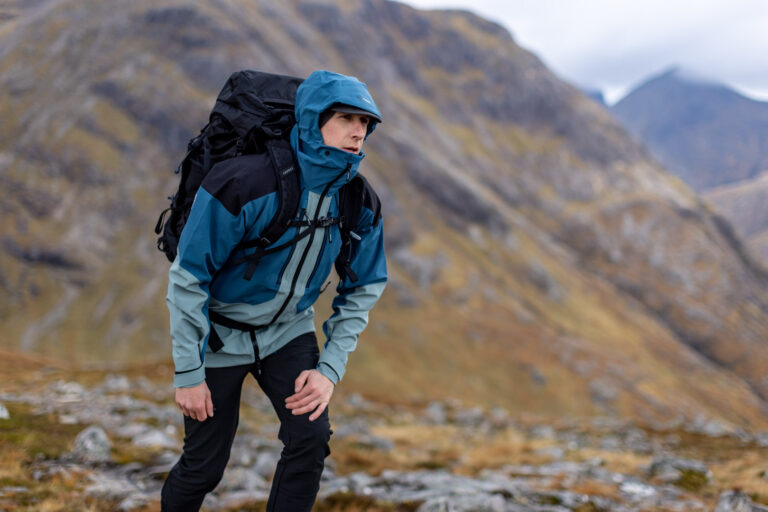
Durable, well-specced and built for some seriously rough conditions. Here's our full take on the £300 Rab Firewall Guide following our tests in the mountains
I’ve tested quite a few of Rab’s waterproof jackets over the years, from the more affordable Downpour range through to its technical mountain shells. The Firewall Guide sits firmly towards the latter end of that spectrum. At £300, it’s a serious bit of kit, designed for demanding mountain conditions.
I’ve been testing it for around six months, wearing it through some pretty grim weather in the mountains, including a particularly memorable outing in a named storm in North Wales. It’s a jacket that feels reassuringly robust, has all the technical details I’d want for serious mountain use and, importantly, has performed exceptionally well when the weather has turned nasty.
There are a couple of things I’d change, but overall I think Rab has produced a very impressive mountain shell.
Where to Buy
Rab Firewall Guide
Our tester’s verdict: “Very durable, well articulated, and with some well designed details and features. £300 isn’t cheap but I think it’s actually reasonable considering the quality and feature set here.”
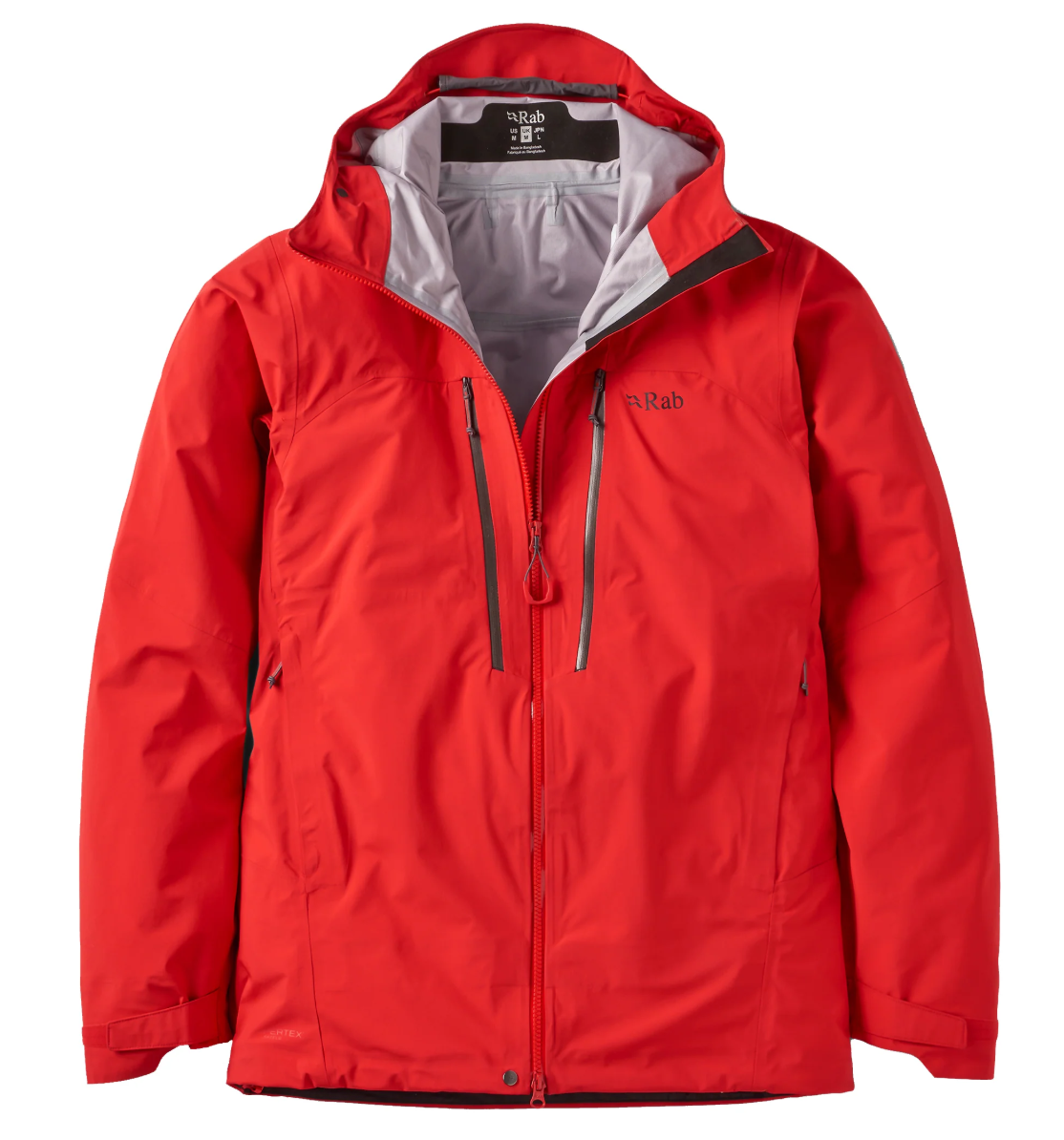
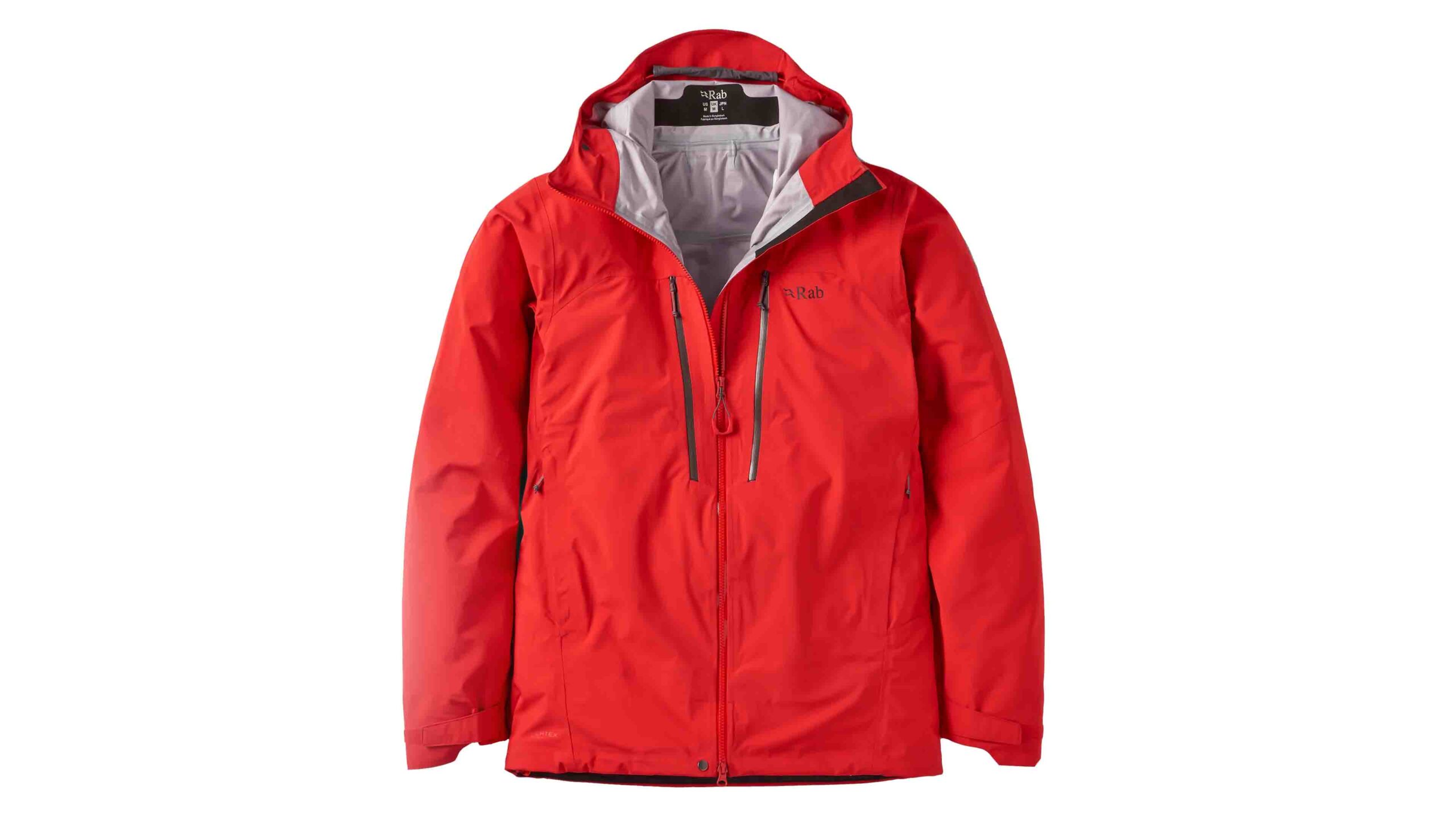
The Rab Firewall Guide is a highly protective, durable three-layer waterproof jacket designed for alpinists and anyone regularly venturing into demanding mountain environments. It uses a three-layer Pertex Shield construction and has a particularly good selection of technical features, including a four-point adjustable helmet-compatible hood, two-way pit zips and four generously sized external pockets.
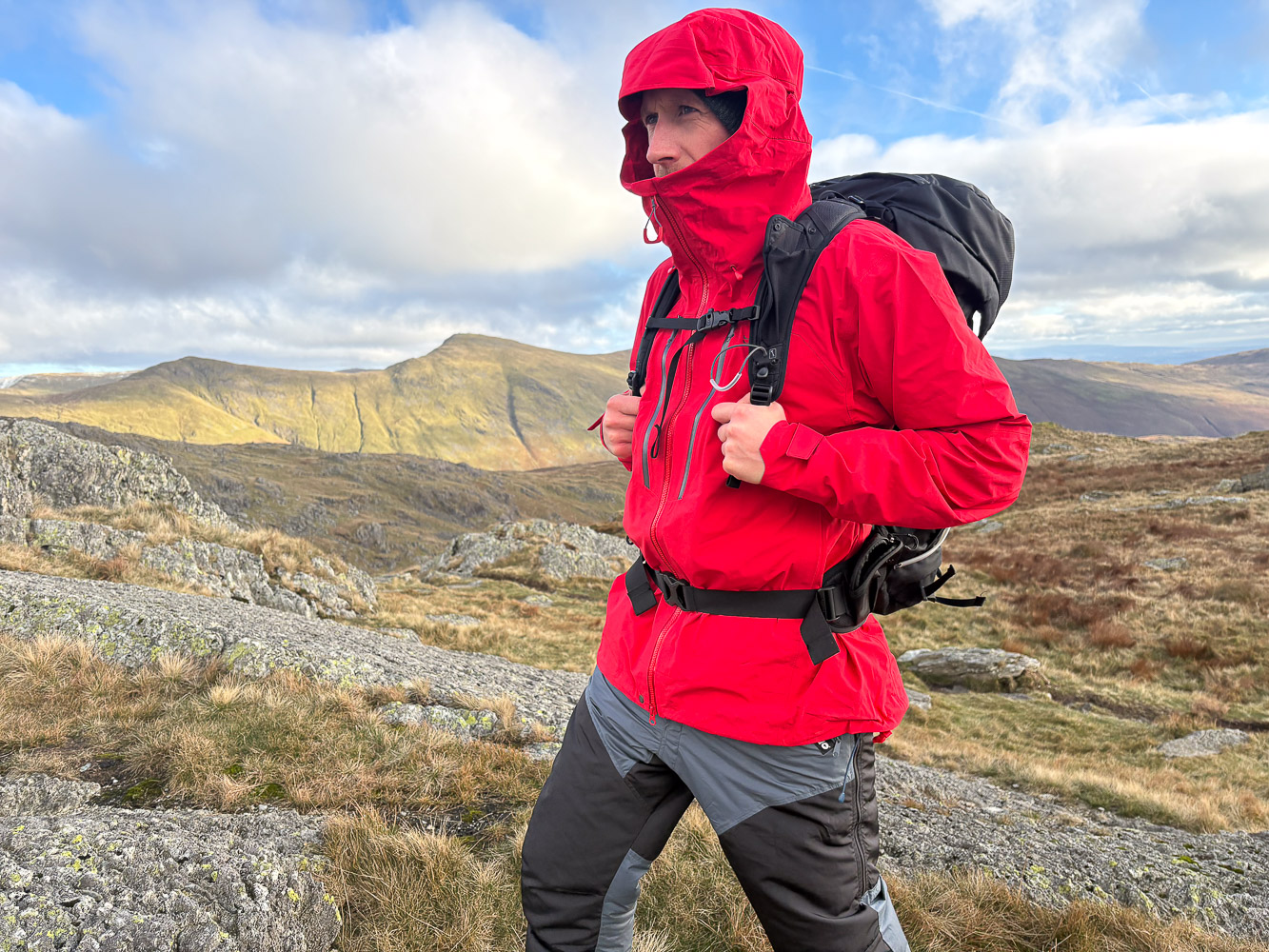
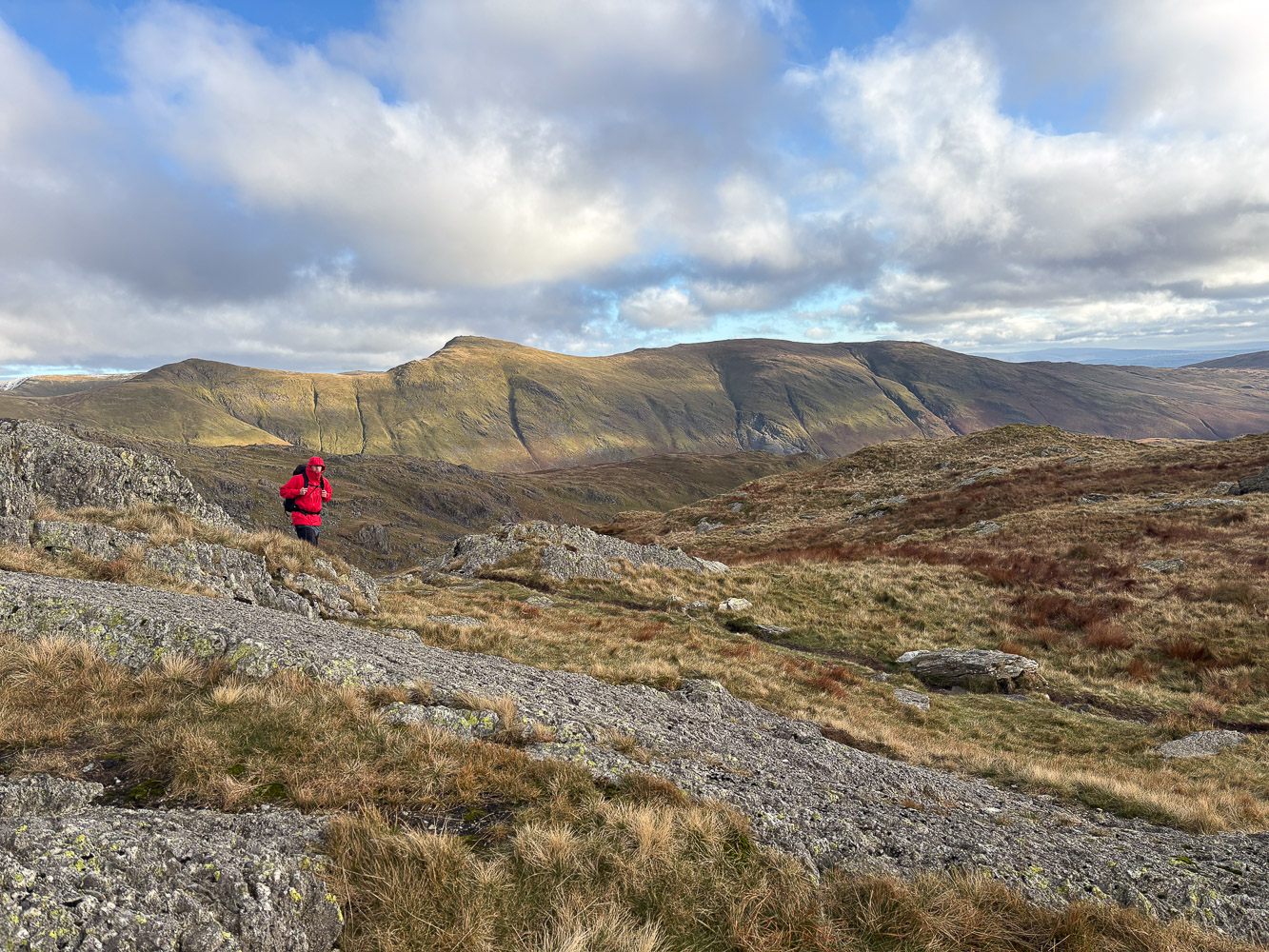
Will testing out a size L guide in the Lake District.
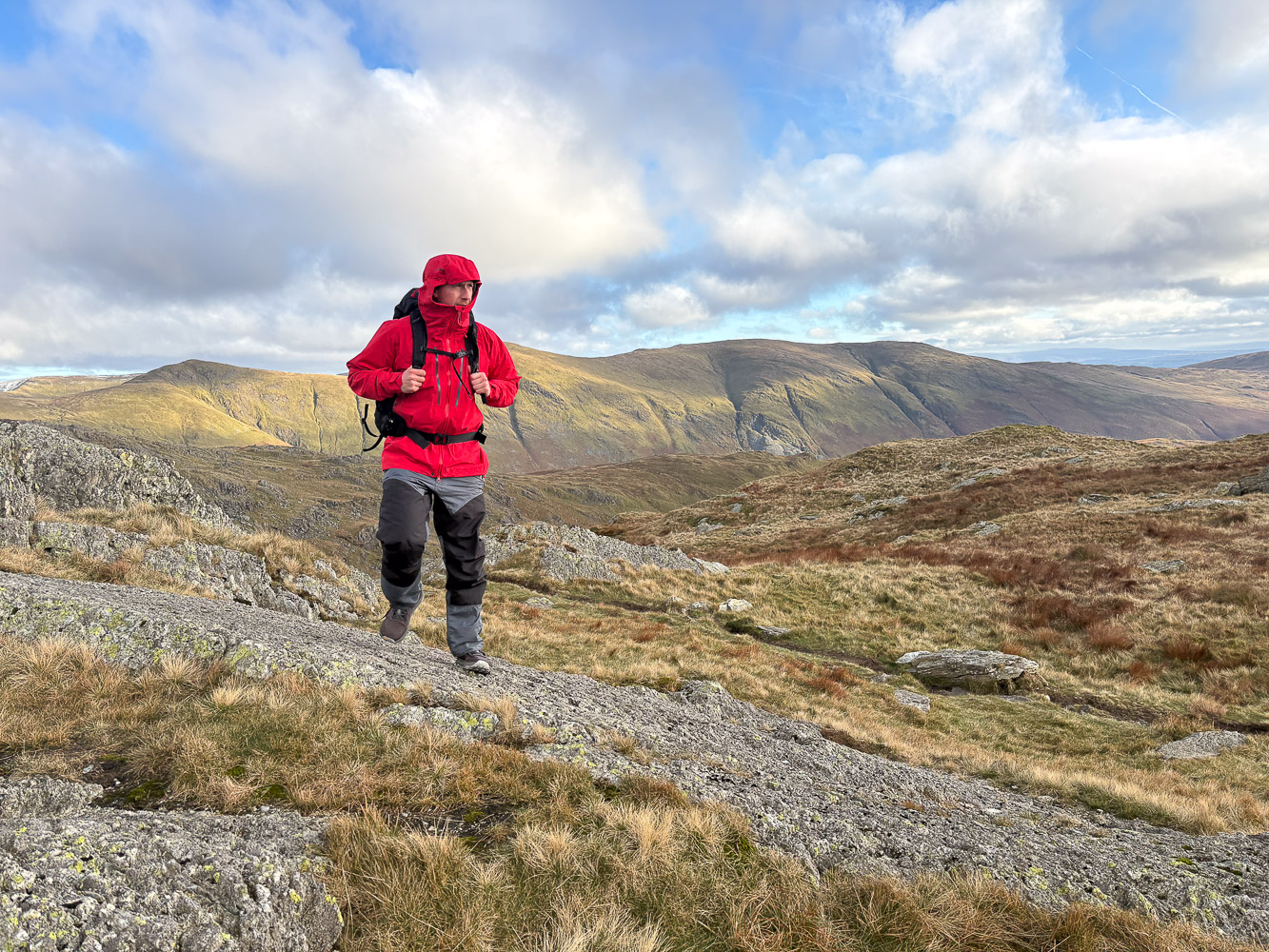
I’ve been wearing it from summer through autumn and into the start of winter. It’s been on full-day mountain hikes, carried in my backpack on drier days and it’s been worn for extended periods in heavy, wind-driven rain. On my most recent outing with it, I wore it over my down jacket on a sub zero hike across Caudale Moor in the Lake District.
What I’ve particularly liked is the combination of its robust construction and thoughtful design. The hood is one of the best I’ve used, the chest pockets are huge and the fit allows for plenty of movement and layering.
At £300, I actually think it’s very good value for a jacket of this calibre. It’s a serious alpine shell without the eye-watering price tag of some of its competitors.
Pros: Exceptionally protective, very robust construction, excellent adjustable hood, huge chest pockets, good ventilation, good freedom of movement.
Cons: Not especially lightweight or packable, hand pockets partly obstructed by hipbelts, embedded plastic hood adjustment components could be vulnerable to damage.
Materials
The Firewall Guide uses a three-layer Pertex Shield construction. This involves a waterproof and breathable membrane sandwiched between an outer face fabric and an internal backing fabric.
It’s a substantial-feeling construction, and one that immediately gives you the impression that this jacket is built for proper mountain use. The face fabric feels reassuringly tough, with a slightly softer and more flexible feel than some of the older Gore-tex Pro jackets I’ve used, before the introduction of the newer ePE fabrics. Still, it has that reassuringly substantial feel that I associate with jackets designed to withstand regular abrasion and rough treatment.
This is a different proposition to something like Rab’s Downpour (one of their most popular jackets), which is designed to offer lighter waterproof protection at a much lower price. The Firewall Guide is a considerably more technical and robust jacket, with a much more comprehensive feature set.
It’s also worth distinguishing it from the standard Rab Firewall. That uses the same fabric but is lighter on technical features and considerably cheaper. The Guide is the more fully equipped option, designed for people who want a shell with pretty much everything they could need for serious mountain adventures.
Features
There’s a lot to like about the Firewall Guide’s feature set. Rab has clearly put plenty of thought into the details here, and it’s one of the things that makes this jacket stand out from some of its competitors.
The first thing I’d highlight is the hood. It’s helmet-compatible and has four-point adjustment, allowing you to get a really secure fit whether you’re wearing a climbing helmet or just a cap. There’s a wired peak too, which provides good protection for your face.
I found the hood particularly impressive in strong winds. On one occasion, the wind was blowing up from below and straight into my face, but the hood stayed securely in place. I found it also moves nicely with your head when you turn your neck, rather than restricting your vision or pulling awkwardly. It’s actually genuinely one of the best hoods I’ve used. I’d put it second only to the hoods on Páramo jackets, which are particularly good thanks to their broader mouldable peaks and also the nature of their softer fabrics.
Another standout is the pocket arrangement. You get two enormous chest pockets, both of which are easily large enough to accommodate an OS map or a bulky pair of gloves. I’ve found these particularly handy when out in the hills, as they’re easy to access and keep important items close at hand.
There are also two large handwarmer pockets. These have water-resistant zips and external storm flaps for additional protection. One thing to be aware of is that they’re partially obstructed when wearing a backpack hipbelt or climbing harness. I found I could still get your hands inside them, but access isn’t quite as convenient. Fortunately, those large chest pockets provide a very good alternative.
Inside the Firewall Guide, there’s a zipped pocket for a phone, which is probably where I’d recommend keeping one in particularly wet conditions. There’s also a mesh dump pocket, which I’ve found useful for a medium-sized pair of gloves, although it’s a little small for bulkier winter mitts.
All the external zips have water-resistant coatings, and I’ve found them reliable in heavy rainfall. The main zip has a particularly large pull tab, which is easy to operate when wearing thick gloves. The smaller pocket zip pulls are a little trickier, but still manageable.
I also like the two-way main zip. There’s a popper at the bottom, allowing you to open the zip from below to create some additional ventilation while keeping the jacket secured against the elements. It works well and prevents the front of the jacket blowing open like a cape when you’re venting.
The two-way pit zips are another very useful feature. They’re long and I found they allow you to dump a considerable amount of heat when you’re working hard uphill.
Other details include a RECCO reflector, which can help search and rescue teams locate you in an emergency, and a large internal storm flap behind the main zip for additional weather protection.
This is a very picky quibble, but one small thing I’d like to see is a way of converting the hood into a collar. There’s a hanging loop at the back of the shoulders, but no corresponding Velcro tab inside the collar. It’s not something you see very often but I tried the 7Mesh Guardian Air recently and appreciated that detail on it. It’s a nice option when you want wind protection without having a hood flapping around, such as when mountain biking or skiing.
There is one other design detail I’m not so keen on. The front hood adjustment toggles use spring-loaded plastic components embedded within the fabric. I can imagine accidentally kneeling on these while inside a tent and potentially breaking them. Given Rab’s generally good approach to making repairable outdoor kit, I’m surprised these components aren’t designed to be easier to replace.
Performance
As previously mentioned, I’ve been testing the Firewall Guide for around six months, using it from summer through autumn and into the start of winter. It’s been exposed to everything from persistent drizzle to some properly unpleasant, wind-driven rainfall in the Welsh mountains.
One of the most memorable outings was in North Wales during a named storm. Conditions were extremely wet and windy, but the jacket kept me completely dry. When worn with a heavy backpack, I had no issues with water getting through the shoulders – that can be an issue with some jackets, particularly those with a low hydrostatic head.
The waterproof protection is excellent. The hood plays a big part in that, providing a close fit around your head and face. The adjustment system makes it easy to get everything cinched in securely, even when the wind is really picking up.
Like most membrane-lined waterproof jackets, the Firewall Guide isn’t going to be particularly breathable when you’re working hard. I’ve worn it on steep climbs and have certainly felt the heat building up inside. But this is where those long, two-way pit zips come into their own. They’re very effective for releasing heat and moisture, and combined with the two-way main zip, they give you plenty of options for regulating your temperature.
I wouldn’t describe this as a very breathable shell – no membrane jackets are in my opinion – but the ventilation options are excellent and make a real difference.
In terms of weight, it’s not a lightweight jacket (583g) but I actually found it to have a reassuring heft to it – sometimes you don’t want something light and flimsy and instead want something built to endure. There are certainly lighter alpine shells available, but I haven’t found the weight excessive for this type of jacket.
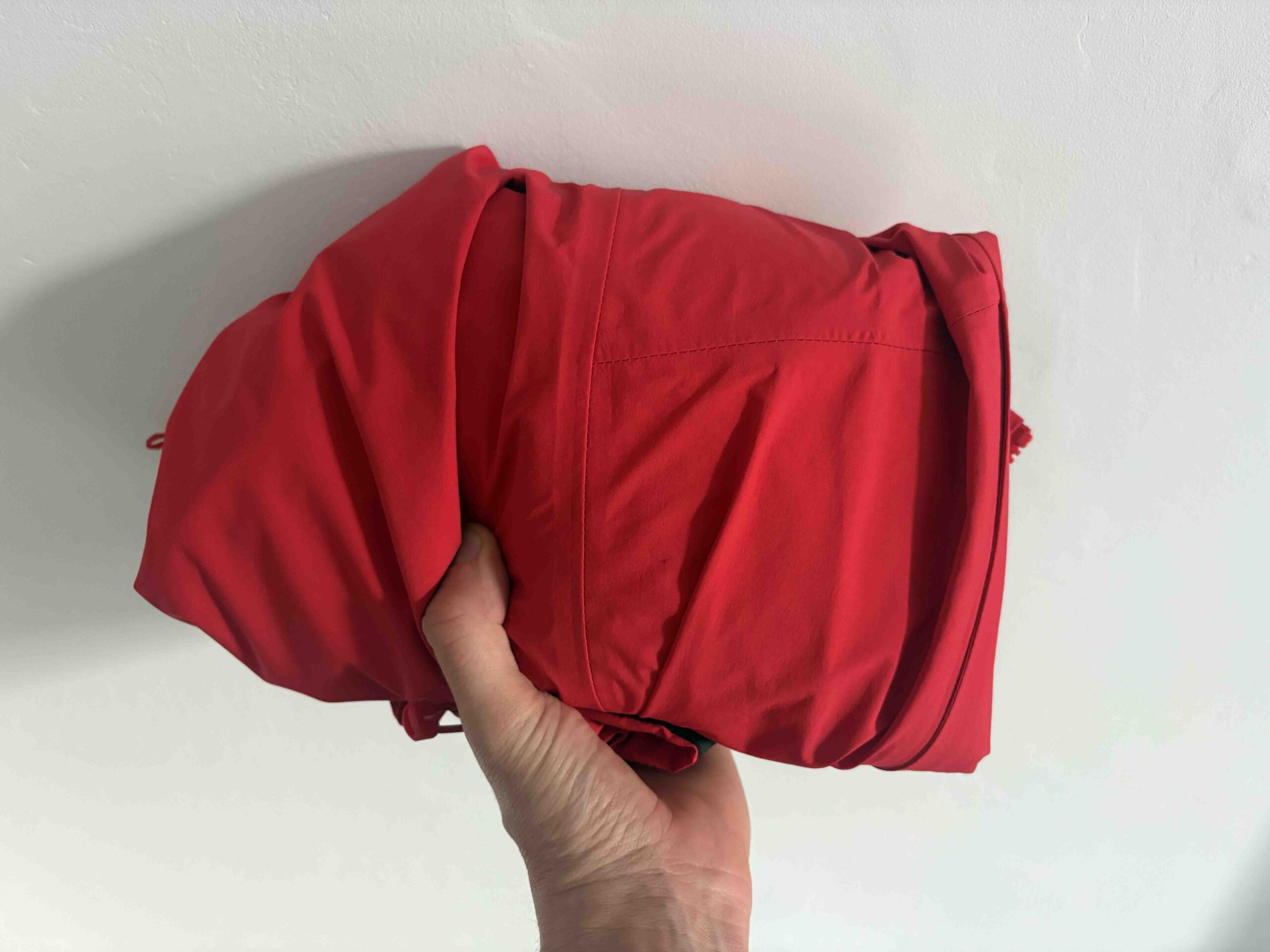
Packability is another area where it doesn’t particularly excel. When rolled up, it’s about the size of an average loaf of bread. That’s not terrible, but there are three-layer shells that compress down smaller. With that in mind, if you’re looking for something to carry as an emergency waterproof on lightweight summer adventures, this probably isn’t the one. For serious mountain use, though, I’m more than happy to accept the extra weight and bulk.
What is the Fit Like?
I’d describe the Firewall Guide’s fit as regular. I’m 5 foot 10, slim but with fairly broad shoulders, and I’m currently somewhere between a Medium and a Large in most outdoor clothing. I opted for a Large here and I think that was the right decision.
It doesn’t look baggy, but there’s enough room underneath for some substantial insulation. I’ve comfortably worn it over a chunky Patagonia Down Hoody, as well as thicker fleeces, without feeling restricted.
The length is good too. There’s enough coverage to keep the hem below a backpack hipbelt or climbing harness, and the sleeves have a nice amount of length.
One thing I’ve always appreciated about Rab’s jacket designs is their articulation. They’re generally very good at allowing you to reach overhead without the hem riding up, and the Firewall Guide is no exception. Whether you’re scrambling, reaching for holds or simply moving around with a loaded backpack, the jacket doesn’t restrict your movement.
There’s a beard guard at the top of the zip, with a microfibre fleece section around the chin to prevent uncomfortable rubbing. You can also cinch the collar in quite tightly to minimise the amount of rain that can get inside.
The cuffs are easy to adjust and I found I could pull the jacket on while wearing some fairly chunky winter gloves – without having to remove them first.
The hem adjustment is also straightforward to operate one-handed. Fully cinched in, it does leave a little excess cordage, which could potentially snag on climbing equipment. Some brands design their adjustment cords with unlinked ends to minimise this risk.
Overall, though, I think the fit is spot on. It’s comfortable, allows for plenty of layering and provides excellent freedom of movement.
Build Quality and Durability
This is arguably where the Firewall Guide makes its strongest impression. The face fabric feels extremely robust and I’ve never felt the need to treat the jacket particularly carefully when using it in the mountains.
I’ve worn it through rough weather and subjected it to the usual knocks and scrapes that come with regular outdoor use. So far, it has held up extremely well, with no noticeable abrasion or deterioration. I’ve also washed it once or twice using Nikwax products and found that dirt has come out well. Overall, the zips, seams, cuffs and other construction details all feel well made.
Based on the materials and construction, I think this is a jacket that should withstand years of regular mountain use. At £300, I also think the build quality represents good value. Many comparable Gore-tex and Gore-tex Pro jackets can cost considerably more, and in my experience, I don’t think you’d necessarily get a huge improvement in real-world waterproof performance by spending extra.
How it Compares…
There are a few jackets I’d consider direct alternatives to the Firewall Guide, and I’ve tested all of them.
The first is theRab Kangri, which is a very similar proposition in terms of its intended use. It uses Gore-tex, is slightly lighter and has a tougher face fabric, but doesn’t have the same number of external pockets. It’s also more expensive. The hydrostatic head rating is higher on the Kangri.
Then there’s theRab Latok Pro, which is arguably the more premium option. It has most of the same technical details but uses Gore-Tex Pro. It’s lighter and more durable, but costs around £250 more. Both jackets are designed for similar mountain pursuits. Personally, if I had £550 to spend, I’d buy the Firewall Guide and put the remaining money towards a decent pair of waterproof trousers.
TheArc’teryx Beta is another jacket I’d compare it with. It’s lighter and more expensive, but doesn’t have quite the same practical feature set. In particular, it lacks pit zips, which I think are a significant advantage on the Firewall Guide.
The Helly Hansen Verglas Infinity is also worth considering. It offers a similar level of protection and durability, but is slightly cheaper and has fewer technical features, including no two-way main zip or chest pockets.
If you’re looking for something more affordable, theHighlander Munro is worth a look. It has a similarly robust feel, although the zip protection is less comprehensive and it lacks some of the technical details found on the Firewall Guide.
Rolled up as tight as can be managed.
And then there’s the standardRab Firewall, which uses the same fabric but is lighter, considerably cheaper and doesn’t have the same feature set. If you want a durable waterproof without all the additional technical details, it’s a sensible alternative.
Having tested all these jackets, I’d say the Firewall Guide offers arguably the best bang for your buck if you’re looking for a fully equipped shell for serious mountain use.
Rab Firewall Guide: Verdict
The Rab Firewall Guide is an excellent waterproof jacket for demanding mountain conditions. It’s reassuringly robust, offers superb weather protection and has one of the best hoods I’ve used. The large chest pockets, effective ventilation and excellent freedom of movement are further highlights.
It’s not the lightest or most packable option, and I’d like to see Rab rethink those embedded plastic hood adjustment components. But these are relatively minor criticisms when you consider what this jacket does well.
At £300, it’s not cheap, but I still think it represents very good value for a technical alpine shell. It offers the sort of protection, durability and feature set that I’d normally associate with considerably more expensive jackets.
I’d recommend it to anyone looking to step up from a lower-cost waterproof to something that can support them on year-round mountain adventures, particularly those who regularly venture into challenging conditions.
If you’re primarily looking for a lightweight jacket for summer hiking or backpacking, I’d look elsewhere. But if you want a dependable, highly protective shell that you can put through its paces in the mountains, the Firewall Guide is an excellent option.
Where to Buy
Rab Firewall Guide
Our tester’s verdict: “Very durable, well articulated, and with some well designed details and features. £300 isn’t cheap but I think it’s actually reasonable considering the quality and feature set here.”