
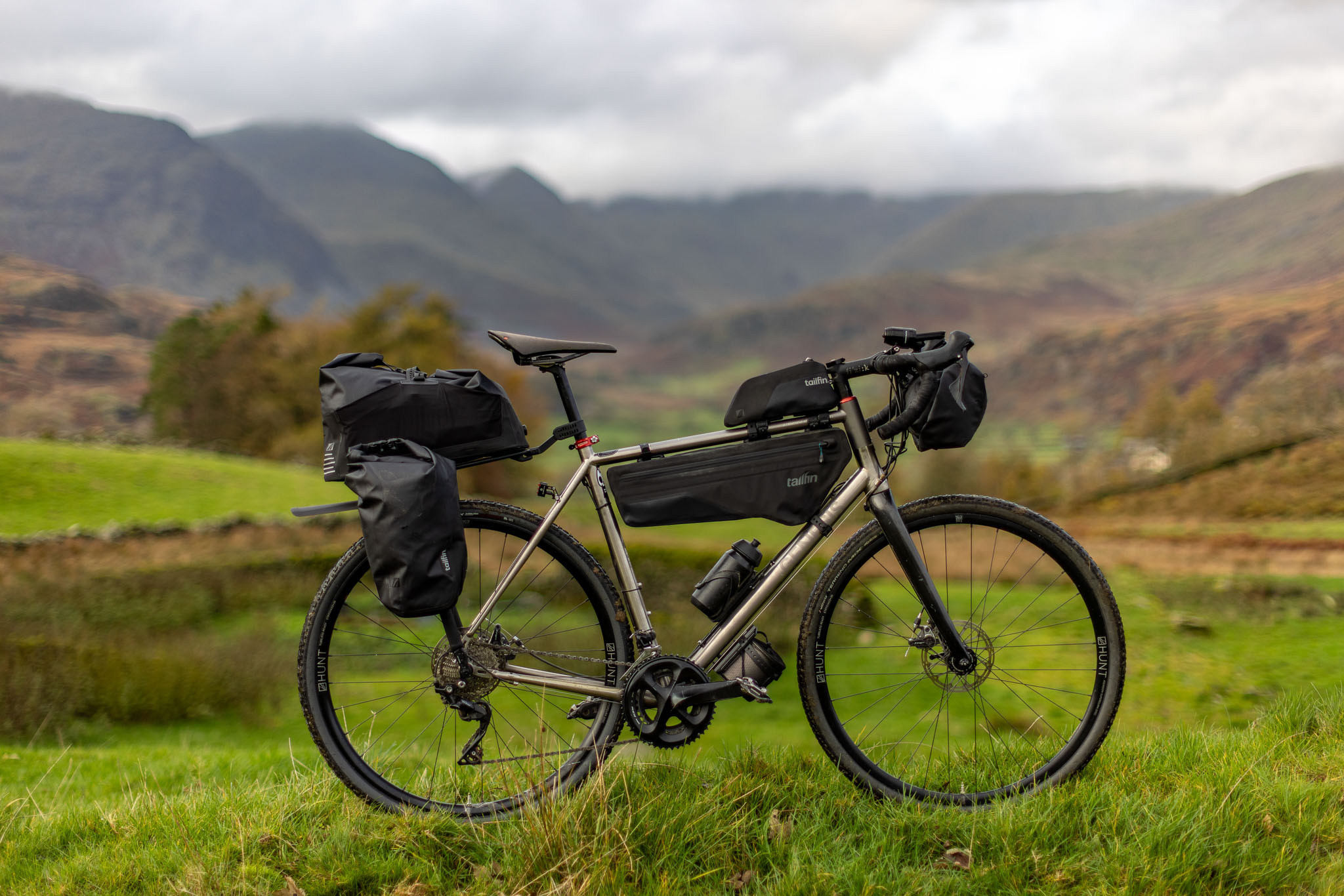
There’s no shortage of bikepacking luggage on the market, and most systems make broadly similar promises: lightweight construction, generous capacity and secure attachment to the bike. But spend a few days travelling with a loaded bike and you quickly realise that the best luggage isn’t necessarily the lightest, most minimal or the one with the greatest capacity. It’s the system that makes life easier along the way.
The Top Line
I’ve used luggage from a number of the well-known bag brands and, having spent the past few months using Tailfin’s bikepacking luggage, what stands out isn’t simply the quality of the individual bags, but the thought and engineering that have gone into the entire system. From the sturdy rear rack to the clever attachment mechanisms and genuinely effective waterproofing, there’s a whole lot to like here. And while the initial choice of components and setup can feel a little daunting at first, the flexibility they ultimately offer is, in my opinion, more than worth the extra considerations in the end.
Pros: exceptional build quality, highly effective system for bikepacking, loads of mounting and configuration options, very waterproof, hard-wearing materials, sturdy pannier rack, everything feels very secure on the bike
Cons: not the cheapest or simplest set-up, a little heavier than some ultra-light systems
Tailfin Bikepacking System
★★★★★
My Bikepacking Set-Up
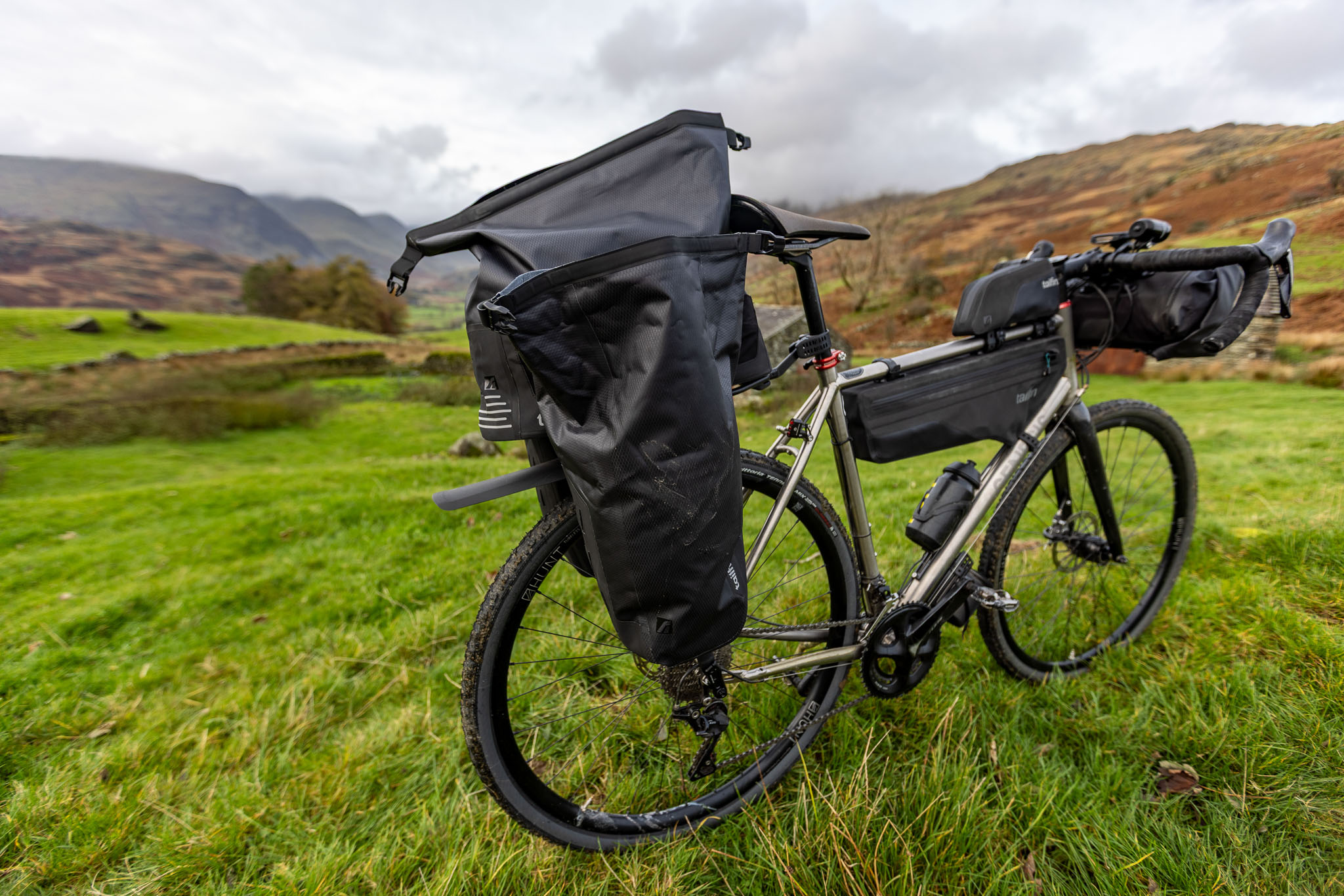
I’ve been testing Tailfin’s bags on my trusty Genesis Croix De Fer Titanium bike, most recently on some overnighters in the Lake District. Conditions so far have (unsurprisingly) varied a lot and have included a mixture of overcast days with on and off spouts of heavy rain, drier days with still muddy gravel trails, and mizzly rides where the overall mood of the day could only be described as: damp.
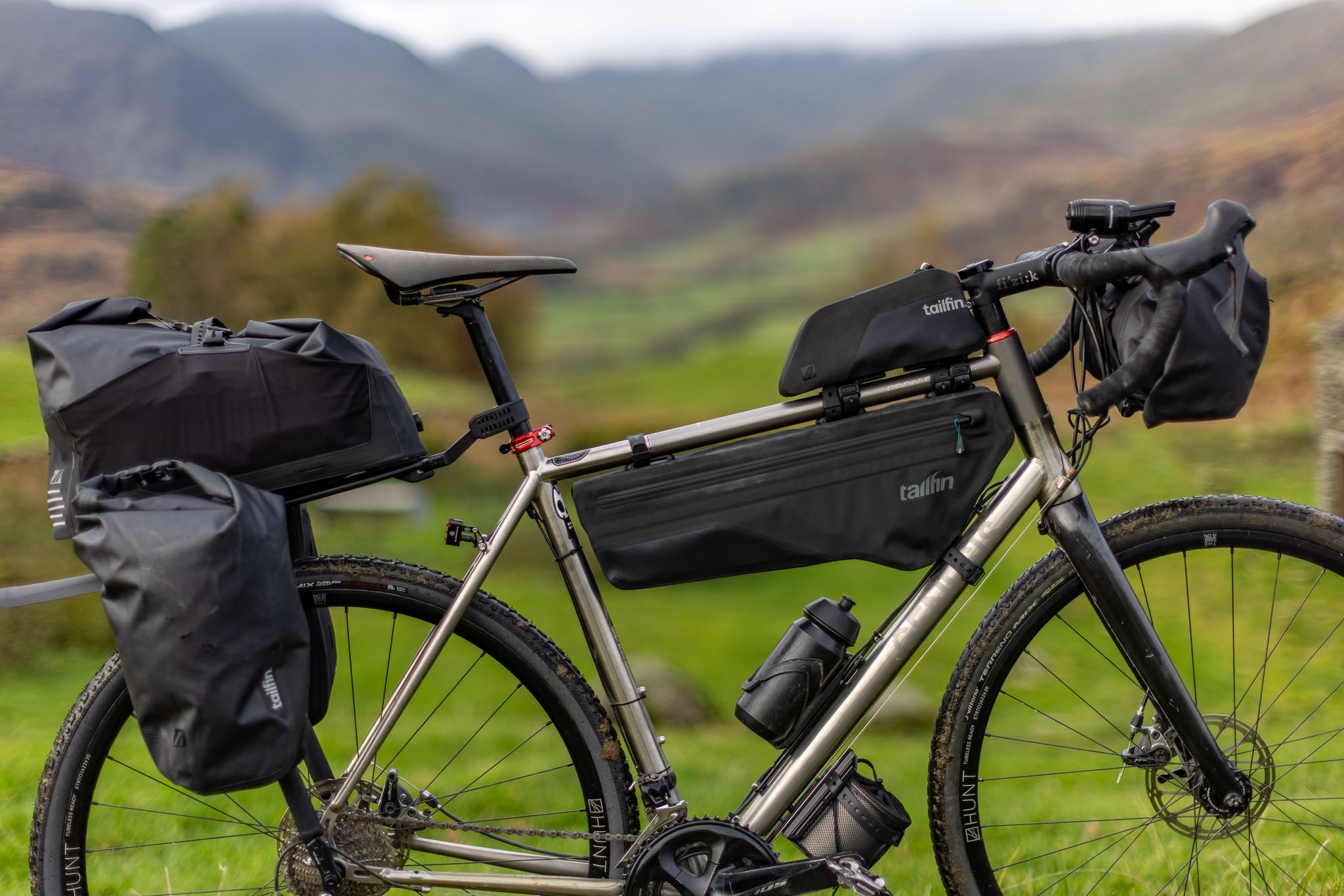
The Tailfin equipment I’ve been testing includes:
- Journey Pannier Rack
- CargoPack System
- Handlebar Bag System
- 2x Mini Panniers
- Top Tube Bag
- Half Frame Bag
- Bag Cage Computer Mount
Weather and Trail Protection
In my opinion, having spent plenty of time riding in changeable UK conditions across multiple days, waterproofing is one of the most important considerations when choosing bikepacking luggage. There are a handful of systems on the market that give you the confidence to leave the additional dry bags at home, and Tailfin sits firmly among them.
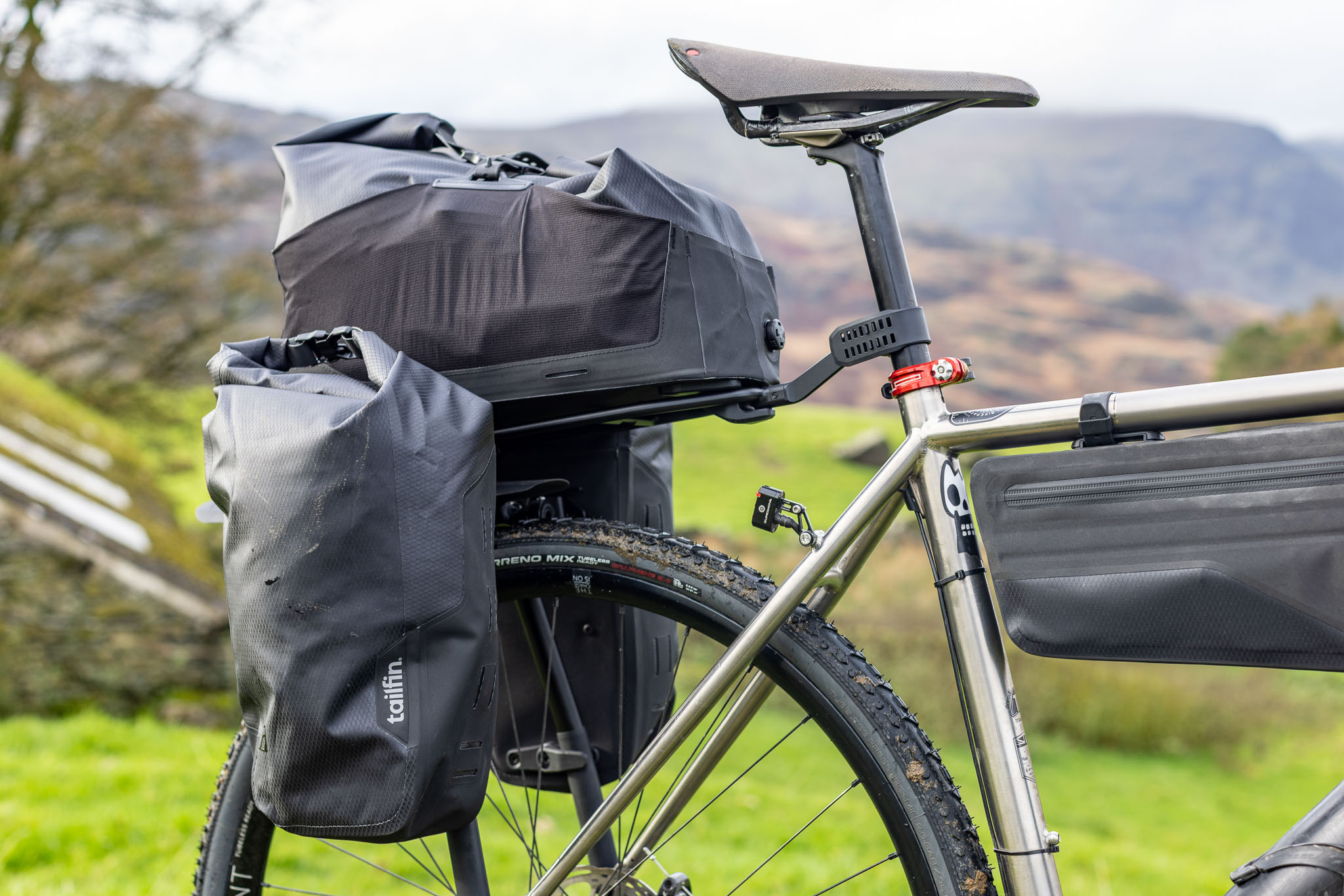
On my test rides in the notoriously varied conditions of the Lake District, the waterproofing hasn’t let me down once. The durability has been similarly promising and I’ve had no issues with rips or tears out on the trail – the materials feel reassuringly tough without feeling too heavy, and there’s no signs of skimping on details. So far, it feels clear that this is a system built to withstand the demands of proper bikepacking adventures, not just the occasional shower or everyday ride.
Related: Best Bikepacking Bags
It’s the sort of luggage you can pack, head out with a dodgy forecast and trust to keep your kit dry without constantly worrying about what’s happening inside the bags. For me, that’s an important distinction. Not having to pack everything inside separate dry bags makes the whole process simpler and more efficient, while at the same time giving confidence that your equipment and clothing are protected if/ when that forecast hits.
Build Quality and Engineering
Build quality is excellent throughout, but it’s the engineering that really sets the Tailfin system apart. There’s a reassuring precision to the way everything fits together, with attachment points and mounting hardware that feel purposeful rather than an afterthought.
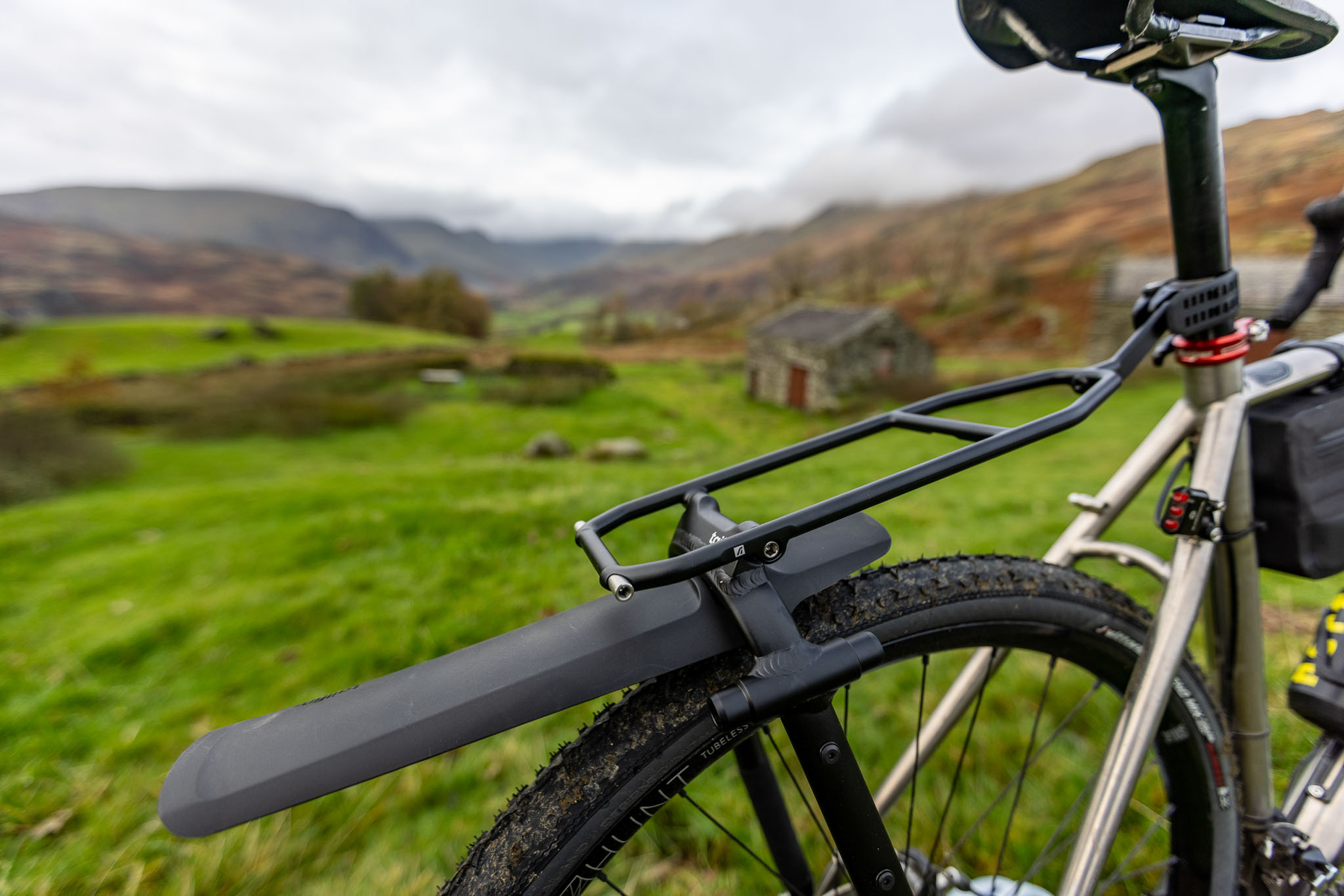
The Journey pannier rack is one of the highlights for me. It’s exceptionally sturdy, with no noticeable rattling, shaking or unwanted movement, whether loaded or unloaded. Despite that reassuring rigidity, it remains impressively lightweight, even in its alloy configuration.
Carbon fibre options are also available for those looking to save further weight, although they come at a higher price point. For most riders, the aluminium version strikes a nice balance between weight, strength and value.
“It feels like a system designed around the realities of bikepacking, rather than simply a collection of bags designed to carry your belongings.”
Attaching the rack to the bike is refreshingly straightforward once you’ve worked through the available fitting options. In my case, I used Tailfin’s QR axle adapter. I’m running a Hunt SON dynamo wheelset on this bike, which I’m not in a hurry to change, so the QR adapter provides a secure and positive mounting point without requiring a change of wheelset. Once everything is in place, the whole assembly feels super solid and I’ve felt confident when using it across rugged terrain, particularly under heavier loads too.
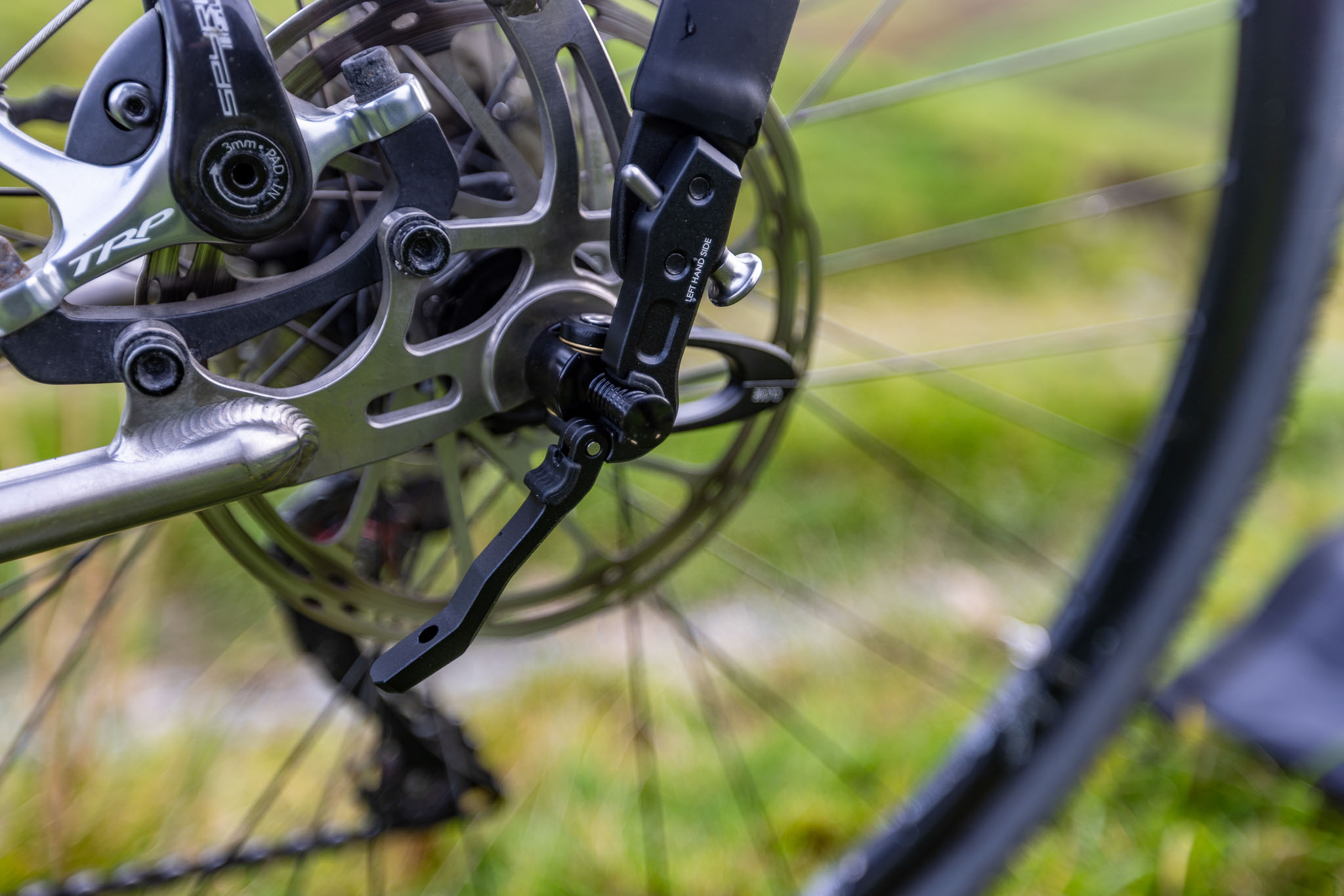
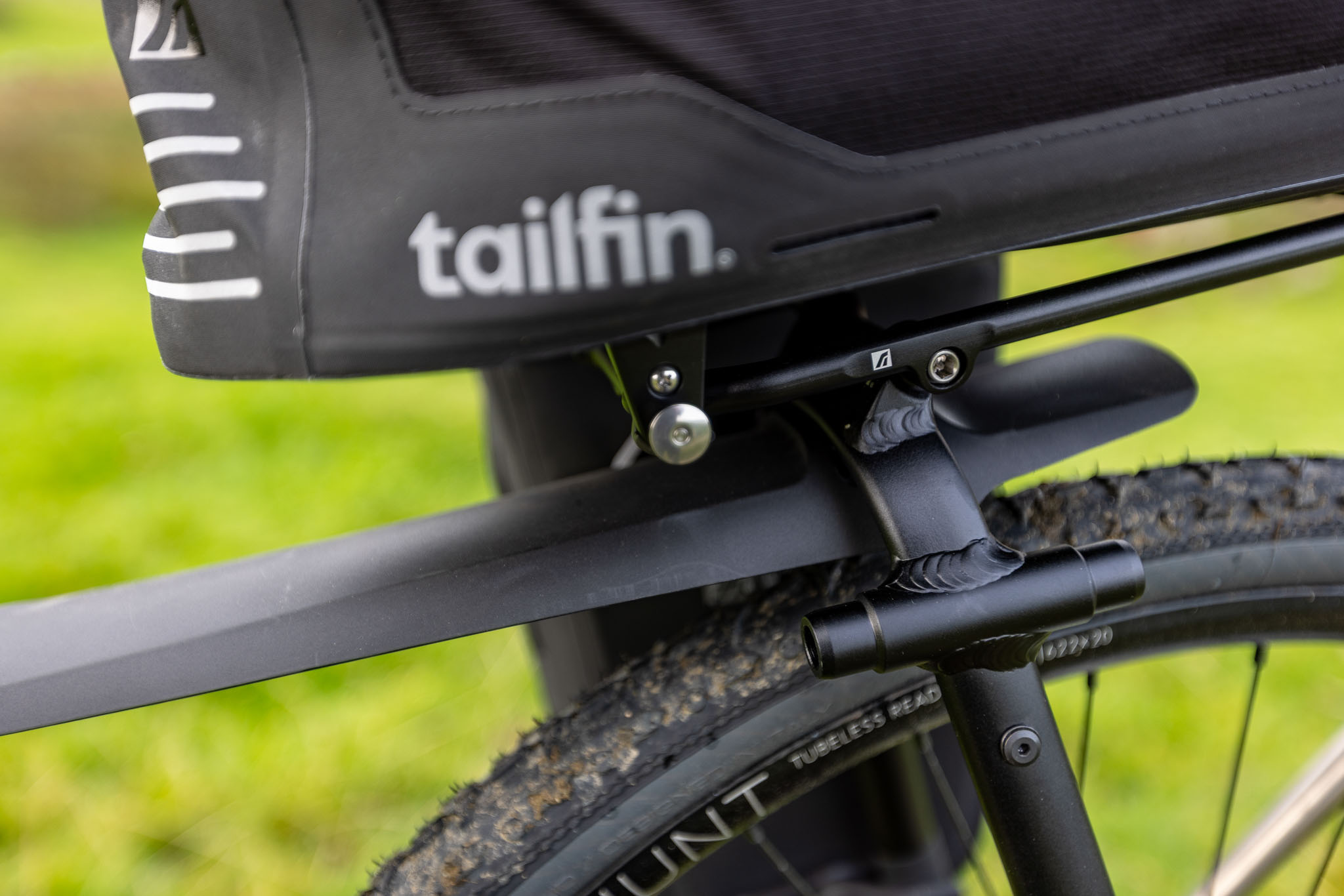
There are a couple of decisions worth considering when choosing the rack. Tailfin offers versions with or without additional rear pannier mounting points. If you’re not planning to run panniers, the version without gives the rack a slightly cleaner appearance. However, these mounting points cannot be retrofitted, so if there’s any chance you might want to expand your luggage capacity in the future, I’d say it’s worth opting for the pannier-compatible version from the outset. It’s a small purchasing decision that could save you having to replace the rack further down the line.
The handlebar bag system is another example of the thought that’s gone into the design. The setup I used incorporates a separate cradle that bolts directly to the handlebars. This provides a solid mounting platform for the bag, keeping it clear of the cables rather than allowing a traditional handlebar-mounted bag to sag down and compress them. A marked distinction from conventional strap-mounted systems, where pulling the bag tight around the steerer can put additional pressure on gear cables and brake lines.
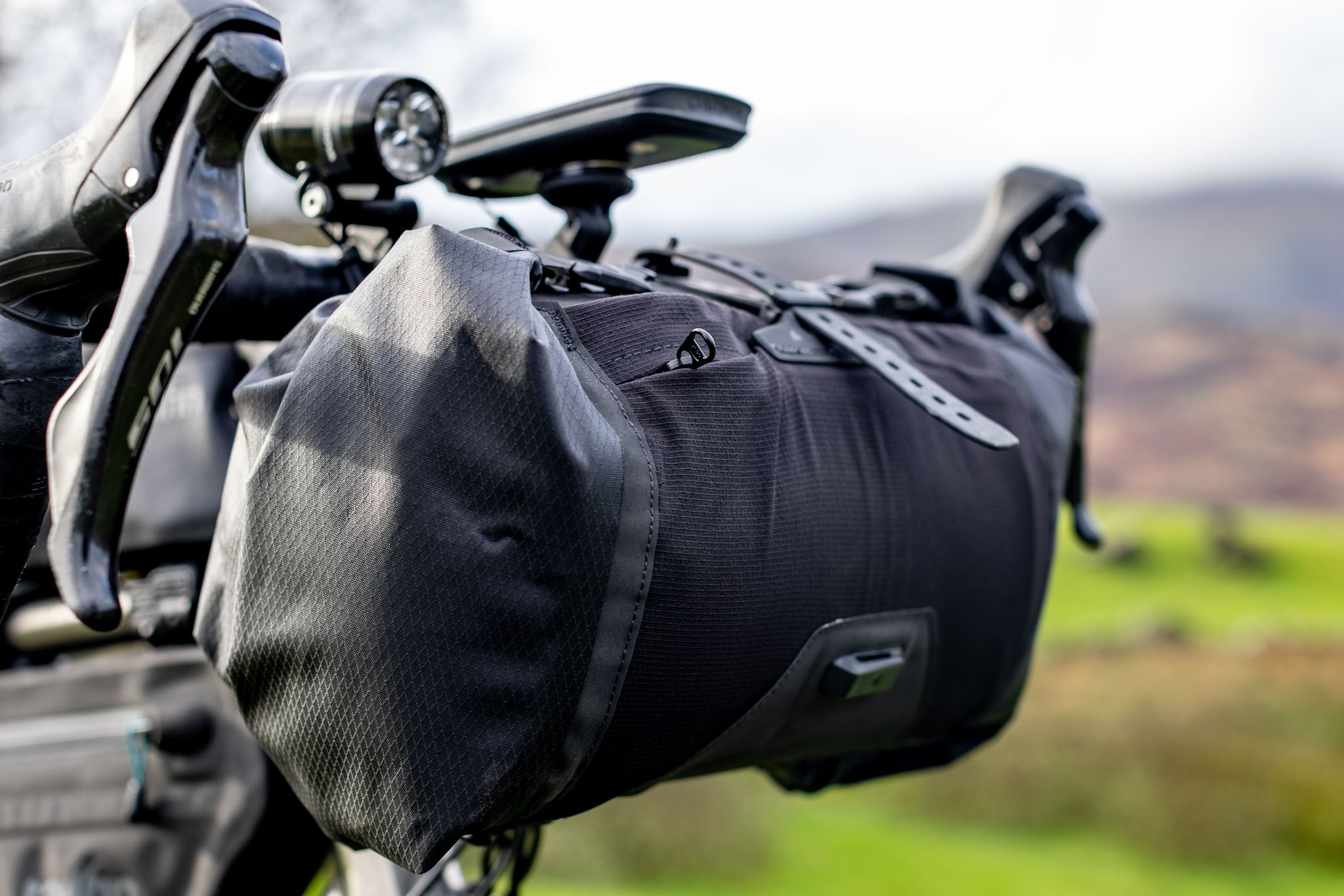
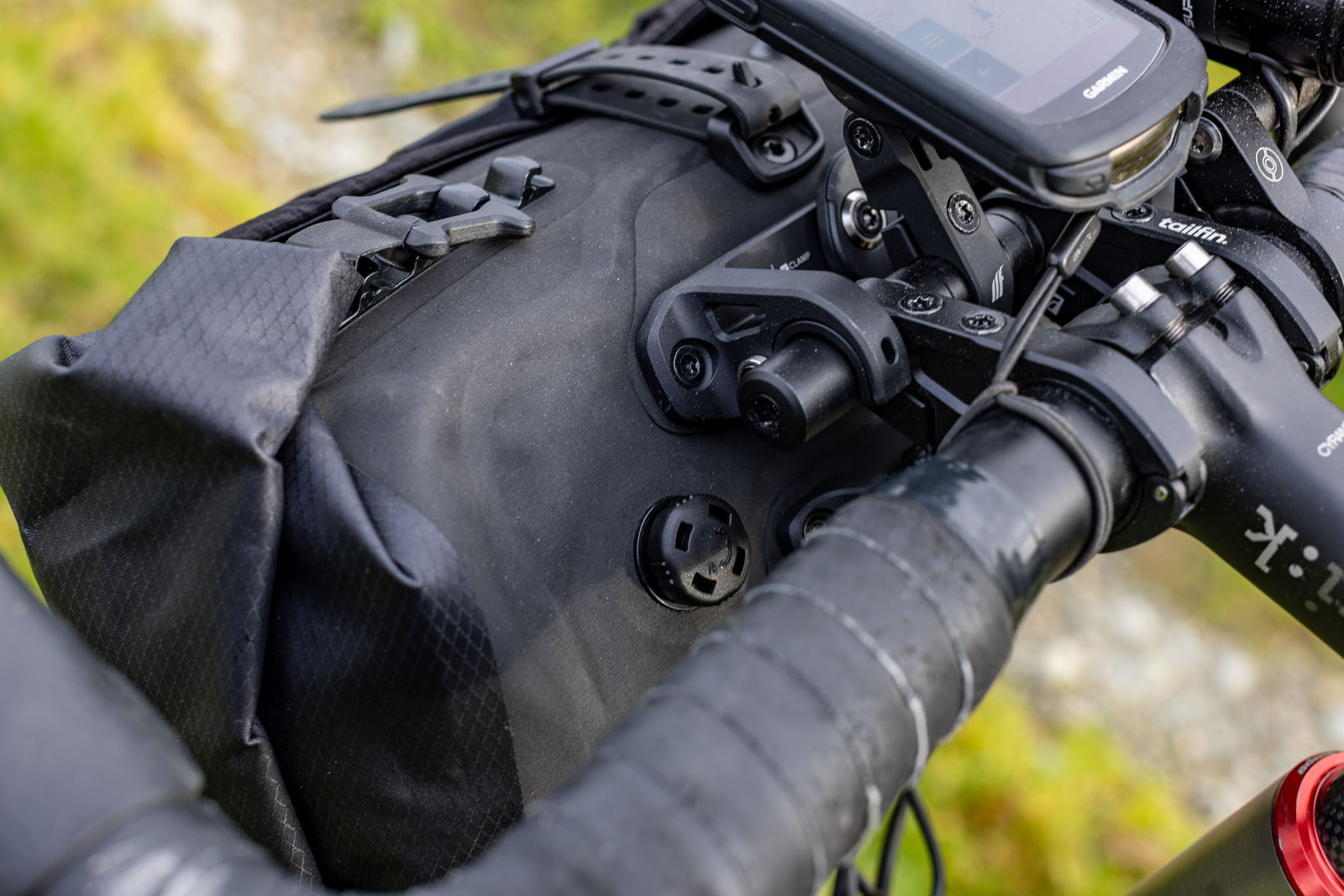
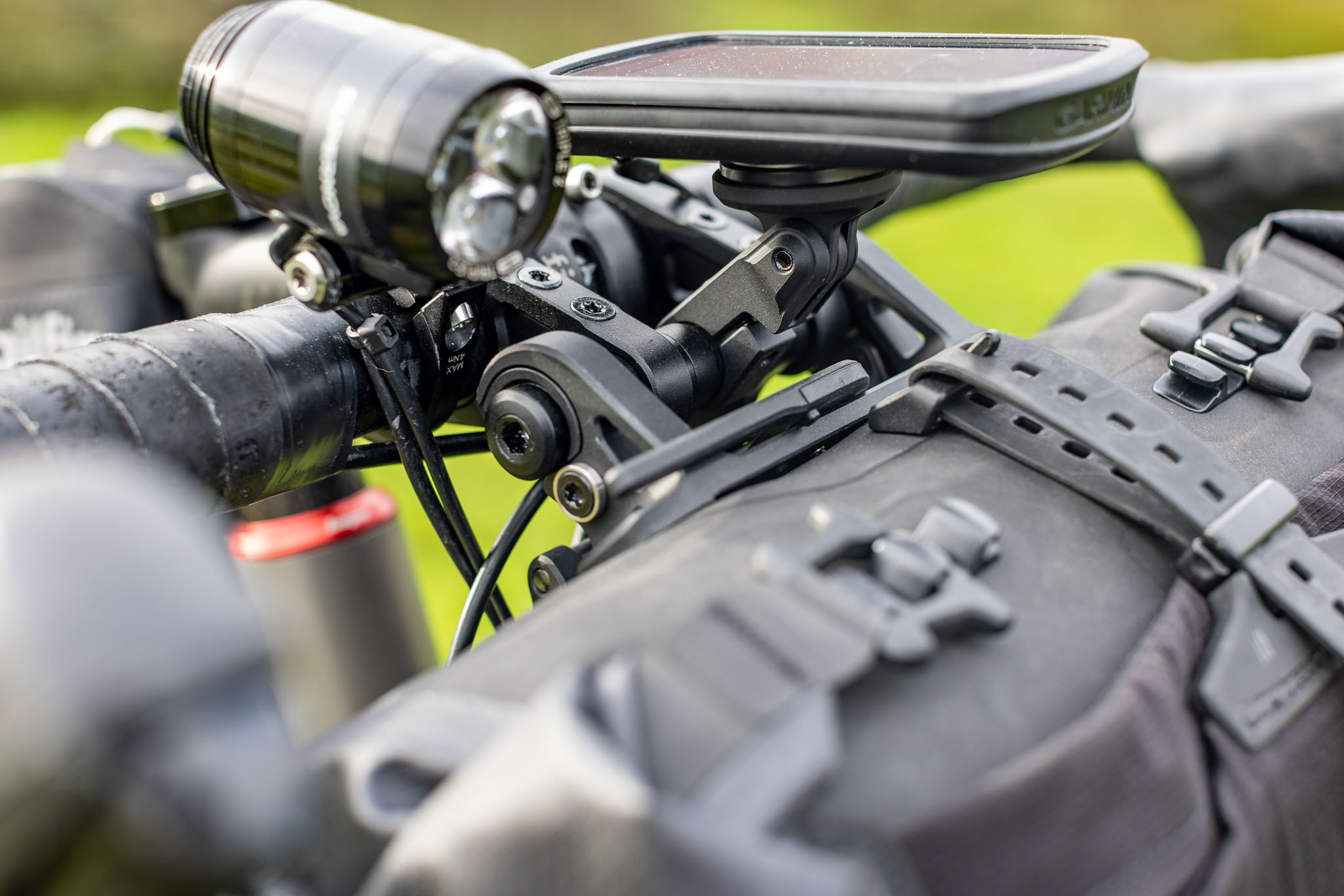
It’s a much neater solution, keeping everything securely in place while avoiding unnecessary pressure or tension on the cables. There’s flexibility here too, with separate mounting kits available for the cradle system, allowing you to incorporate a Garmin or GPS device and additional lighting. It’s another example of Tailfin thinking beyond the bag itself and considering how riders actually configure their bikes for longer journeys.
Ease of Use and Mounting
One of my biggest frustrations with traditional saddle-mounted bikepacking bags has always been the process of getting everything packed, secured and back onto the bike each morning. What should be a relatively straightforward part of breaking camp can quickly become a frustrating exercise, particularly when you’re dealing with multiple straps, fiddly attachment points and cold fingers.
It’s an area where the Tailfin system really comes into its own. With the mounting hardware already attached to the bike, getting the bags on and off is simple, end of. Rather than having to wrestle with straps and readjust everything each morning, it’s a case of clicking the bags into position and setting off.
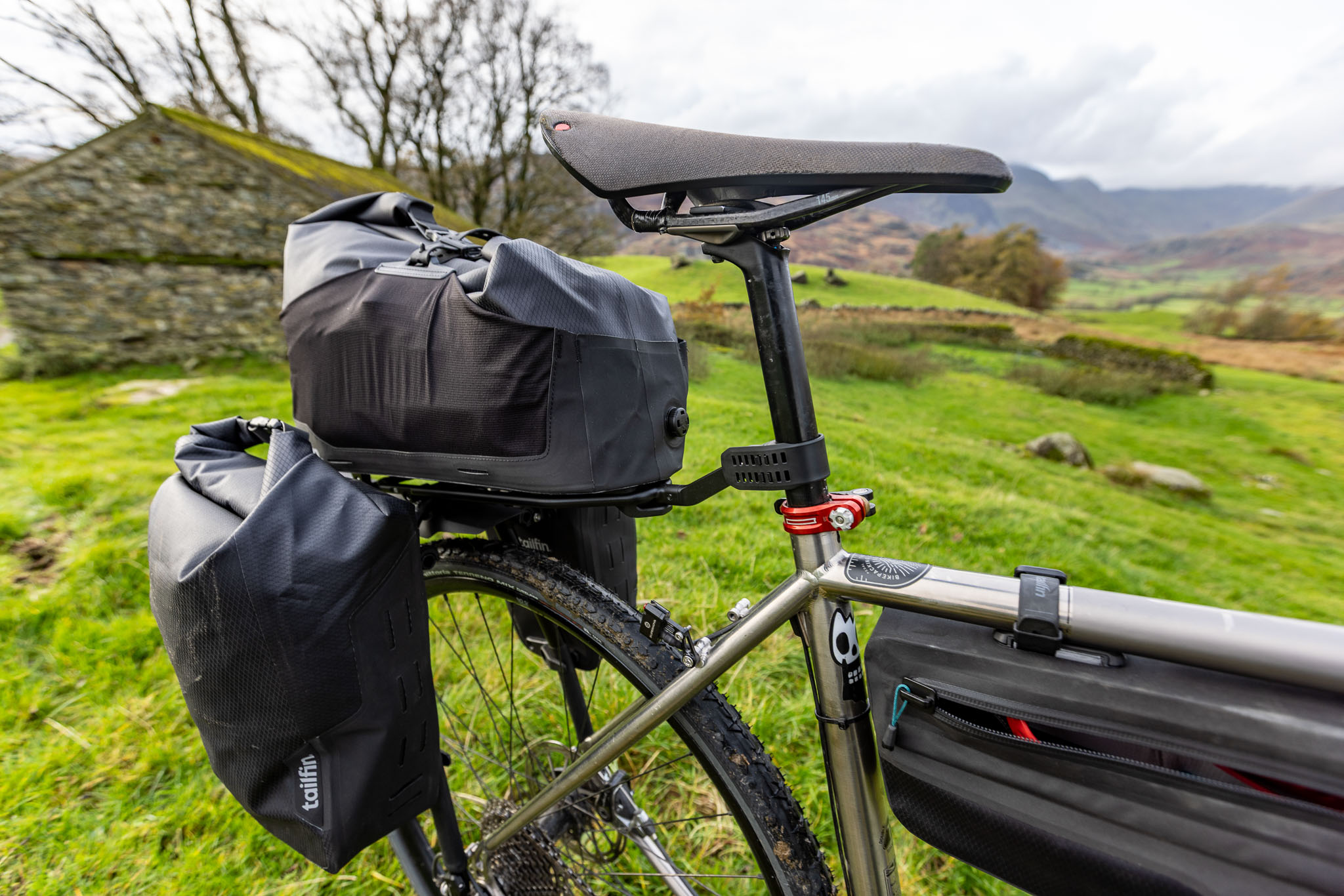
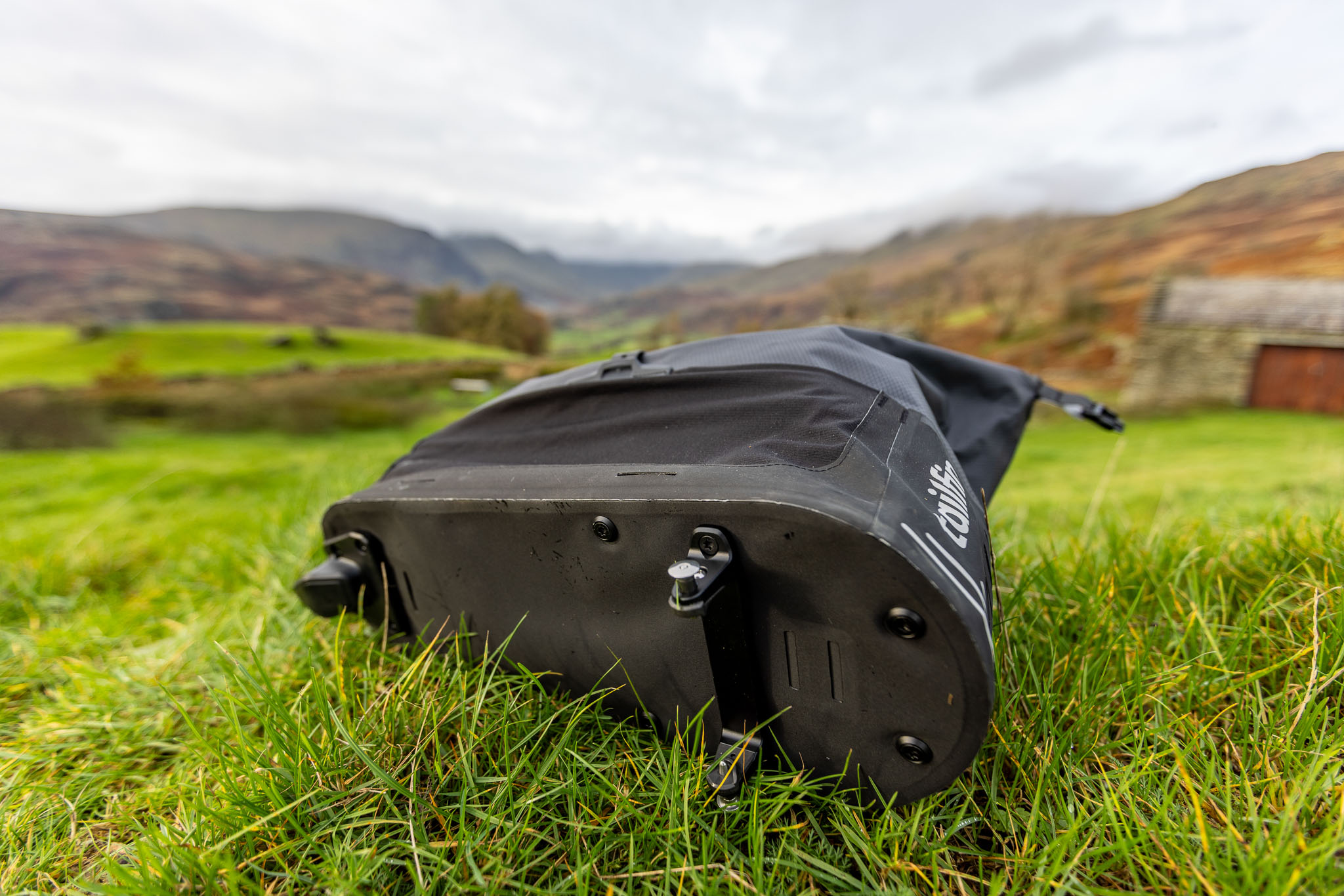
This is particularly noticeable with the CargoPack bag and gravel-style panniers. The convenience of being able to remove your luggage, unpack and repack, then securely reattach everything in a matter of moments makes a genuine difference to the daily routine of a bikepacking trip.
There is inevitably a small weight penalty associated with carrying the additional rack and mounting hardware compared with a minimalist, strap-based setup. However, I’d argue it’s a worthwhile trade-off. If a little extra weight means less time faffing around at camp, particularly on cold mornings when all you really want to do is get moving, then it’s a small sacrifice I’m more than happy to make.
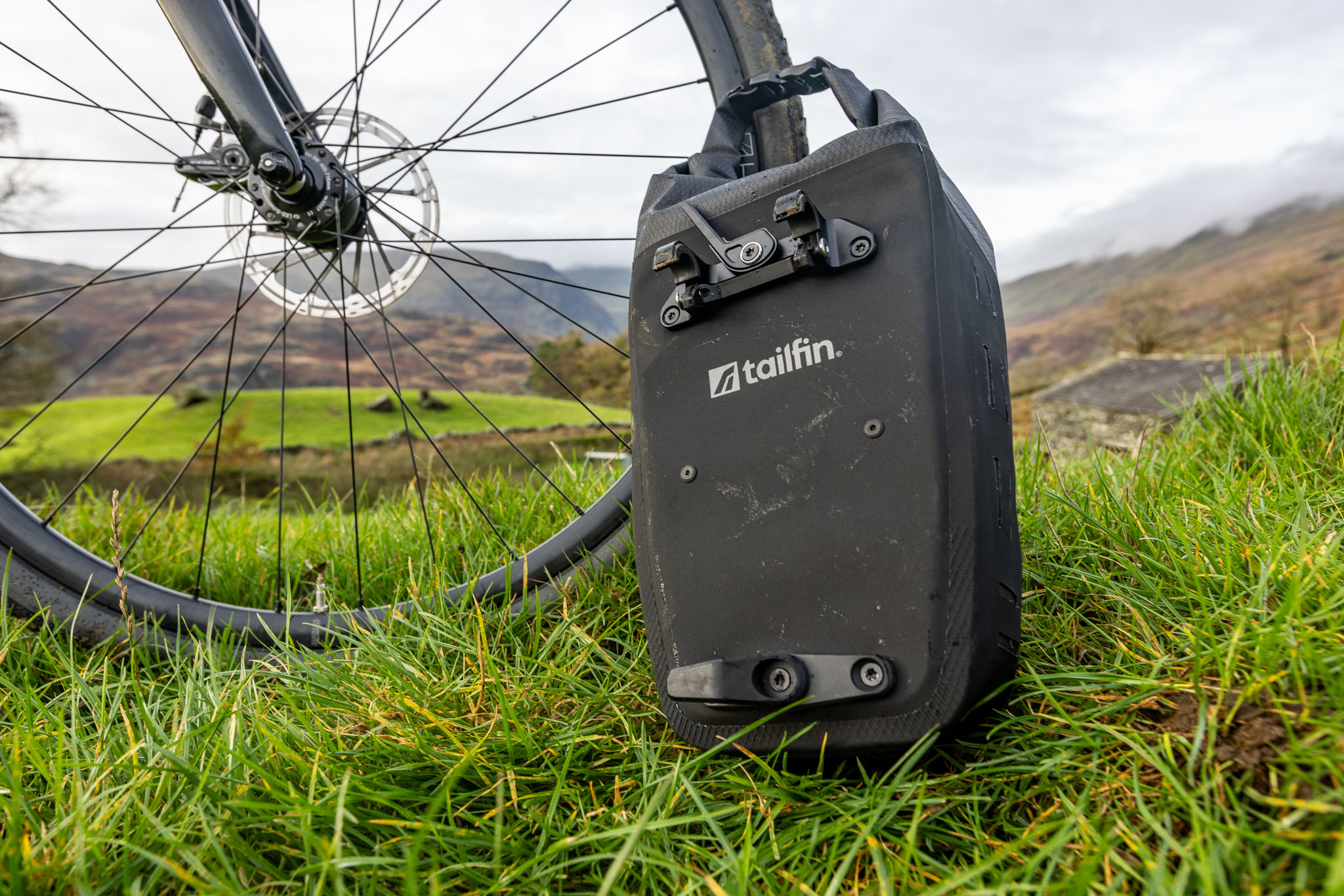
For me, this is one of the strongest arguments for the Tailfin approach. It’s not just about carrying your kit securely; it’s about making the entire bikepacking experience easier.
Modularity
One of the initial challenges with Tailfin is simply working out what you need. The range of bags, mounting options and configurations can seem overwhelming at first, particularly if you’re accustomed to buying a couple of bags and attaching them directly to your bike.
The fitting instructions also take a little time to navigate, and there’s more to getting everything set up than simply strapping a few bags into place. However, spend a little time working through the process and that initial complexity starts to make total sense.
Rather than offering a one-size-fits-all solution, Tailfin allows you to tailor the system to your individual bike, frame size and style of riding. The frame bag is a good example of this attention to detail. Its straps have several different positioning options, allowing you to adjust their location to suit your frame and accommodate other luggage. If, like me, you’re running a top-tube bag alongside the frame bag, being able to reposition the straps means the two can coexist without their mounting points clashing or compromising the fit. It’s a relatively small detail, but one that demonstrates the thought that’s gone into making the system work across different bike configurations.
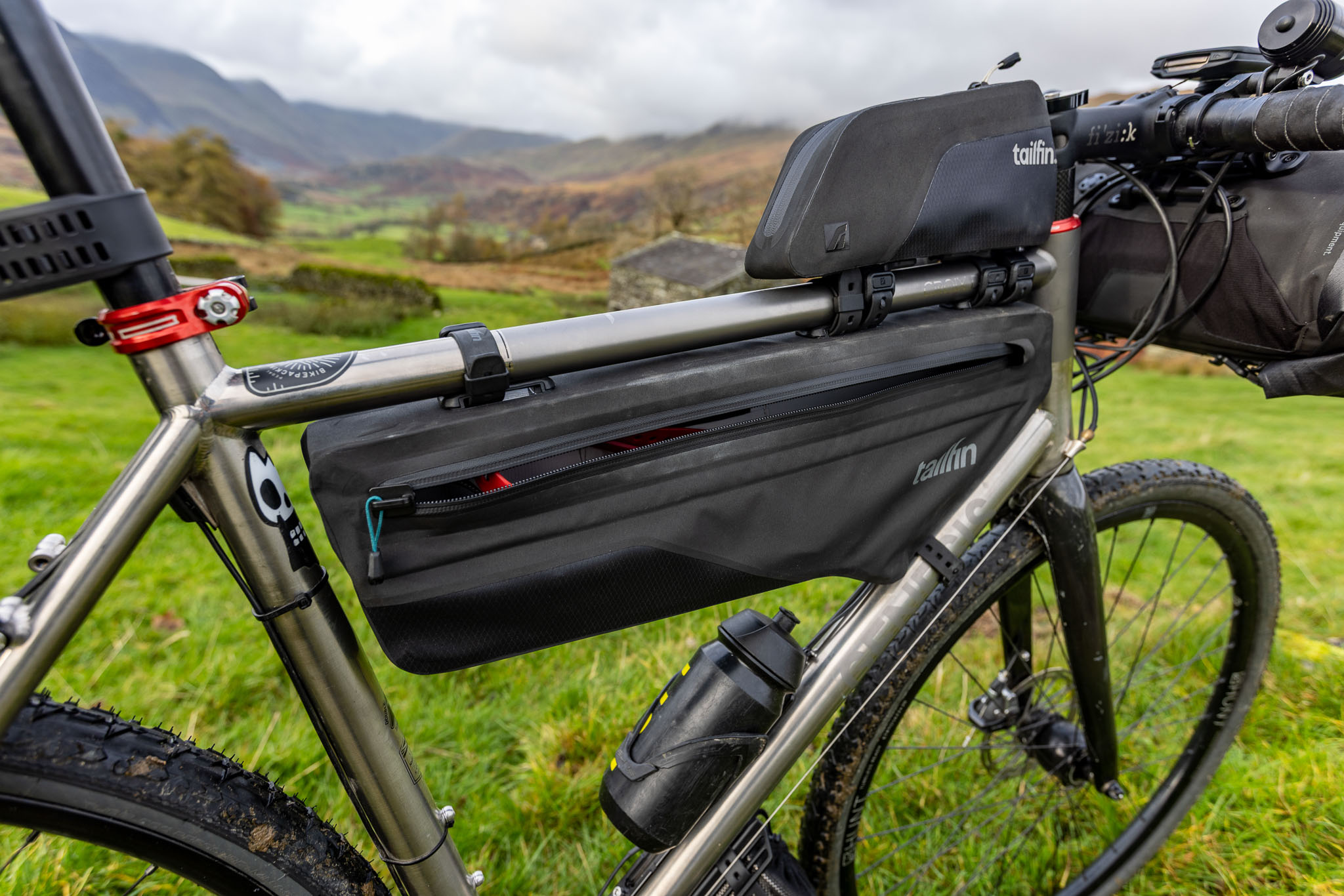
Whether you’re looking for a more traditional bikepacking setup or prefer the practicality of a rack and panniers, there’s considerable flexibility in how you configure things here. And once you’ve worked out how everything fits together, installation becomes surprisingly straightforward, and the modular approach gradually proves to be one of the system’s most valuable features.
Verdict
Tailfin isn’t necessarily the simplest or cheapest way to get luggage onto a bike, and the initial process of choosing components and working through the fitting instructions requires a little patience. But these are relatively small compromises when you consider what the system delivers.
The waterproofing inspires genuine confidence, the build quality is excellent and the engineering behind the mounting system is very impressive and effective out on the trails. I’ve found the rear rack exceptionally sturdy too, while the quick and positive attachment mechanisms make getting bags on and off the bike refreshingly straightforward.
Ultimately, what I appreciate most about Tailfin is that it feels like a system designed around the realities of bikepacking, rather than simply a collection of bags designed to carry your belongings. The small conveniences, particularly when packing up each morning, make a noticeable difference over the course of a multi-day trip.
You might carry a little more weight than with a minimalist strap-based setup, and you’ll need to invest some time getting everything configured. But once it’s all in place, in my experience, it works without fault.
For riders who value dependable waterproofing, secure mounting and a luggage system that makes life on the trail less of a chore, then take a serious look at Tailfin. There’s a configuration to suit all bike designs and I haven’t come across anything better yet.
Tailfin Bikepacking System
★★★★★
