We’ve long been fans of Keen’s Targhee range, particularly their Targhee IV boot which has held its place on our ‘best walking boots’ round-up for a number of years now.
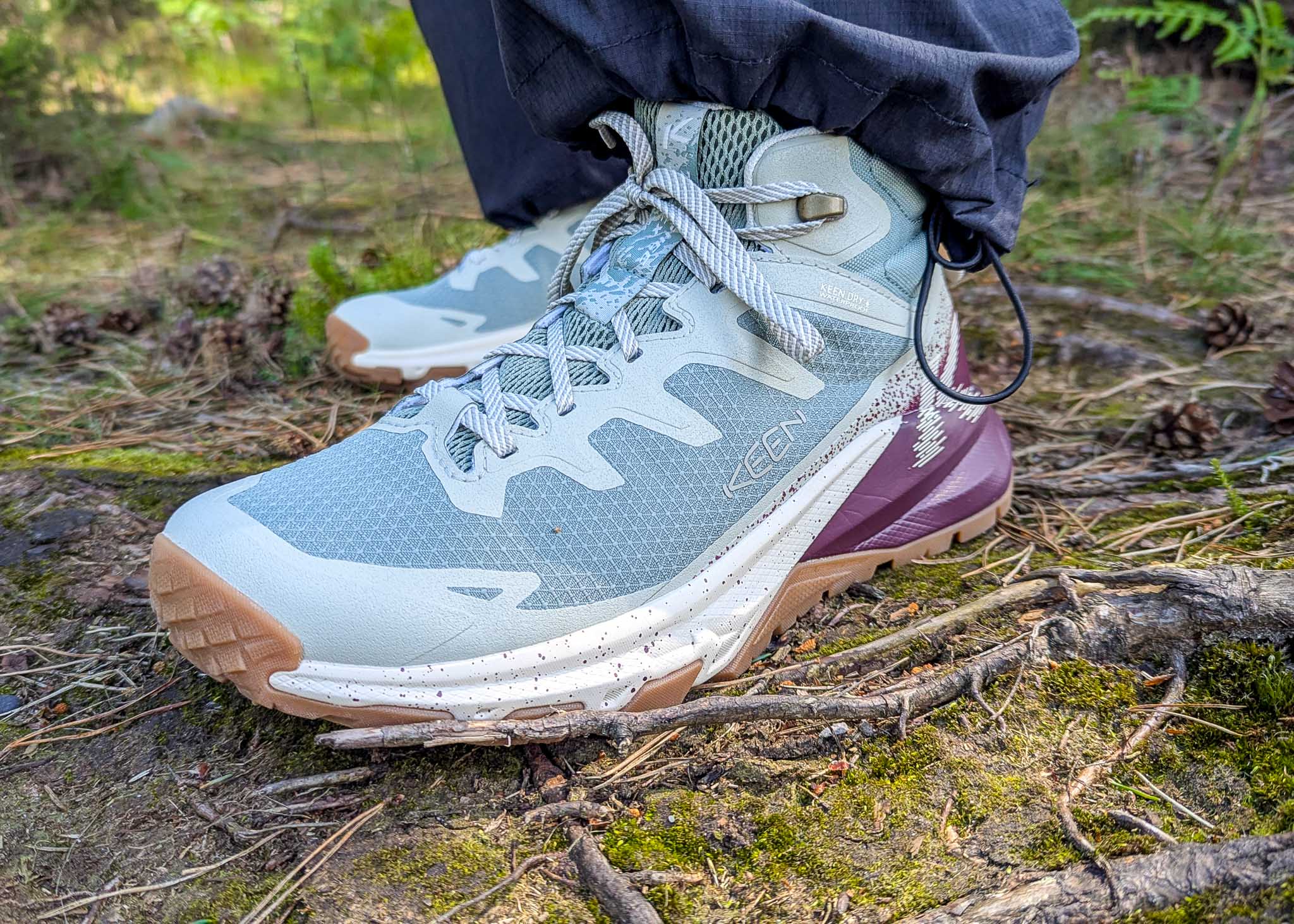
This, however, is the Targhee Apex, Keen’s latest evolution of the popular model, offering the same dependable performance in a lighter and more agile package.
I’ve been out testing it, most recently in the North Pennines along sections of the Pennine Bridleway and the Teesdale Way, as well as further south in the Yorkshire Dales. Here’s how I got on.
Keen Targhee Apex Key Details
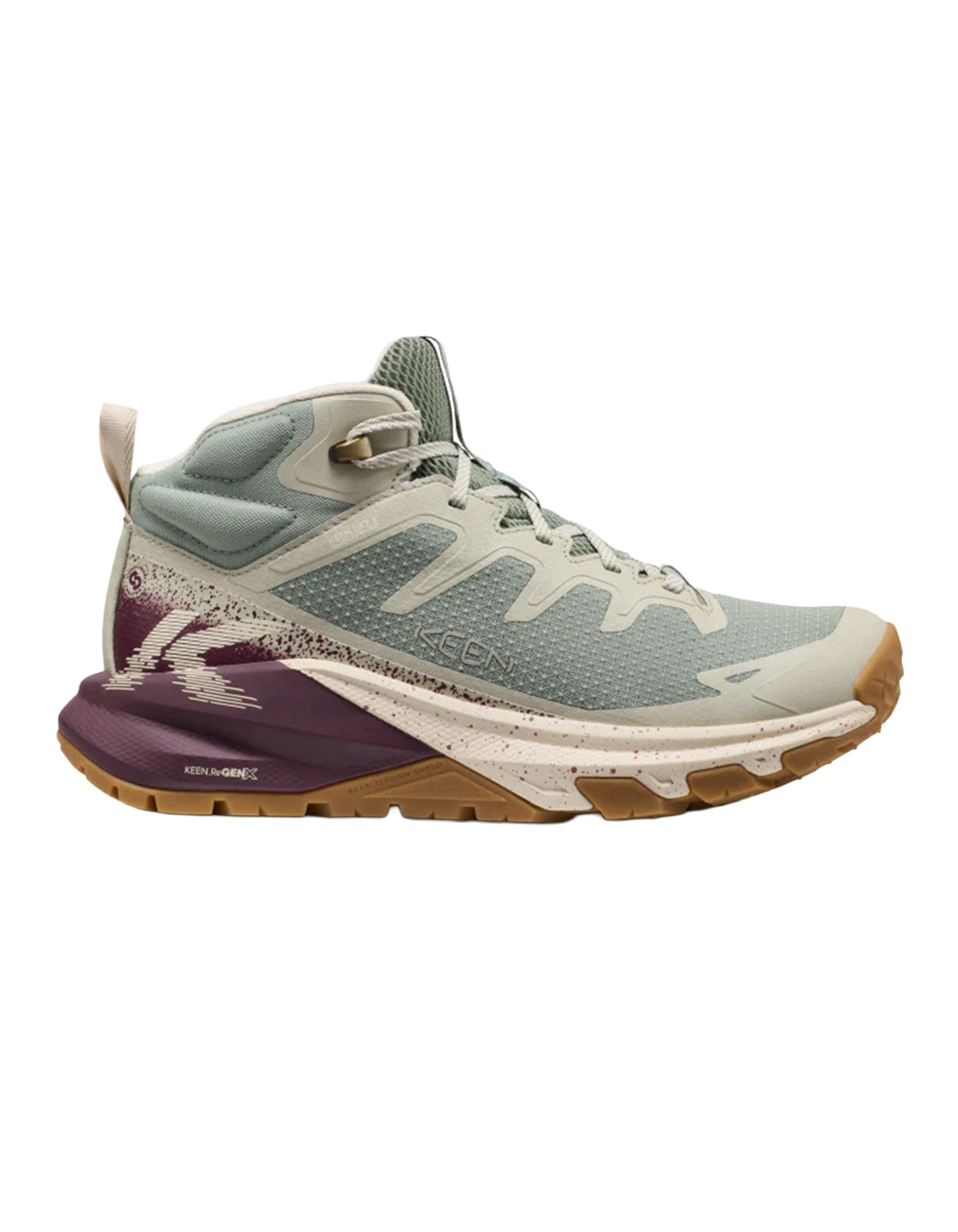
Keen Targhee Apex Mid WP
★★★½
Price: £150
Weight: 315g per boot (women’s UK size 5.5)
Pros: lightweight, agile, comfortable out of the box and on the trail, good traction, pretty stable feeling, good city to trail option
Cons: trade-offs in durability, not the most protective upper, mid cut and gusset too low for some boggy and muddy terrain
Comfort: 4/5
Stability: 3.5/5
Durability: 3/5
Traction: 4/5
Overall rating: 4/5
The Keen Targhee Apex features Keen’s signature wide-toe box along with a contoured arch, a removable foam insole, and an abrasion-resistant mesh upper with TPU overlays. There’s also a high-rebound foam at the midsole (KEEN.ReGENX), a high-traction outsole with a multi-directional lug pattern, along with Keen’s ‘TERRAIN SHIELD’ wrap for lateral stability.
The shoe uses Keen’s in-house waterproof-breathable membrane as well as a PFAS-free DWR. A pesticide-free anti-odour treatment has also been used which is made from naturally occurring microbes rather than harsh chemicals or biocides.
Comfort and Fit
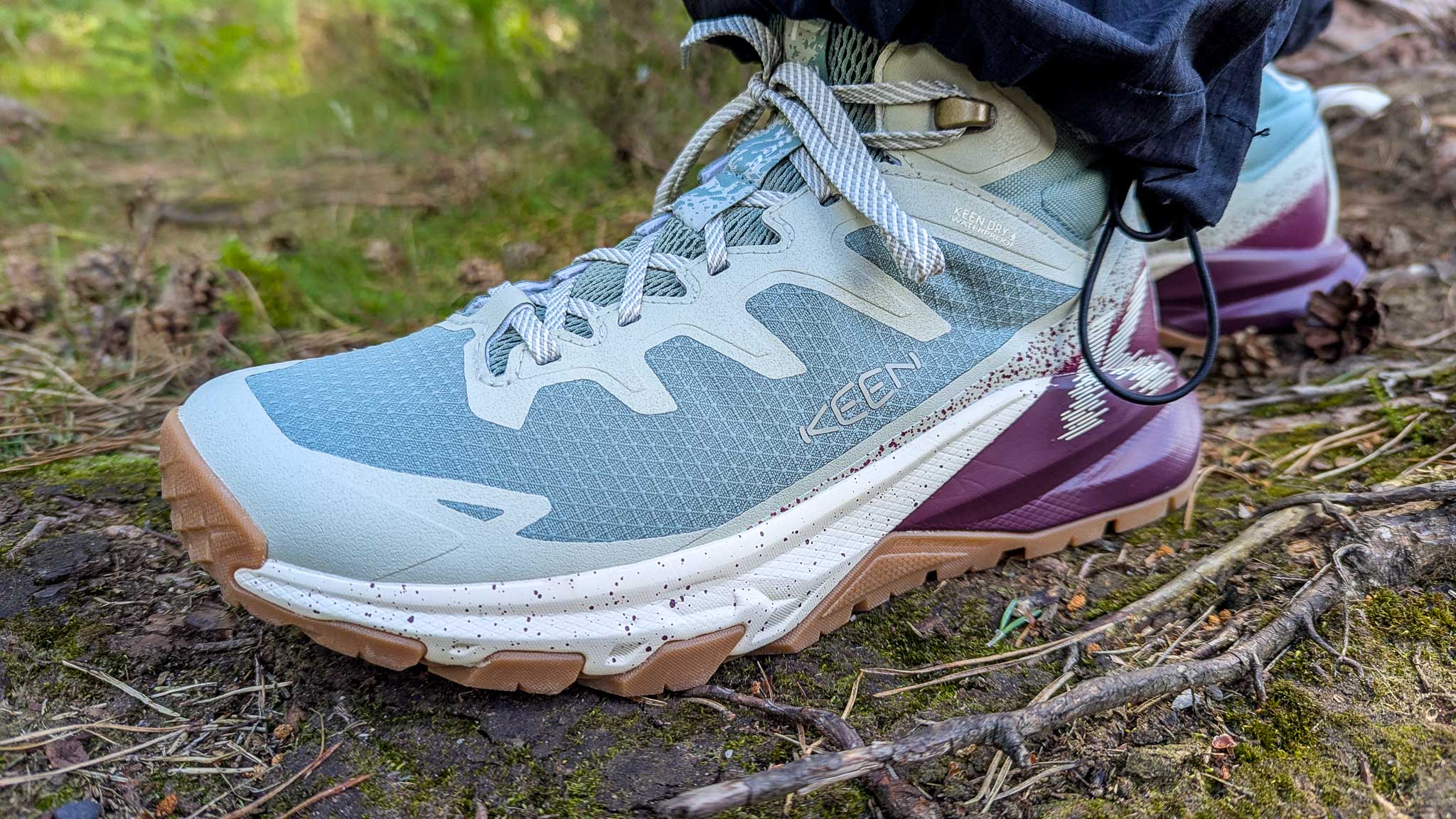
I’m yet to try a Keen shoe that isn’t comfy straight out the box and the Targhee Apex follows suit. While the insole offers relatively minimal support, the bouncy midsole combined with the cushioned cuff and spongey tongue more than makes up for it comfort-wise. It feels like a treat from the get-go. I also appreciate that the insole is removable so you can replace it once it’s worn out.
While I personally prefer something stiffer and more protective for multi-day backpacking trips, I’ve found the Apex’s level of cushioning ideal for big day hikes as well as fast hiking trips. I can also see it working really well as an everyday walking boot too, when you still need something grippy and reliable, but don’t need to go overkill with a trekking boot.
The overall fit is similarly comfortable thanks to Keen’s signature wide toe box. I have quite narrow feet so, admittedly, I was a little unsure at first if it would be too wide for me. However, I tried them in a UK size 5.5 – my usual size – and the fit was spot on.
Grip and Trail Performance
The grip here is impressive. Much like the Targhee IV, the traction is great for groomed trails as well as light rocky sections and moderately muddy bits. For anything ultra-rocky, properly boggy, or more technical, I’d look elsewhere. However, for stuff like packed earth, waymarked trails, forest paths, bridleways and coastal paths, I’ve had no issues so far.
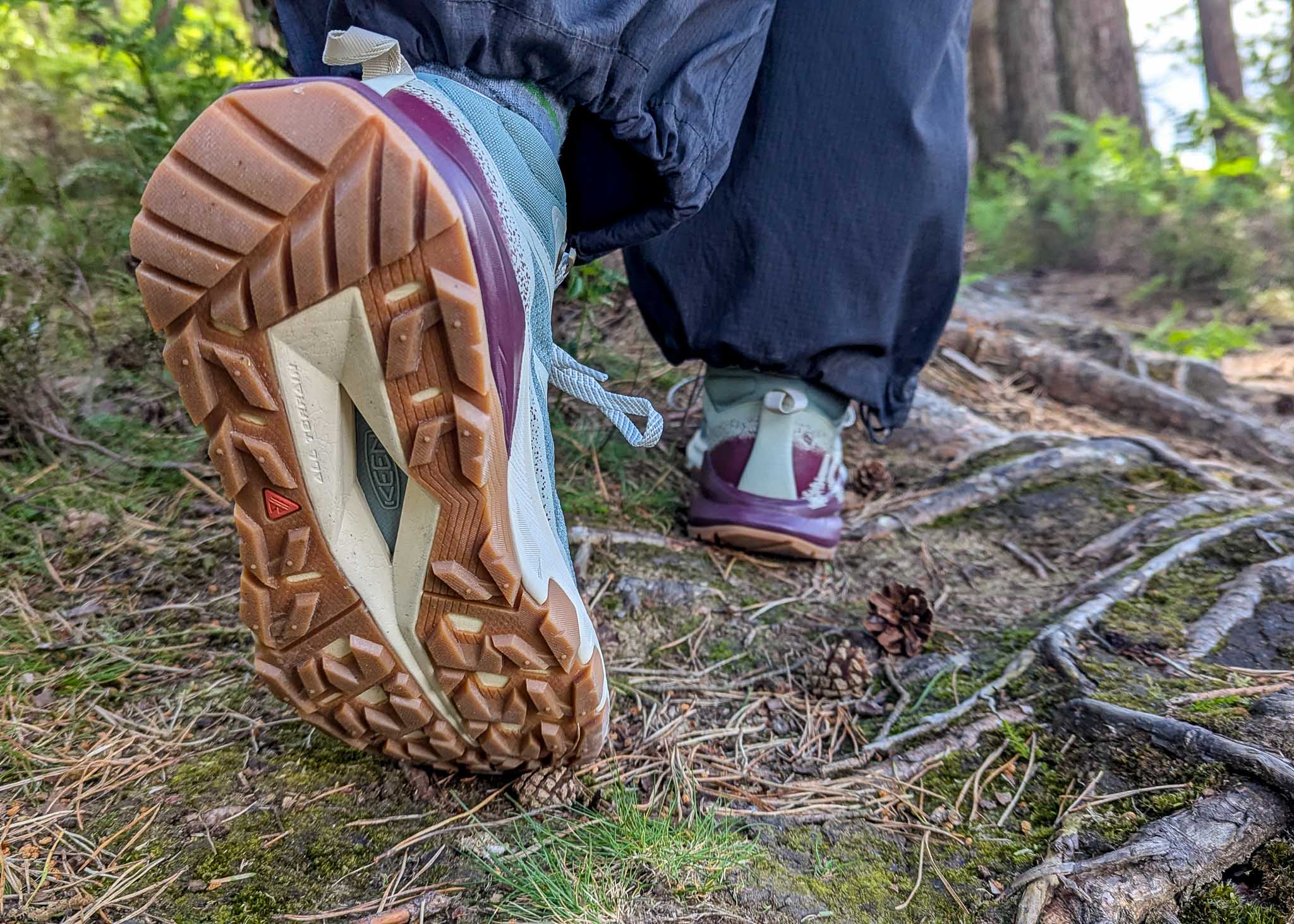
I recently used the Targhee Apex boots along some sections of the Teesdale Way where I walked through a mixture of bridleways, moorlands, permissive farmland paths and river paths. Overall, Keen’s ‘ALL-TERRAIN’ outsole handled each type of terrain very well. There were a few very muddy sections by the Tees where I would have appreciated some deeper lugs, however, the performance elsewhere was impressive.
The lug pattern in particular felt well designed and performed reliably on both uphill and downhill sections thanks to the multidirectional build. There’s a diamond shaped cut-out in the midfoot that occasionally fills with mud, however, I personally haven’t found this to affect my grip.
The rubber compound felt sticky enough for some light rocky sections too, though, like most non-technical boots, it does have its limitations on wet rock.
Stability
Though lightweight in design, I was actually pleasantly surprised by the stability of the Targhee Apex boot. While you won’t get the same levels as a technical hiker, I’d say Keen has nailed the sweet spot between stability and weight here.
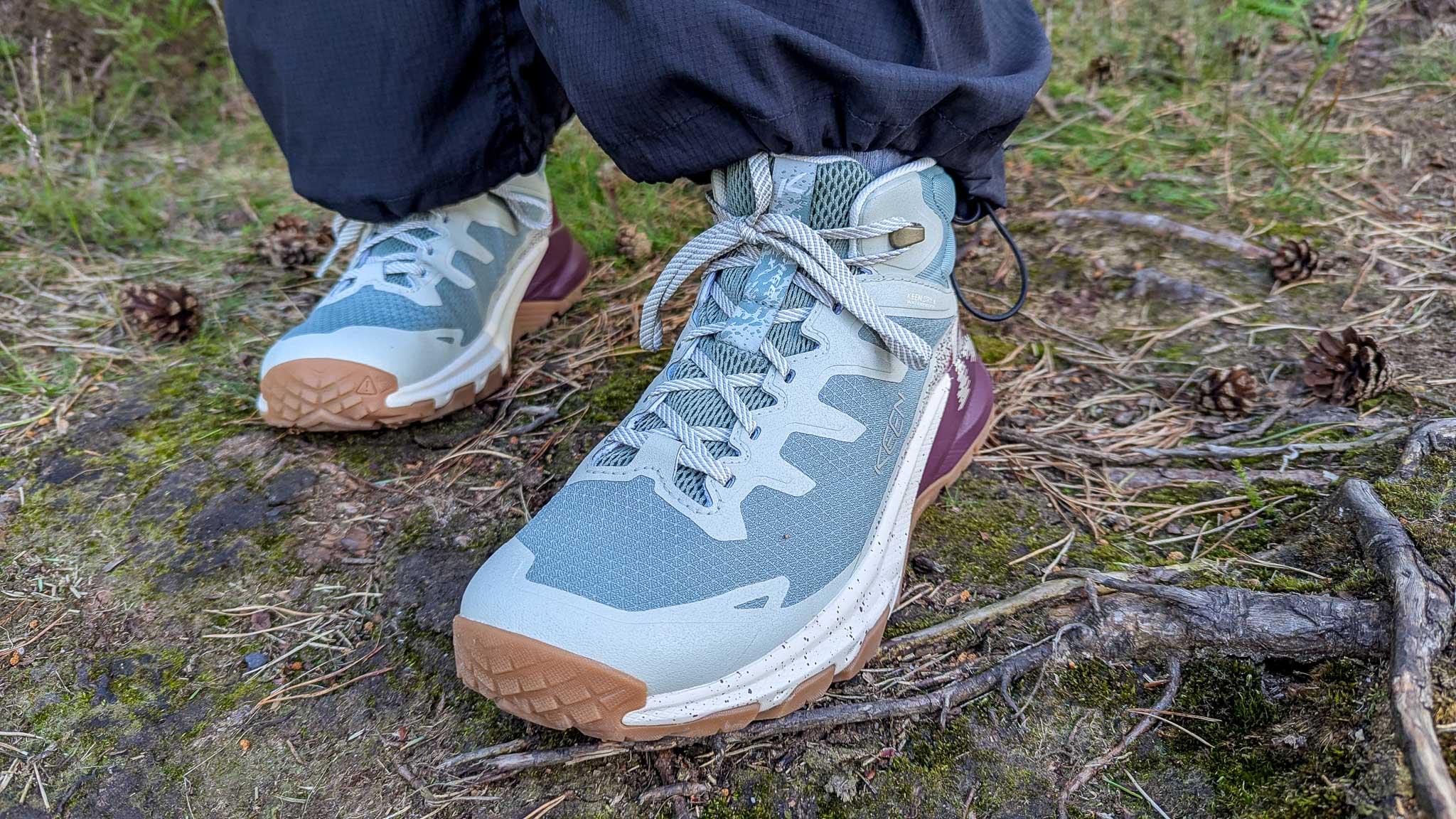
The design is mid cut and, during my tests, the cuff held very comfortably around my ankle. The lacing system is secure (I didn’t have to stop and re-tighten my boots at all) and locks the cuff in nicely. Elsewhere, the boot uses a wrap above the midsole that adds a layer of protection to the boot and limits your foot’s lateral movement on the trail.
The midsole also benefits from a shank that helps limit side-to-side movement on uneven terrain. When hiking across uneven sections in the North Pennines, including lots of rooty forest sections, I’d say this rings true. I felt very secure each step of the way.
Rigidity
This is not a rigid hiking boot. It’s a fast and light hiker that feels more aligned with a flexible trail running shoe, but with added protective elements for long hiking days, and a less aggressive tread than a runner.
The upper is soft and flexible from the get-go which means the boot requires next to no breaking in time. Underfoot, there’s also some flex, though, as I mentioned before, there’s a built-in nylon shank for moderate protection from lumps and bumps on the trail.
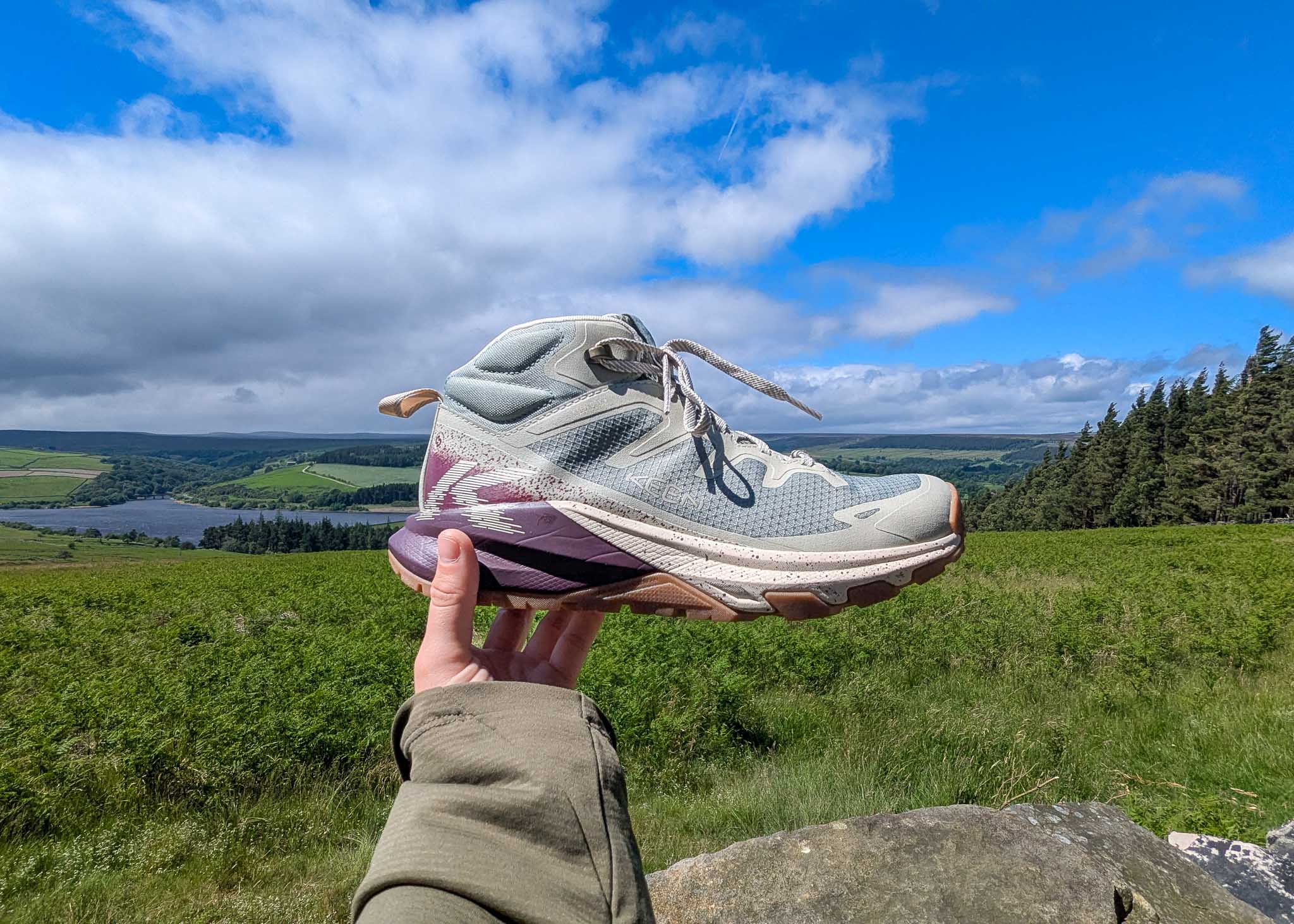
This lightweight construction, responsive midsole, and flexible upper allow the boot to move very naturally with the foot, making it well suited to fast-paced day hikes and more casual trail conditions too.
During my tests so far, I’ve found this balance of flexibility and support good enough to prevent too much foot fatigue, though hikers carrying heavy loads may find it lacks the firm platform and stiffness needed for multi-day trips. The priority here is agility and comfort over the stiff, structured feel of a backpacking boot.
Waterproofing and Breathability
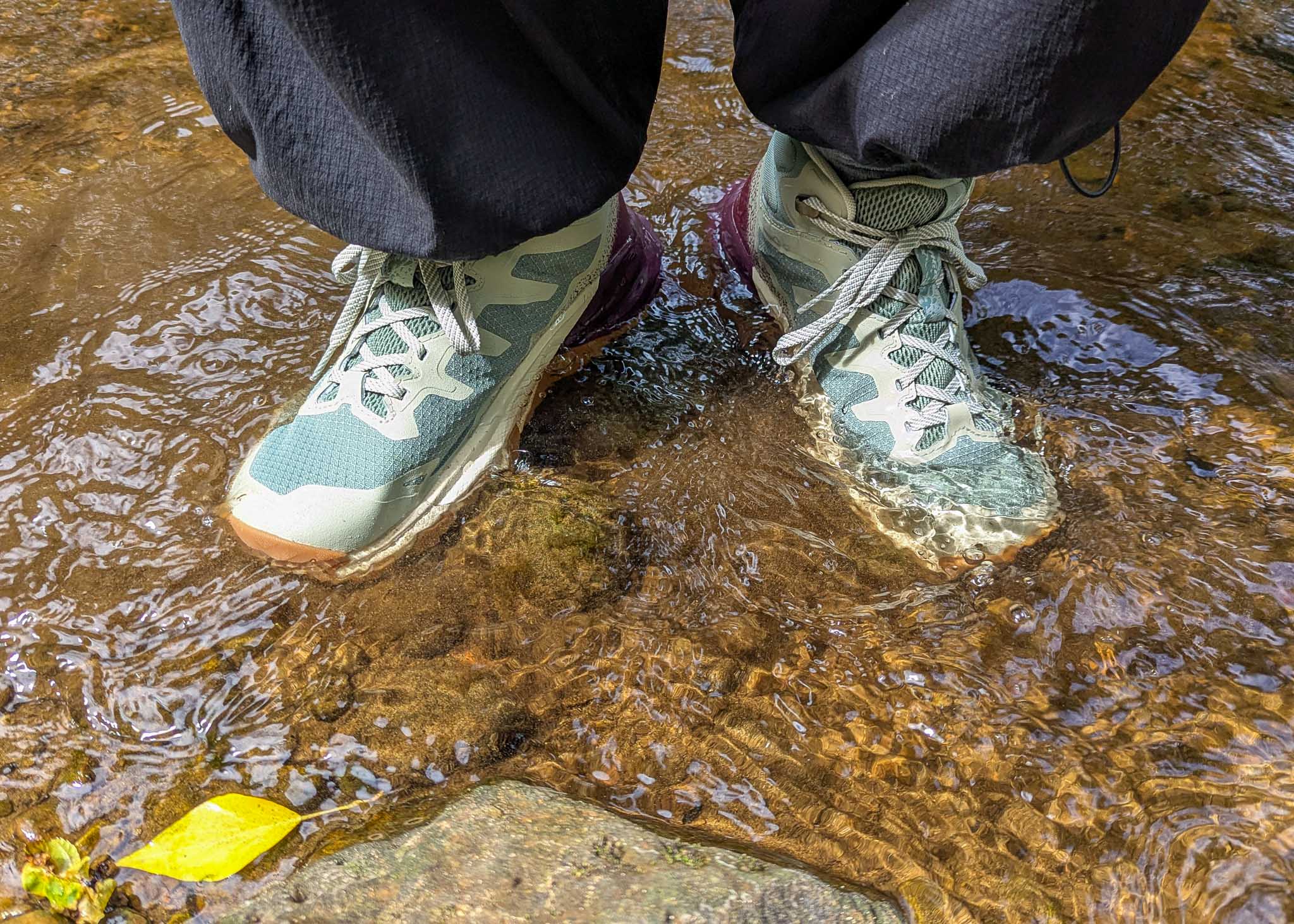
Keen uses their own proprietary waterproof-breathable here, along with a PFC-free DWR. On test, I’ve had no problems whatsoever with the waterproofing.
Breathability-wise, I’ve been impressed. The upper feels relatively thin and my feet haven’t felt overly hot when on-the-move. It feels as though warmth and moisture are able to pass through quite quickly. The downside of this is that you’ll get less protection compared to thick upper, however, that’s generally the trade-off for having a lightweight, faster moving boot.
Durability
I’ve not yet put enough miles in this boot to comment too much on the durability, however, the abrasion-resistant upper has handled my tests well so far. The upper is also seamless which is promising in terms of either ripping or exposing the stitching, something I seem to be suspiciously good at doing…
The rubber toe-cap and the ‘TERRAIN-SHIELD’ wrap that extends above the midsole are likewise promising, though there are always limits when it comes to non-leather boots. You won’t get the same level of durability as the Targhee IV, for example, which uses a nubuck leather upper. However, that’s the trade-off for using synthetic materials that lower the overall weight of the shoe.
I’ll come back and update this review as I put in more miles of testing over the next few months.
How It Compares
In terms of weight, cushioning and breathability, the Targhee Apex feels quite similar to Merrell’s Moab boots or the Salomon X Ultra Mid Boots.
If your hikes are mostly three-season trail hikes and moderate hill paths, I’d say the Keen Targhee Apex is one of the stronger options, especially if breathability is a priority for you. However, for more rocky use and precision, the Salomon X Ultra Mid might suit better. For all out value and if you like a touch extra stiffness underfoot, I’d opt for Merrell. It’s definitely worth trying a variety of these types of light hikers on in the shop though as much will come down to personal preference.
If you want something a little heavier but more protective and durable – something for more uneven or boggy terrain, or for wearing with a heavy pack – I’d go for something like the Lowa Renegades or the Asolo Falcons (both of which you’ll find here).
However, if you’re drawn more to the cushioning, it’s also worth checking out the Hoka Anacapa or the Adidas Terrex Free Hiker, both of which offer even more of a foamy feel underfoot. They’re a little less durable though.
Should You Buy the Keen Targhee Apex?
All in all, I think this is a very capable light hiking boot. For three-season use for activities such as day hiking, fast hiking and everyday use, I think this is a solid option to go for. Thanks to the lightweight design and the comfort factor, I can see this being an appealing option for many beginner to intermediate hikers here in the UK and beyond.
Keen Targhee Apex Mid WP
★★★½
If, however, you’re looking for anything technical or if you need something for truly boggy terrain or heavy loads, I’d look for something stiffer, higher and more durable. I’ve listed some options above (see: ‘How It Compares’ section), however, if you want something even burlier, check out the Altberg Fremington or the Aku Trekker Lites, for example.
Nevertheless, both the stability and grip of the Targhee Apex boots have impressed me. And while going light isn’t without its drawbacks, I think Keen’s latest offering for the fast and light hiker category is impressive. £150 feels like a very reasonable price for what you get here too – I’d happily consider this a good value option.