Best Power Banks in 2026 | Portable Battery Packs For Charging On The Move
Our favourite portable chargers, battery packs and power banks, all rated and reviewed for every kind of adventure in 2026
Thanks to the ingenuity and portability of the modern power bank, heading into the great outdoors no longer means going off-grid. And being able to keep your devices charged on-the-go has some undeniable benefits. After all, a functioning phone, GPS unit and/ or satellite communicator can be an absolute lifesaver in an outdoor emergency.
Choosing the right power bank, however, isn’t always easy. There’s a lot of shoddy options on the market nowadays – particularly ones that aren’t suited to the unpredictable conditions being outdoors can throw at you. Luckily for you, we’ve tried and tested the best portable power banks for backpacking and hiking in a range of styles, sizes and capacities this year. So whether you’re after a small, lightweight pocket pal or a rugged, heavy-duty hero, there should be something for you here. This group test also includes some solar-powered chargers, as well as power stations for the van lifers among us.
Best Power Banks for 2026 | Our Favourites
Tested and reviewed by the Outdoors Magic gear testing team – here are the category winners for this year so far:
Biolite Charge 20 – Best Power Bank Overall
Goalzero Venture 75 – Our Runner Up for Best Power Bank
Jackery Explorer 1000 V2 – Best Power Station for Van Life
Simond Quick-Charge External Battery – Best Budget Power Bank
Nitecore NB20000 GEN 3 Power Bank – Best Battery Pack for Power
How We Tested The Power Banks
We love gadgets here at Outdoors Magic – from hand warmers and camping stoves to GPS watches and outdoor action cameras – we can’t get enough. They simply make our time in the outdoors that much more fun.
And this year, we’ve decided to put together a list of our favourite power banks for outdoor adventures. Featuring a variety of options suitable for day hiking, backpacking, off-grid van adventures and more – these are our tried and tested favourites at the moment. The first round of testing for this article was conducted by Matt Jones. Further testing has since been conducted by the wider Outdoors Magic gear testing team, including editor Will, editorial assistant Jazz, and OM contributor Jordan.
The majority of our testing is focused on outdoor use such as hiking, trail running, canoeing, and camping, though our testers have also checked how each power bank performs in day-to-day life.
Editor’s note: This article was last updated in February 2026 with all-new products following a winter of testing.
1. Biolite Charge 20 Power Bank
Best power bank overall, following our tests.
Where To Buy
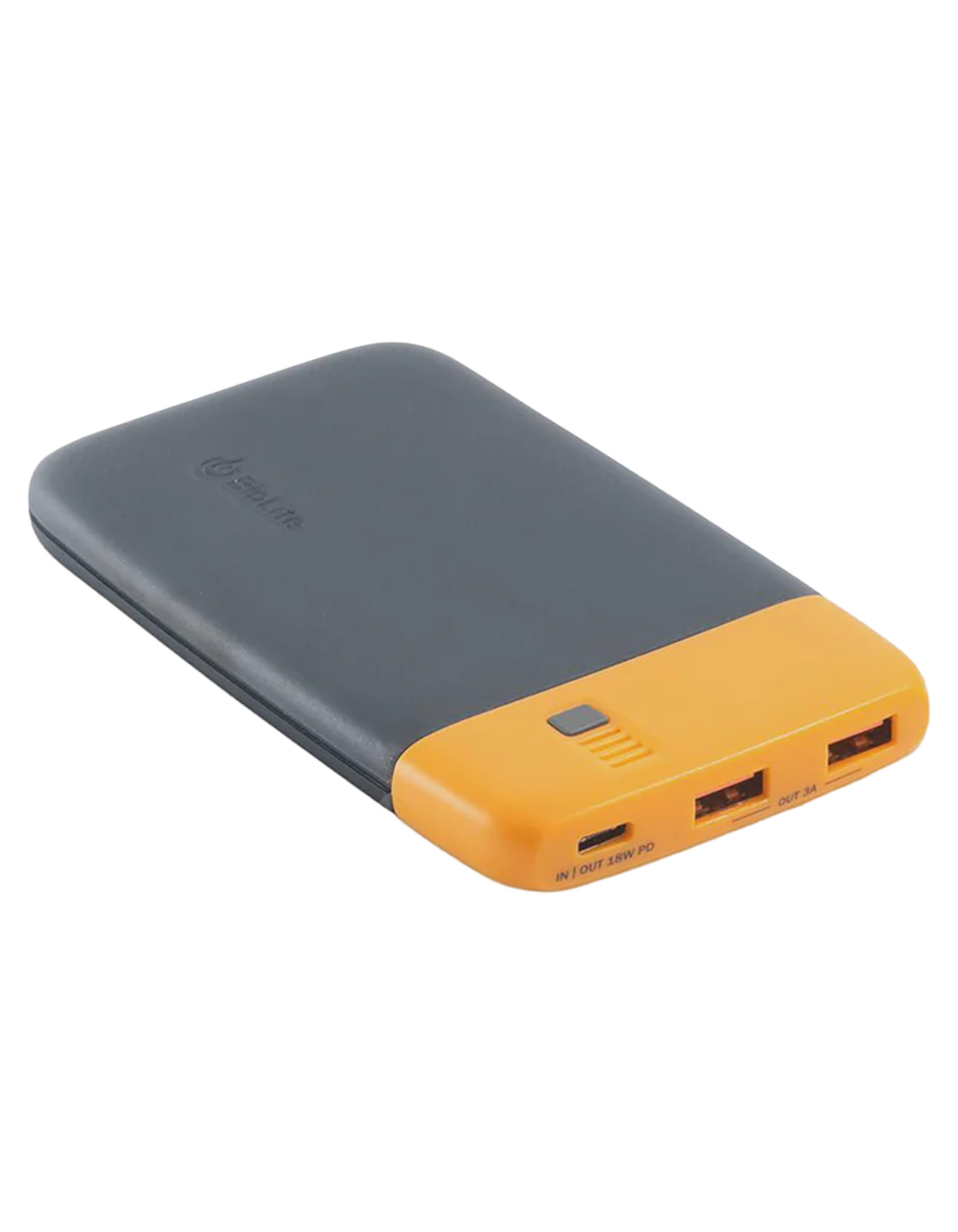
Biolite Charge 20
Our tester’s verdict: “For day hiking and overnight camping trips, this is my go-to power bank. It’s very lightweight and easy-to-use and quite simply does the job.”
Price: £50 (member’s price: £44) Weight: 165g Capacity: 6000mAh Dimensions (L x W x D): 12.8 x 7.5 x 1.4cm Best for: day hiking, overnight camping trips, everyday use
One of the smallest power banks on test, the Biolite Charge 20 weighs under 200g and slides easily into your pocket. It has a 6000mAh capacity – enough for about 1.5 smartphone charges. During our tests, we’ve found it super easy to operate – there’s just a single button that lights up a four-LED indicator telling you how much juice is left. There’s one USB-C PD port (up to 18W) and two USB-A Quick Charge ports. The tough housing is sleek and durable and has an IPX6 rating, offering resistance to rain and spills. It is supplied with its own charging cable and is FAA carry-on compliant (a.k.a. it’s safe to take on aircraft in hand luggage).
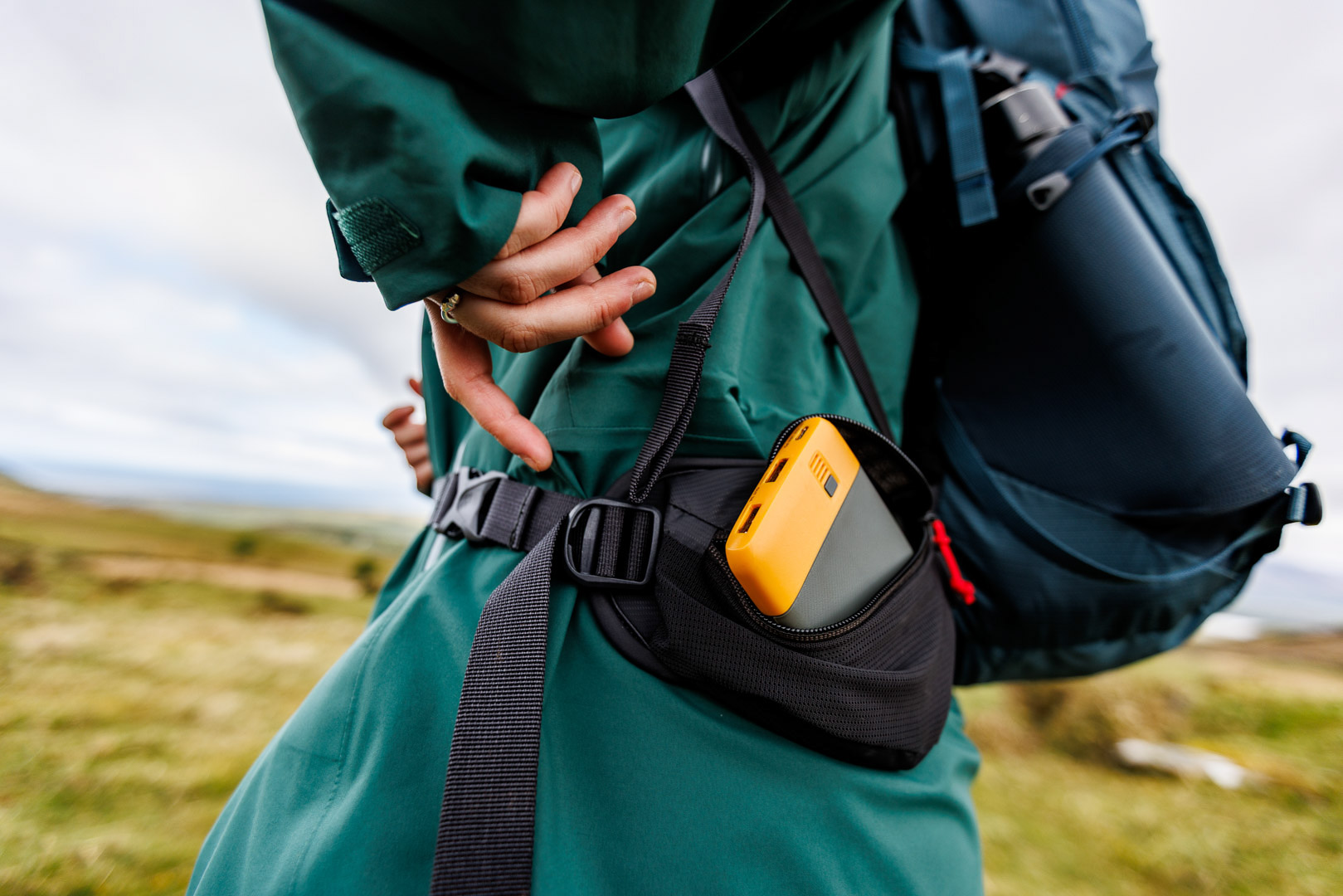
OM tester Jazz is shown here out and about in the mountains of Eryri with the BioLite Charge 20 power bank. Photo: Dave MacFarlane.
OM tester Jazz has been using the BioLite for a number of years now. She reports, “For day hiking and overnight camping trips, this is my go-to power bank. It’s very lightweight and easy-to-use and quite simply does the job. I find it handy for day-to-day use too as it’s pretty small and takes up barely any room in my bag. I wouldn’t use it for anything much longer than an overnighter, but for what it can do, it’s been a handy little addition to my kit.”
Pros: Lightweight, durable, versatile Cons: Limited battery capacity compared to others on the market, no lids protecting the ports
2. Goalzero Venture 75 Power Bank
This power bank came in at a close second during our tests.
Where To Buy
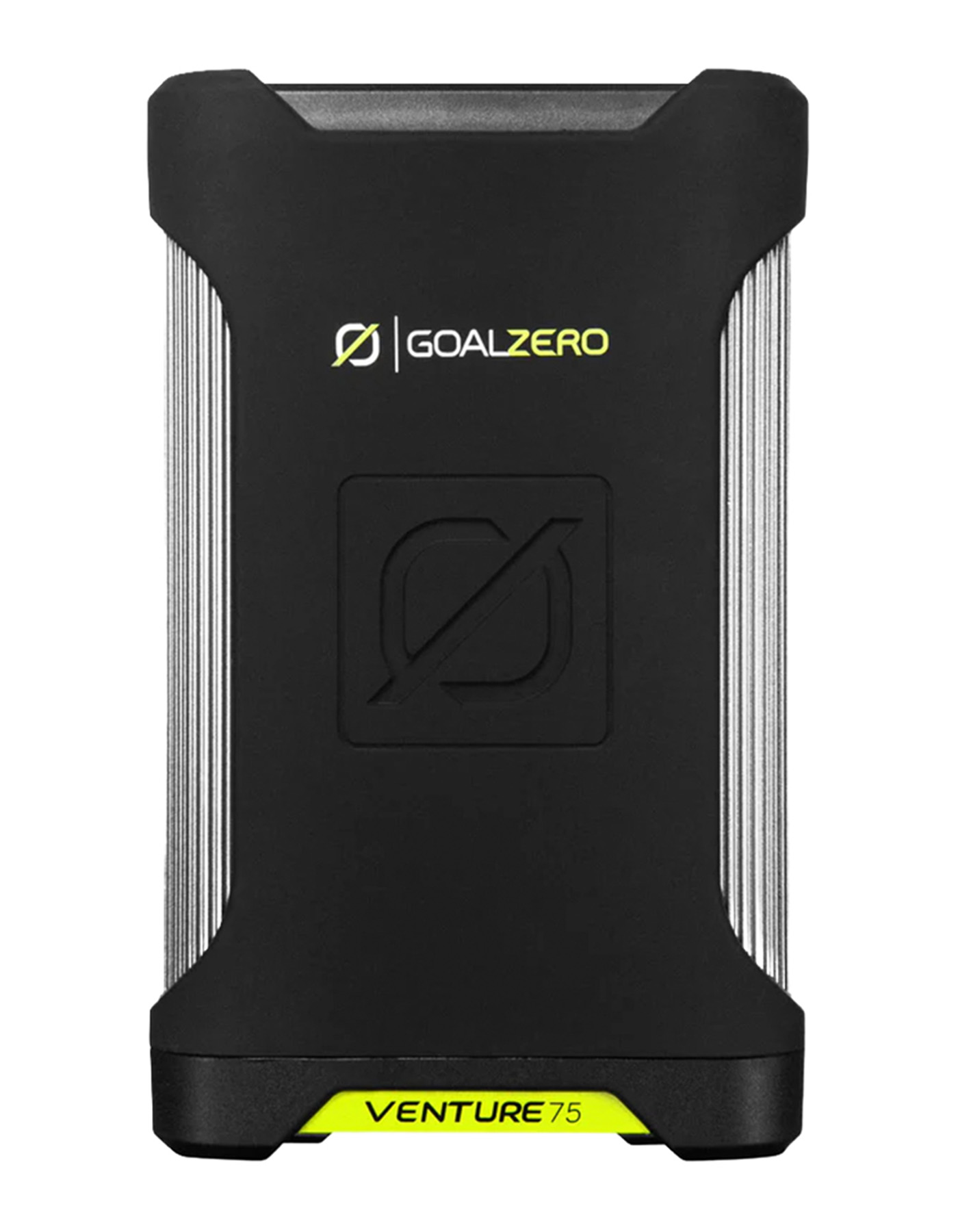
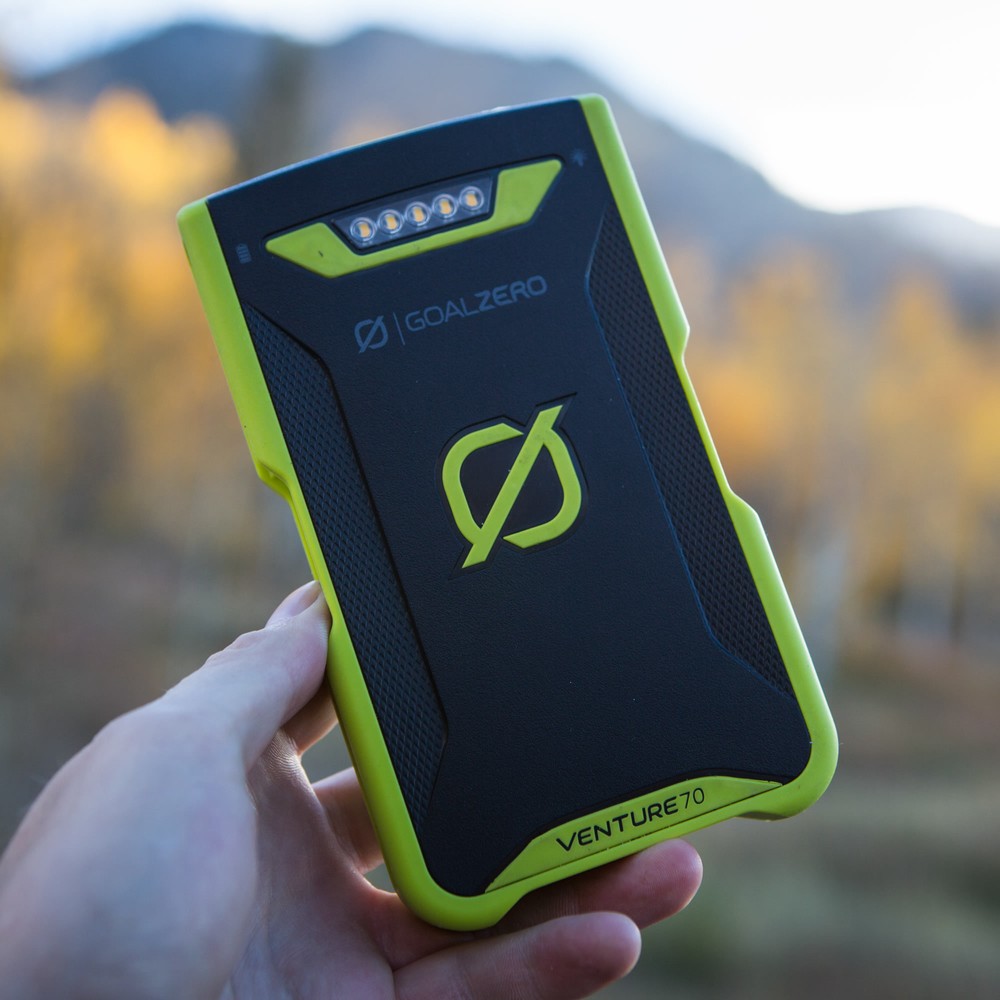
Goalzero Venture 75
Our tester’s verdict: “This is a seriously rugged power bank that I’ve found ideal for multi-day adventures.”
Price: £120 (member’s price: £85) Weight: 577g Capacity: 19200mAh Dimensions(L x W x D): 15.6 x 9.6 x 2.9cm Best for: multi-day hiking trips, trips abroad, backpacking
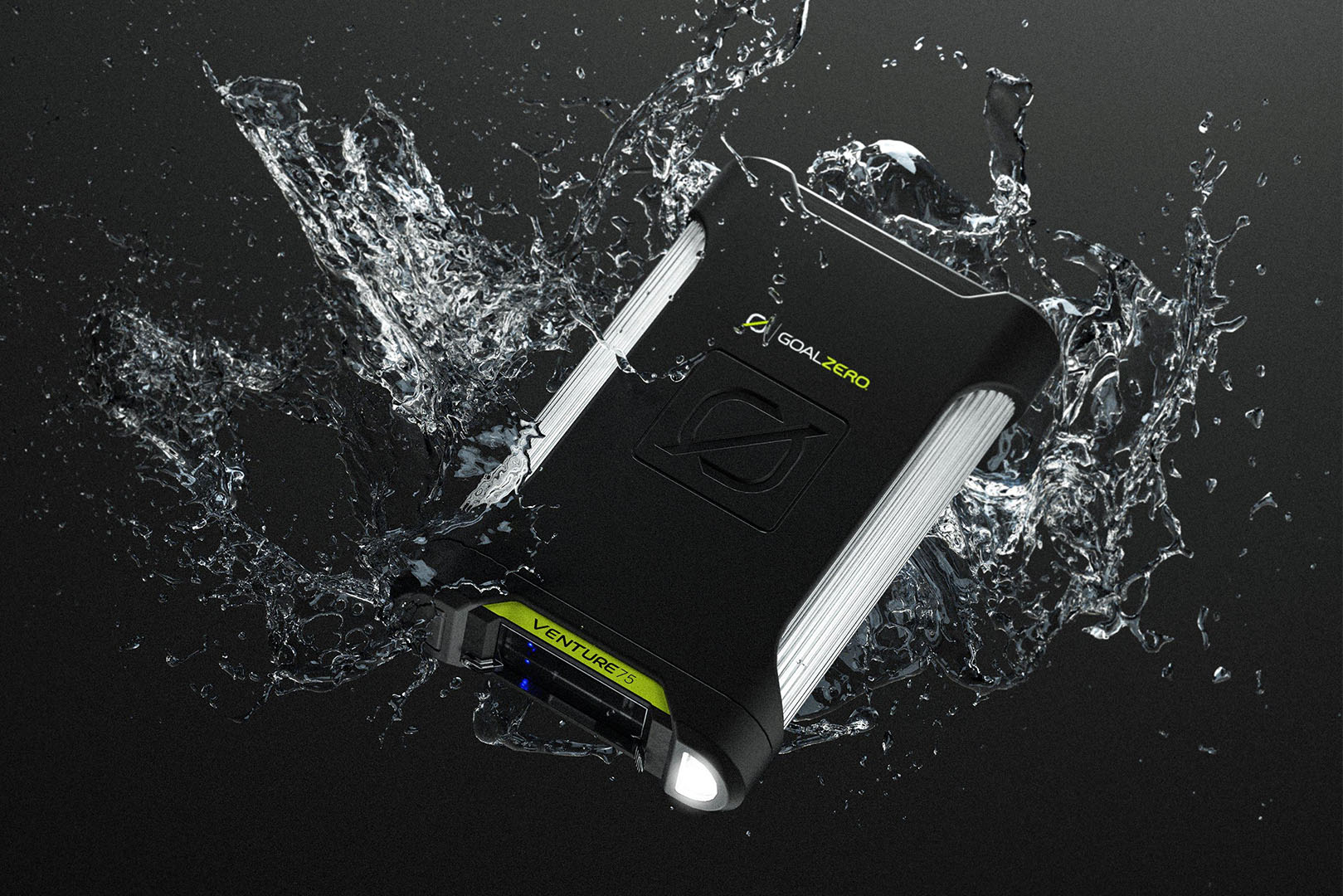
The Goal Zero Venture 75 is a seriously rugged, waterproof power bank with an IP67 rating. It has a generous 19200mAh capacity – enough to charge a smartphone roughly five times. The two high-speed 3A USB outputs (USB-C and USB-A) can charge two devices simultaneously.
Photo: Goalzero
The Venture 75 also has a smart charge feature that can identify different devices. It then applies the fastest charging profile possible, without risk of overheating or overcharging. It also allows pass-through charging. That means you can safely charge devices from the power bank even when it’s plugged into the mains. We also liked the built-in 50-lumen LED torch, which has two brightness settings and three strobe modes, including SOS.
Pros: Packed with useful features and some sophisticated internal tech. The extremely rugged, waterproof housing with integrated cables makes the Venture 75 a very practical option for multi-day outdoor adventures. Cons: It’s a heavy power bank, and it’s also fairly expensive.
3. Jackery Explorer 1000 V2
We’ve chosen this as the best power station on the market – an ideal option for van life.
Where To Buy
Jackery Explorer 1000 V2
Our tester’s verdict: “I’ve been using both the solar panels and the battery for the past two months, and they have both quite simply been a solid bit of kit that you can rely on.”
Price: £900 Weight: 10.8kg Capacity: 1070Wh battery capacity with 1500W output Dimensions(L x W x D): 32.7 x 22.4 x 24.7cm Best for: van life, off grid adventures
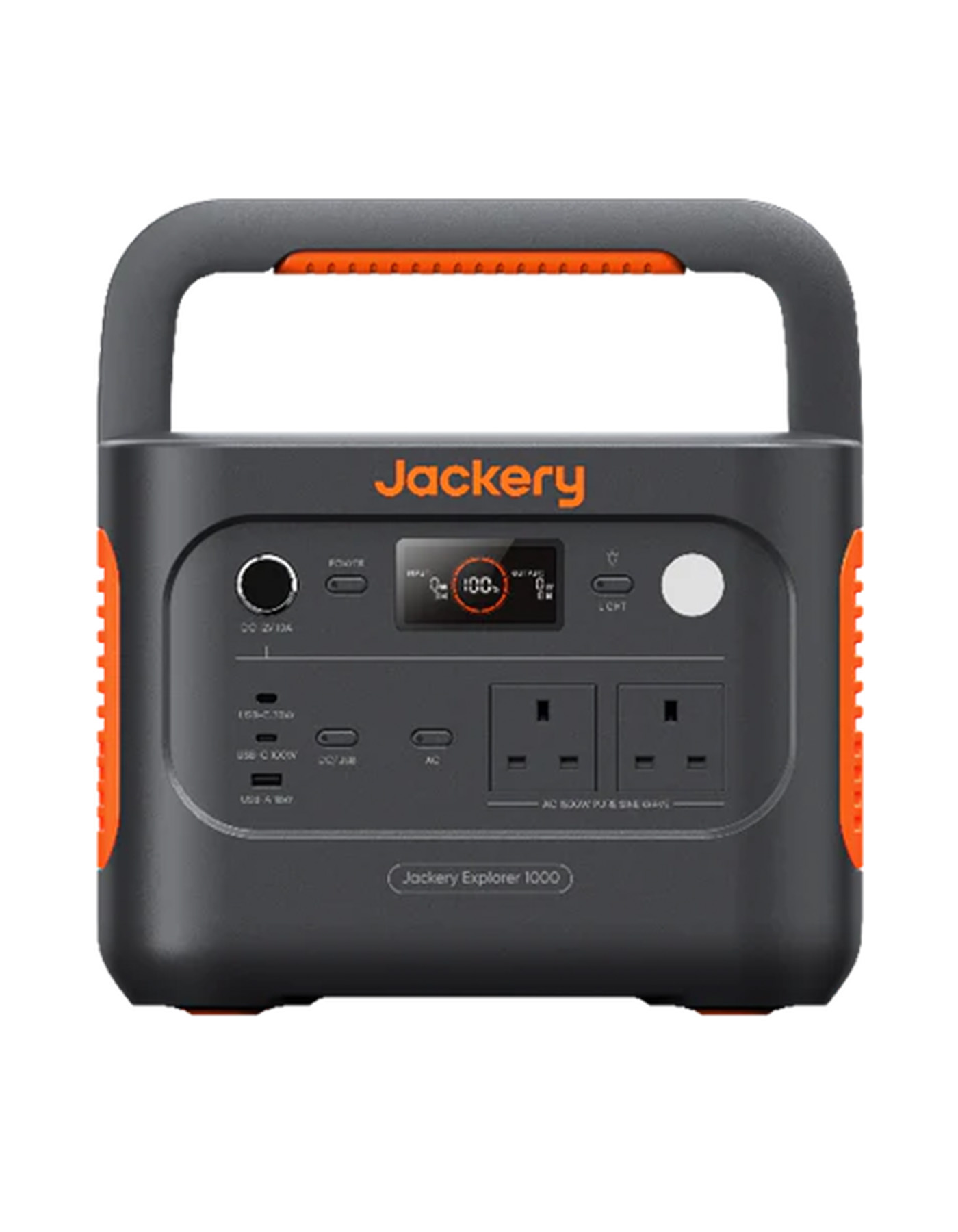
With more and more people looking to get away from mains hook ups, whether that’s for campervan trips or large basecamp setups, there’s no doubting that portable power solutions have come a long way in recent years and one company that seems to be at the forefront of this portable battery development is California-based Jackery. From what we’ve seen, their ‘Explorer’ range of all-in-one solar power stations are able to harness the sun’s energy extremely effectively and efficiently.
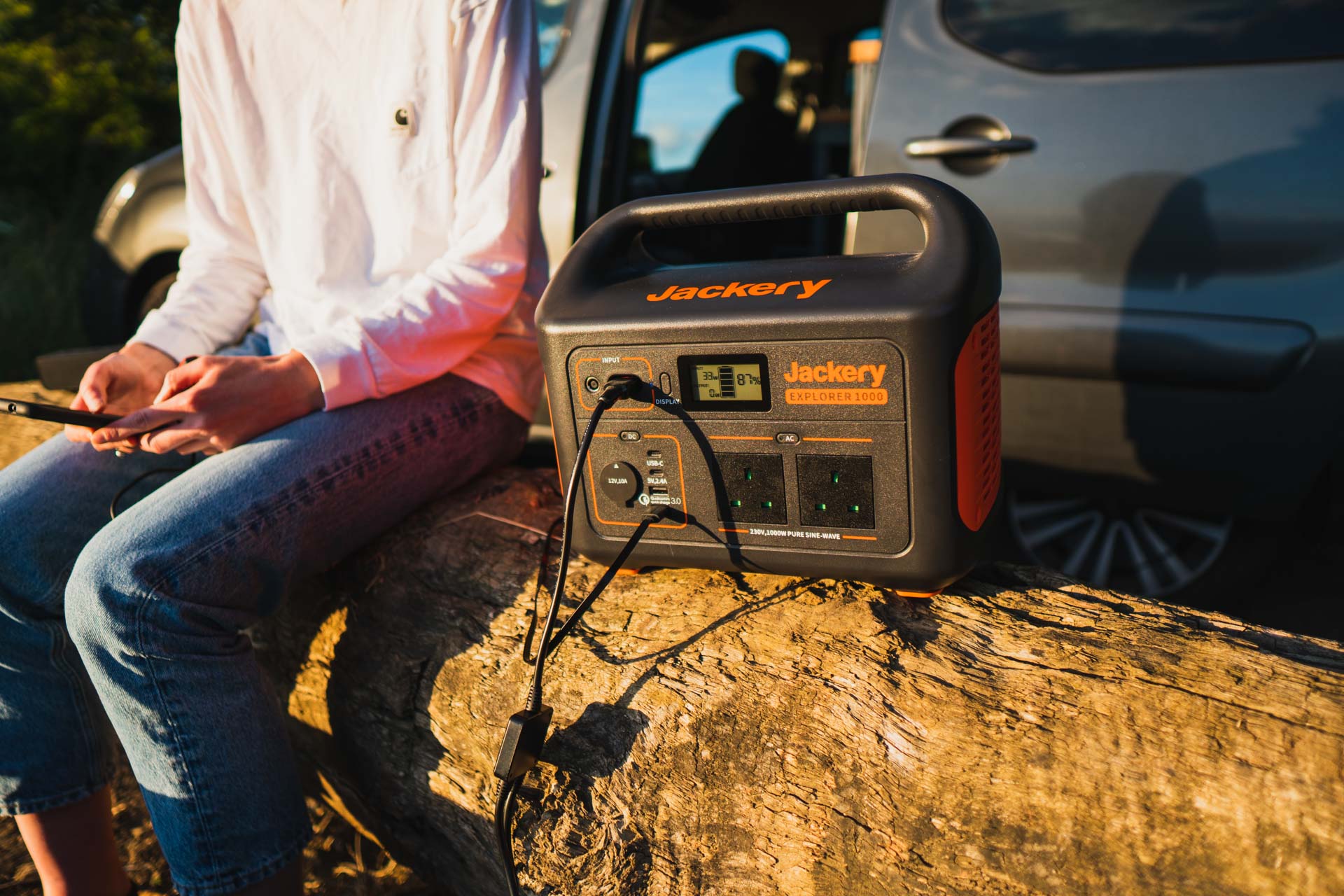
One of our testers Holly is pictured here using the Jackery Solar Generator 1000. Photo: Jordan Tiernan
OM tester Jordan Tiernan has been using the Jackery Explorer 1000 for many years now. He reports: “I’ve been using both the solar panels and the battery for the past two months, and they have both quite simply been a solid bit of kit that you can rely on. Depending on your usage, I’d say the 1070Wh capacity is best suited towards two to three days if you’re looking to go without charging the battery. If you’re looking to go for longer stints in the middle of nowhere, however, then the solar panels (SolarSaga 100W) will be able to provide you with further charging capabilities. Jackery claim the solar panels will kick out 100 watts of power (in direct sunlight, of course), and this is consistent to what I got whenever I checked the input wattage.”
Pros: Great for outdoor adventurers who live out their van and need to charge lots of kit Cons: Expensive, a bit overkill unless you own a campervan/ live off-grid
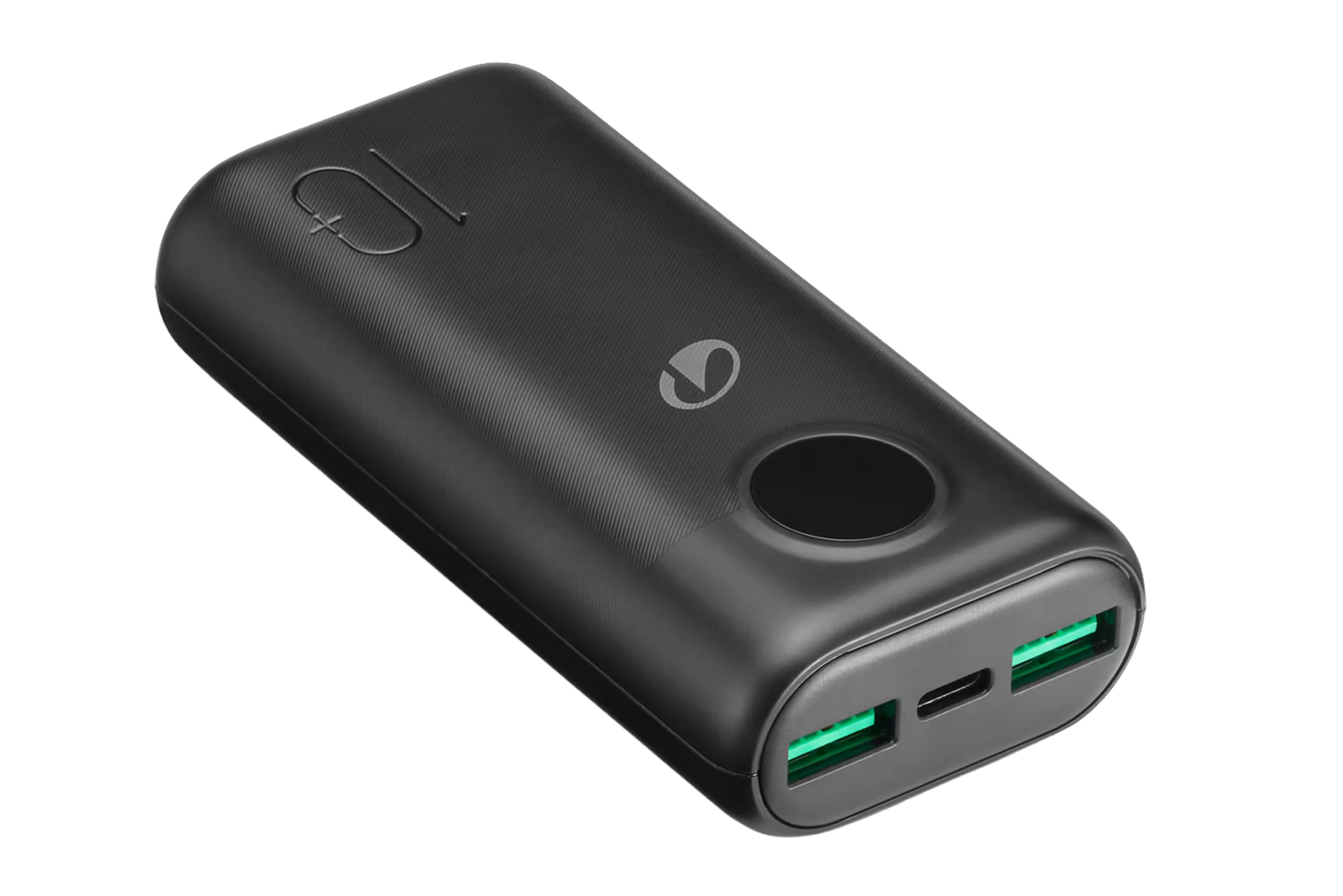
Price: £25 Weight: 175g Capacity: 10000mAh Dimensions(L x W x D): 11 x 6.7 x 1.7cm Best for: portability, day hiking, everyday use, overnight camping trips
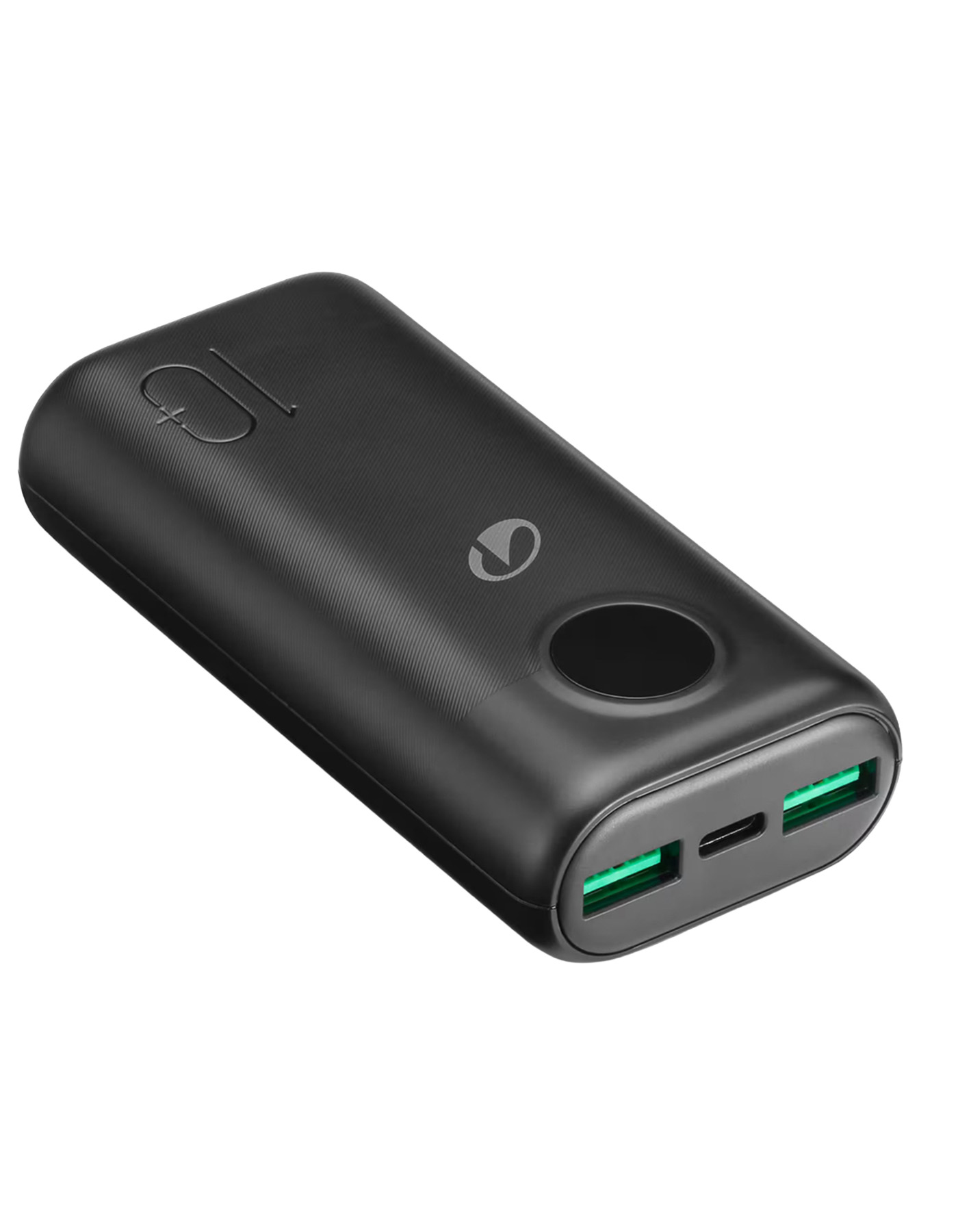
The Simond Quick-Charge External Battery is a lightweight and affordable 10000mAh power bank designed for everyday use and short outdoor trips. It provides sufficient capacity to recharge smartphones at least once fully, while its compact form factor makes it easy to carry in a backpack or walking trouser pocket without adding bulk. The unit features three charging ports – a USB-C port that works as both input and output with fast-charging up to 18W, and two USB-A outputs also rated at 18W – allowing you to charge up to three devices at the same time.
An easy-to-read battery level screen lets you monitor remaining power, and built-in safety features stop charging if there’s an overload to protect your devices. Backed by a 2-year warranty, we reckon this power pack offers a solid balance of performance and value for those on a budget.
Pros: Good value, lightweight, portable, does the job Cons: Not ideal for multi-day use, unsure of durability
5. Nitecore NB20000 GEN 3 Power Bank
This gets our pick as the best battery pack for power.
Where To Buy
Nitecore NB20000 GEN 3
Our tester’s verdict: “This power bank is a bit of a tank and it’s surprisingly compact considering the power it holds.”
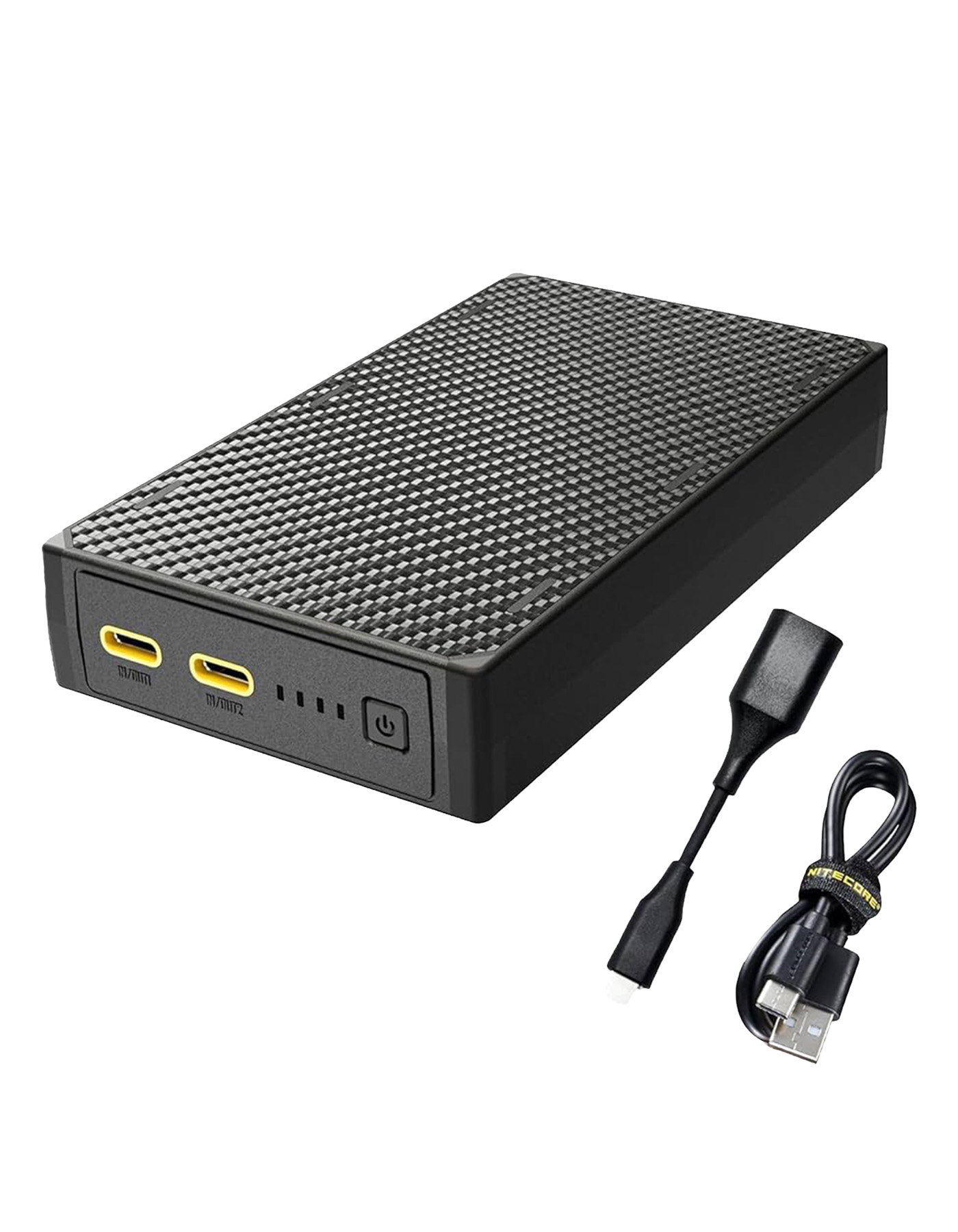
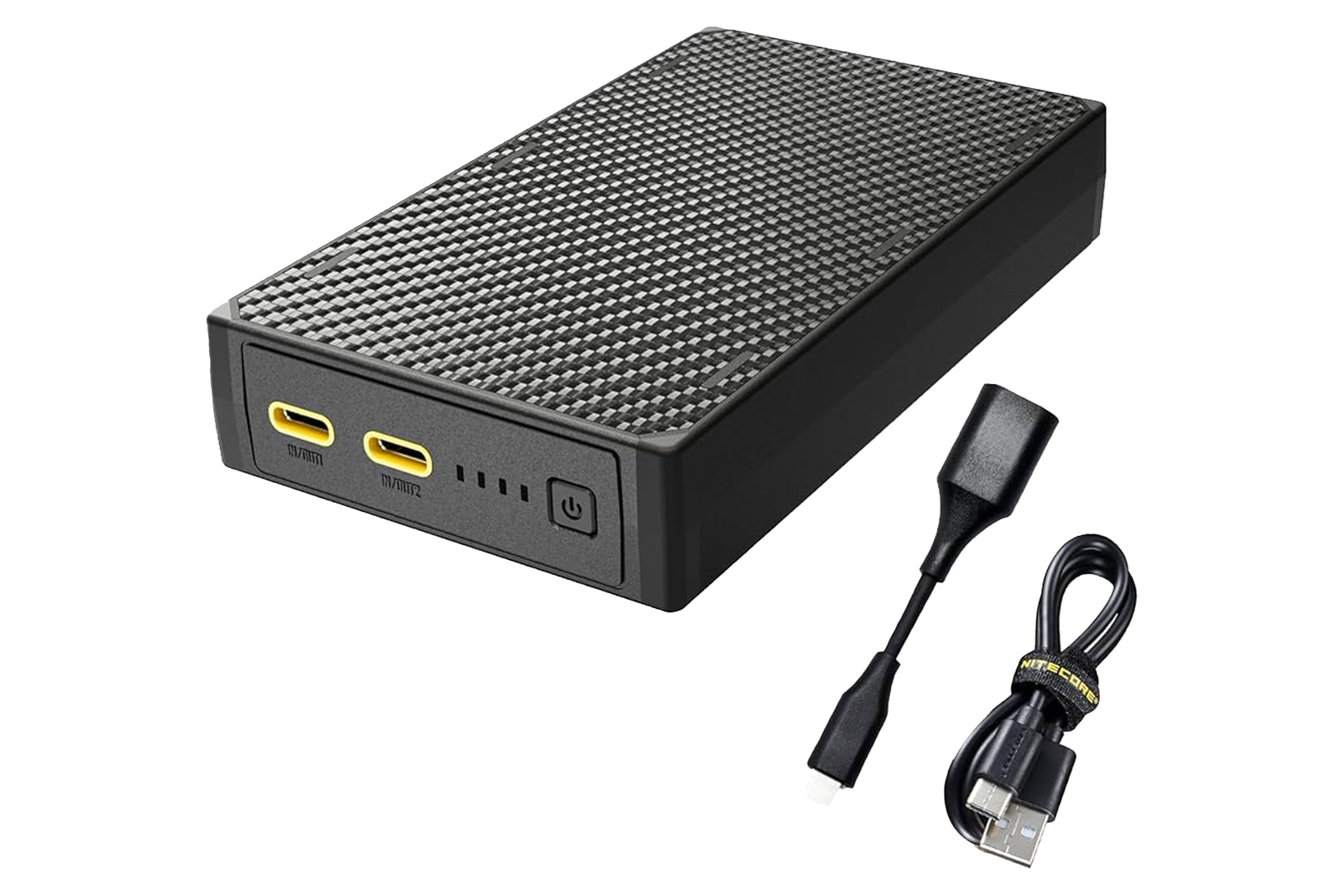
Price: £105 Weight: 296g Capacity: 20000mAh Dimensions(L x W x D): 119 x 69 x 21.5mm Best for: people who need a lot of power capacity, multi-day adventures
The Nitecore NB20000 Gen 3 is a high-capacity, rugged power bank purpose-built for outdoor adventures. It packs a 20000mAh battery into a lightweight carbon-fibre composite shell that’s surprisingly compact considering the power this thing holds.
The dual USB-C ports support fast charging up to roughly 22.5W and allow you to charge two devices at once, while also enabling pass-through charging – so you can power your devices and recharge the power bank at the same time. A USB-C to USB-A adapter is included and four LED indicators show the remaining battery level. There’s also built-in protections that guard against overcurrent, short circuits, and thermal issues.
With its IPX5 water-resistant rating, it stands up well to splashes and challenging conditions, making it a solid companion for backpacking, camping, and other outdoor adventures.
Pros: Suitable for multi-day use, very tough build, great power capacity, lightweight considering size and capacity Cons: Expensive, not the most portable
Best of the Rest
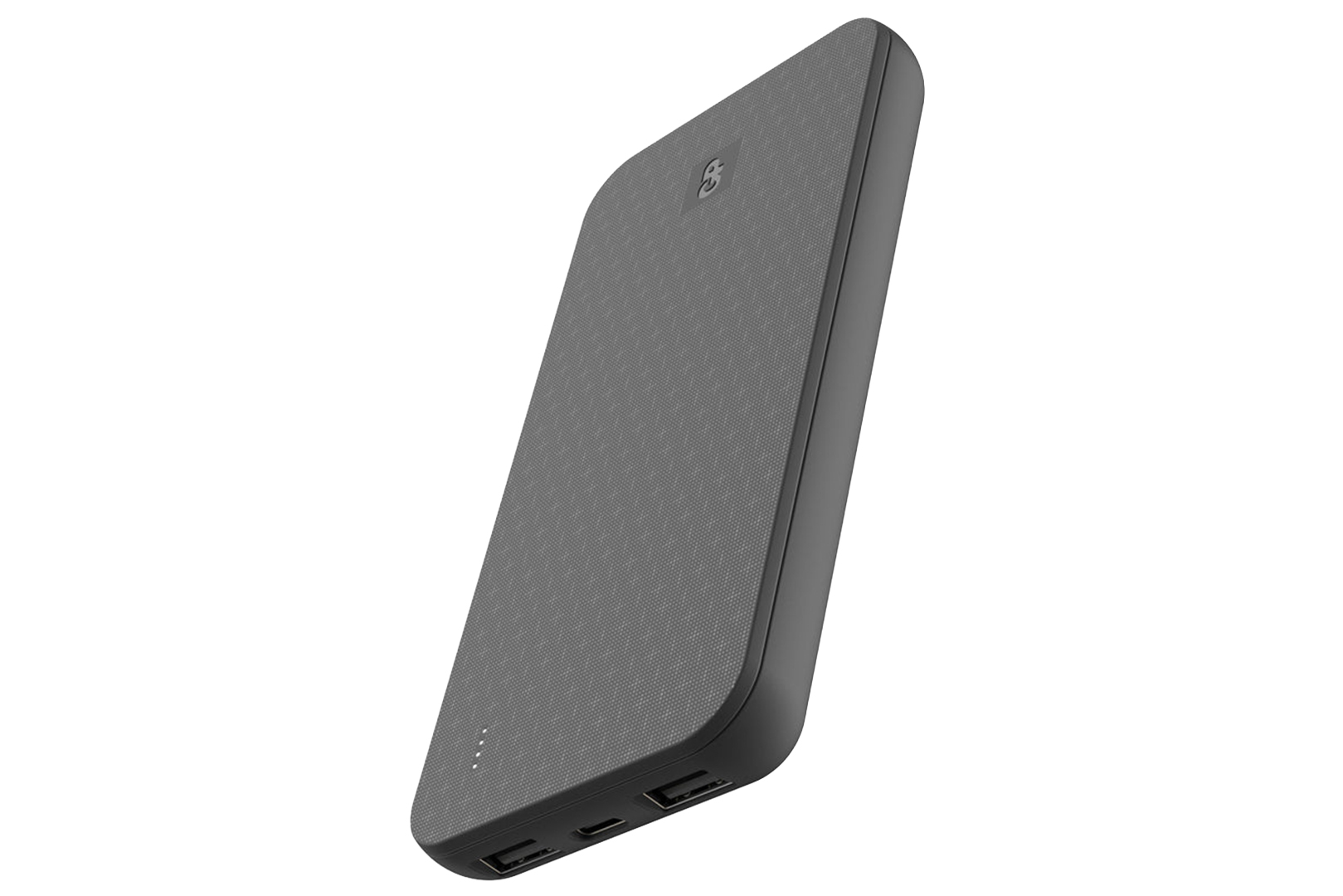
6. GP Batteries Powerbank Plus 10000mAh
Where To Buy
GP Batteries Plus 10000mAh
Our tester’s verdict: “A handy daily charging pack at a very good price.”
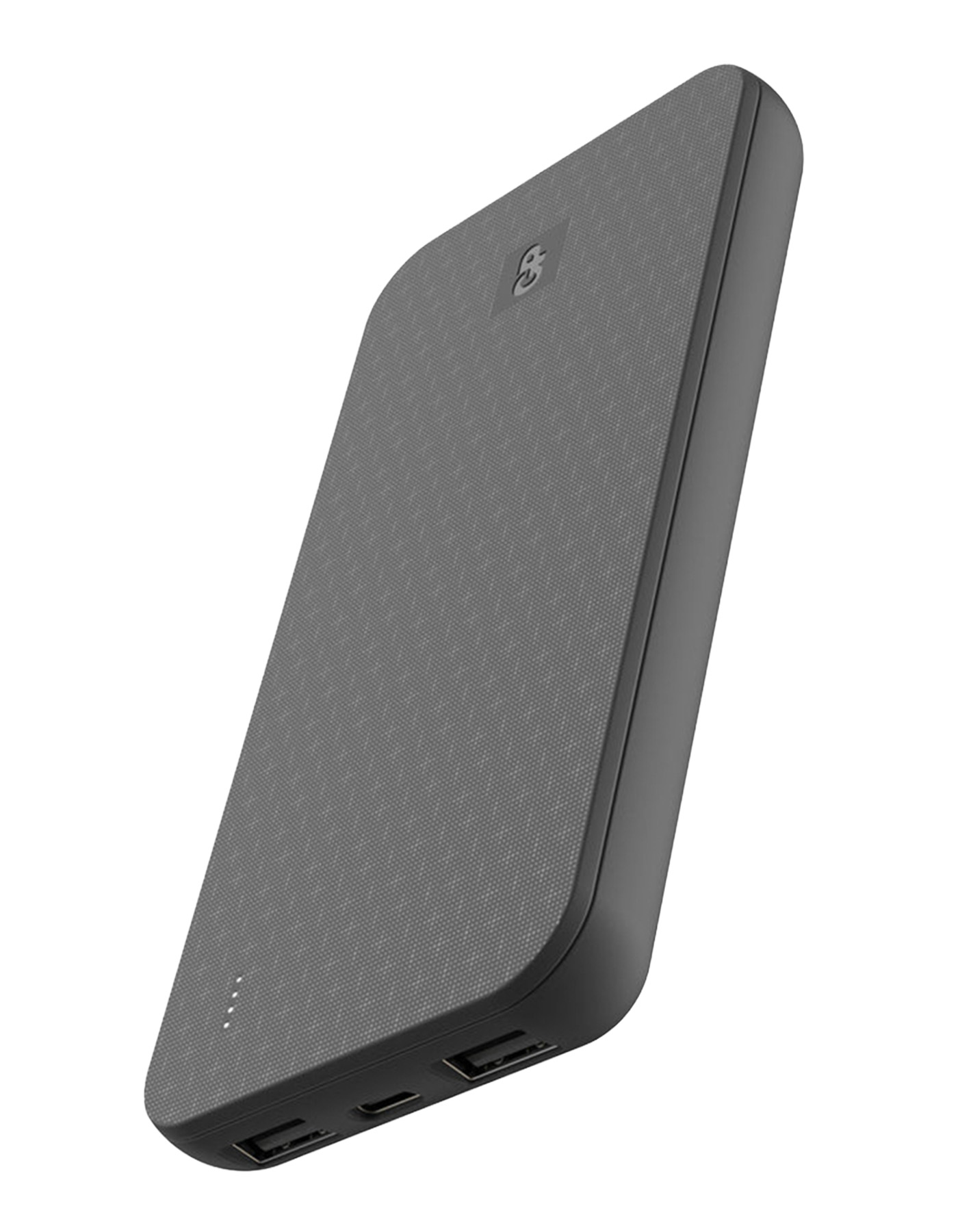
Price: £30 (member’s price: £15) Weight: 224g Capacity: 10000mAh Dimensions(L x W x D): 138.5 x 68 x 16mm Best for: hiking, backpacking, camping
The GP Batteries Powerbank Plus is a portable charger with a 10000mAh lithium-polymer battery that can deliver up to roughly two full smartphone charges. It’s also under the airline-approved 100Wh limit for travelling abroad too.
It features three output ports – one USB-C and two USB-A – letting you charge multiple devices simultaneously, and the USB-C port also functions as the input for recharging the power bank itself. A set of four LED lights shows the remaining battery level while the unit’s slim, lightweight design (about 224g) makes it easy to slip into your hiking daypack or hipbelt pocket. Overall, we think it’s a versatile power bank for hiking and camping trips, while also being suitable for everyday use and travel too.
Pros: Great value, lightweight, good charging capacity considering its portable size Cons: Not the toughest exterior compared to others on the list
7. Belkin Boost Charge Pro 65W 3-Port
Where To Buy
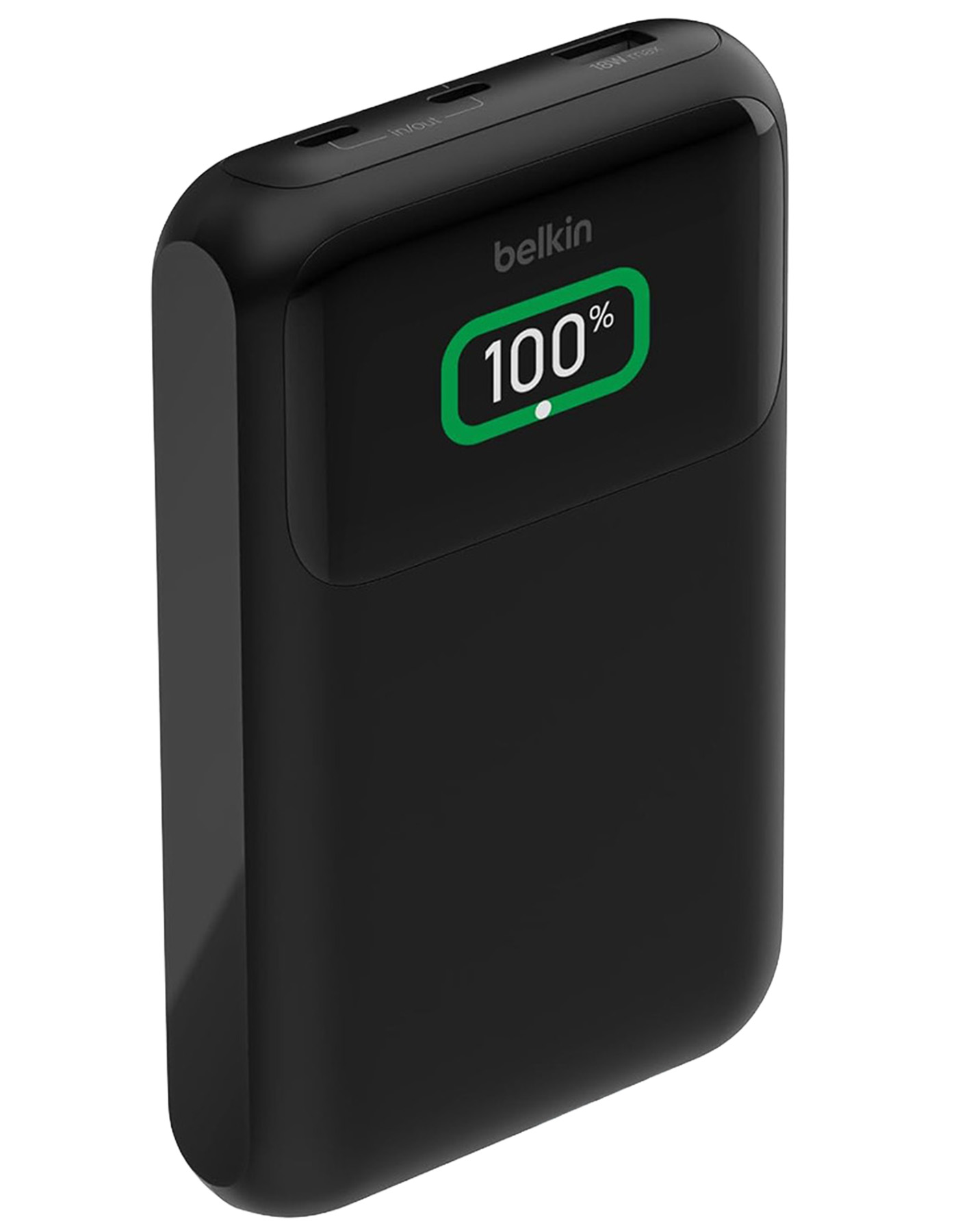
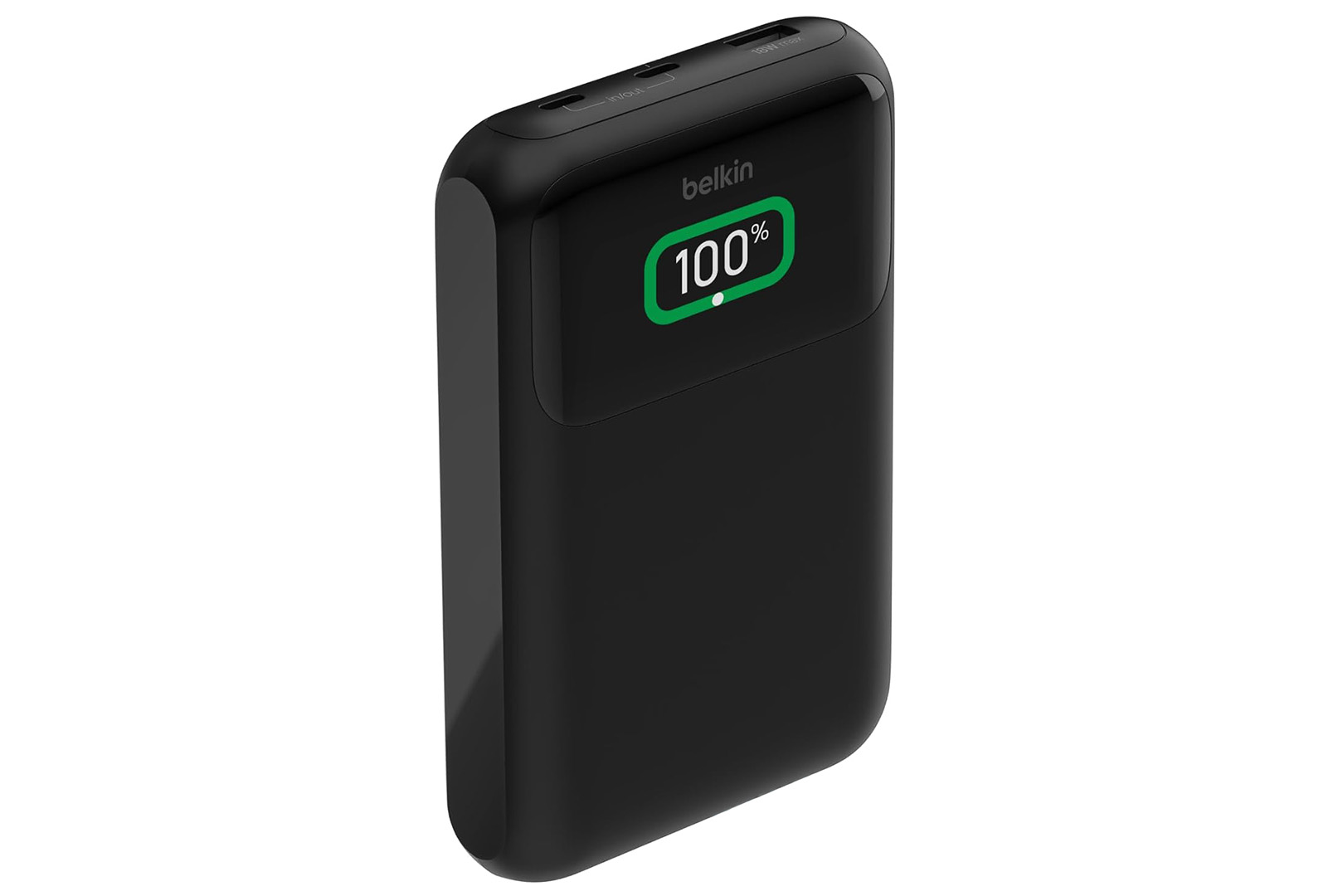
Belkin Boost Charge Pro 65W 3-Port
Our tester’s verdict: “I think this would be a great power bank for outdoor photographers and videographers who need to charge large devices on assignments.”
Price: £70 Weight: 378g Capacity: 20000mAh Dimensions (L x W x D): 13.8 x 8.5 x 2.55cm Best for: outdoor photographers and videographers, multi-day use
The Belkin Boost Charge Pro is a bit of a tank. Featuring 20000mAh of charging capacity, it supports charging a laptop and two other devices all at once. This is why we think it would be a great power bank for outdoor photographers and videographers who need to charge large devices on assignments.
For daily use, it’s a bit overkill, but for outdoor missions that last longer than 2 days, we think this is a solid option. It’s worth bearing in mind, however, that the Belkin Boost Charge Pro isn’t waterproof so you’ll want to keep it secured in a dry bag.
Pros: Great charging capacity, can charge laptops too, 2-year warranty, made from recycled materials Cons: Not the toughest, not waterproof
8. Anker Nano Power Bank
Where To Buy
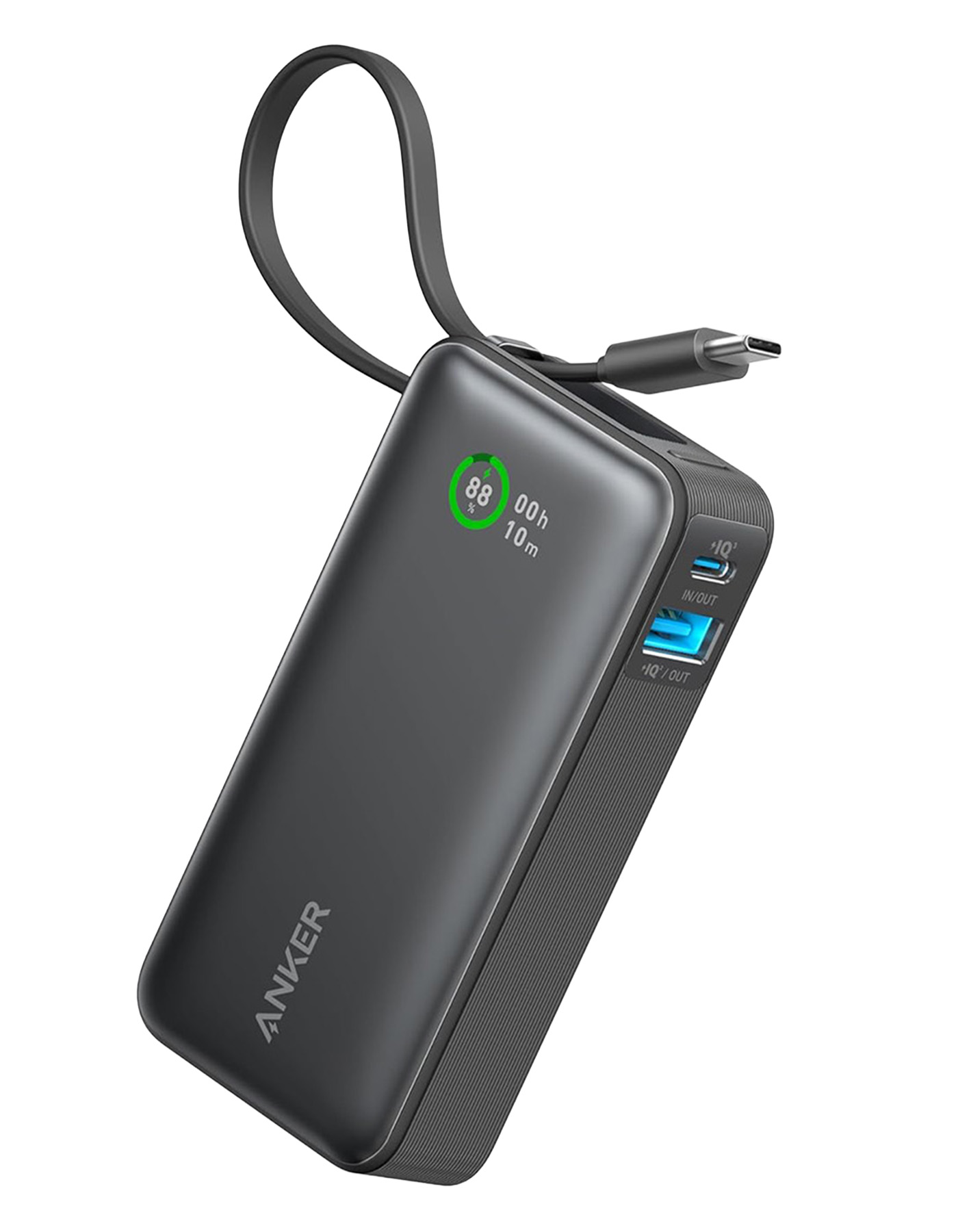
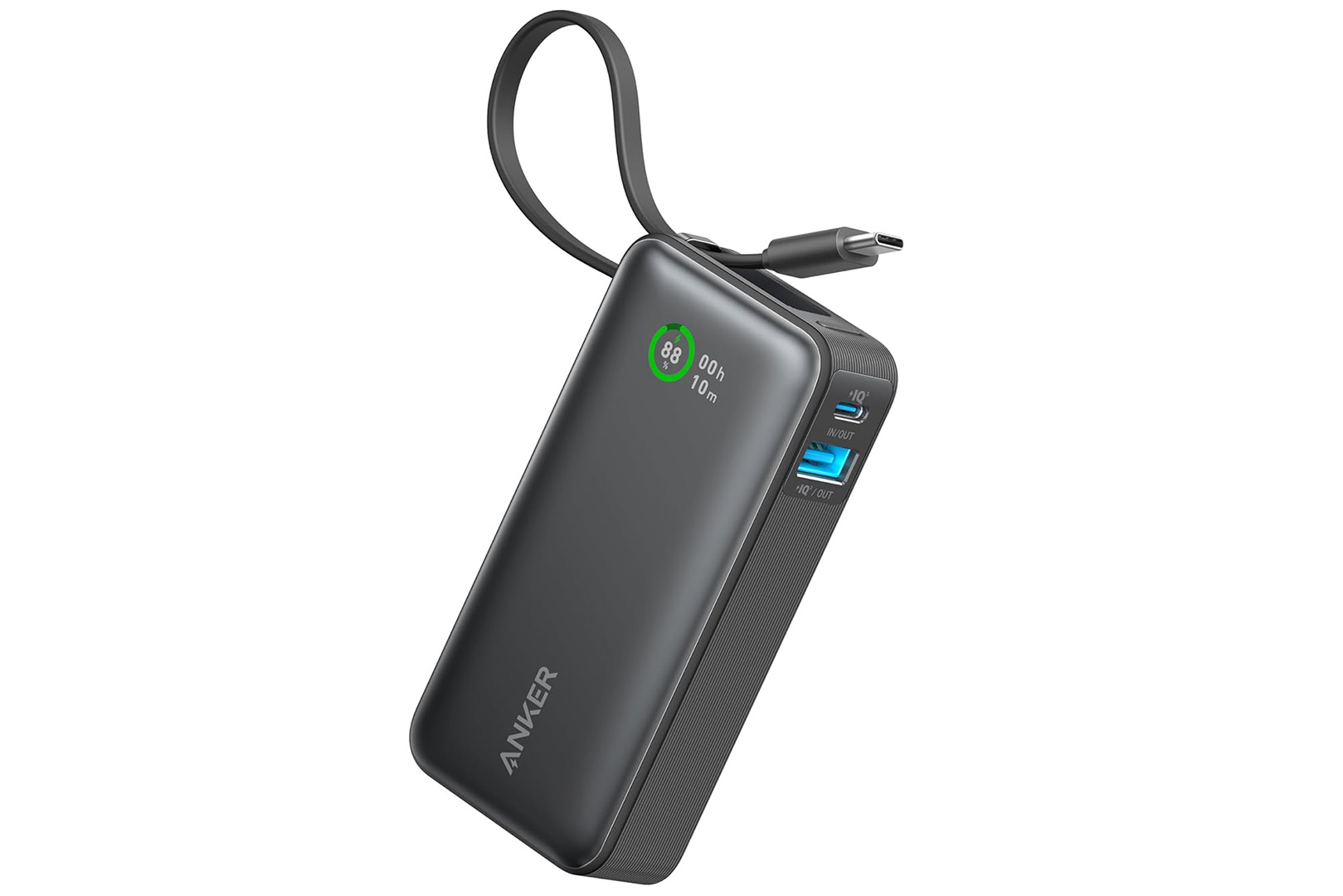
Anker Nano
Our tester’s verdict: “This is the most portable power bank I’ve ever used.”
Price: £25 Weight: 215g Capacity: 10000mAh Dimensions (L x W x D): 104 x 52.3 x 26mm Best for: ultralight adventures, daily use
This power bank packs a small but pretty mighty punch. In fact, it’s the most portable power bank on this list so far and is about the size of a Garmin InReach Mini. While it’s not waterproof and doesn’t have the toughest build here, we can see it working well for daily summer use out in the hills.
Particular highlights include the 30W high-speed charging, the slick and functional display screen, and the handy wrist strap. We also like the fact that the exterior casing uses 80% post-consumer recycled plastic. Not bad, not bad at all.
Pros: Very compact, good value, solid charging capacity, quite fast Cons: Not the most premium build, unsure of durability, not waterproof
What Makes The Best Portable Power Pack?
Firstly, think about how much power you’re likely to need and how long you might be away from a power source. This will dictate what size power bank you need in terms of battery capacity, which is usually measured in milliamp hours (mAh).
To help you out, note that it typically takes 2,500 to 3,500mAh to charge a modern smartphone (though many factors can affect power consumption). Charging a GPS unit or digital camera is likely to consume a similar amount of power, while charging something like a head torch will consume much less. High-powered devices like tablets and laptops are the biggest drain on battery capacity.
Put simply, the larger the rated capacity (in mAh), the more juice the power bank can store – though the trade-off is increased size and weight. So if you’re only carrying a smartphone on a day walk and just want a back-up power source, look for a pocket-sized battery charger. On the other hand, if you’re planning to spend multiple days in the wilderness carrying a number of different devices (like a GPS, phone, GoPro and digital camera), then you’re going to need one of the bigger power banks around (probably 20,000mAh+).
To power multiple devices effectively you’ll also need a power bank that supports simultaneous charging, i.e. one that has at least two or more outlet ports. Many of the latest models also offer features such as quick charging through high-speed USB or USB-C connectivity, as well as in-built technologies to prevent over-charging and optimise charging efficiency.
Durable Power Banks
Also consider your environment. In damp, humid conditions or on expeditions you might need a waterproof and rugged power bank, which can cope with moisture or even complete immersion as well as bumps and knocks. If so, look for a product with a certified IP (International Protection) rating, which is usually expressed as two letters or numerals, e.g. IPX6 or IP67. This standard classifies the degree of protection provided against intrusion, dust, accidental contact and water.
“It typically takes 2,500 to 3,500mAh to charge a modern smartphone”
As well as being impact and water-resistant, power banks specifically designed for the great outdoors often have LED lights, so they can be used as torches. This can be a useful additional feature, as can power banks with integrated charging cables – so you don’t have to remember to bring separate cables with you.
Other devices have integrated or add-on solar panels, which offer the ability to top up the power using energy from the sun. Solar panels are becoming more efficient all the time, meaning that this is now a viable option for those planning to spend days or even weeks off-grid. Most solar panels trickle-charge a power bank over a period of several hours, but others can also be plugged directly into your device.
Our Guide To Power Banks
Fully charge all your devices before you head out – that way you can save your power bank’s juice for when you really need it
It takes more power to charge most devices from 0 to 50% than it does to charge from 50% to full, so top up your devices when they dip to 50% rather than letting them run right down
Unplug your device as soon as it is near full charge. Keeping a device plugged in so it is continually topping itself up to 100% can drain some power banks very quickly
Use the cables supplied with either your device or your power bank. Cheap, inferior cables increase resistance, which can increase battery drain and adversely affect charging speeds
For fastest charging speeds, use the highest-rated outlet on your power bank (for example, a 2.1A USB port will charge more quickly than a 1A USB)
Try not to use your devices while they are plugged in and charging from your power bank
Use your power bank regularly. Run a simple charge and discharge cycle once a month to help maintain the internal battery
Don’t let your power bank or your devices get cold. Low temperatures can reduce the speed at which a battery discharges. If you’re camping, wrap them in your clothes or even keep them in your sleeping bag so they stay warm
The original version of this article was written by Matt Jones. Recent updates have been made by Jazz Noble and the wider OM team.