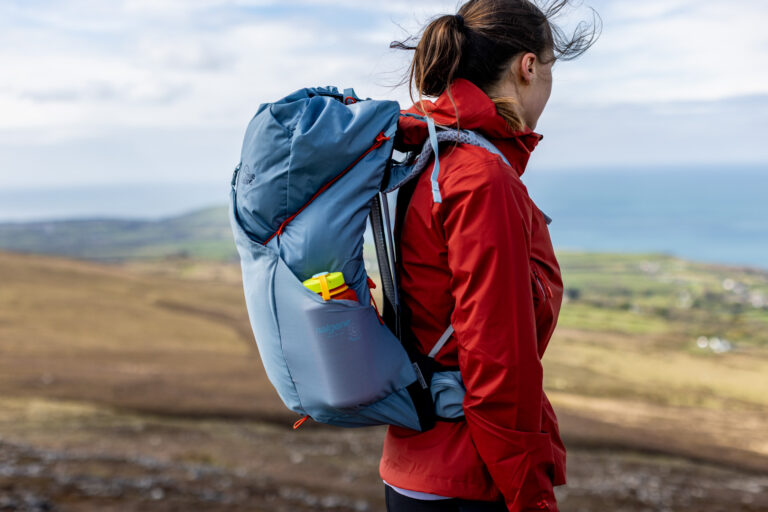
Altberg, in case you didn’t know, are a well-loved brand here in the UK, with deep roots in North Yorkshire. We recently visited their factory to get to know the ins and outs of how their shoes are made – you can read all about their fascinating backstory here.
Related: Best Walking Shoes
Related: Best Walking Shoes for Women
While their hiking, military and country boots are well-known across the globe for their quality, it’s their lesser-known hiking shoes that we’re looking at today. Namely, the Altberg Skipton shoes. Marketed as an ‘approach-style’ walking shoe that also works well for urban leisure, the Skipton features the tough leather upper that Altberg are known for, along with more lightweight technologies in the lining and sole for a more streamlined experience out on the trail.
Altberg Skipton Key Details
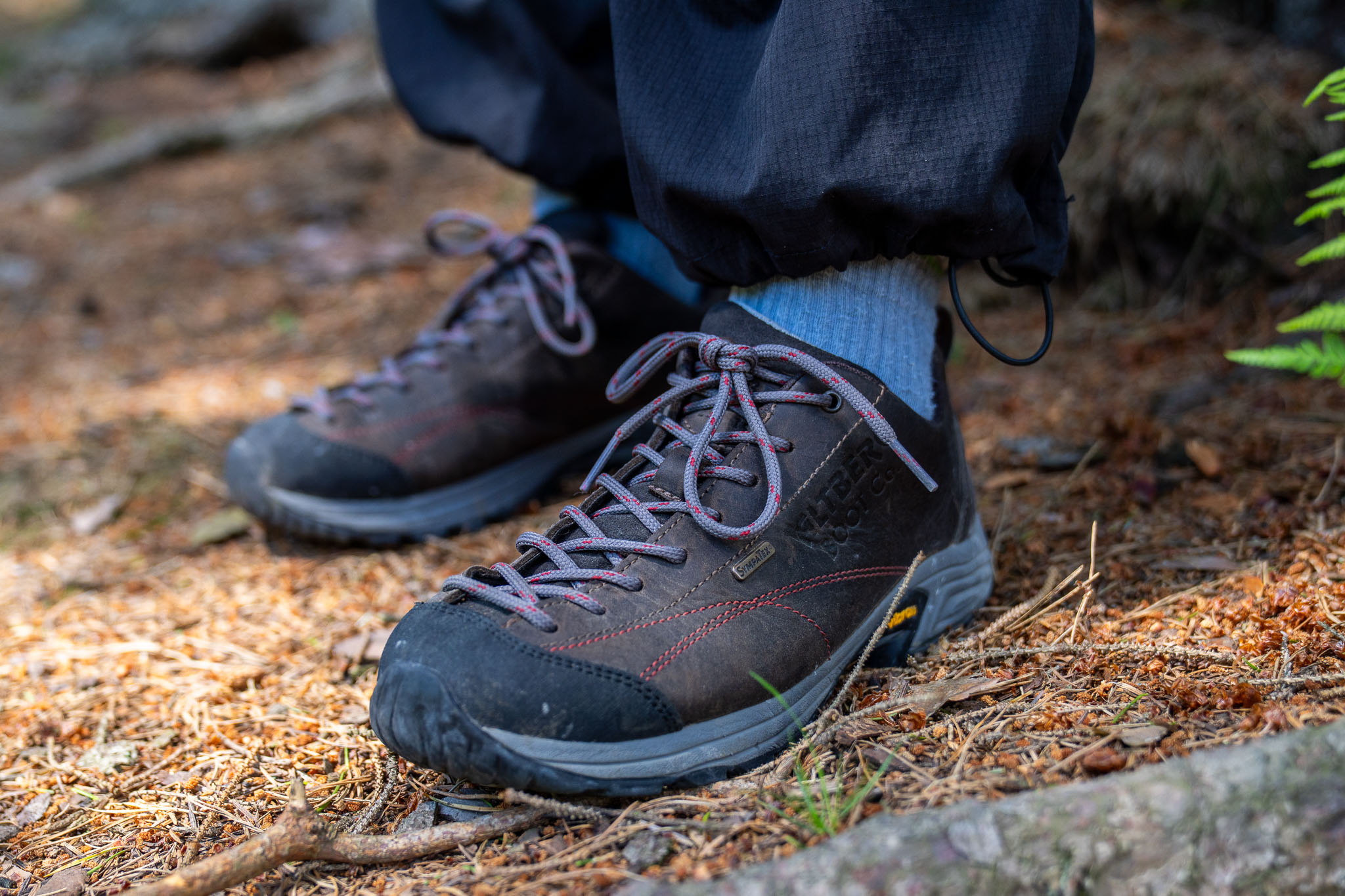
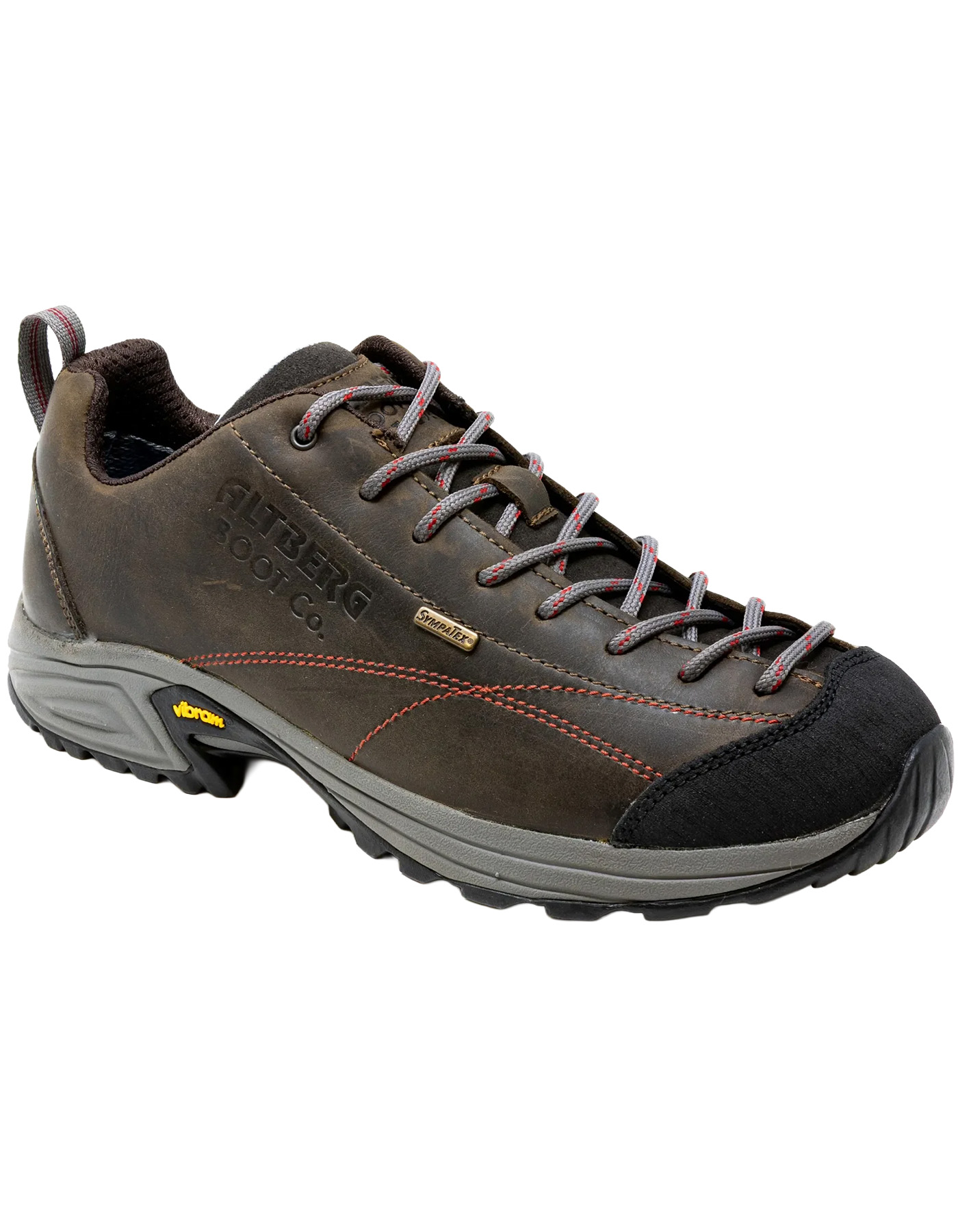
The Skipton features a ‘lace-to-toe’ approach-style design, accompanied by an oiled nubuck upper, a Sympatex Lite waterproof lining, a lightweight, anatomically designed midsole, an insole with memory cushioning, and a Vibram ‘SkyRunning’ outsole.
Altberg Skipton
★★★★½
Price: £170
Weight: approx. 379g per shoe (UK size 8)
Pros: durable and tough leather, very comfy across big miles, contoured fit, secure lacing, reliable grip, out-of-the-box comfort
Cons: potentially too narrow for some folks, won’t suit those who like a lot of cushioning
Comfort: 4.5/5
Stability: 4/5
Durability: 4.5/5
Traction: 4/5
Overall rating: 4.5/5
How I’ve Been Testing The Shoes
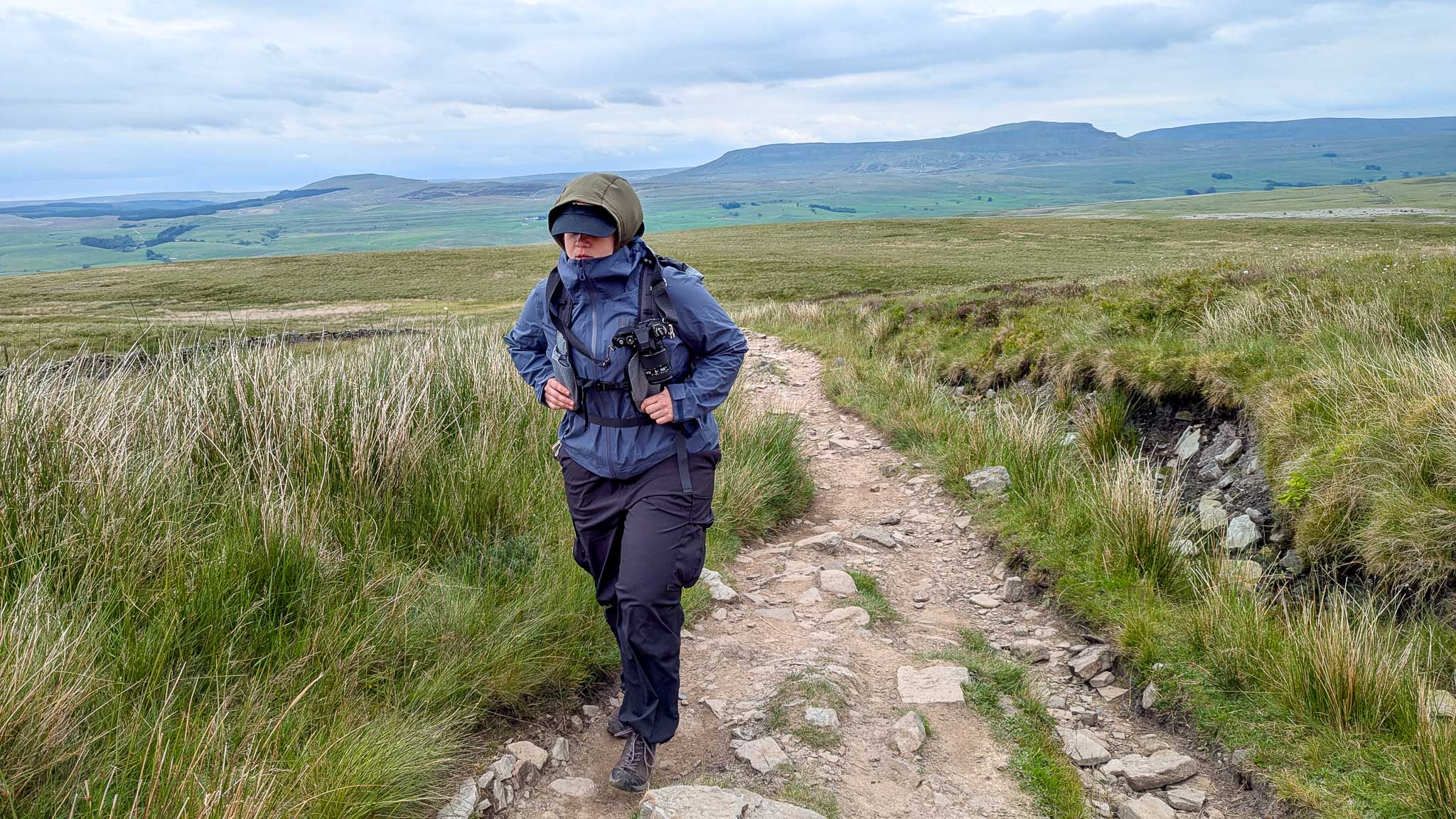
As luck would have it, I had the opportunity to test the Skipton shoes out in the Yorkshire Dales recently, the homeland of Altberg. Along with more low level walking exploring the moorlands, I also ventured up Ingleborough from Chapel-el-Dale, and then back via the classic Three Peaks Horton-in-Ribblesdale route.
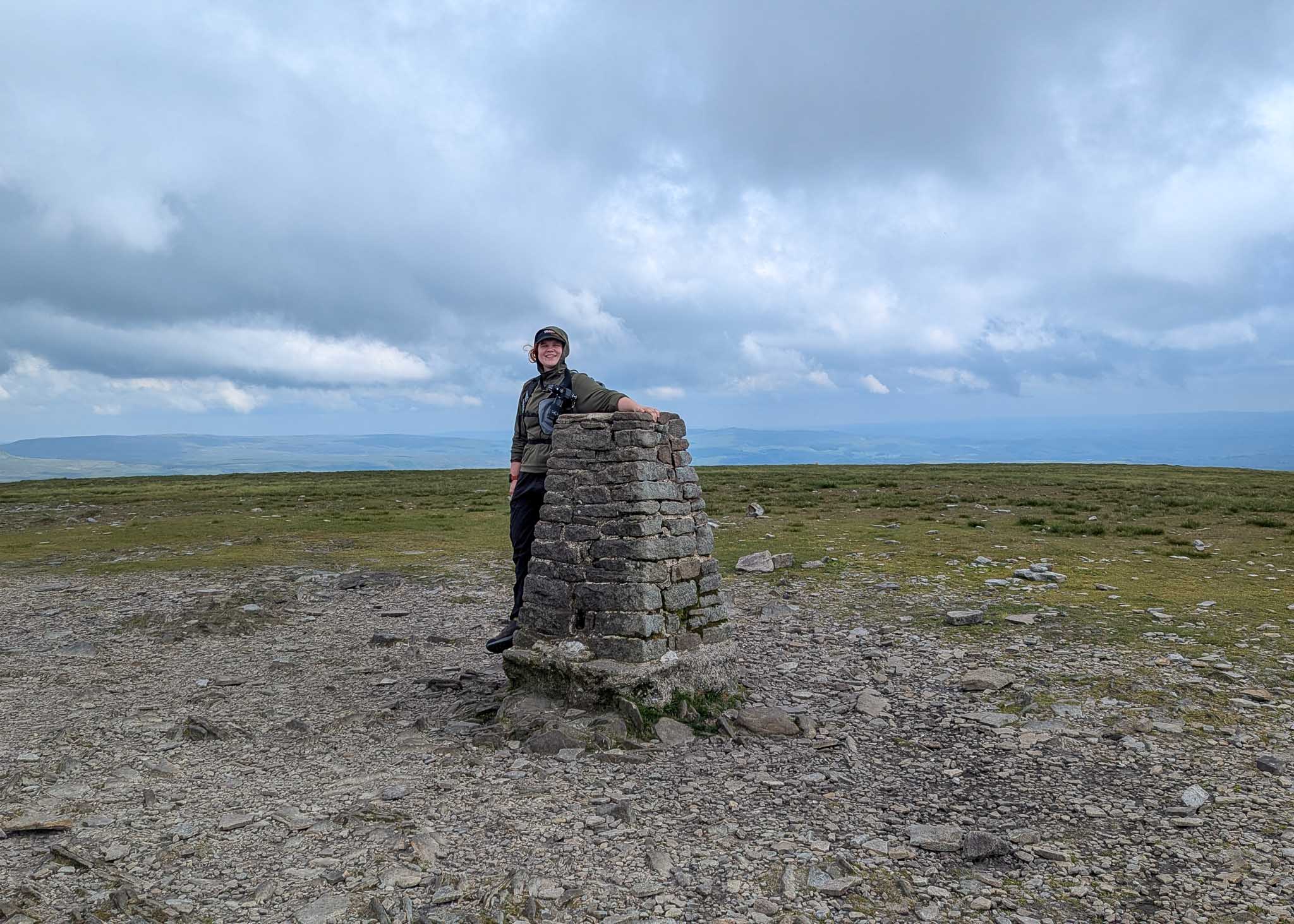
Elsewhere, I’ve used the Skipton shoes further north in the Pennines along some sections of the Teesdale Way and the Pennine Bridleway. The terrain here was a mixture of bridleways, moorlands, permissive farmland paths and river paths; while the terrain up Ingleborough was a lot rockier, especially on the Chapel-el-Dale ascent, with a few sections of muddy and boggy ground on the way down.
I’ll be taking them to the Preseli Hills with me next week too so will update this review if I continue to test the shoes.
Who Will Like The Altberg Skipton Shoes
The Altberg Skipton is ideal for:
- Multi-day hiking and day hiking alike
- Rugged terrain as well as more casual use
- People looking for something between an approach shoe and a hiking shoe
- People who like a locked in fit
- People looking for a walking shoe with genuine durability
Who Should Not Buy It
Less ideal for:
- Ultralight hikers
- People looking for a roomier fit, similar to those you’d find in an Altra shoe or a Keen shoe
- People with wider feet – the Skipton only comes in one fit, though the rest of Altberg’s boots have a huge array of different fits and volumes. It’s recommended you go ½ a size up if you have wide feet.
Comfort and Fit
I found the Skiptons comfortable straight out of the box. Unlike stiffer and thicker full grain leather boots, these shoes feature a thinner and more flexible leather upper that make them ready to hike in from the get-go. During my tests, I didn’t spend any time breaking them in and I had no problems whatsoever.
Instead, what you get is a slight wrinkling to the leather as it moulds to your natural foot shape and movements. This has always been one of my favourite features of leather – you basically end up with shoes that are specifically moulded to your own feet. Bespoke, if you will.
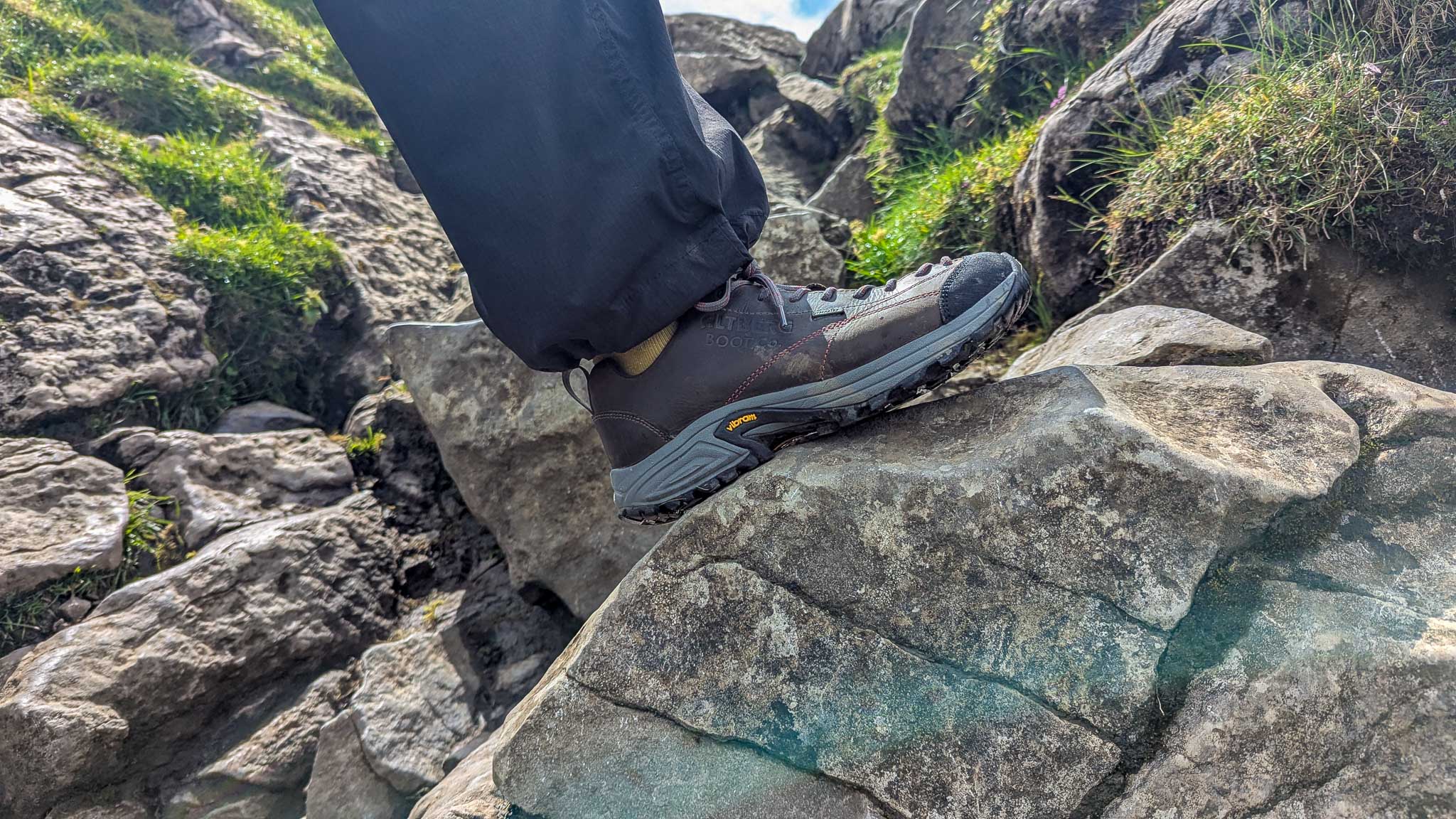
Elsewhere across the shoe, you’ll find a removable insole with memory cushioning, and a PU-cushioned, shock absorbing midlayer. All in all, this makes for one very comfortable hike. Even across long distances – including an 8-hour stretch of hiking in the Dales – my feet didn’t feel too fatigued or sore at all. I also particularly like how the insole is removable as you can easily replace it once it’s worn out.
That being said, it’s not the ultra-cushioned experience you might find in a Hoka shoe, for example. If that’s more your bag, I’d look elsewhere. I’d say the Skipton is better suited to long distances in this sense. It’s the kind of shoe I’d happily take with me on both multi-day treks and big day hikes alike.
Lacing-wise, it’s an approach-style ‘lace-to-toe’ fit that really locks your foot into place. I personally love this kind of fit as it feels really stable and secure, especially on uneven and rocky terrain, though it’s perhaps not suited to hikers who prefer a more relaxed fit with a wide toe box.
Grip and Trail Performance
I’ve hiked in these shoes across a wide variety of trails here in the UK including mountain paths, rocky almost-scrambling ascents, boggy moorlands, wet slabs of rock, farming fields, muddy river paths, dry stretches of earth, compacted bridleway paths, and a few stretches of tarmac en route back to the car. So far, I’ve found the grip reliable, even in shifting weather.
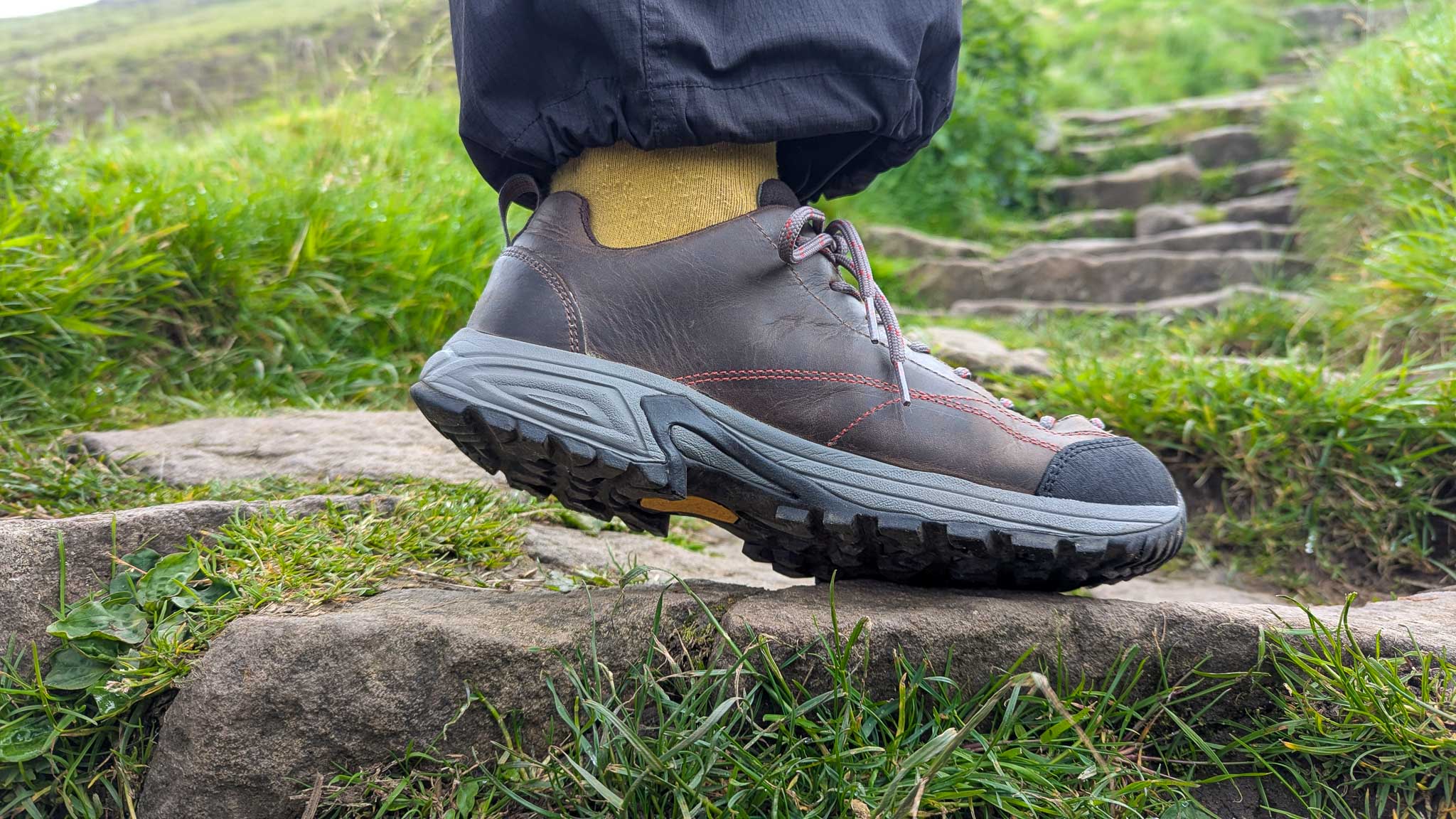
For example, on one day of hiking in the Yorkshire Dales, after 2 days of heat and humidity, the weather took a turn, changing the dry paths into decidedly sludgier terrain. In the mud, I found that the lugs bit in nicely and shedded mud fairly well. They aren’t super deep lugs, so you won’t get the performance of something like a trail runner, for instance, but for a bit of sludge here and there, I was pleased with their performance.
The Vibram ‘SkyRunning’ sole is targeted towards rugged, off-road terrains and mountain hiking. And so far? I’d say this is true. The lug pattern is multi-directional so you get a good amount of grip across multiple terrain types. In my experience, it excels best on rocky scree, shrub-laden moorlands, both loose and compacted earth, and moderate mud. The UK special, really.
Stiffness and Protection
I’ve found that the sole strikes a nice balance between feeling protected underfoot and also being able to feel some of the ground beneath you. There’s a little less protection towards the midfoot, though I’d say it’s a good balance between agility and protection in this sense.
The sole is rigid enough to limit foot fatigue on light, rocky terrain, while still allowing for a natural rolling movement in each step. I also found this stiffness was helpful for improving stability when carrying heavy loads and when crossing rough and unforgiving ground. That being said, for more technical rocky terrain, or for high-level scrambling over long periods, I’d opt for something stiffer.
The leather upper and robust construction also offer a good level of protection from sharp rocks, roots, and other trail hazards. I particularly like the reinforced toe bumper – it gives you the added confidence to really throw yourself into your hike. I also think it adds a modern touch to the look of the shoe.
Waterproofing and Breathability
The waterproof membrane used here is Sympatex Lite, a more breathable and eco-friendly alternative to Sympatex’s standard lining, which is more commonly found in heavy duty outdoor gear. The main difference is that the membrane is thinner and therefore more lightweight and breathable. It’s also fully biodegradable with recycled materials in the inner fabric. Not bad, not bad at all.
Sympatex Lite works using a chemical process that absorbs sweat and moves it outwards, away from the shoe. It does this via billions of sweat-binding molecules that are compelled to channel water vapour outward. The greater the temperature and humidity difference, the greater the moving effect. In essence, the membrane should adapt accordingly, regardless of what environment you find yourself in.
At the same time, the membrane doesn’t allow water to enter from the outside. This, combined with the oiled and water resistant nubuck leather in the upper, makes for one very waterproof shoe. To maintain the water repellency in the leather, Altberg recommend treating it with Leder Gris wax/ paste or Leder Bok spray every once in a while.
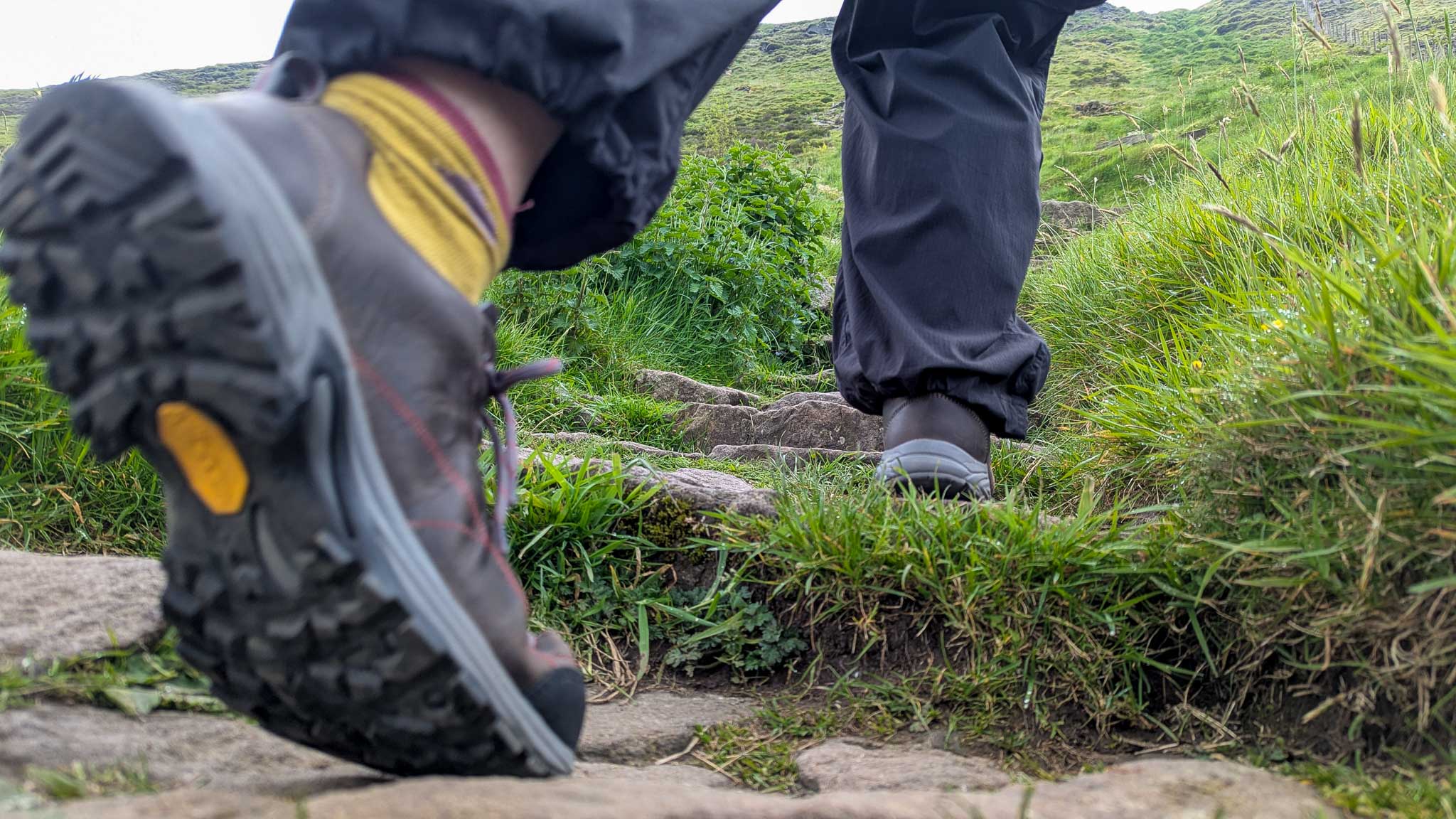
While I wouldn’t necessarily reach for a walking shoe if I was heading into properly boggy and/ or water-logged terrain – I’d probably choose a boot in this scenario – for hikes where you’re mostly going to come across puddles, muddy sections, and a fair chunk of classically British rain, I think these will more than do the job.
I’ve had no issues so far anyhow. And I feel reassured about puncturing the membrane – something that’s happened to me twice now with synthetic hikers – by the tough leather outer.
On test, the breathability has likewise proved impressive. I didn’t expect it to be honest, especially not from a fully leather hiker, but so far, my feet haven’t overheated once, even on an unusually warm and humid weekend in the North Pennines with highs of 26°C. Don’t get me wrong, I wouldn’t wear them in a seriously warm conditions, but for most three season temperatures here in the UK, I think they’ve got a lot to offer.
Durability
While the true test of durability is time – something which will reveal itself as the years go by – from what I’ve seen so far, and based on my experience from testing many walking shoes over the years, there’s a lot to like here.
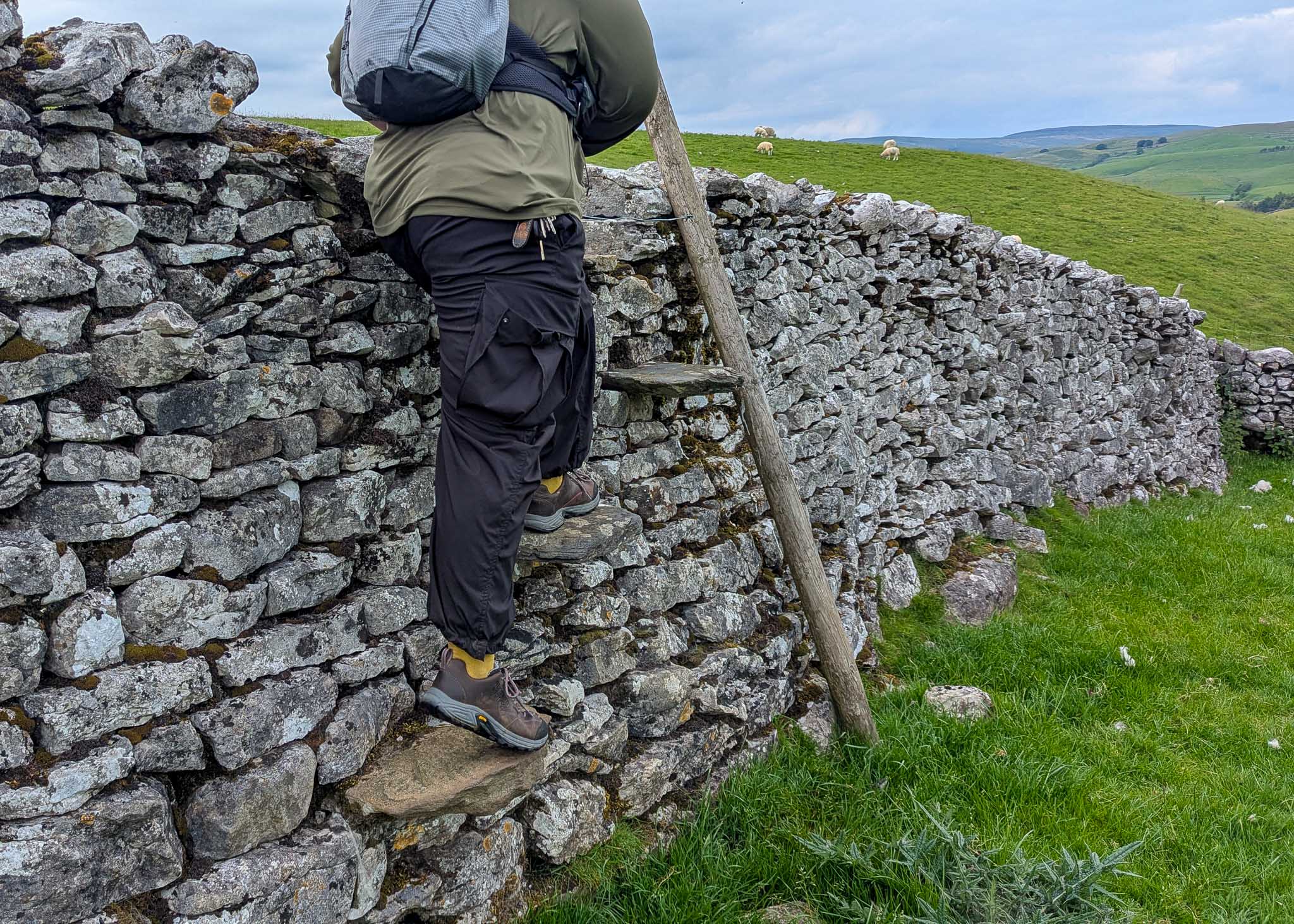
The upper is made from 1.6/ 1.8mm of oiled Nubuck leather with a scuff resistant toe bumper. There’s no wrap-around rand, though I imagine it would take quite a lot of effort to puncture through that leather. It feels reassuringly thick and tough to the touch.
Out in the hills, it’s likewise proved tough. Across spiky and rooty sections of trail in the North Pennines, I had no problems. Likewise, across some all-rock sections up the Chapel-el-Dale ascent of Ingleborough, I felt very protected all across the shoe. There’s no signs of wear and tear so far beyond a nice wrinkling in the leather as it moulds to my foot shape.
How it Compares
If you prefer a boot, but still want something durable, I’d recommend the Altberg Fremington or the Altberg Dalesway if you prefer a vegan option. Instead of leather, the Dalesway uses a synthetic material called lorica.
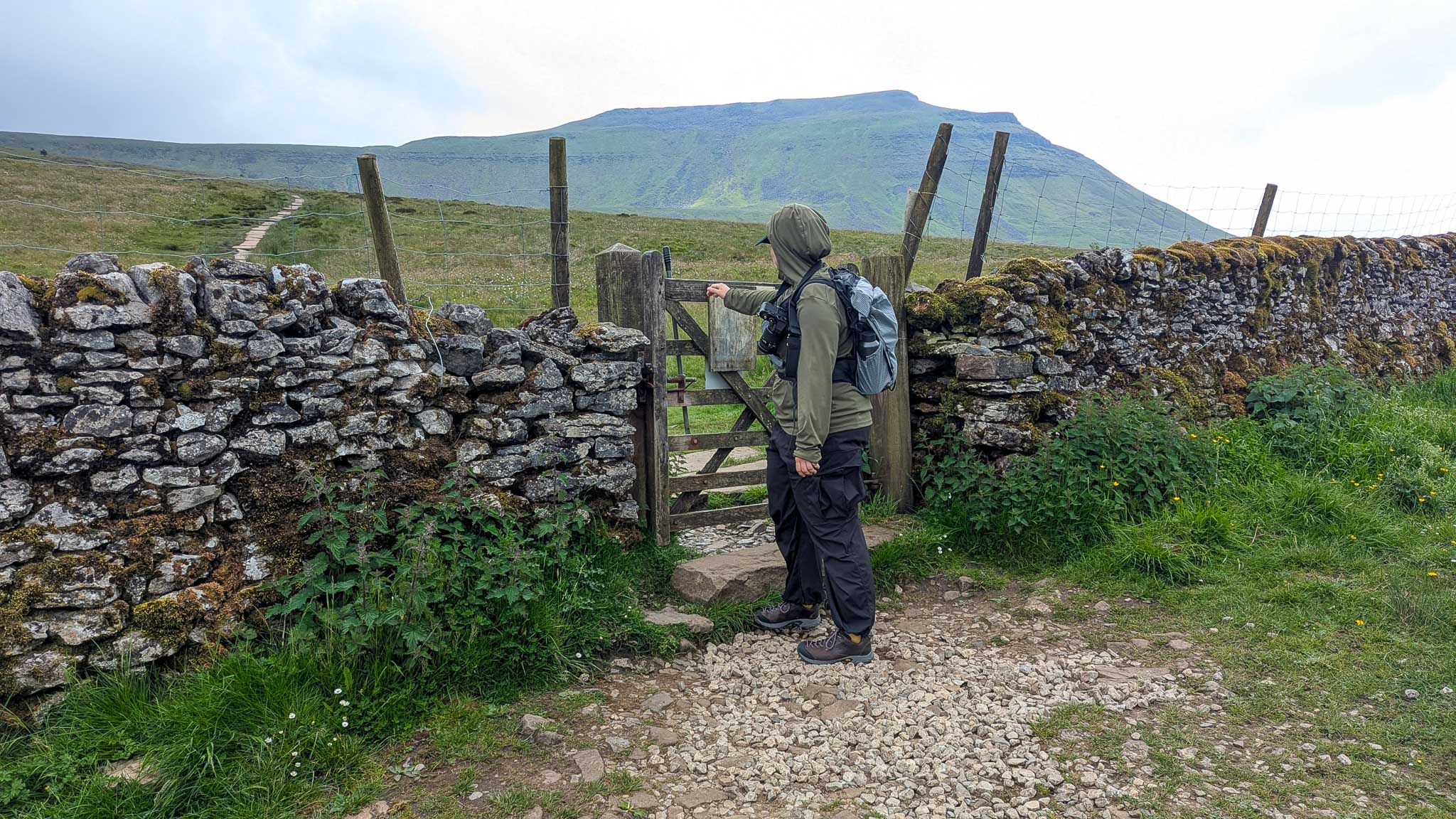
For something warmer, I’d recommend the Lowa Innovo Low GTX or the AKU Rocket DFS GTX shoes. And for something more technical and better suited to properly rocky trails, the Scarpa Rapid XT are well-worth considering.
Looking for something lighter and cooler that’s better suited to very warm weather? The Scarpa Cyrus 2 GTX shoes or some trail runners like the Altra Lone Peak 9+ or the Kiprun MT3 Trail shoes are good options.
Should you Buy the Altberg Skipton?
In short, I’d say yes. If you’ve been searching for a hiking shoe that’s grippy, protective, light feeling, yet still durable at the same time, then I think you’ll get along really well with the Altberg Skiptons.
While not an ultralight-style of shoe, the Sympatex Light lining combined with the lightweight Vibram ‘SkyRunning’ sole make the shoe feel unexpectedly light when on the move. Add the tough nubuck upper into the mix and what you get is an agile feeling shoe that doesn’t compromise on durability. Yes, the leather will increase the overall weight of the shoe, but for me, it’s a very reasonable trade-off for shoes that last longer than just a few hiking seasons.
At £170, it’s not the cheapest hiking shoe, but it’s not the most expensive either. It’s a bit of an investment in this sense. One that will more than pay itself off when you think of how easily synthetic hiking shoes wear out these days.
Altberg Skipton
★★★★½