Outdoors Gear, Equipment, News, Reviews, Forums, Walking Routes and More at OutdoorsMagic.com

Outdoor Features

Trekking Sweden’s High Coast Winter Trail

Sarah Hewitt spends three frozen days exploring – and surviving – on Sweden’s High Coast

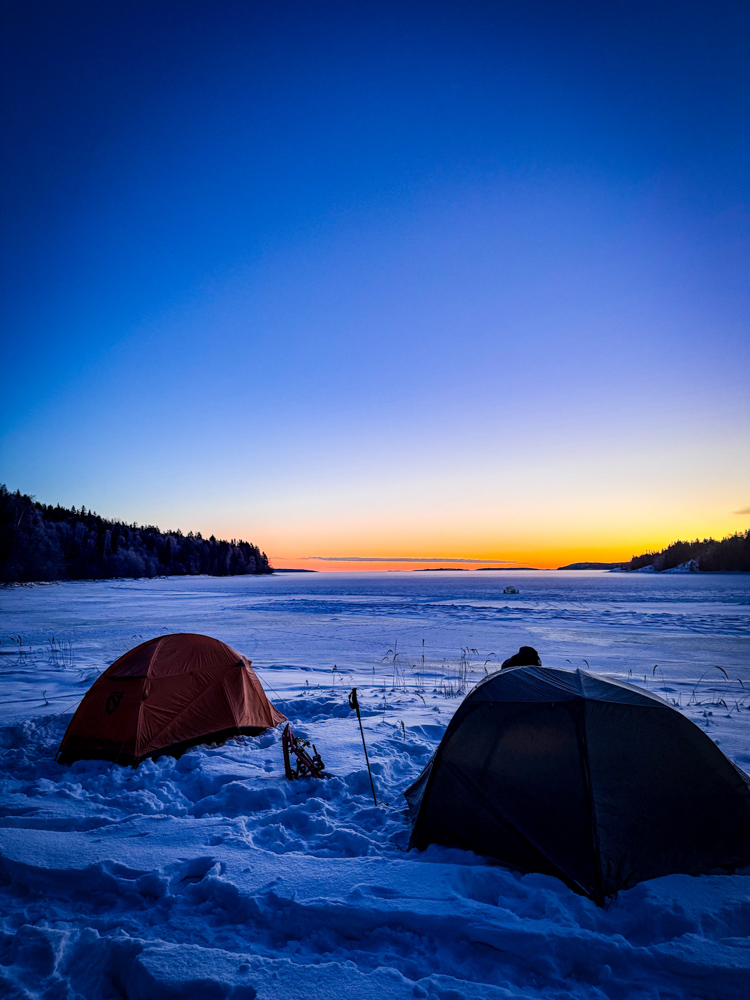
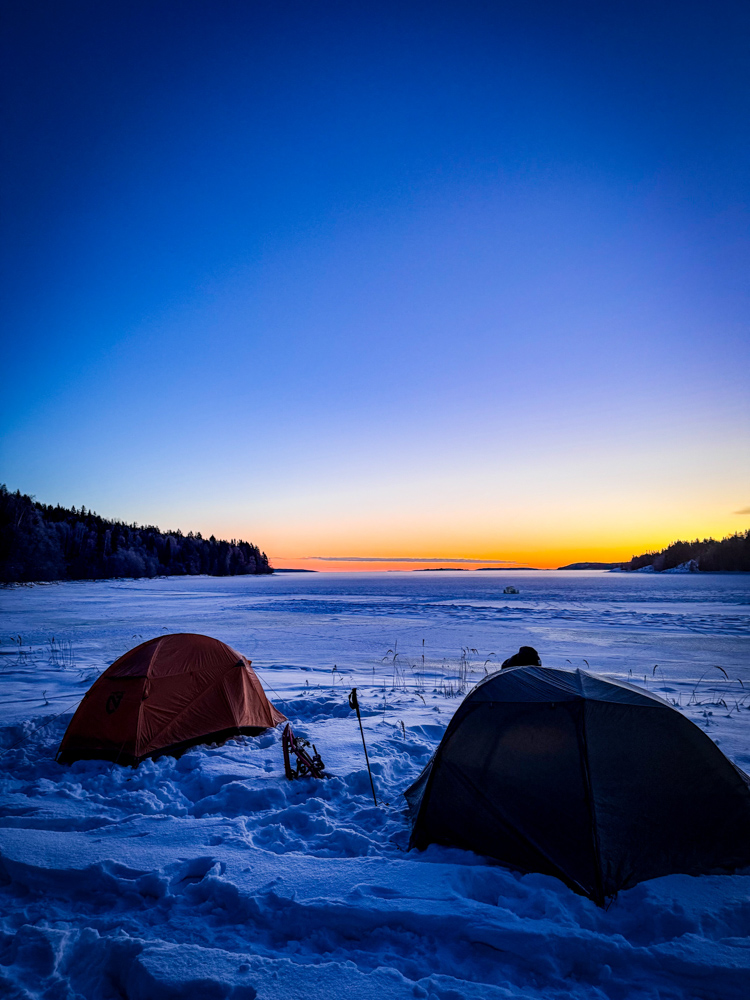
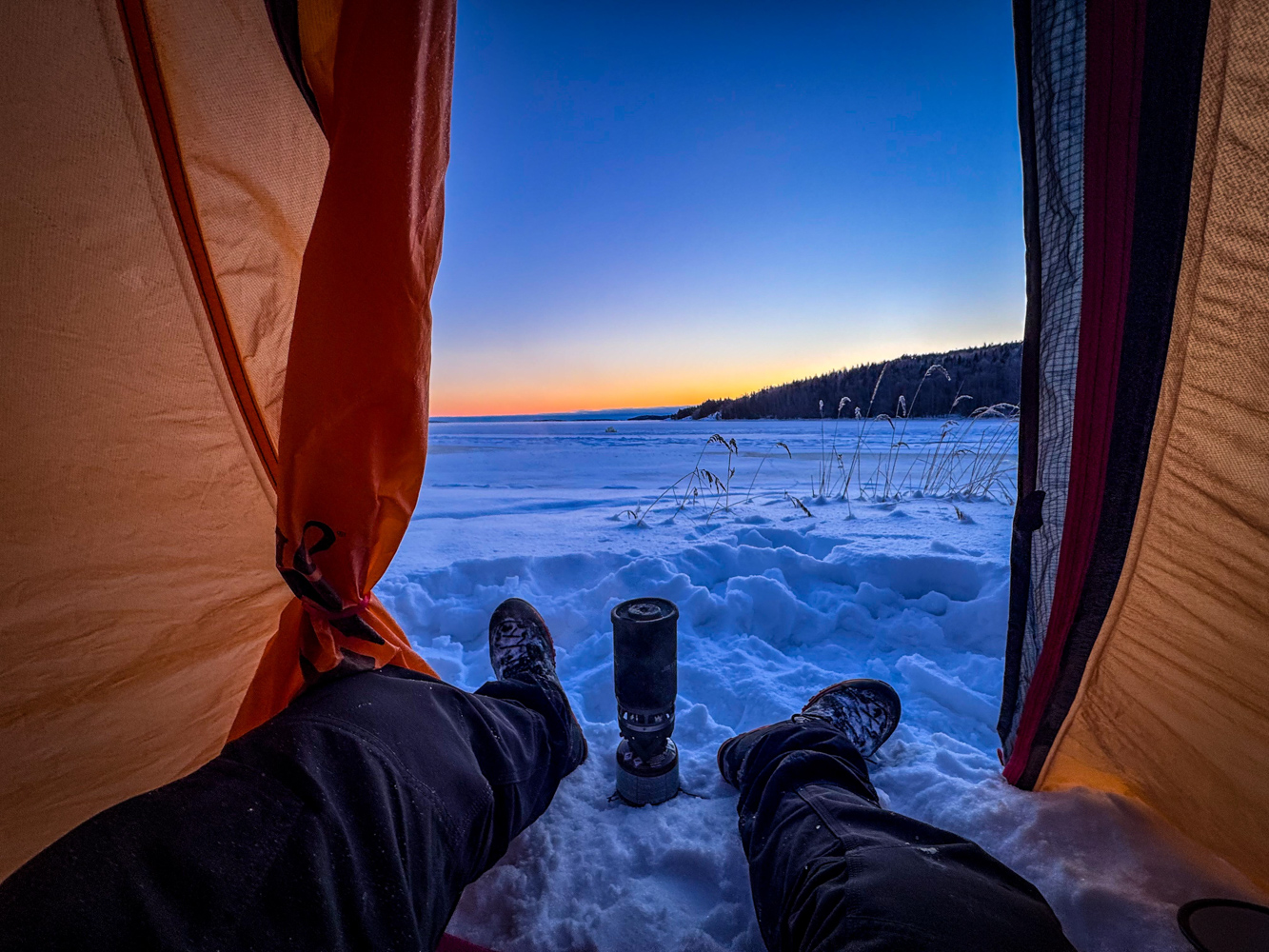
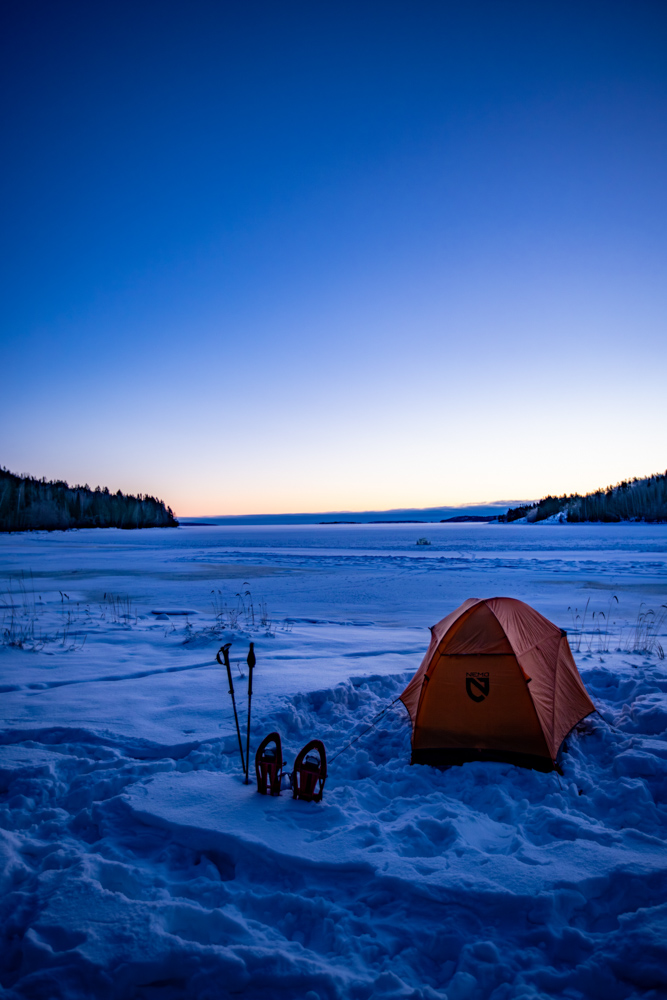
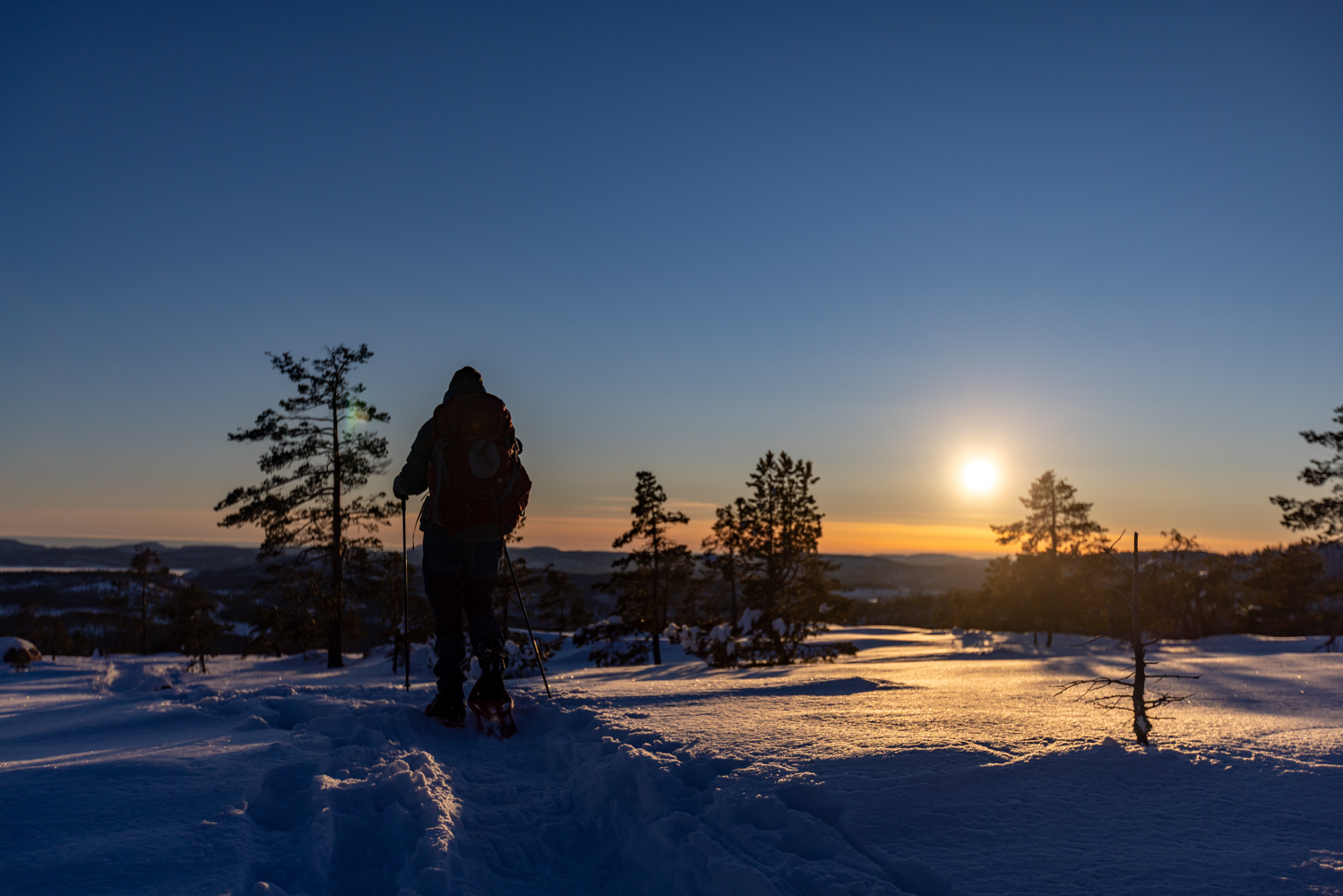
It’s 6.30am and my alarm is going off somewhere deep in my sleeping bag. I wrestle it free from a tangle of gloves, camera batteries and water bottles and, after fumbling with the drawcord around my face, finally wriggle free. The inner of my tent is crusted with frost. I carefully open the door, avoiding the metal zip, and am greeted by the view I came here for. Seeing sunrise over Kälsviken and inky blue skies turning orange in complete silence makes even -30 feel worth it.

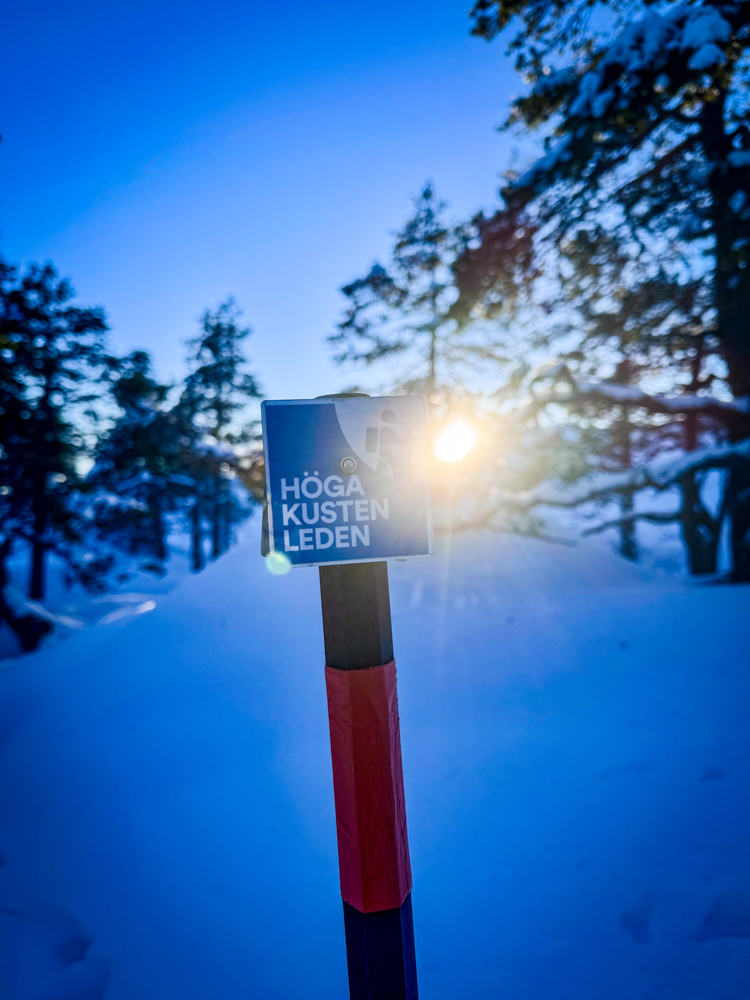
This is my fourth High Coast Winter Hike, organised by FriluftsByn, the “outdoors village”. I first came on the 35km trek in 2019 after a Facebook ad had me correctly pegged as someone who liked Sweden, wild camping and pushing myself out of my comfort zone. All true. But winter camping was new to me, and as I joined the Facebook group and saw everyone’s gear flat lays, I started to panic. I didn’t even know I’d need snow pegs for my tent, but someone offered to make me some in exchange for a beer at the afterparty. Deal. It’s that mix of camaraderie, the epic views and one incredible adventure that’s made me come back so many times. 

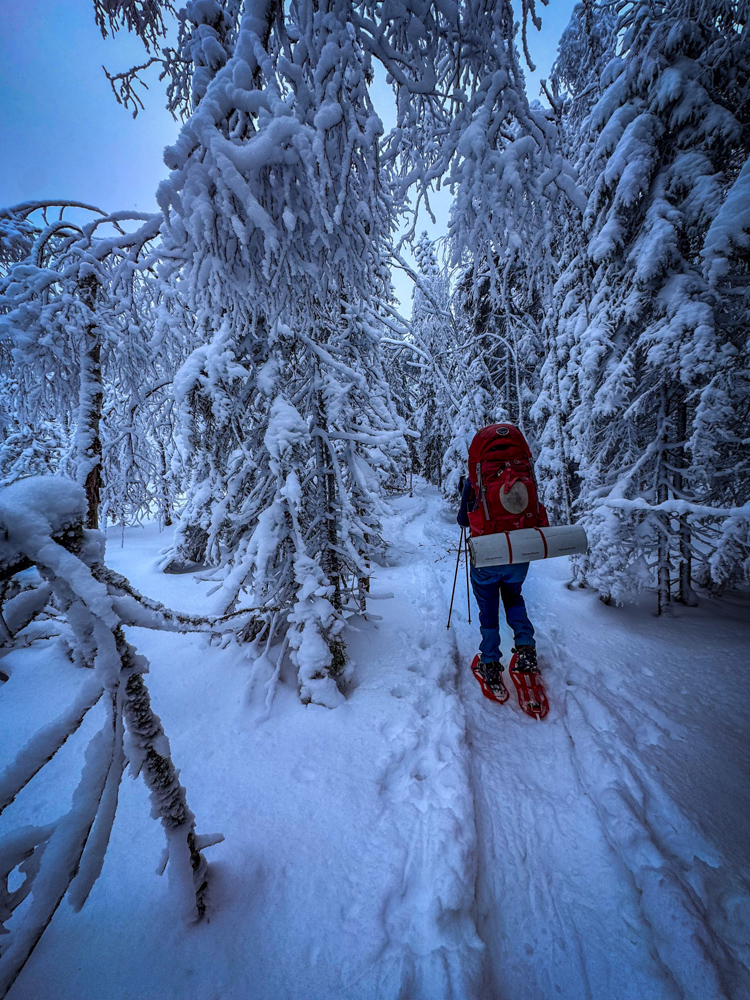
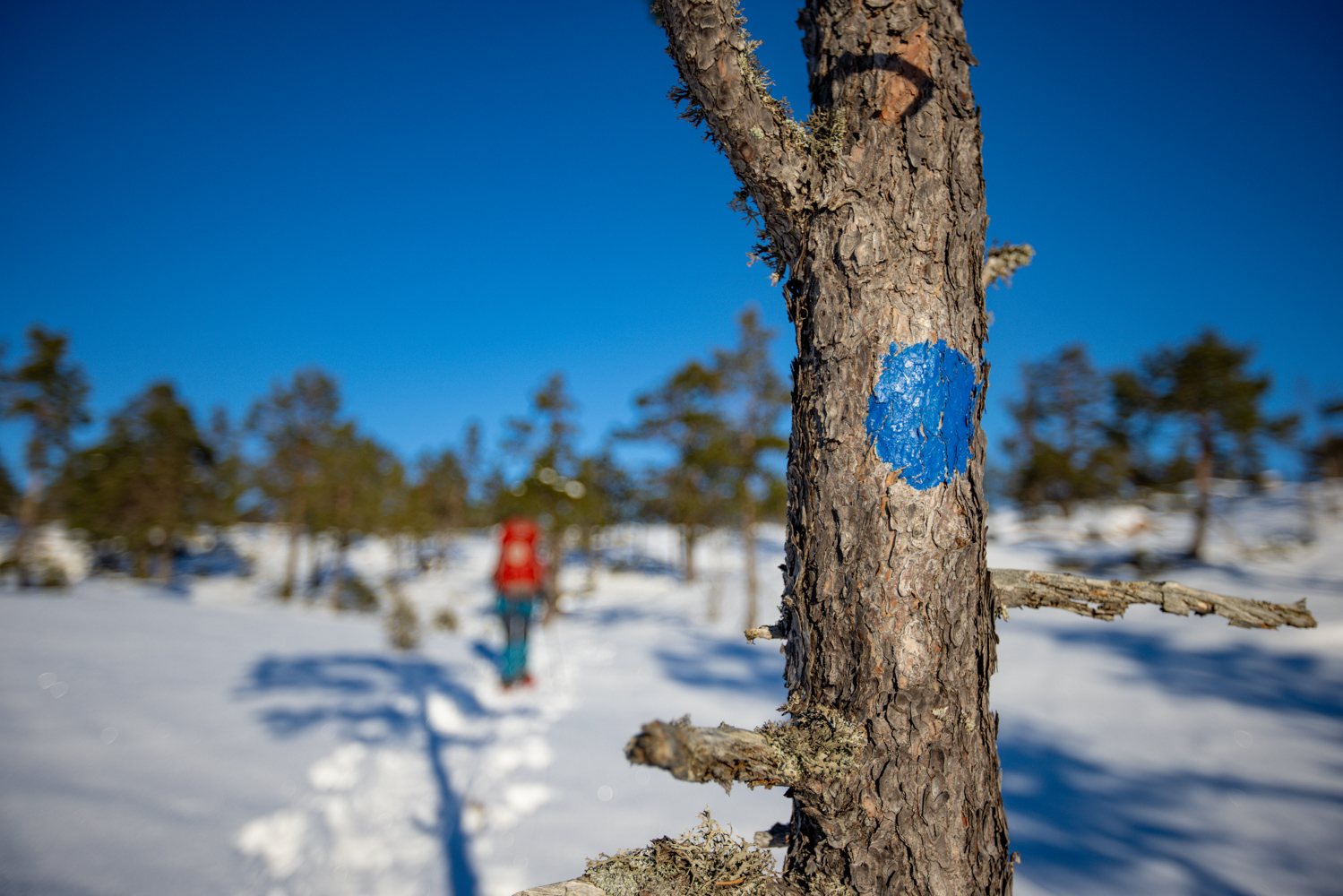
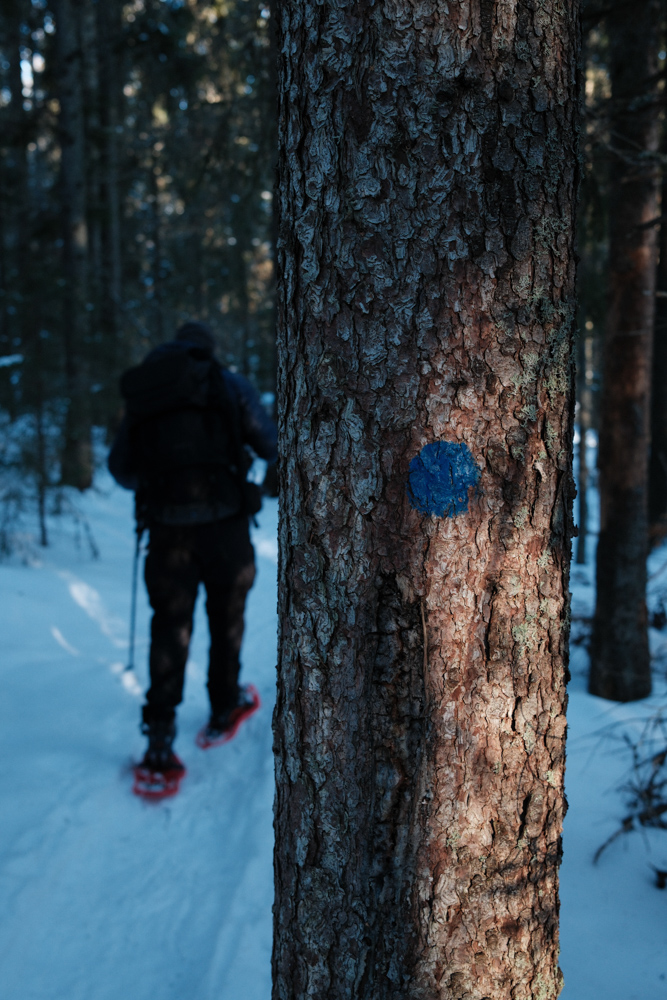
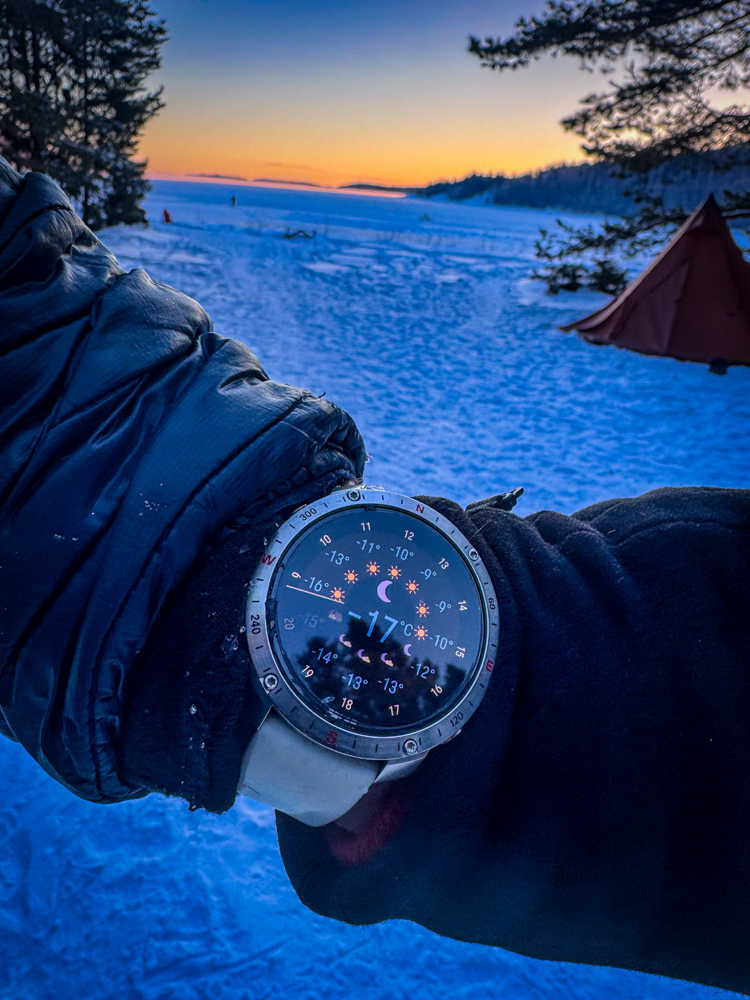
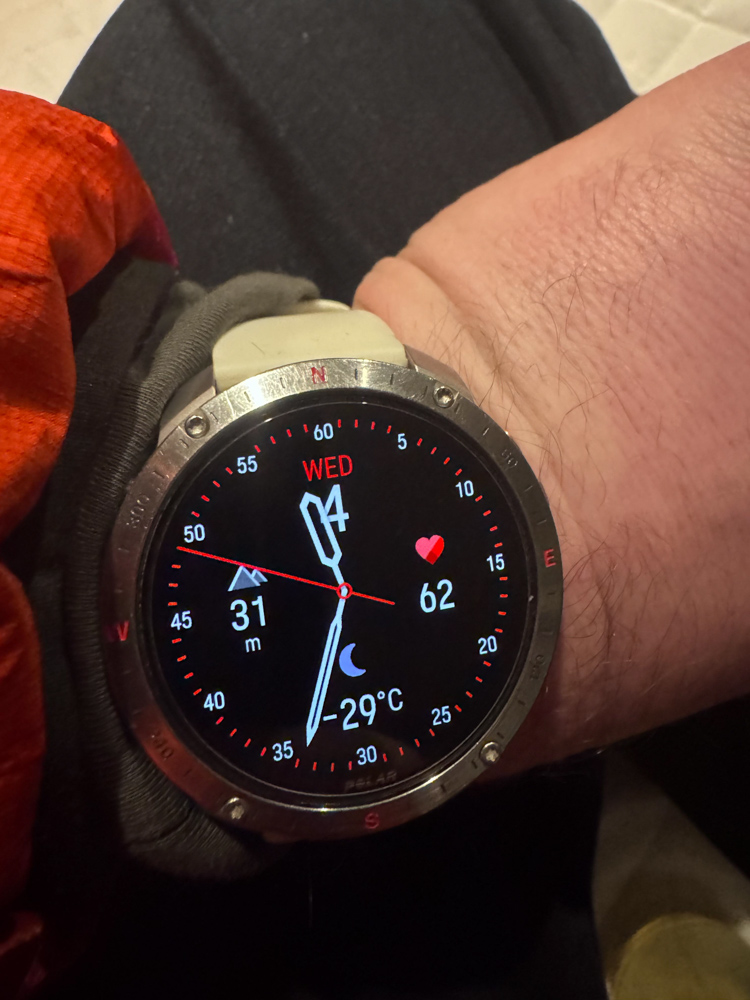
This year is different, however. At the briefing, Jerry Engstrom, the owner of FriluftsByn, tells us it’ll be one of the coldest Winter Hikes on record: highs of -17 and lows of -30. The room buzzes with a sense of “what have we signed up for?” as Jerry runs through the safety tips with extra detail. The next morning we shoulder our backpacks, faff with our snowshoes one last time and set off from the West Entrance of the Skuleskogen National Park.  

We’re told to “be bold, start cold” which feels wrong in these temperatures. But sweat is dangerous here. Damp layers lead to chills and hypothermia, and nothing is going to dry in these conditions. Over the next three days, temperature management will become constant: unzip, vent, layer up, drink, eat, repeat. 
Photos: Dave MacFarlane

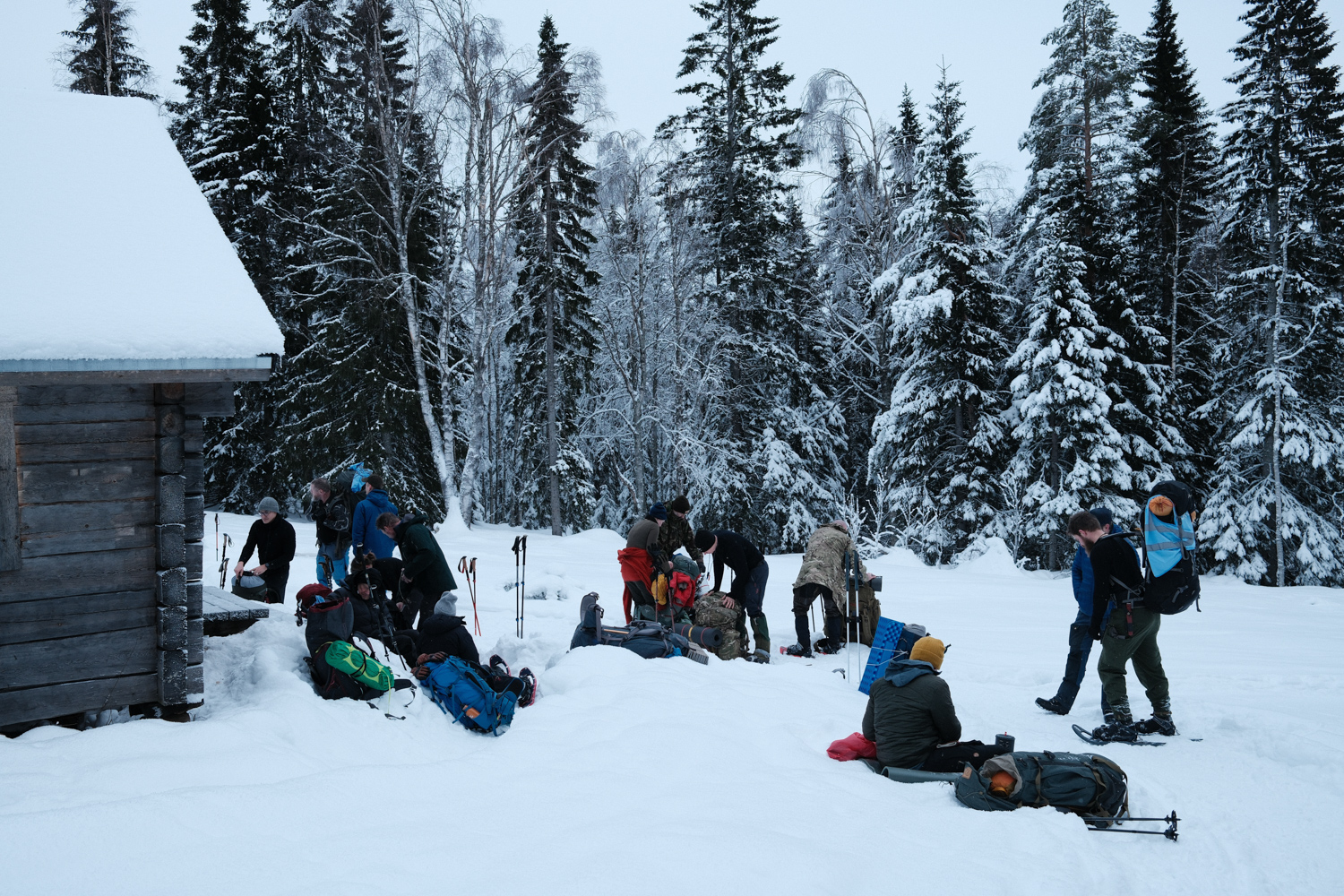
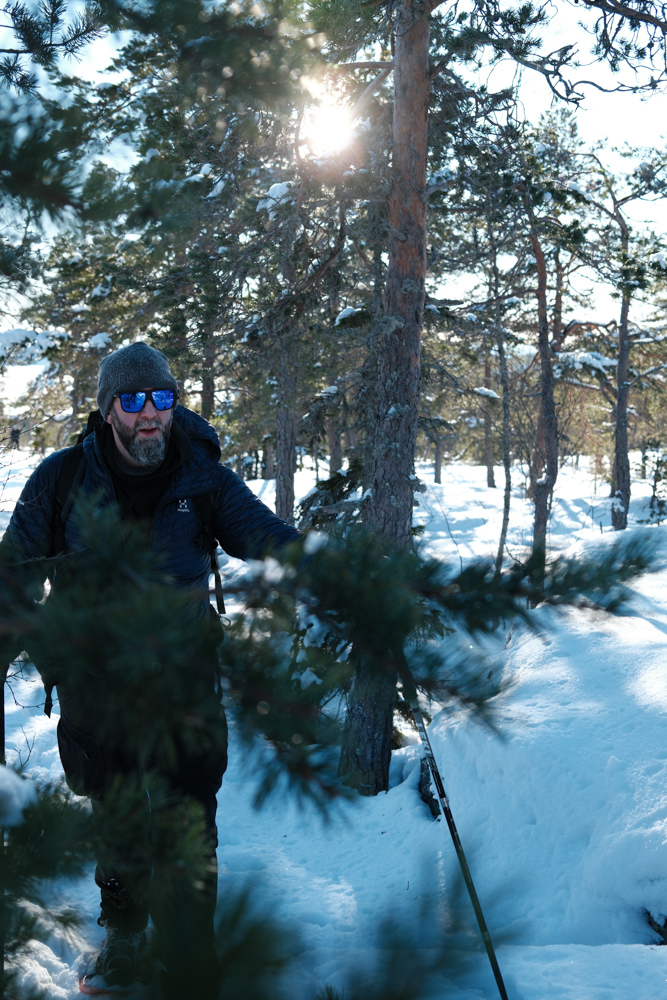
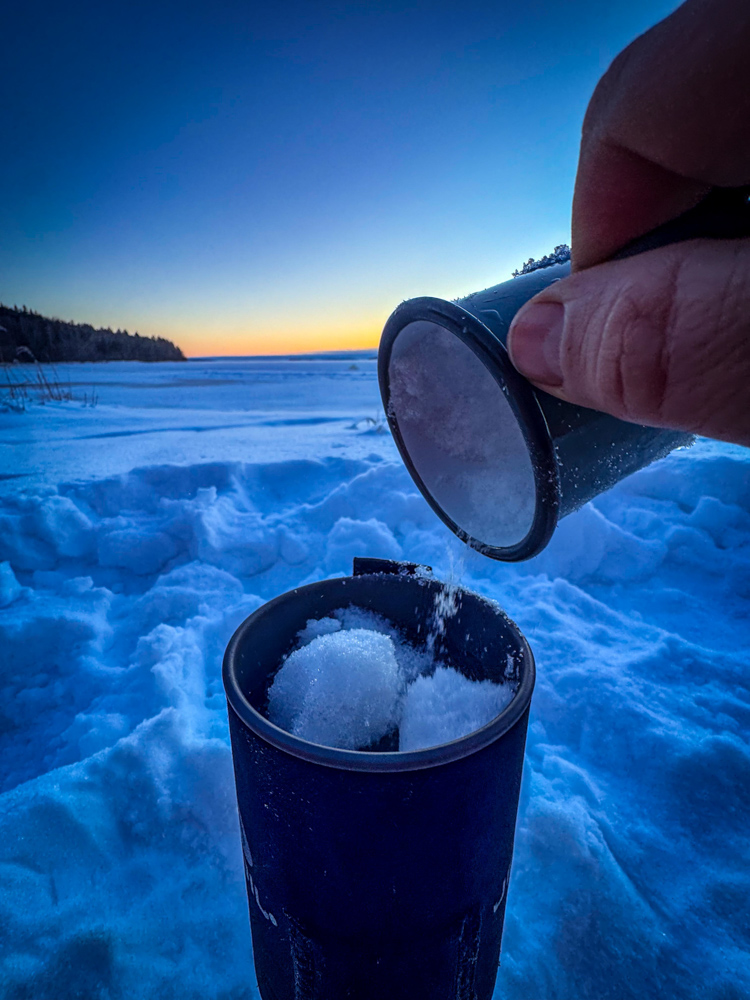
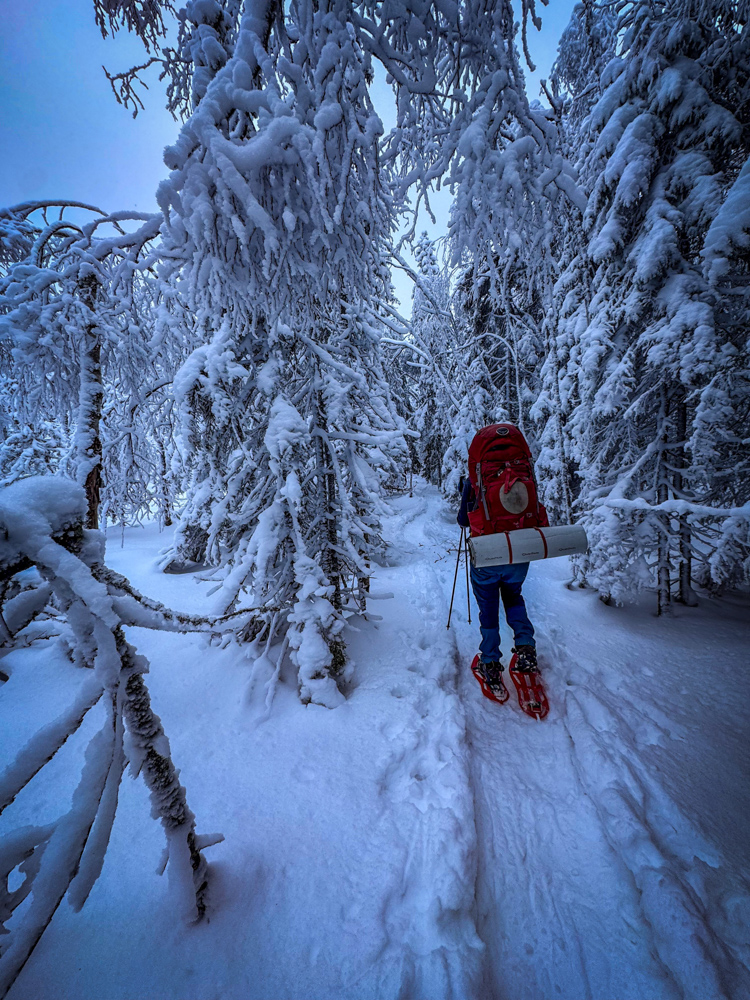
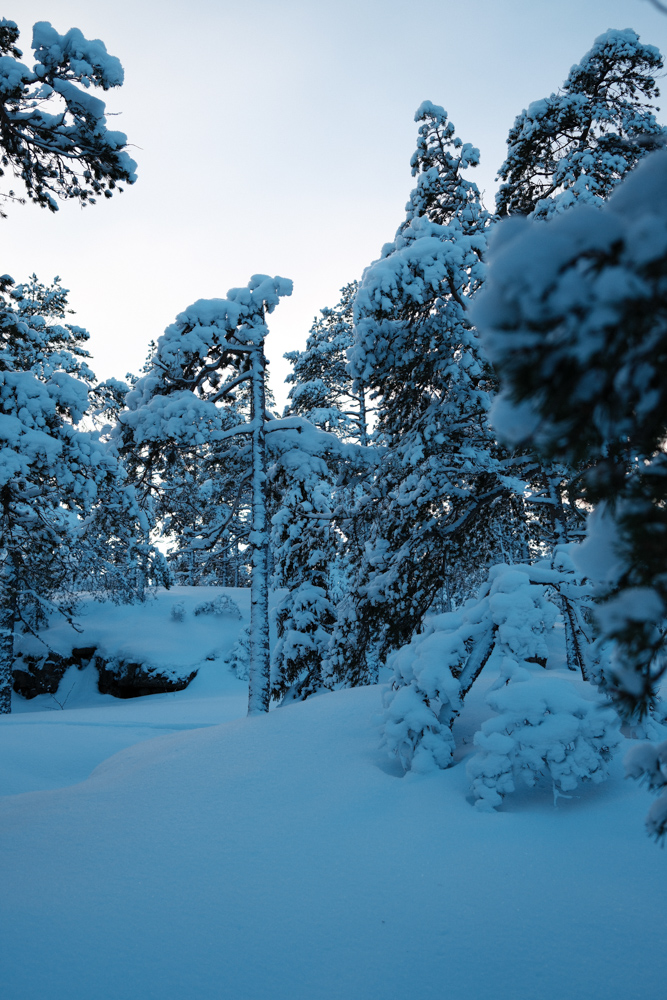
The snow is deeper than I’ve ever seen it here. Trees are thick with frosting and we whoomph along like yetis. At lunch in Norrsvedjebodarna, we immediately start melting snow. In winters like this there’s no running water and dehydrated meals plus cold dry air means you’re losing moisture all day. So when you stop, you melt. 

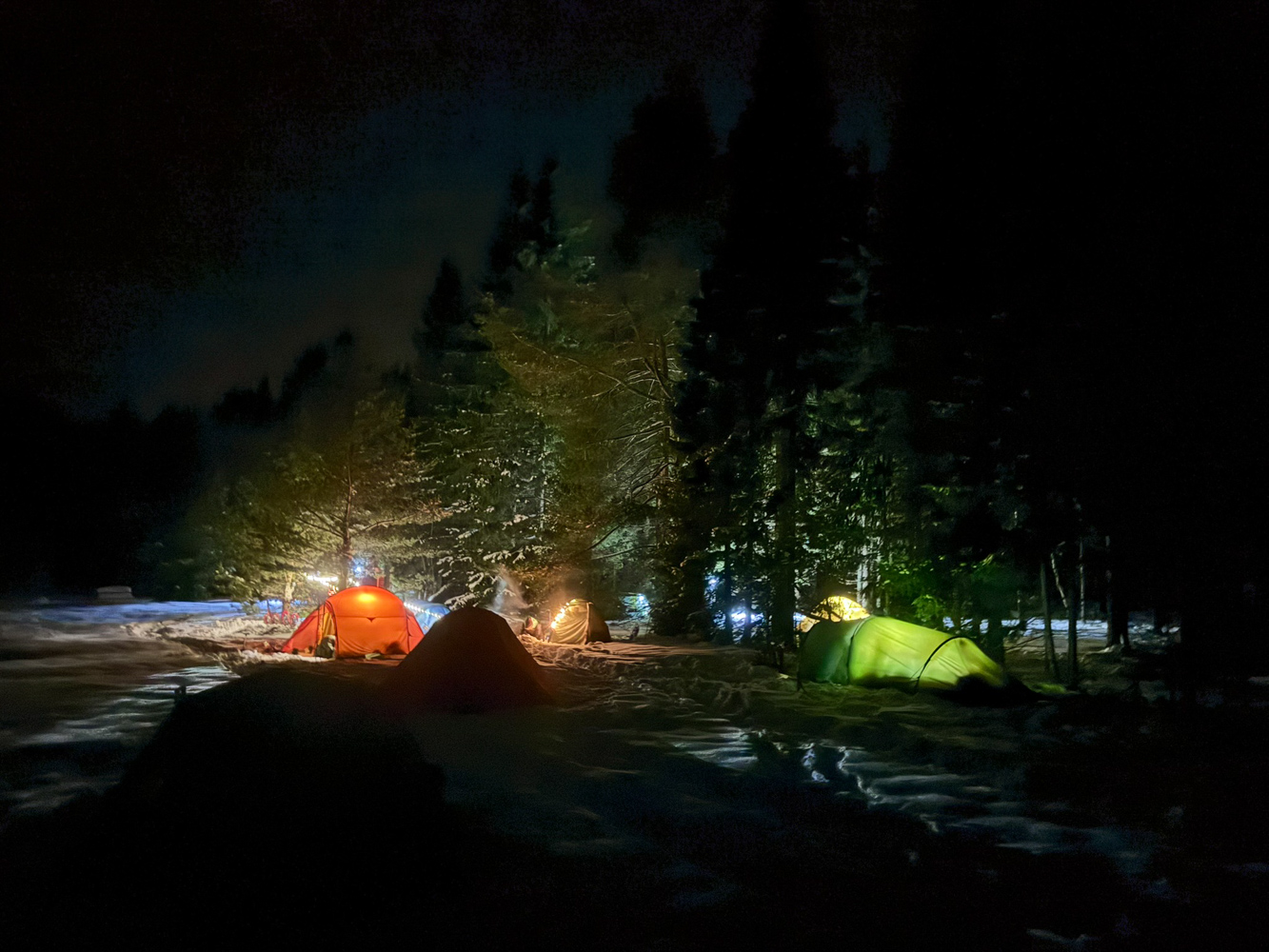
 Due to the forecast, the plans have changed. Instead of camping at exposed and remote Tärnättvattnen, we’ll spend both nights at Kälsviken, an inlet of the Gulf of Bothnia. It’s my favourite campsite anyway, and this also means our bags will be lighter for the second day. We arrive mid-afternoon. Normally this is a moment I savour: tent up, tea made, relaxing with the view. This year? There’s no lingering.  


First: stomp down the snow into a platform. Then pitch the tent and hope the snow pegs hold. Gloves off for dexterity, gloves on before your fingers sting or get stuck to the metal poles. It’s slow and awkward. As soon as my tent is up and my bed is made, I head straight to the fire. 

Related: Best Winter Gloves Reviewed
Related: Best Handwarmer Reviewed

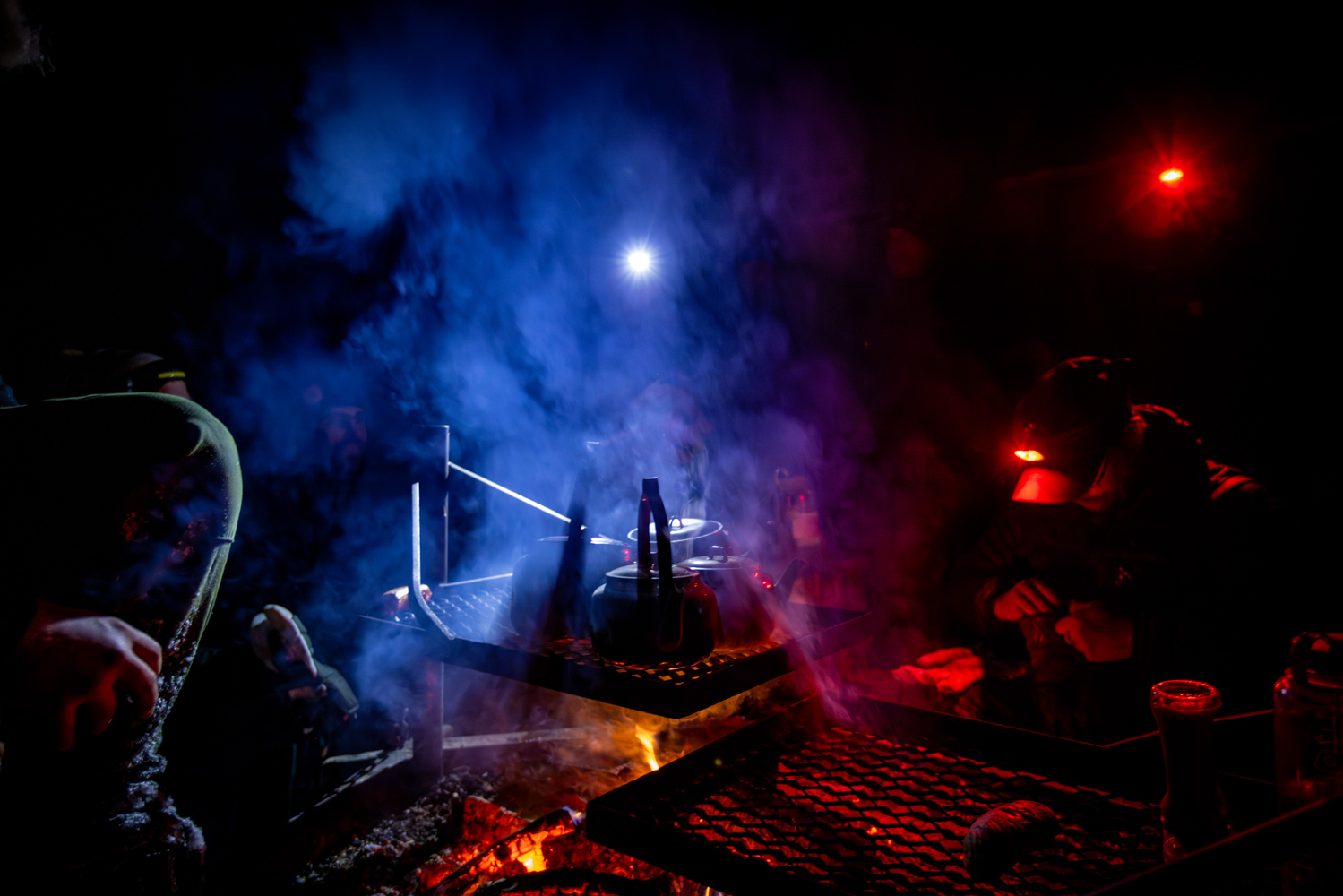
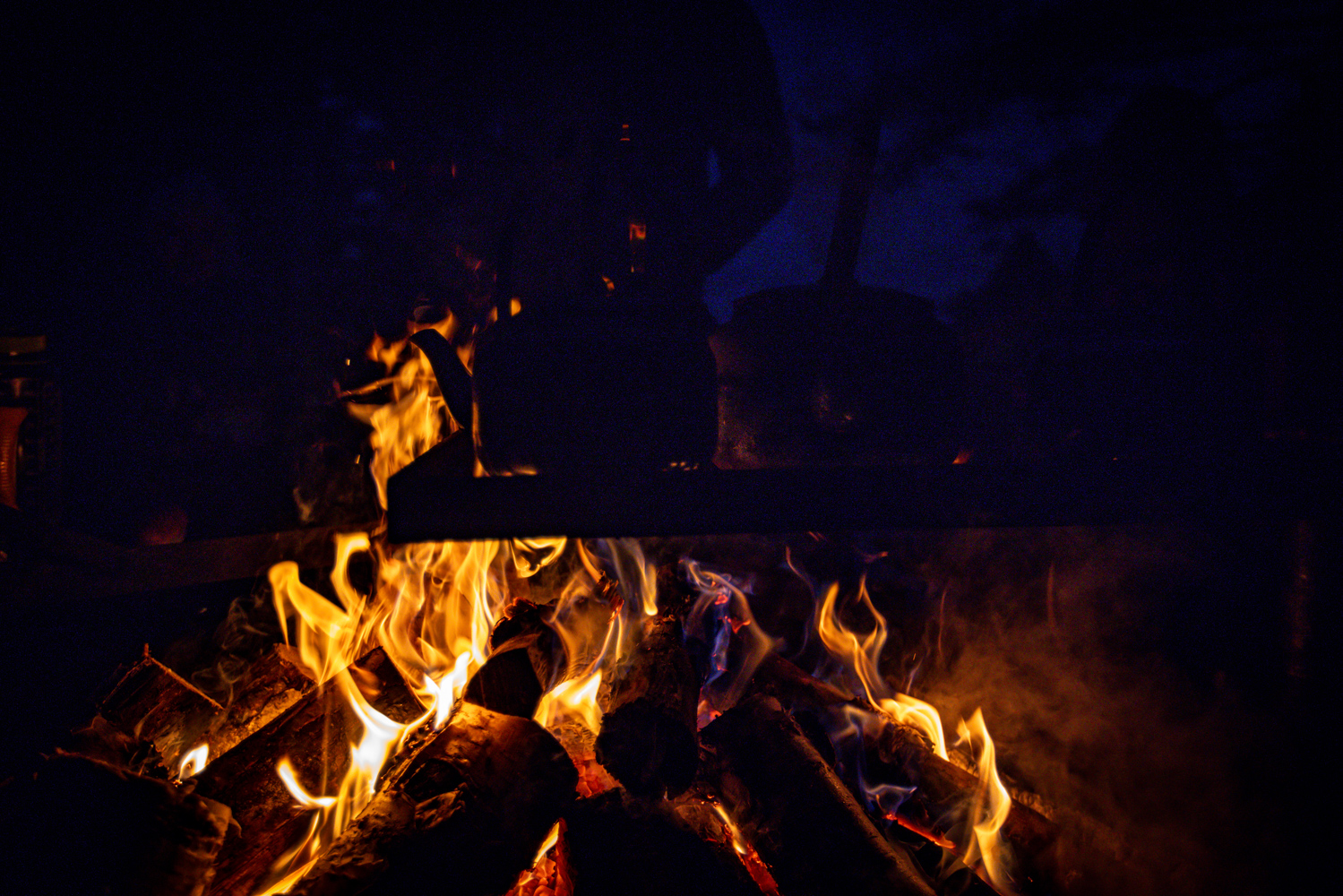
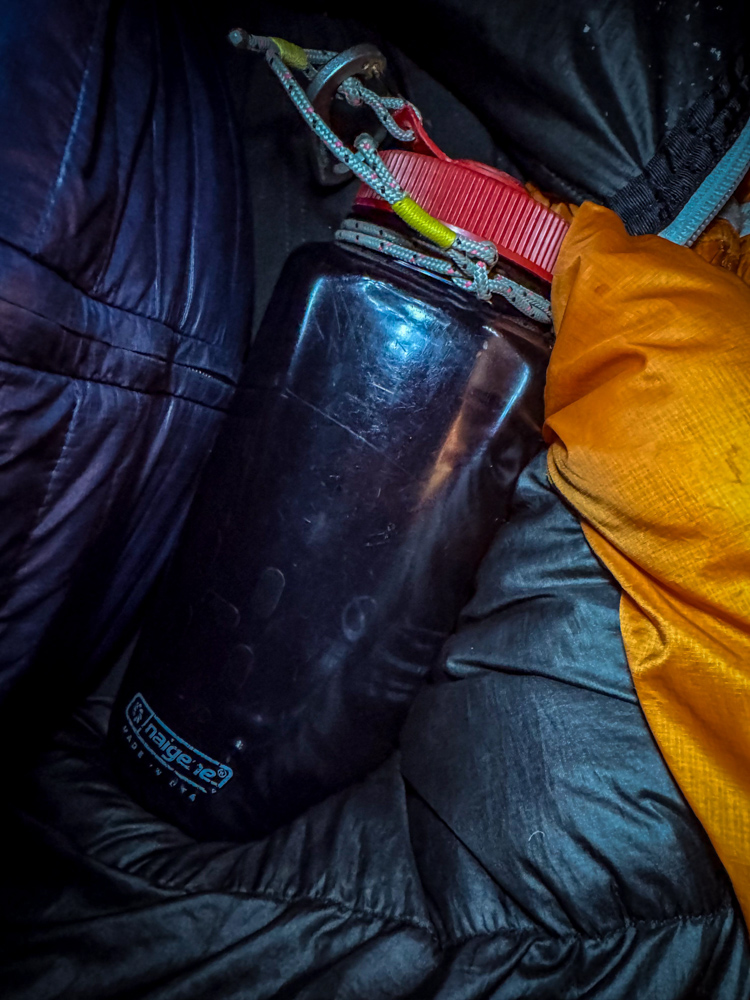
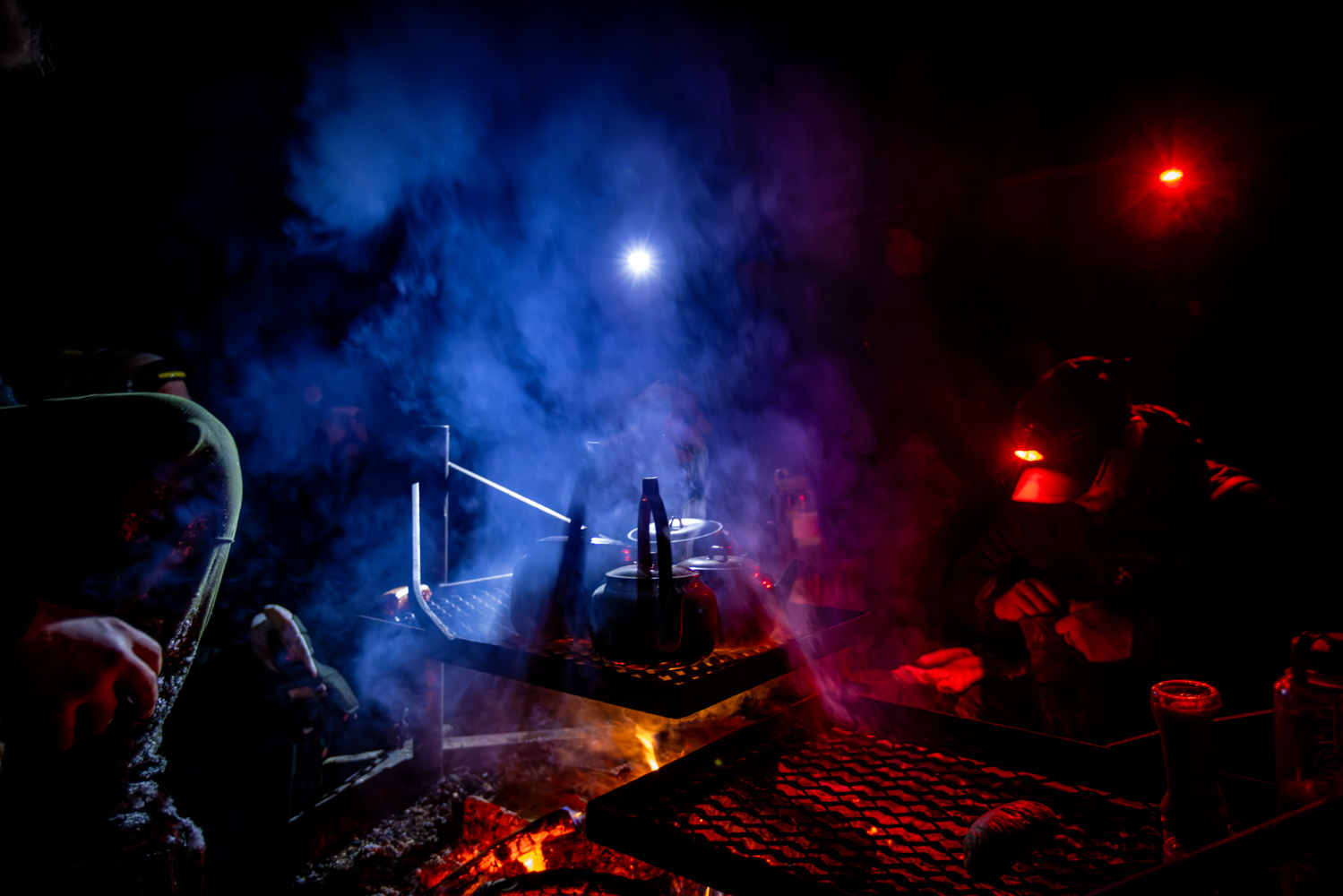
Feet are the next priority. Wet and cold feet are a bad combination: no-one wants chilblains, frostbite or blisters out here. Around the fire, we rotate boots and socks, balancing them close enough to dry but not close enough to melt. As I drink a hot chocolate made with smokey fire water, tales circulate of someone who destroyed his Hanwag boots right here. I manage to blister my Nalgene trying to stop it freezing. 

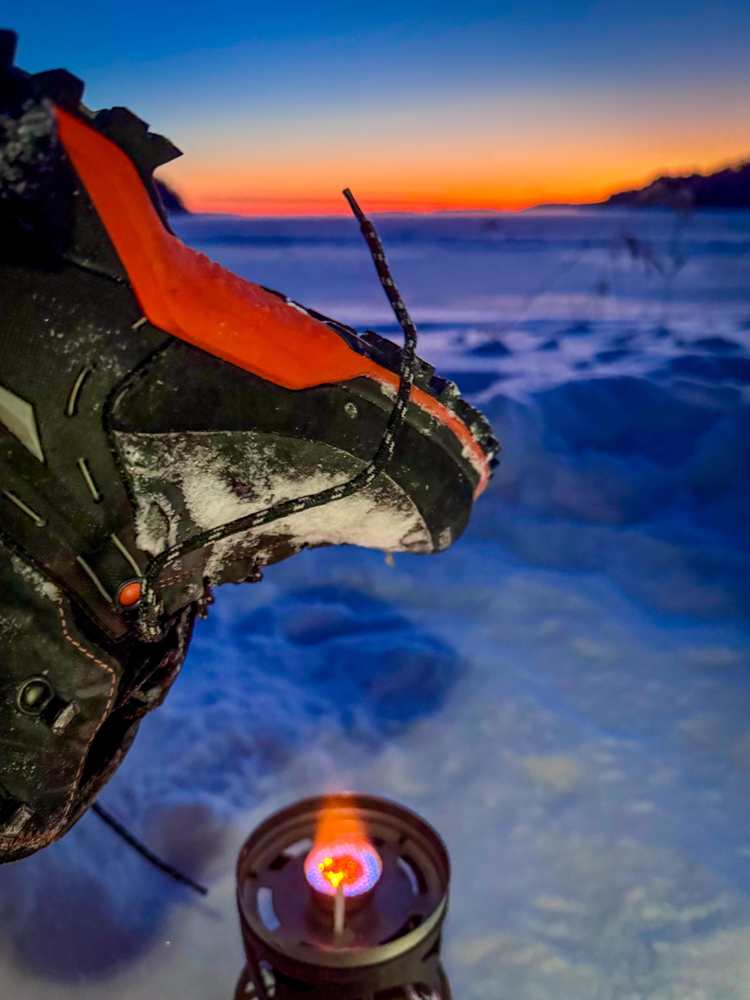
The cold affects everything we have with us. The stoves struggle – even with winter gas. My toothpaste is frozen, and the wet wipes belonging to my hiking buddy Dave have become icy tiles. Feeling a little feral, we finally leave the campsite and have the forest to ourselves.  

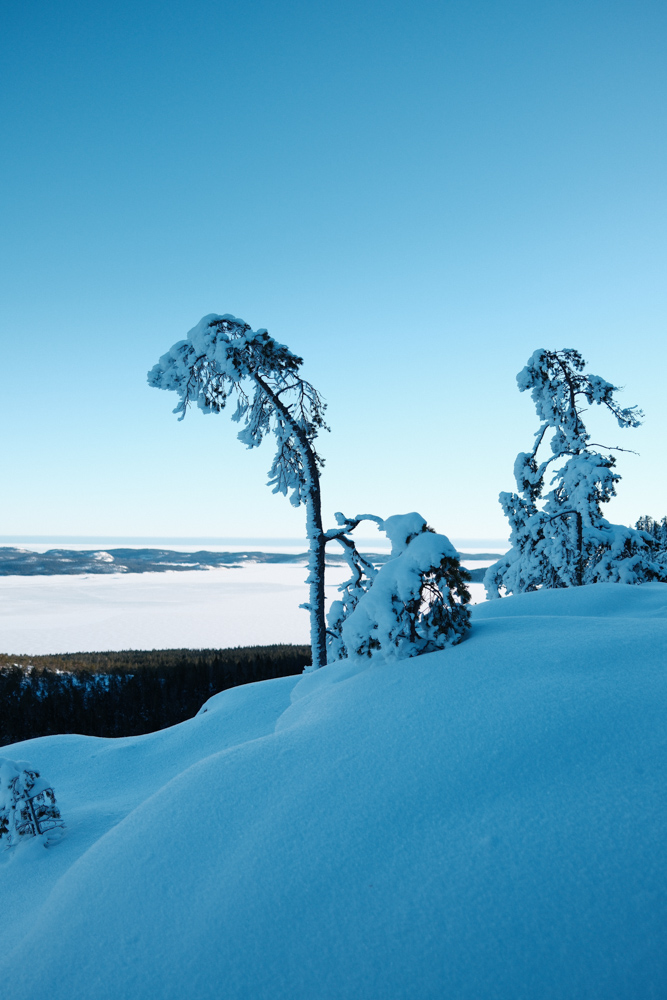
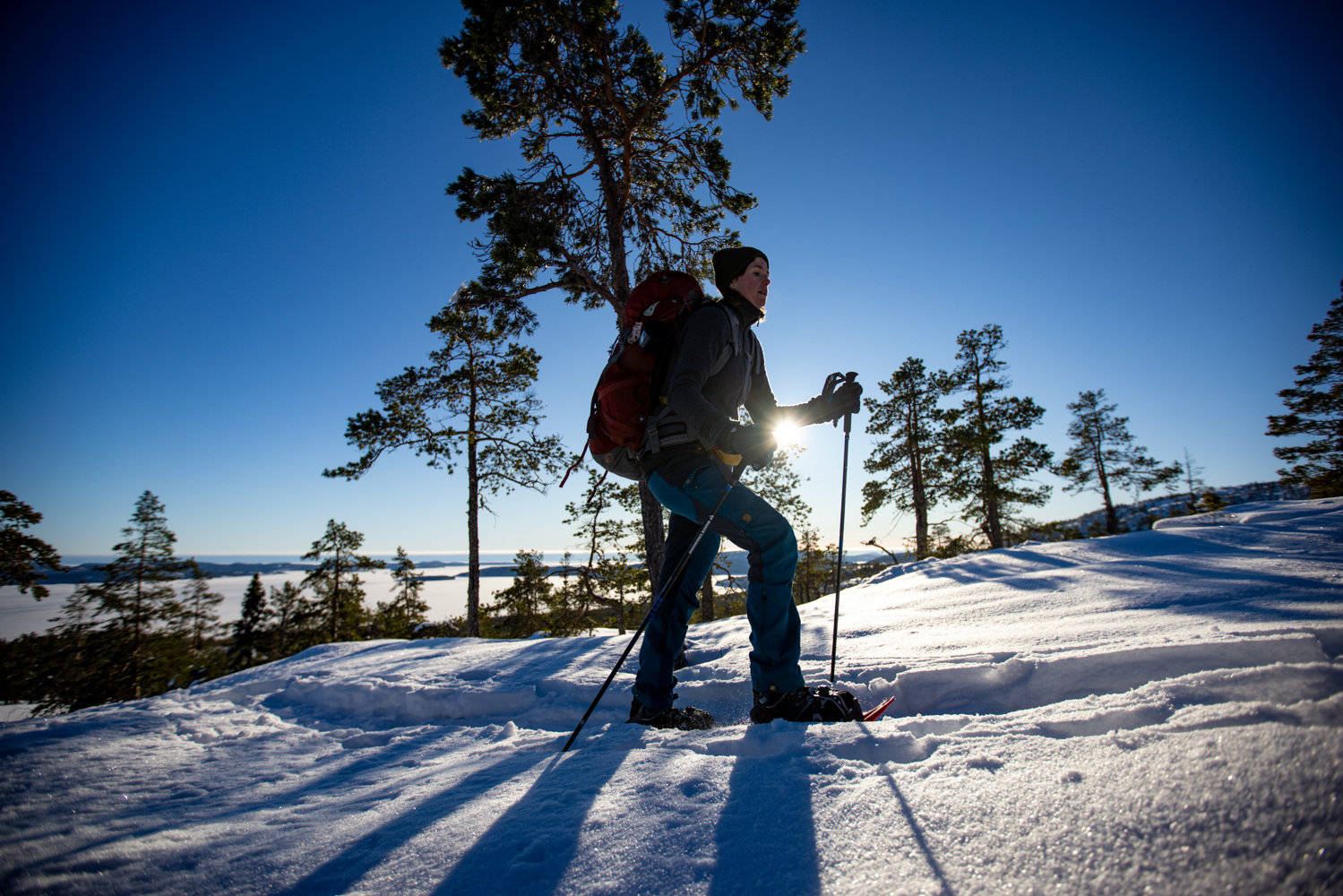
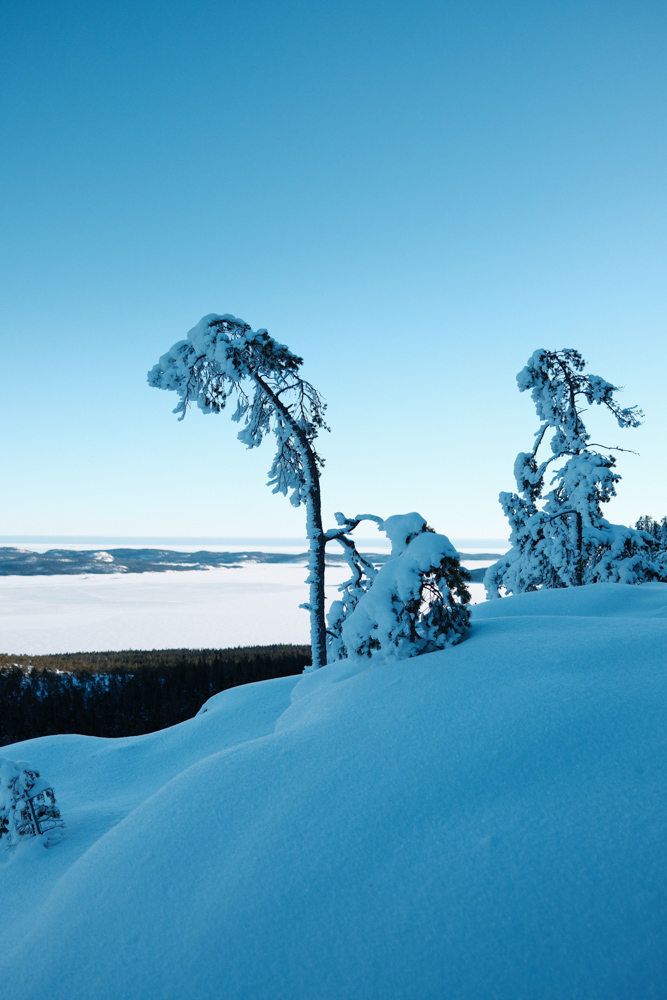
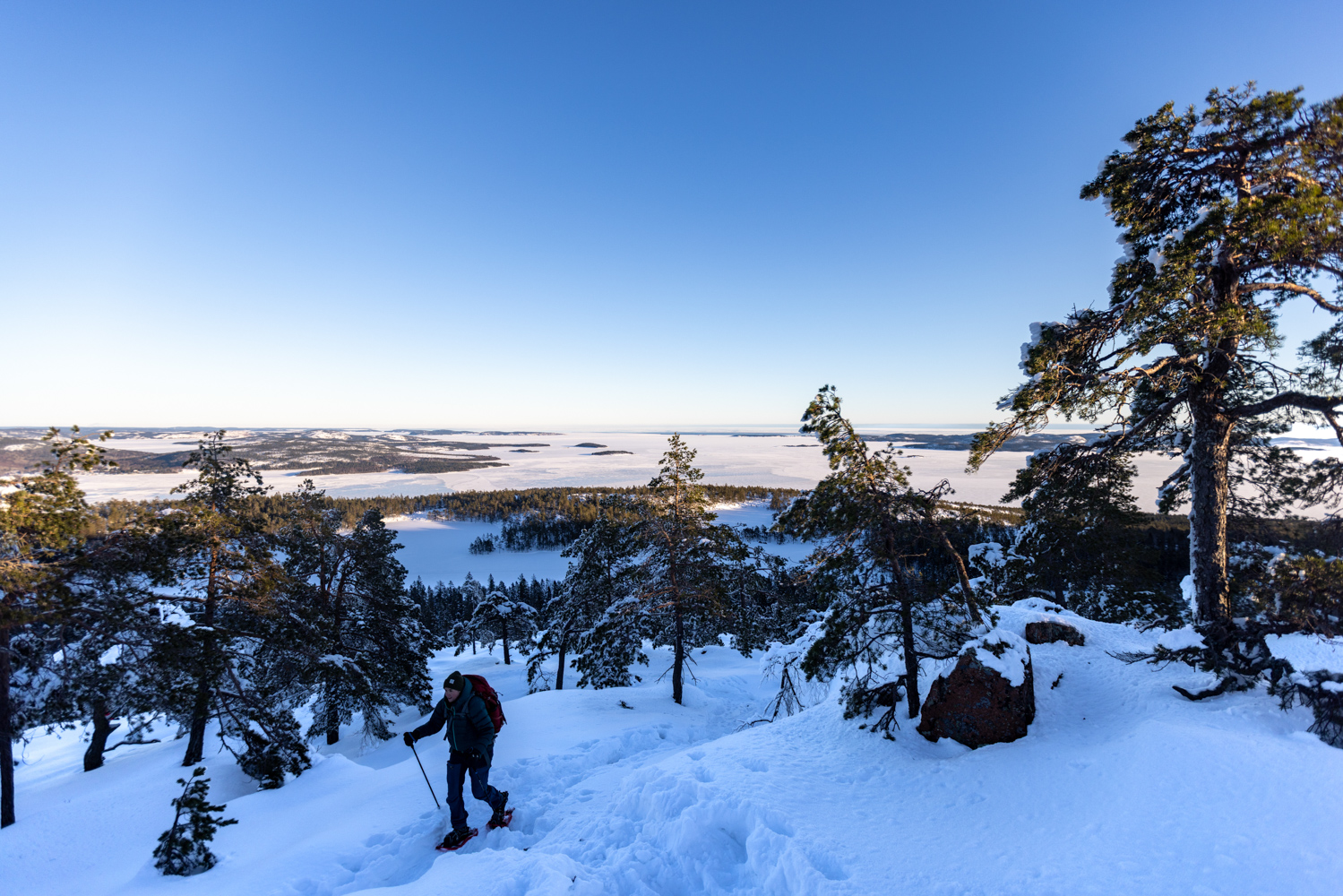
The air is so cold the inside of my nostrils freeze, but the climb from Naskebodarna warms us up. The High Coast, a UNESCO World Heritage Site, has the highest coastline in the world and from the top, islands and inlets merge into one frozen landscape. At lunch at Tarnattvattnen, I toast some of my frozen bread on the fire while Dave tries to thaw the squeezy cheese in a tube. Nothing is safe from the cold here.   

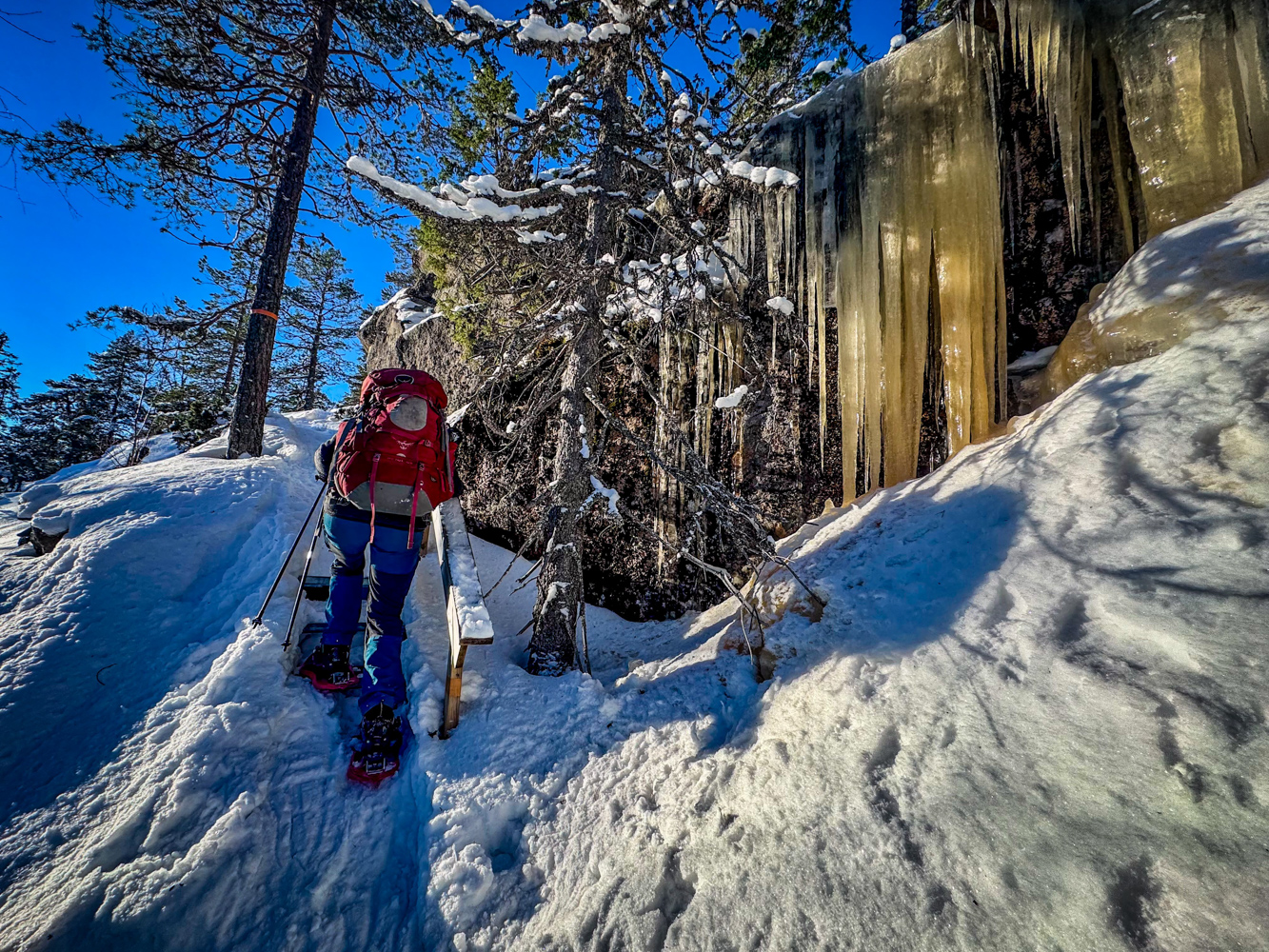
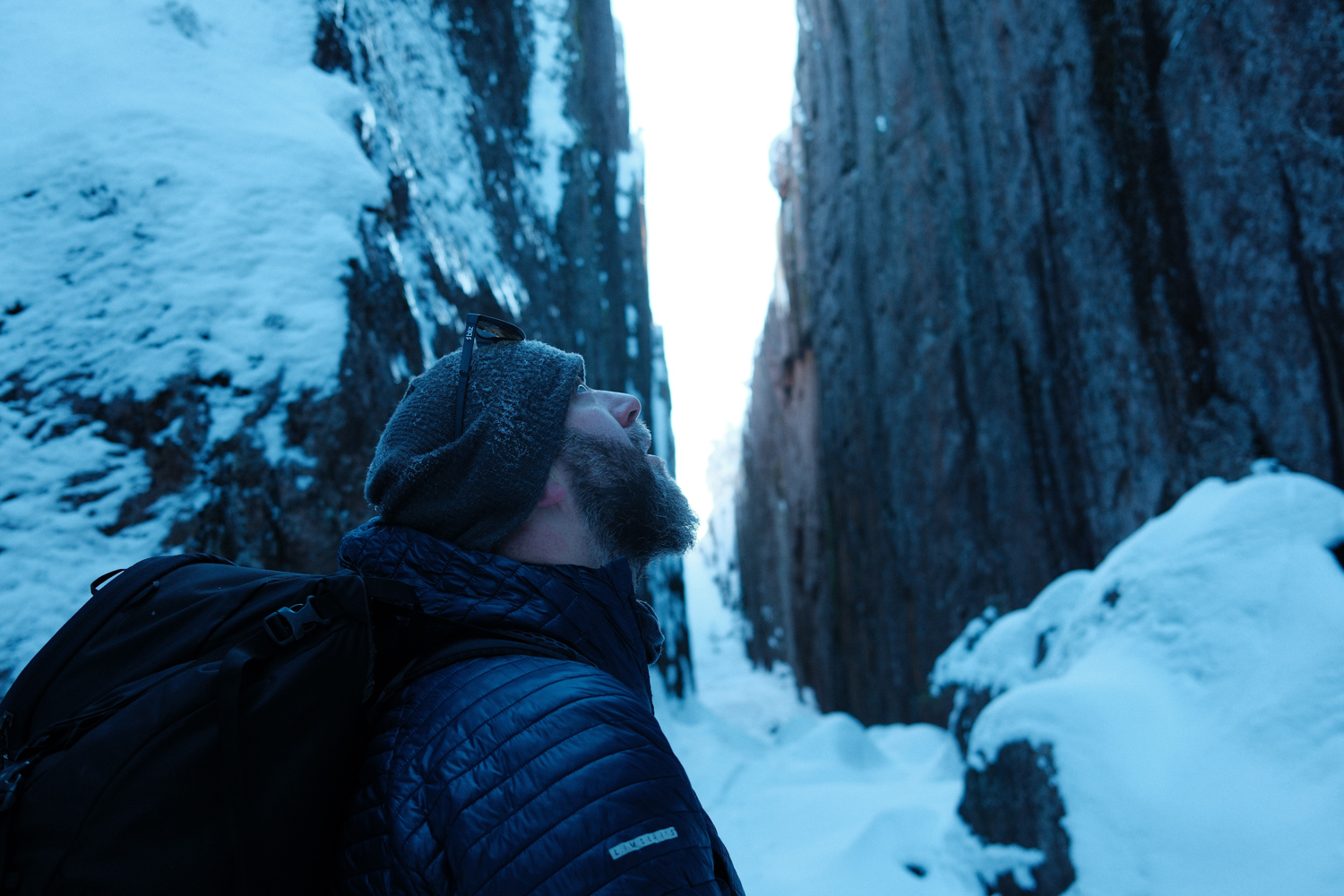
We continue towards Slåttdalskrevan – a deep and imposing gorge – passing candy cane trees dripping with snow. On one steep section, I abandon dignity and crawl on hands and knees, jamming my snowshoe claws in the snow hoping they hold. At the top of Slåttdalsberget, we catch golden hour light before the wind chases us back to camp. 

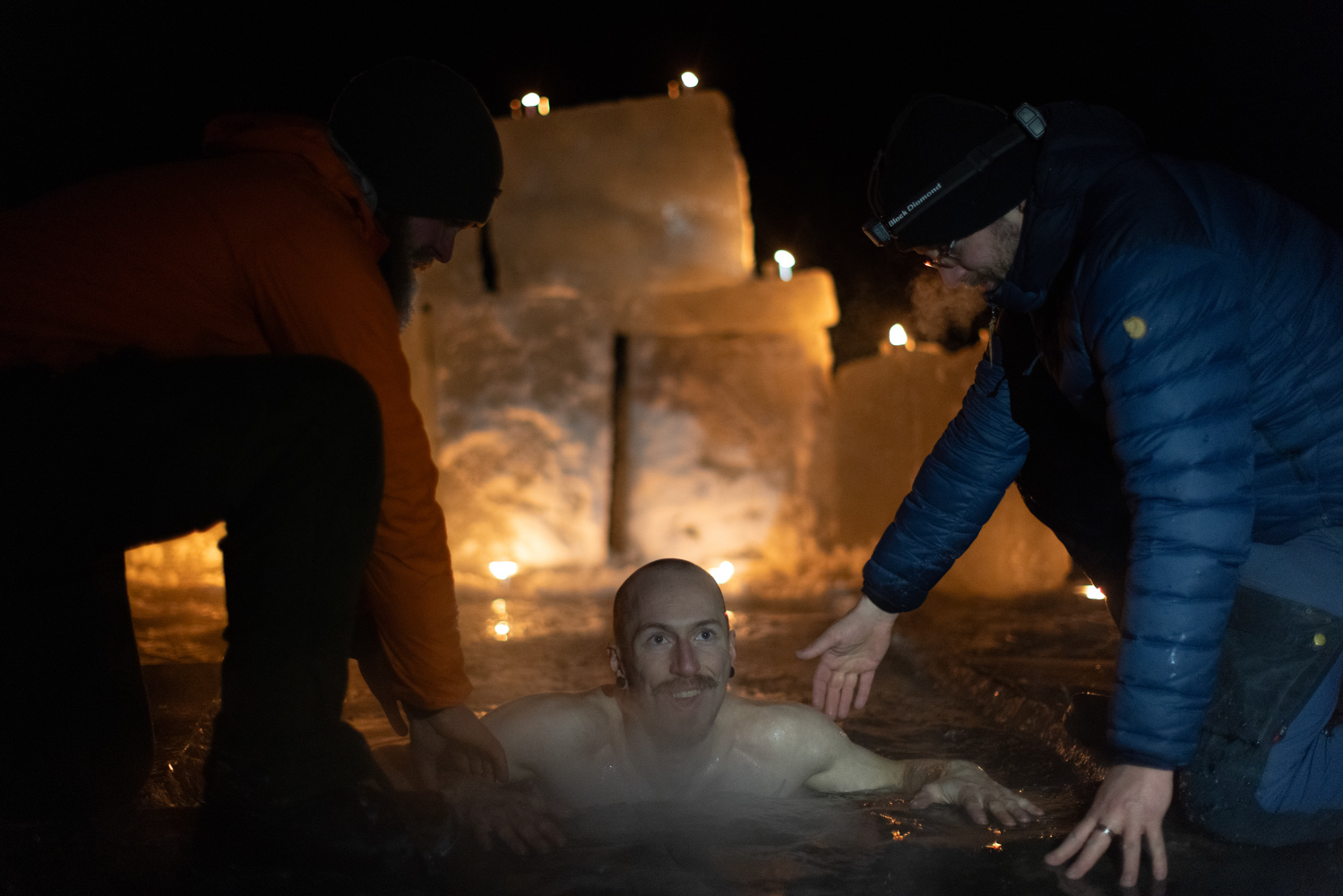
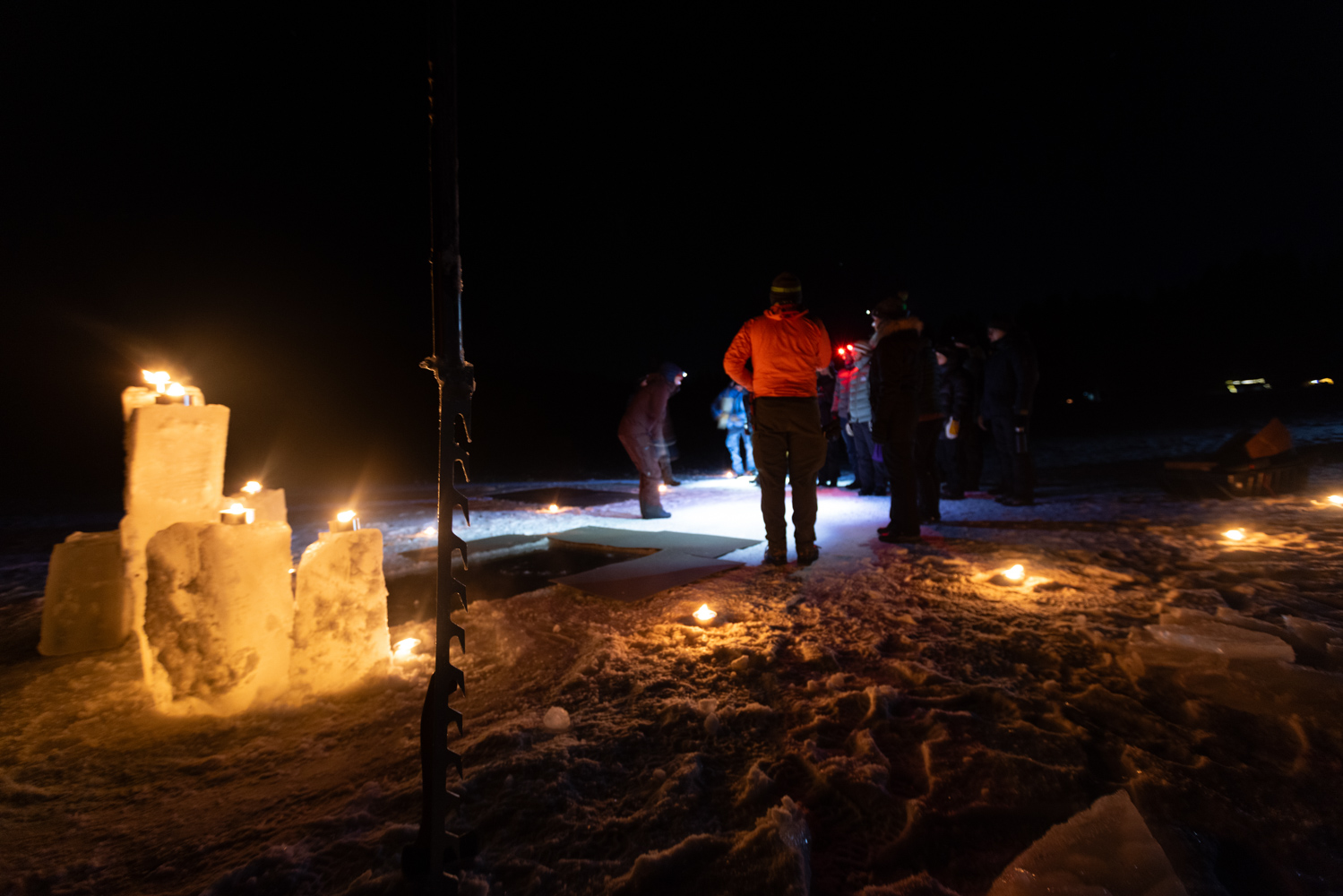
Friday night is the Woolpower Dip where volunteers jump through a 40cm hole cut in the ice before warming up in fresh merino layers courtesy of Östersund-based Woolpower. Having done it in 2019, I can confirm it requires a certain amount of madness. One year there was no ice at all and participants had to run straight into open water – a sobering reminder of the volatility of the world’s climate these days. 

The Woolpower Dip – not a mandatory part of the trip!

This year there’s plenty of ice, but what’s missing is whisky. Normally hip flasks are pulled from down jackets as adventure stories are swapped round the fire. This time we’ve been told to leave them at basecamp. Alcohol in these temperatures can make you feel warmer than you are and impairs your judgement – not ideal at -30. So we settle for a hot chocolate instead. 

The second night is the coldest I’ve ever spent in a tent. It’s a careful balance between breathing and keeping my face covered. My layering system and double mat combo – foam plus insulated inflatable – keep me pretty toasty. In the morning, condensation from my breath has frozen on my sleeping bag. Over my morning tea, I dry it out by the fire.  

On our final day, we send most of our heavy kit back to basecamp and set off for the two mountains between us and the finish line. There are some sense of humour failures when I realise how much ascent there is still to go and at one point I give up trying to stay upright on the descent and slide down on my bum instead. Fuelled up on blåblarsoppa from the crew, we begin the final push up Skuleberget. Energy and daylight are fading but the cowbells ringing in the distance and red flags cheering up the landscape spur us on. We high-five across the finish line, celebrate with goulash and beer before catching the last ski lift down. 

This year’s Winter Hike was a totally different experience. The familiar faces, landscapes and the smell of woodsmoke were all still there. But this time it was all about adapting to and surviving in extreme conditions. It was about knowing your kit well enough to use it with numb fingers. About constantly checking in with yourself and your friends – am I sweating, hydrated, too hot, too cold, are my feet dry? It was about choosing safety over those moments that make the magic.  

With thanks to Visit Sweden and Friluftsbyn for their support.

Words: Sarah Hewitt
Photos: Dave MacFarlane and Sarah Hewitt​

production