Passenger, in case you didn’t know, are a British brand founded in 2012 who’ve steadily been getting more and more popular in the outdoor world, gaining a reputation for making practical kit at decent prices, with strong environmental ethics grounding what they do.
Related: Best Daypacks
In the past, we’ve reviewed some of their jackets, such as the Five Element and the Ashland jacket, as well as a few of their shorts, such as the Drifter beach shorts, and the Traveller All Purpose shorts. This, however, is the Tide 25L dry bag backpack, a versatile waterproof pack from Passenger that we’ve been testing this summer.
How I Tested It
I recently used the Tide 25L as my main pack for a week-long camping trip to the Pembrokeshire coast in Wales. Most of the trip involved hiking along the Pembrokeshire Coastal Path from beach to beach, exploring as many swimming spots as possible. I filled the backpack with all my swimming gear, a travel towel, snacks for the day, water bottles, and other beach essentials such as sun cream, sunglasses and a good book.
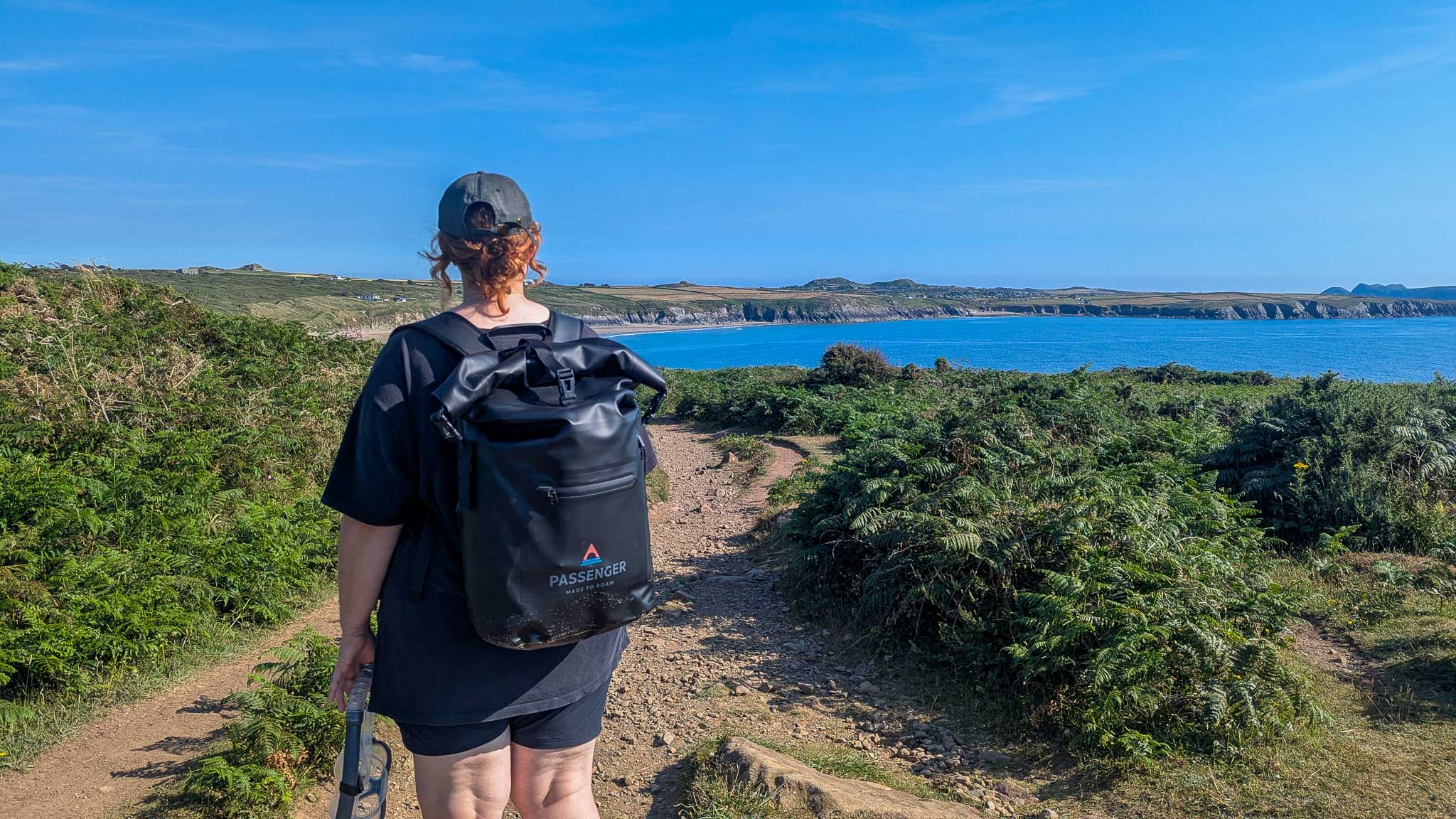
The length of these walks ranged from smaller 20 minute walks right through to 3 hour walks along the coastline in highs of 30 degrees in some places. On one occasion, I used the pack for a 3.5 hour loop of Skomer Island, Wales’ second largest island. The bag was packed full of camera gear here, as well as plenty of water to stay hydrated during the heatwave.
I’m planning on taking the Tide pack with me to Lough Erne in Northern Ireland in September for some canoeing so stay tuned for updates on that front.
Passenger Tide 25L Waterproof Backpack: The Top Line
A genuinely tough waterproof pack made from 100% recycled nylon, this dry-bag/ backpack hybrid is a very practical companion for aquatic adventuring. Ideal for short to medium length coastal day hikes, beach hopping and canoeing alike, at just under £100, it’s good value for your money too.
Passenger Tide 25L
★★★★
Price: £99.95
Weight: approx. 1.2kg
Best for: wild swimming, short to medium length coastal day hikes, beach hopping, travel, canoeing
Pros: tough build, recycled materials, great capacity, comfy back system, good value, versatile
Cons: gets hot in very warm weather, no hip belt, drawbacks in breathability
Design and Materials
The main material here is 100% recycled nylon accompanied by a tough TPU laminated coating. In a nice touch from Passenger, they offer a full breakdown of the impact of each product they sell. In this instance, you can trace the manufacturing to China and there’s a detailed breakdown of the total distance the bag will have travelled during its lifespan so far, as well as an estimate of CO2 emissions. For more details, look out for the ‘Impact’ section here.
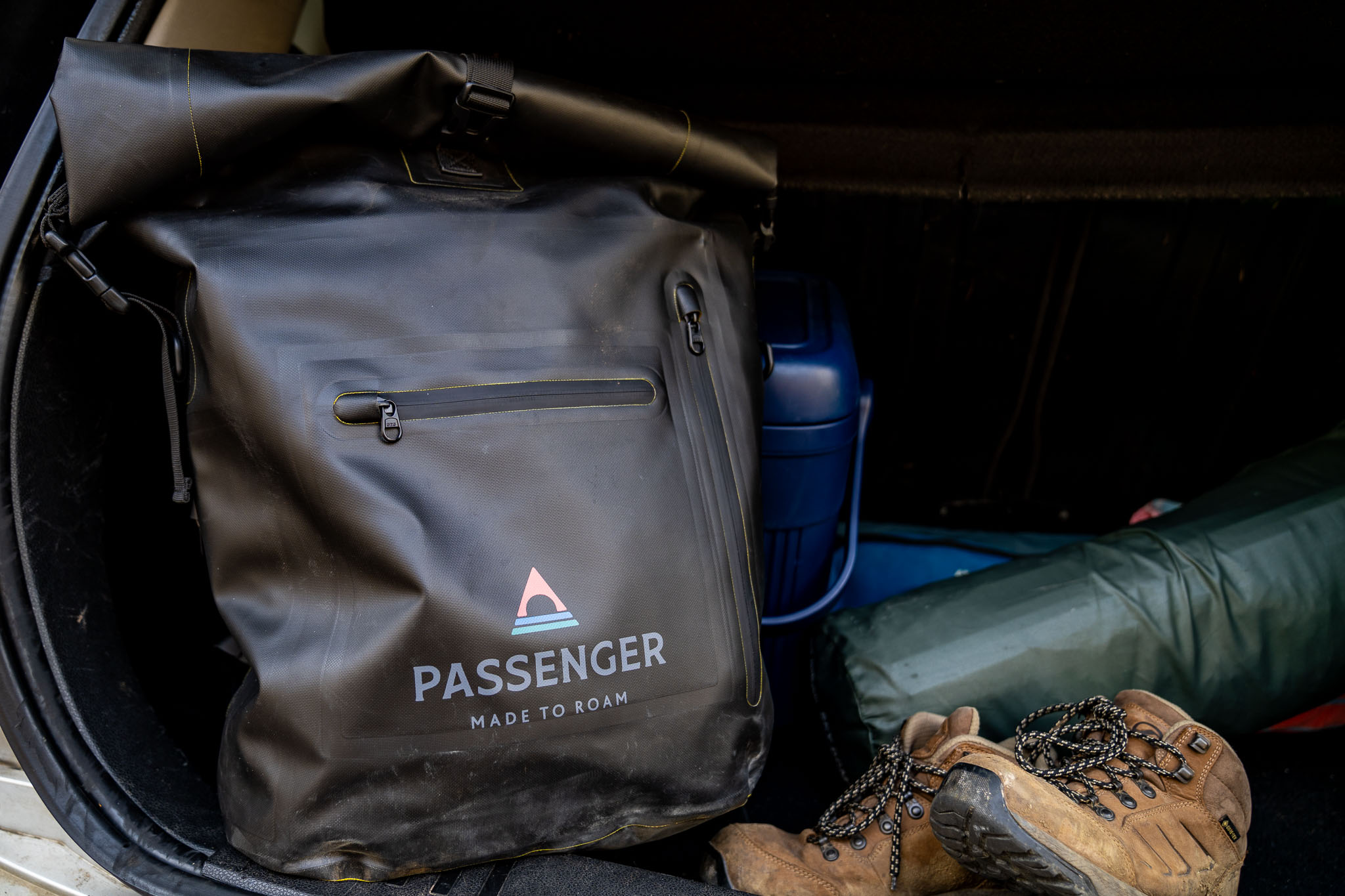
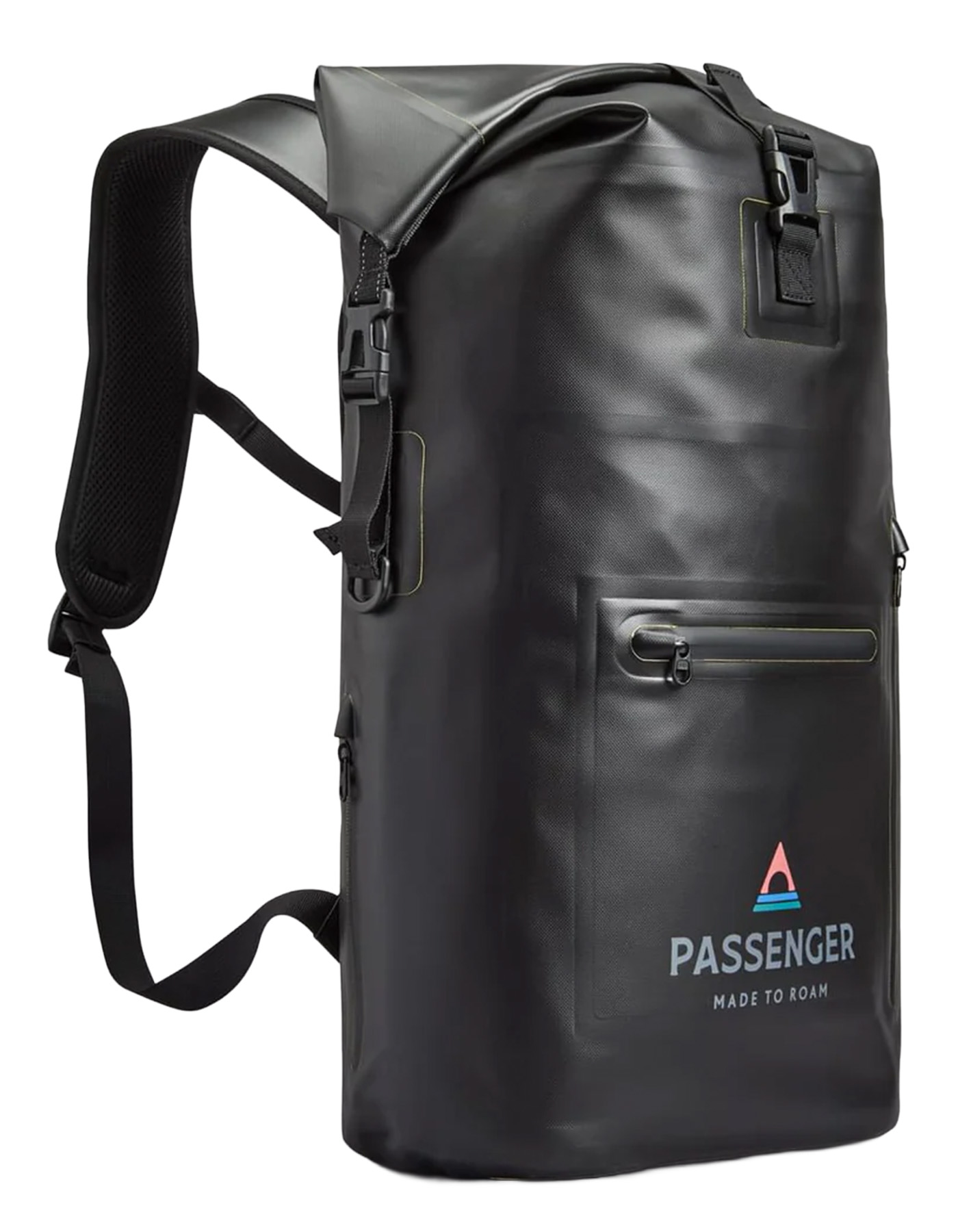
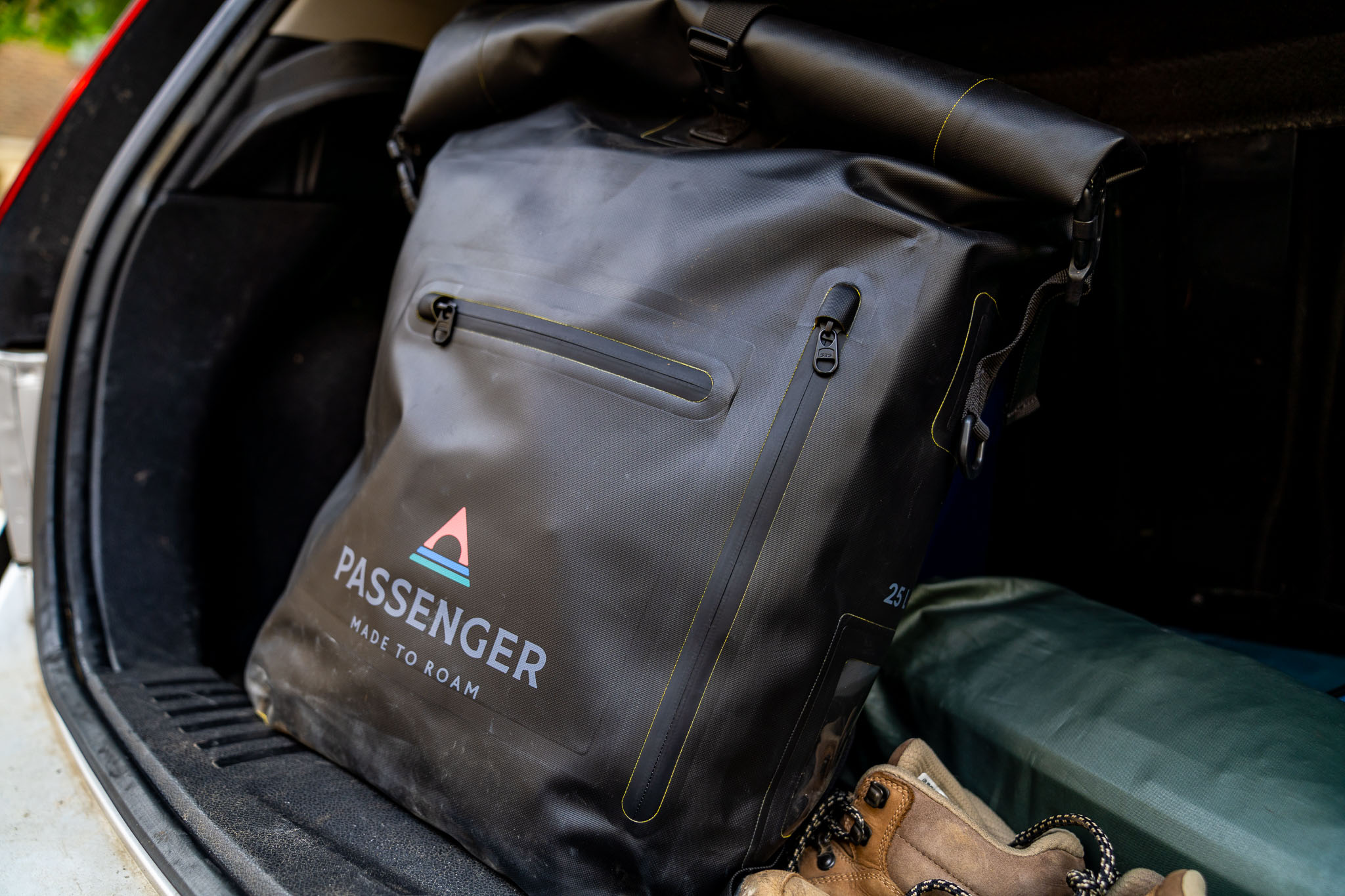
Elsewhere across the bag you’ll find two external front pockets, an internal zippered pocket, an internal detachable laptop sleeve, along with an internal ski-pass/ ID card window with visibility from the outside. The back panel features ergonomic padding with slightly padded shoulder straps and an adjustable sternum strap. To carry it with your hands, there’s a rubberised top grab handle.
The overall design is a roll-top style of bag with a large, minimalist main compartment, not unlike smaller dry bags you might use inside your hiking backpack. The overall capacity is 25L, though thanks to this large main compartment, it feels a lot bigger.
What Is It Best For?
In my experience, I’ve found the Tide 25L pack great for coastal holidays where you’ll be doing a mixture of beach hopping and short day hiking. Likewise, it’s been great for shorter outdoor swimming trips, trips to your local swimming pool, as well as on one extremely rainy cycle where I knew I’d need something properly waterproof.
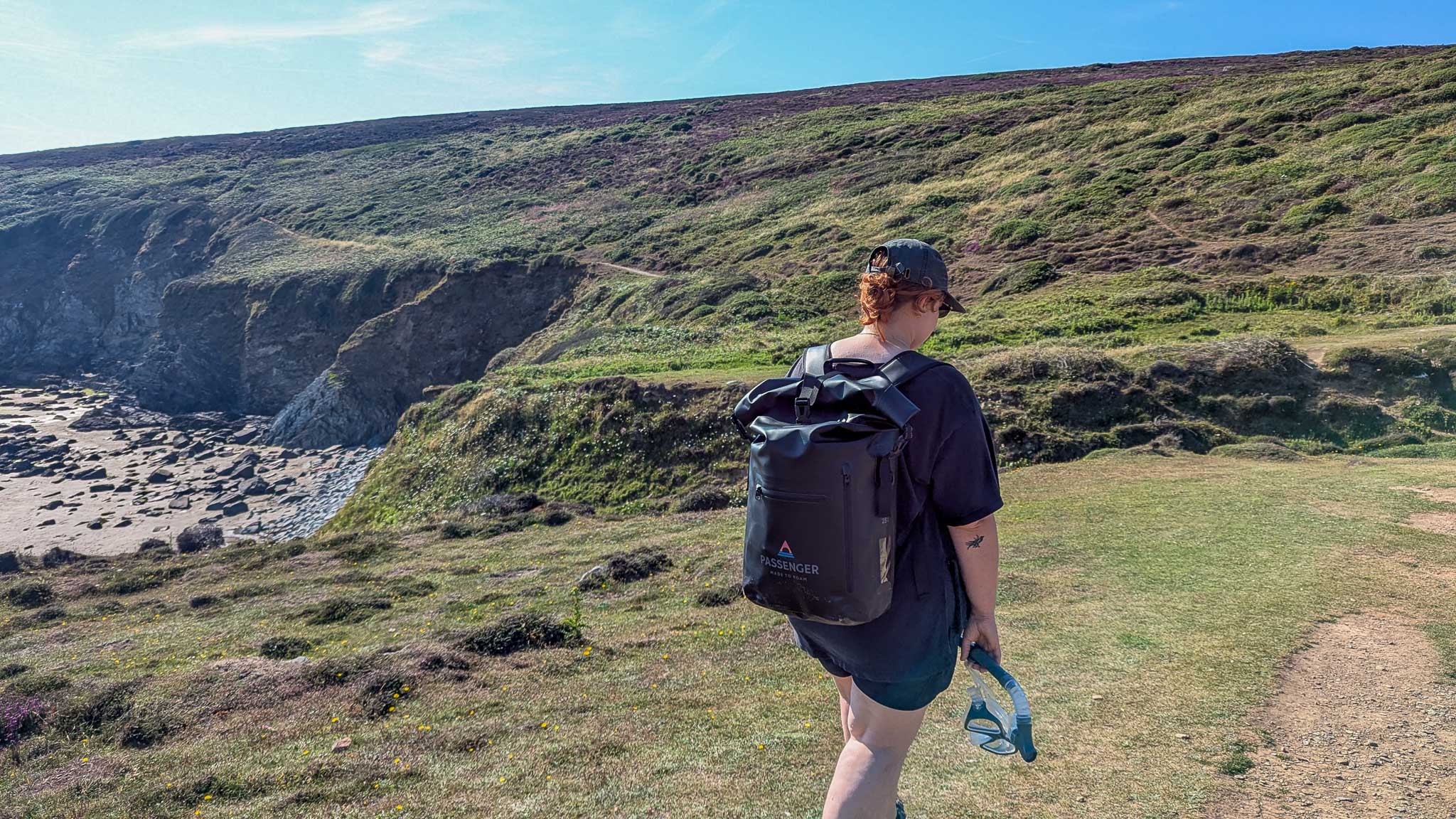
In Pembrokeshire, on a week-long camping trip, I found it really handy for hiking along the coastal path from beach to beach. The back system provided enough stability and support for hikes of up to 3/4 hours, while the waterproofing and handy pockets helped me separate my soggy swimming gear from essentials like my phone, keys and wallet.
For anything longer than 3/4 hours, I’d personally opt for something more supportive and breathable, however, for what the Tide is designed for – swimming trips, aquatic adventures and light hikes – I’ve found it really useful.
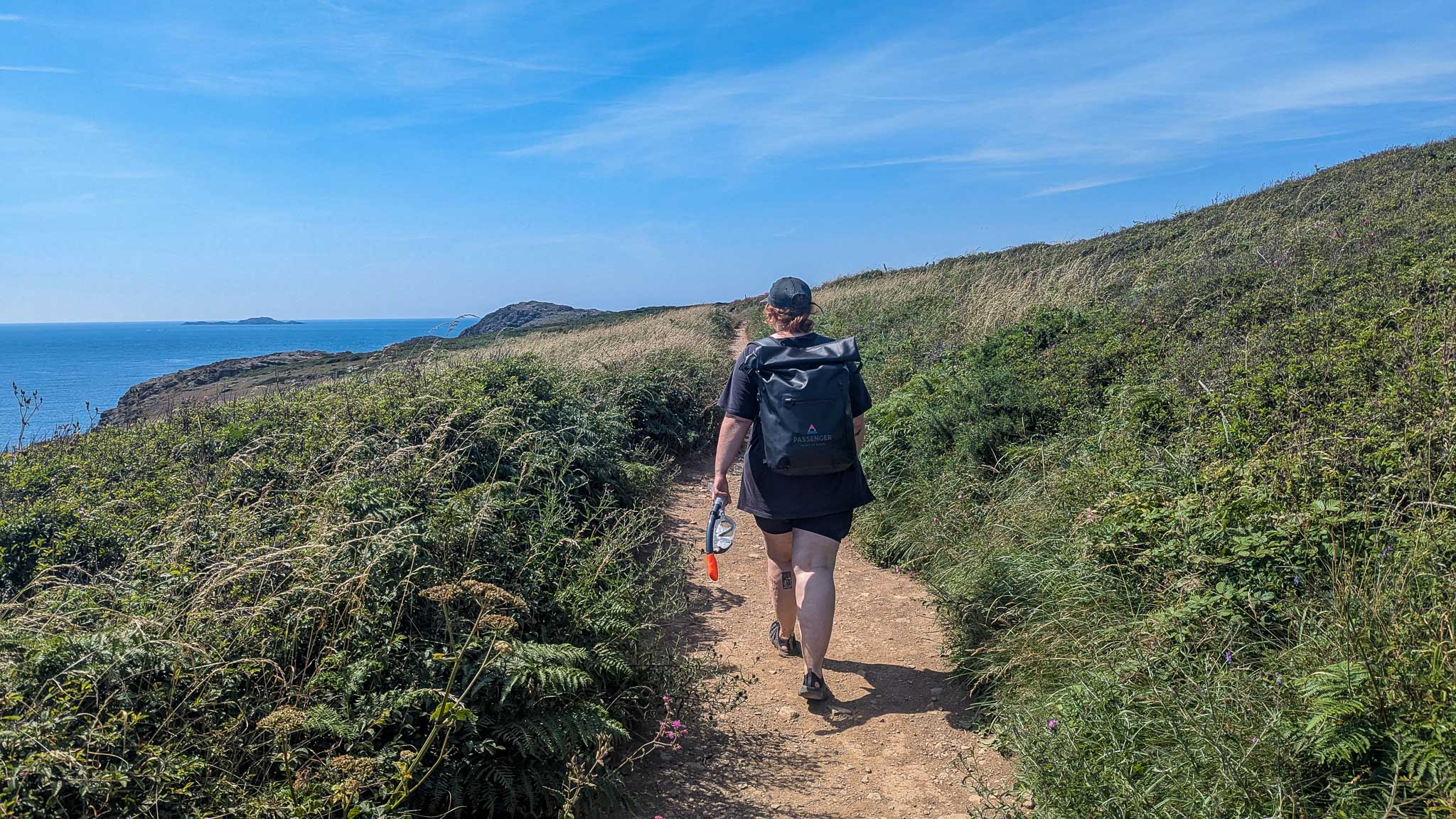
I can see it working well for non-technical canoeing too – I’m looking forward to testing it for this purpose in September – as well as some light kayaking, providing your hatch is big enough to fit the bag.
For SUPing, I think you’d need to be quite confident that you won’t tip over as the bag is not designed to be fully submerged.
The Back System
On test, I’ve found the back system comfortable. It’s not plush but it’s not stiff either. It morphs quite intuitively with your back shape, sitting snug while you’re on the move. The stability is good in this respect – the pack moves with you as you move – though there’s trade-offs in terms of breathability as there’s little space between you and the fabric. That being said, limits in breathability is generally the price you pay for fully waterproof bag.
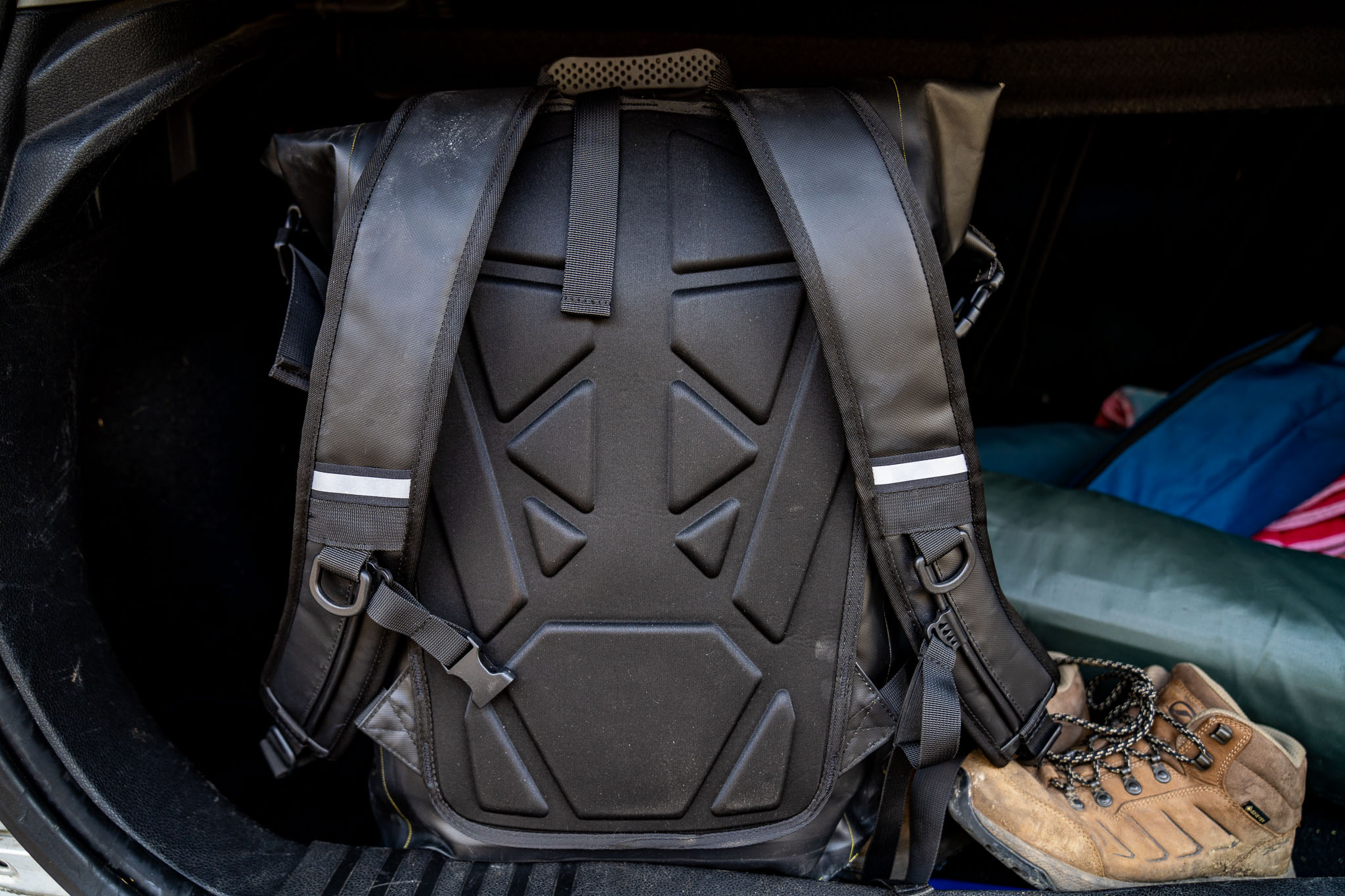
Anyhow, regardless of whether it’s been packed to the brim or barely packed at all, the pack has always felt stable and evenly distributed across my back. On one instance, I had the bag packed with all my camera gear for a 3.5 hour hike around Skomer Island and the pack never felt lumpy or unstable, even when twisting and turning to get some shots of the nesting puffins.
To help distribute weight, there’s a sternum strap, though it’s worth mentioning that there’s no hipbelt. For heavier loads, I would have liked a hipbelt, though for small to medium loads, I’ve found that the sternum strap does the job well.
Fit and Sizing
This thing has buckets of space. While a modest 25L, the large main compartment combined with the roll top closure make it feel much larger in my experience. Unlike traditional hiking packs which will have multiple compartments, there’s only one main compartment here, with a few discrete pockets.
I personally found this design very useful for swimming trips as I could bring along bulky items such as my snorkel, beach towel, and beach book, which otherwise might not slot as nicely into a hiking pack.
It’s worth noting that the bag only comes in one size. I’m 5ft6 and I’d say it’s ever so slightly on the larger side of the scale so it might be worth trying before you buy if you have a shorter back length. Width-wise, I’m probably around a UK size 16/ 18 or an XL in clothing and I found it very comfortable. I have a large bust size and found that the sternum strap still had a fair amount of room left for expansion when I was using it.
Waterproofing
The waterproof rating is 10k here, though it’s not designed to be submerged. To shut and fully seal the backpack, you need to roll the top of the bag tightly 3 times before snapping the two side buckles shut.
On test, I’ve had no problems with moisture either getting inside the bag, or leaking out of it. There have been times when I’ve put my soggy swimming gear at the bottom of the bag and used the internal pocket to separate my phone, keys and wallet. I had no issues with cross-contamination on these occasions.
One downside to the waterproof material is that it does get noticeably hot under the sun. I’d recommend placing it in the shade if you can, as the internal contents do start to warm up after an extended period.
Details
The internal laptop sleeve is a cool touch, and I can see it working well for rainy commutes into work. So far, however, I’ve mostly used this compartment for separating dry gear from soggy gear, and in that respect, it’s been very useful. It’s also handy to know that I can remove it if I need more space.
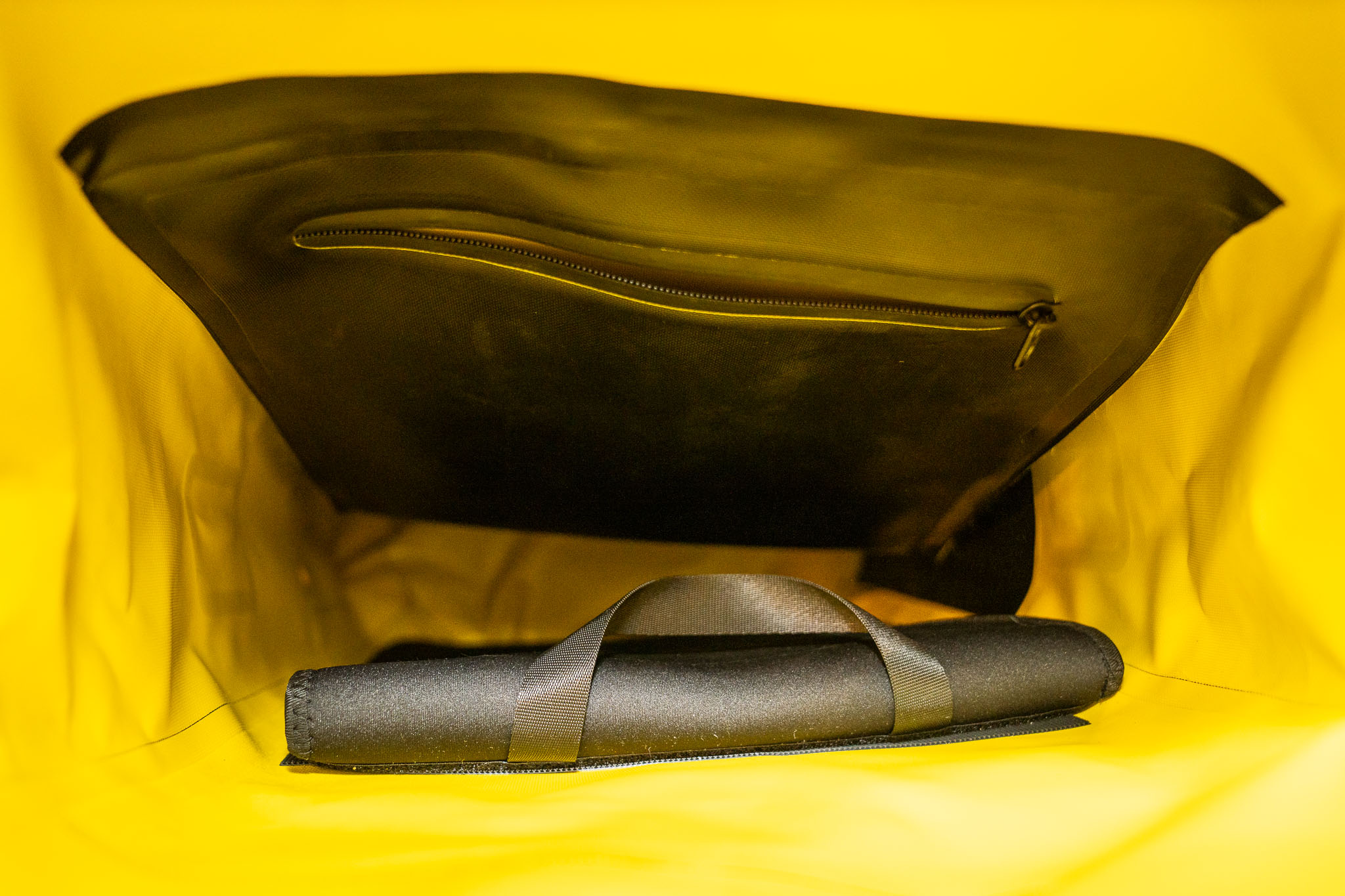
Elsewhere, there’s two pockets on the front: one horizontal pocket and one vertical pocket that’s the perfect size for a book. There’s also a side ID pocket, and one fairly large internal pocket for your essential items. While you won’t get as many compartments as a regular hiking backpack, the simplicity here is quite refreshing. Sometimes it’s nice to stuff it all in and not think too much. That being said, if you’re an extremely organised packer, you might want to add in some gear organising packs.
There are two attachment points next to the side closure buckles that I’ve found handy. If you remember to bring along a few carabiners, these external loops are great for attaching your swimming gear and drying it in the sun as you walk.
Durability
While I haven’t yet used this backpack long enough to comment too much on the durability, from what I’ve seen so far, it looks very promising. I’ve found the material tough and impressively abrasion-resistant, especially against hard and spiky rocks along the Pembrokeshire coastline.
I tend to throw down my backpack just about anywhere, and I’ve felt very confident in doing so with this bag. The TPU overlays also add confidence in this sense; it certainly doesn’t feel like it’s about to break or puncture any time soon.
Verdict
All in all, the Passenger Tide 25L dry bag backpack is a great companion for aquatic adventuring and short day hikes alike. I can see it working well as a travel bag too, when you know you’ll be doing lots of swimming along the way. In fact, I’m planning on bringing it with me along the Puglia coast this autumn – I think it’ll work really well for the kind of beach hopping I’m planning on doing.
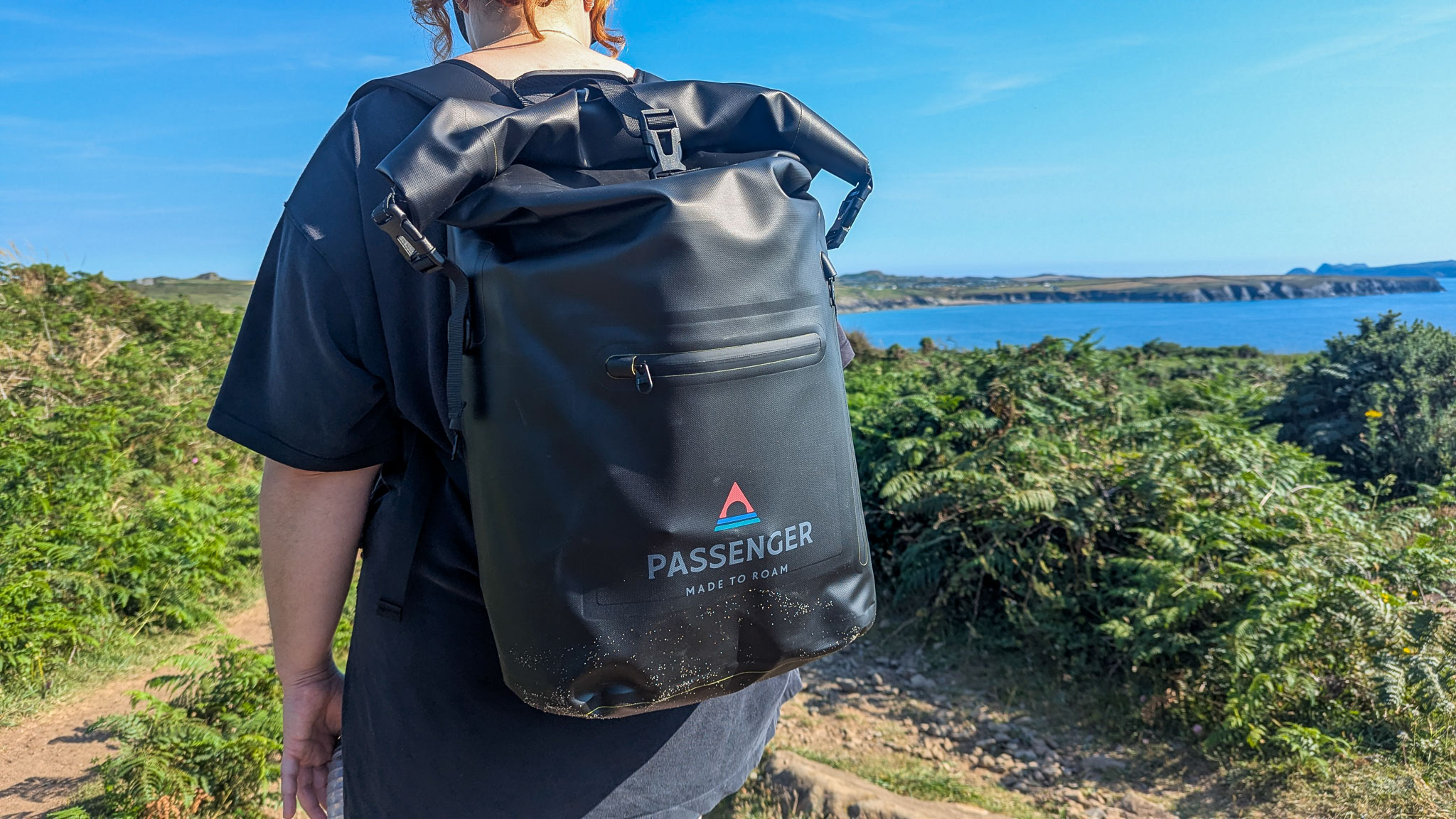
As with any waterproof pack, there’s drawbacks in terms of breathability and the amount of cushioning you can have, however, I’ve found it very stable when on the move, regardless of how lightly or heavily it’s been packed.
The tough, recycled fabric is another big highlight of the Tide, and is partly what makes it so versatile across different activities. At £100, considering you can use this thing for swimming, hiking, canoeing, boating, travelling, and even the odd rainy commute, I’d consider that good value for your money too.
Passenger Tide 25L
★★★★