Best Waterproof Jackets of 2026 | Tested & Reviewed by Our Experts
From lightweight to heavyweight and everything in between, here are the best waterproof jackets out there in 2026
It’s vital to travel in the mountains with adequate protection from the worst the weather can throw at us and that means having a quality waterproof jacket. When you’re in the wild, you want a good rain coat that you can count on.
The most obvious concern when buying a waterproof jacket is the type of protection that you’re getting, as this influences the price, weight, breathability and of course the level of waterproofing on offer. You obviously don’t want the jacket to start leaking water after just a month of wear, yet you don’t want to pay over the odds for something that may feel a little overkill for the type of activity that you’re buying the jacket for.
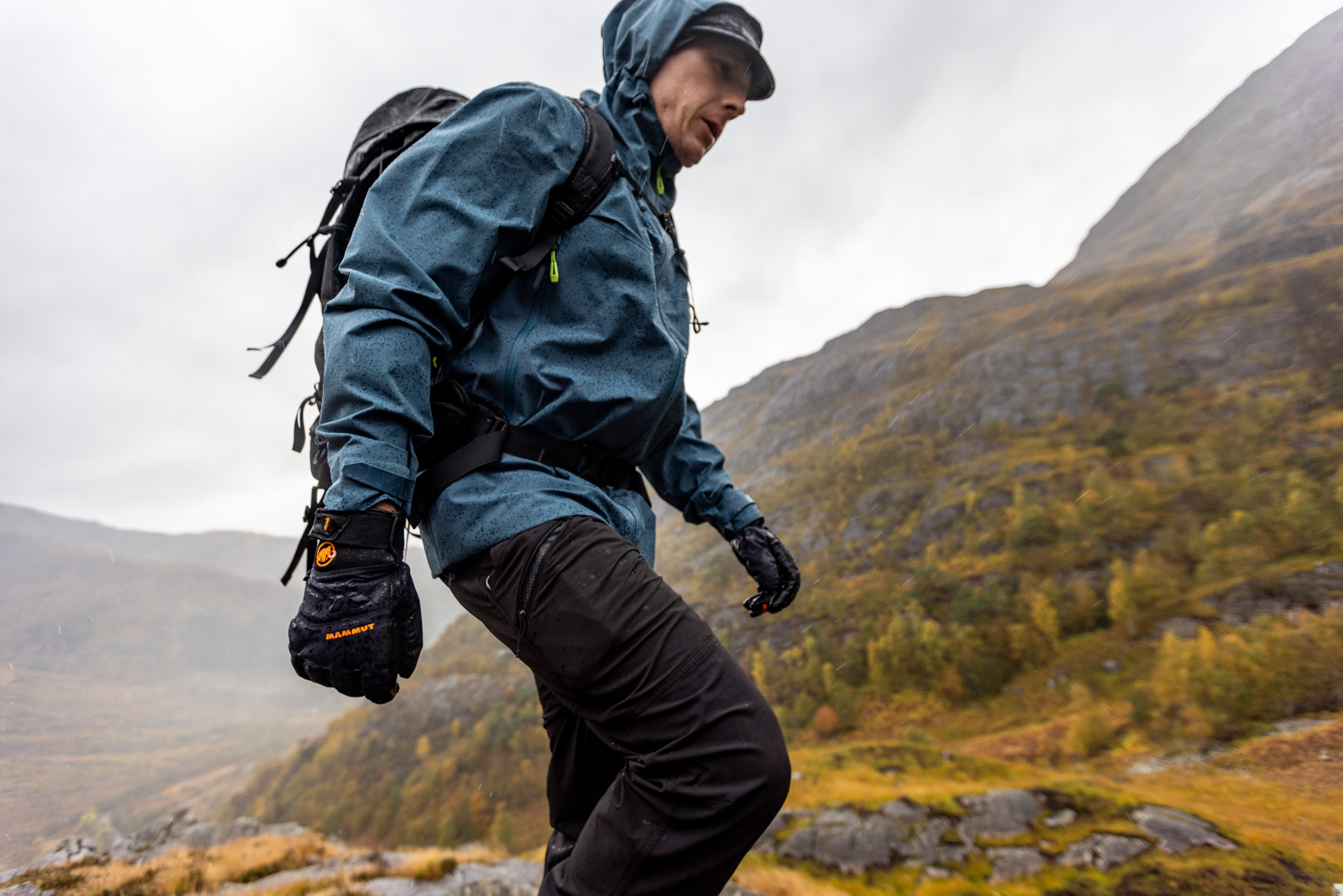
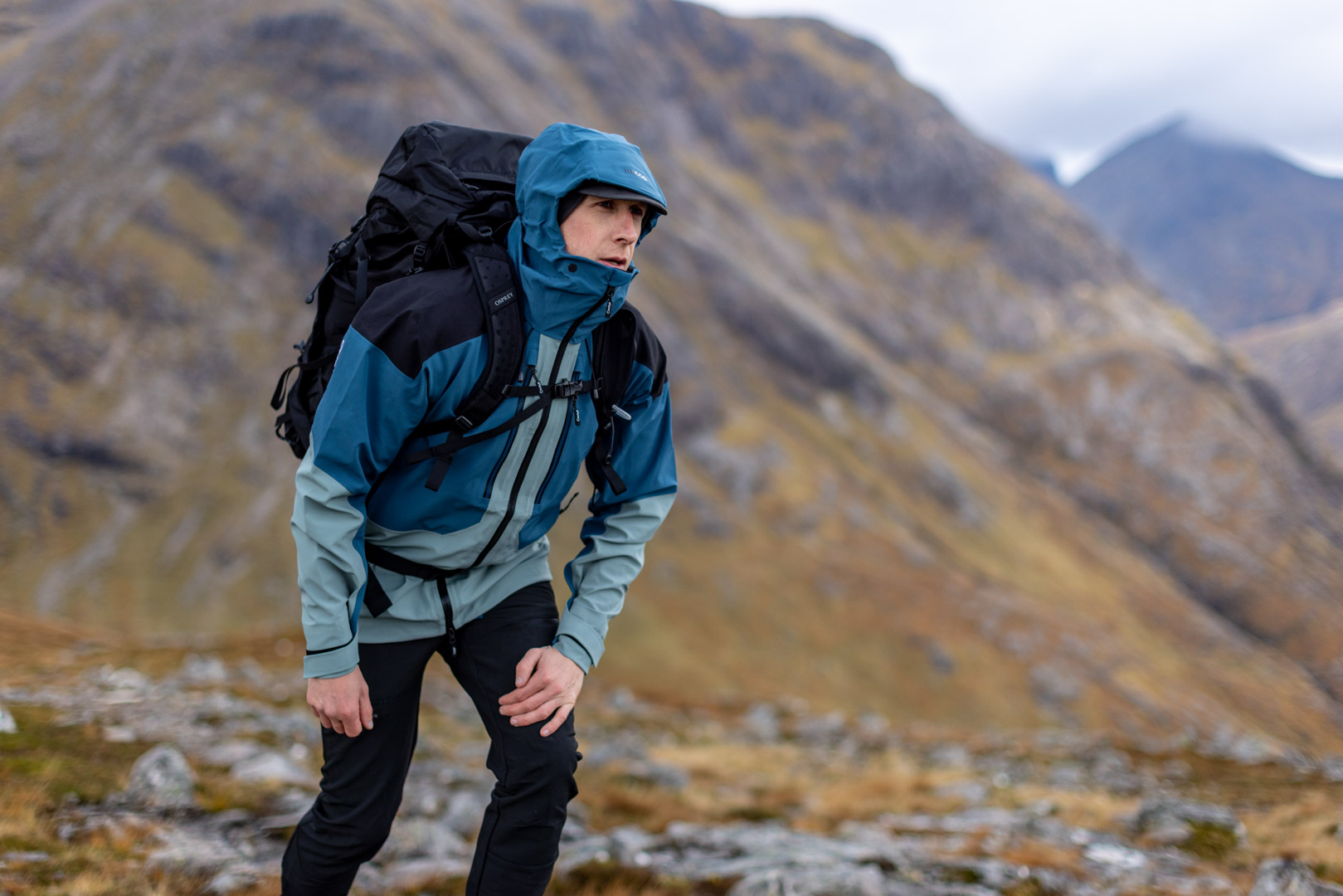
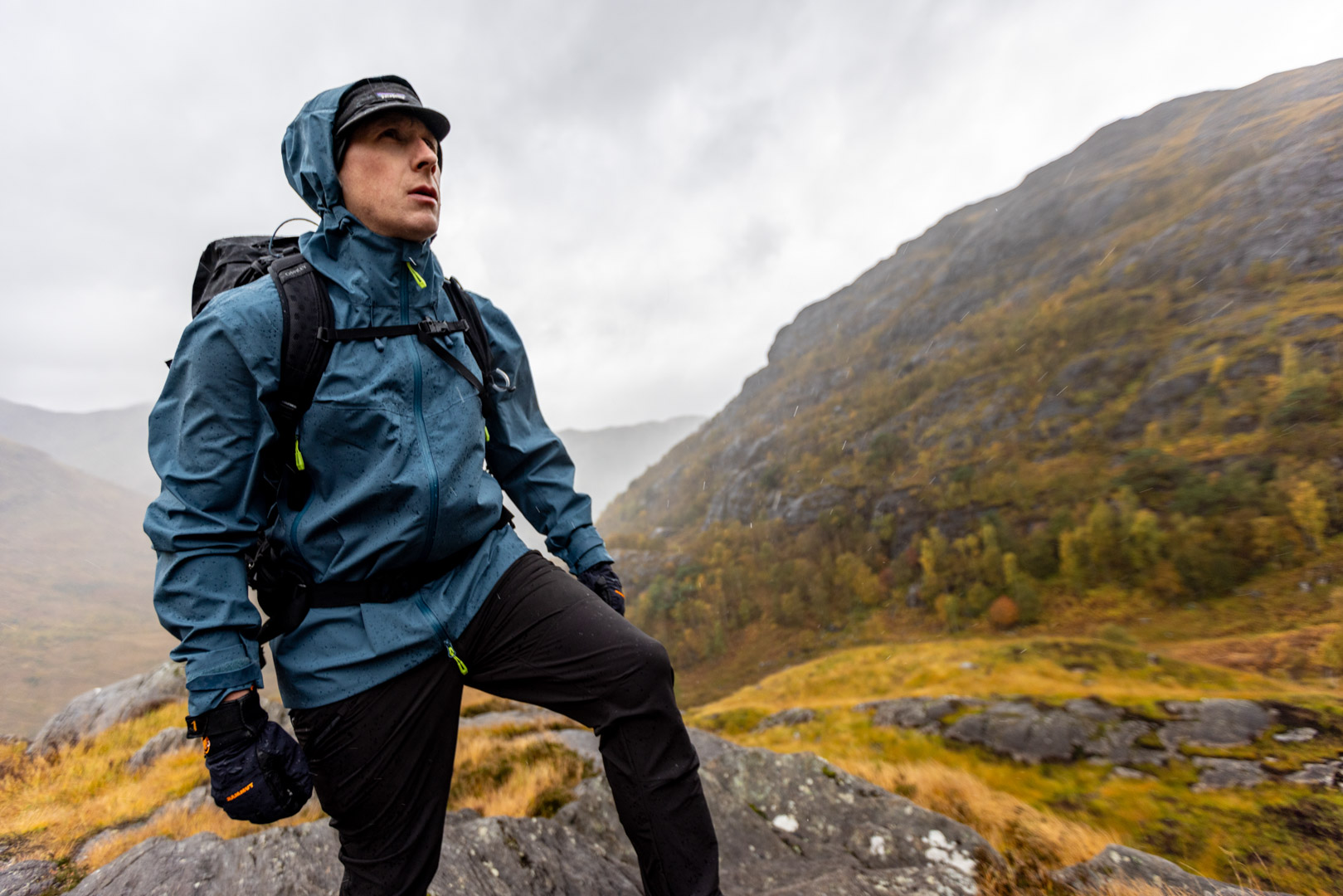
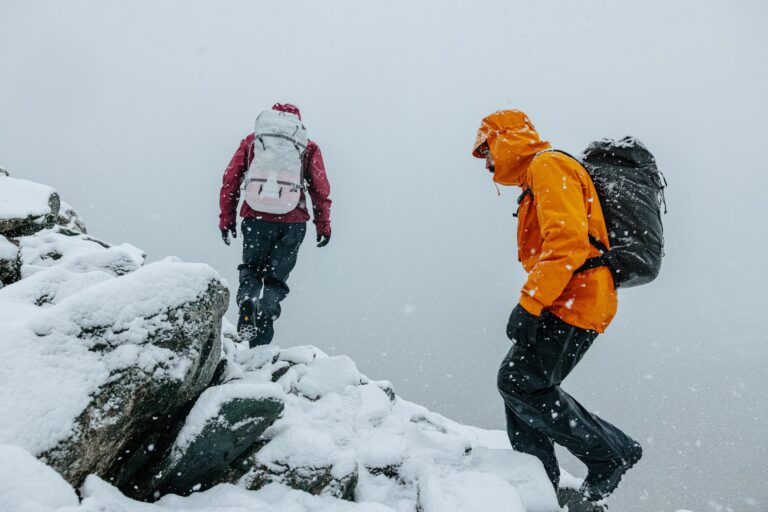
OM editor Will during one of our waterproof jacket test trips.
You’ll notice that membrane lined jackets are the most common in this roundup. They’re favoured for their good balance between weight, breathability and waterproofness. The most common type of waterproof membrane is of course Gore-tex, but we’ve also included some of the various own-brand waterproof technologies such as Paramo’s Nikwax Analogy and Patagonia’s H2No.
Aside from the type of waterproof protection on offer, it’s also important to consider other features that the jacket carries in order to find the best waterproof jacket for you. Choose these features based on the type of activity that you’re buying the jacket for. For instance, if you’re going to be mostly cycling and trail running then a lightweight and breathable jacket will be the best option for you. A jacket that holds a mixture of features makes for a great multi-activity jacket that can be used and abused wherever you take it.
Give our ‘Buyer’s Guide to Waterproof Jackets’ a read to understand the differences between the three waterproof protections. And, while the list on this page contains both men’s and women’s waterproof jacket options, if you’re looking for women’s options exclusively, you’ll find the results of our tests for the best waterproof jackets for women here.
Best Waterproof Jackets: Our Team’s Top Picks:
Many of the jackets in this selection are featured in our Outdoor100 and our Green Gear Guide. Within these product guides, you’ll be able check out a more in depth review of each jacket, including tester’s verdicts and industry trade secrets.
Cimalp Guide Pro – Best Waterproof Jacket for Durability and Protection
The Expert
These jackets were tested by editor Will Renwick and our contributors and outdoor enthusiasts Emma Cole and Cat Nicol. Will, who led the tests, has been reviewing outdoor gear for outdoor magazines for over 10 years. He’s stood on a number of gear awards juries, including for the ISPO Awards, the OIA Awards and the Scandinavian Outdoor Awards and has hiked numerous long distance trails including the 870-mile Wales Coast Path, the Cambrian Way and the Camino de Santiago. Emma, is a hiker, trail runner and cyclist based in the North Wessex Downs and Cat is a hiker and snowboarder from the Cairngorms.
The team testing out jackets on backpacking trips and mountain runs.
How They Were Tested
We tested all of these jackets on hikes within the UK’s national parks, as you’ll see in the pictures alongside each review. Will, Emma and Cat looked at the resistance to heavy and wind-driven rain, the breathability when hiking at tempo up hills, the durability of the fabrics against rough rocks and branches and their resistance to abrasion when worn underneath a heavily-loaded backpack.
Editor’s Note: Páramo’s Caminata jacket has recently replaced the Velez Adventure Light Smock as the most breathable waterproof jacket following our tests. All links have been checked and changed to ensure they are available for purchase.
1. Helly Hansen Verglas Infinity Shell 2.0
Selected as our best waterproof jacket overall this year
Where to Buy
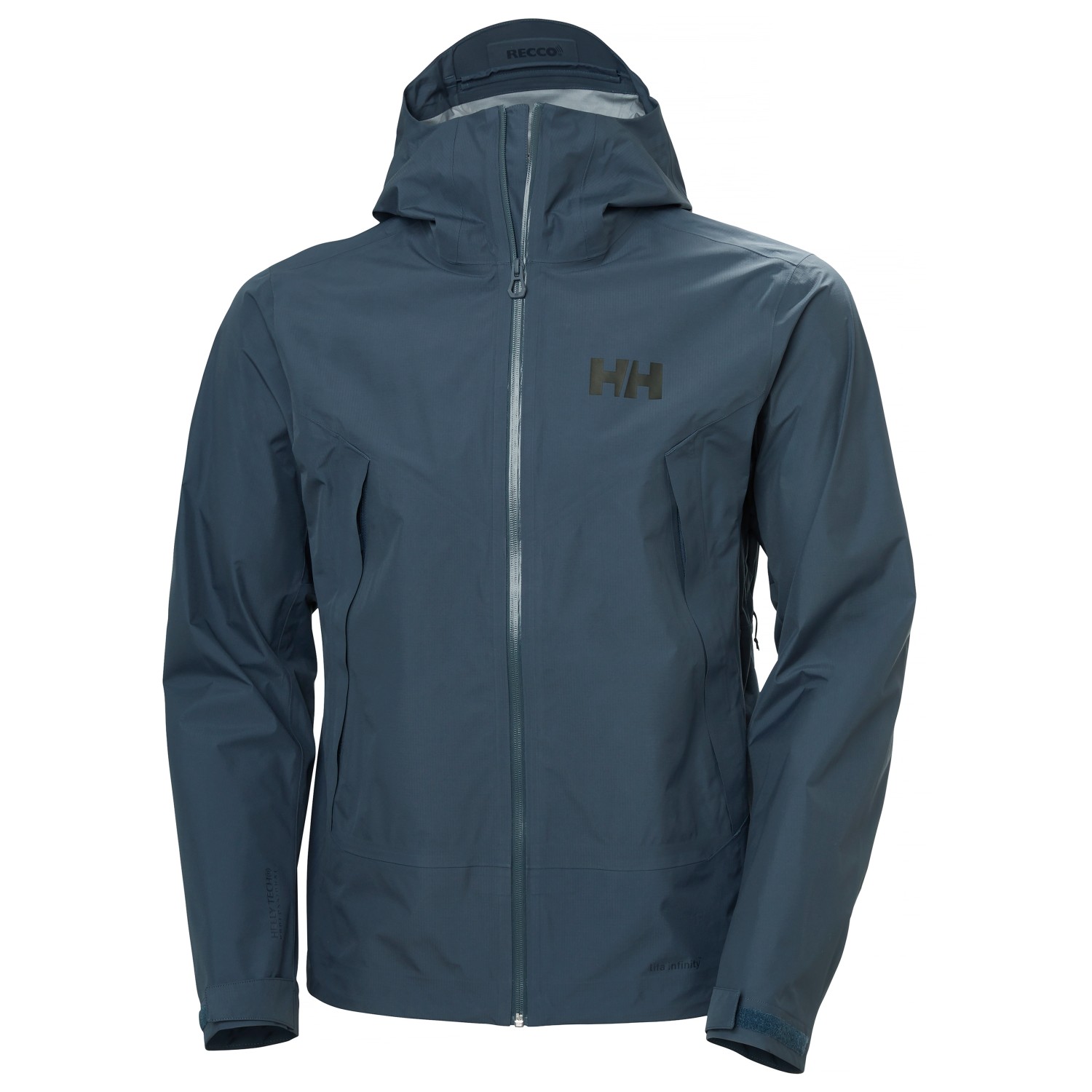
Helly Hansen Verglas Infinity Shell 2.0
Our editor’s verdict: “This is a reliable, highly functional shell with a lot of durability. It has an alpine-style cut, so it might be worth sizing up if you prefer a loose fit.”
Price: £335 Weight: 410g Best for: hillwalking, mountaineering What we liked: protective, eco-conscious, innovative fabric What we didn’t like: quite heavy
Tough, waterproof, breathable and with all the right features and details you’d want in demanding mountain environments, from what we’ve seen from this jacket, we’d say it’s ideal as a shell for year-round outdoor use. It’s got the durability, protection and room for layering to serve as an option for winter use, while in the summer, it’s the kind of thing to support you on those days when the weather really isn’t going to be on your side.
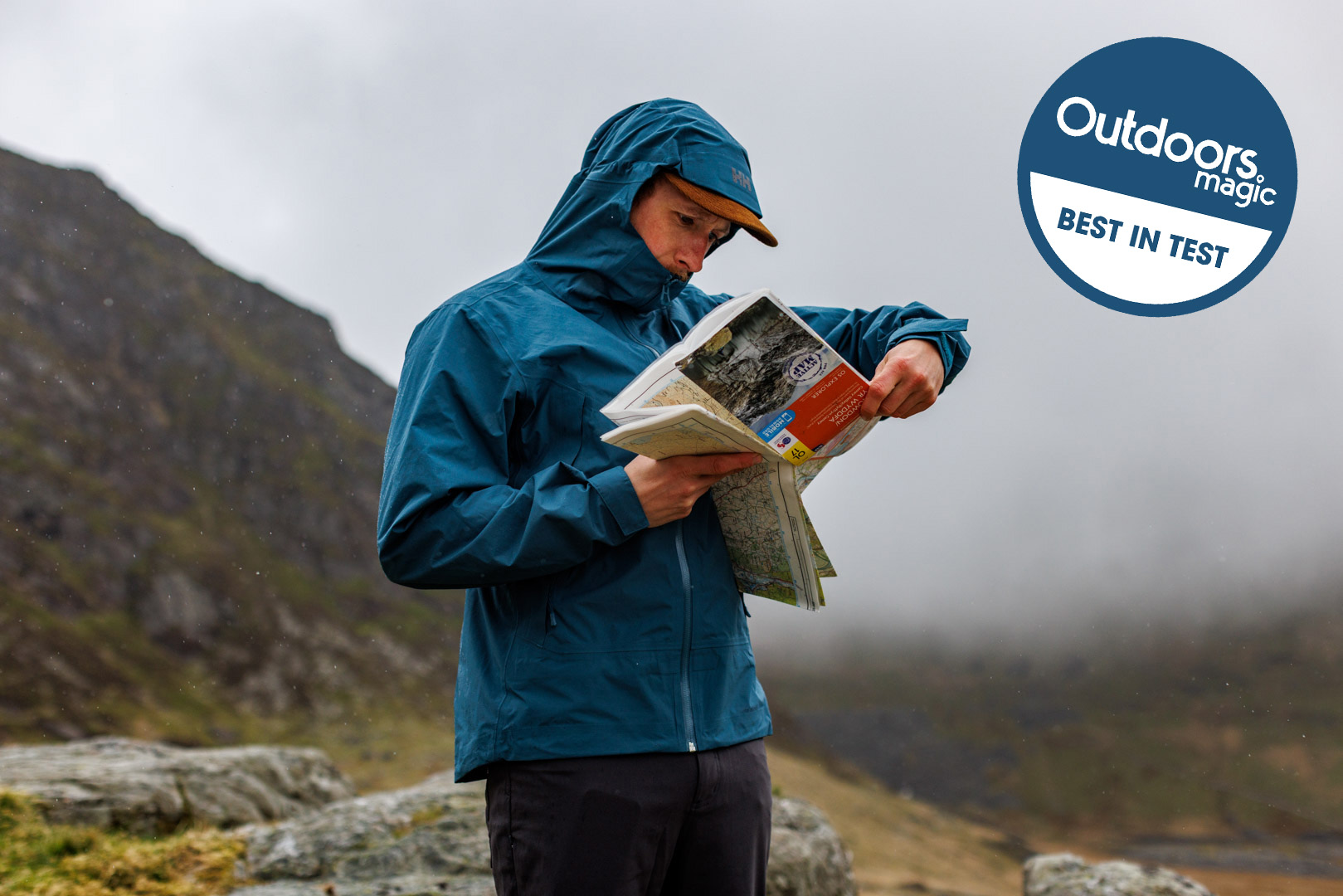
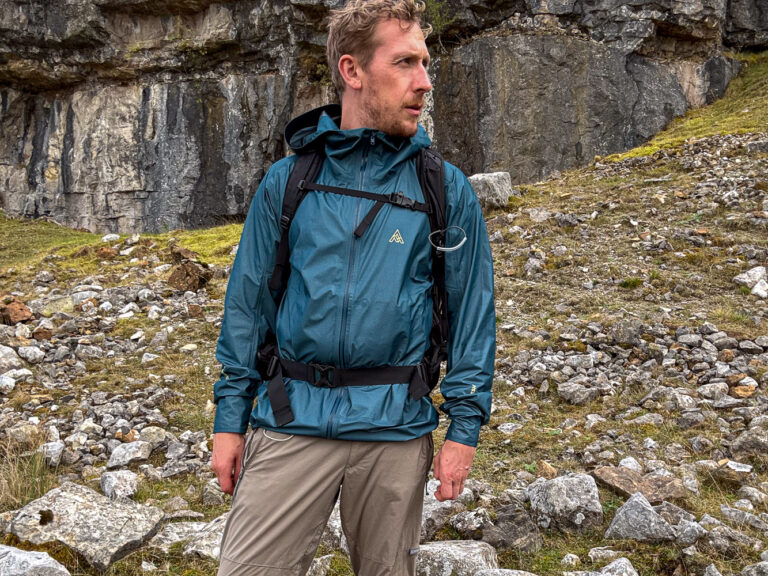
Will, who is 5 foot 10, testing out a size M version of the Helly Hansen Verglas Infinity 2.0 jacket. Photo: Dave Macfarlane
OM editor Will has been testing Helly Hansen’s Verglas Infinity Shell 2.0 out in the mountains of North Wales and has been very impressed with the brand’s proprietary Helly Tech Professional fabric. He said, “From my experience using this on the side of some very wet and windy mountains, this jacket is 100% waterproof and 100% windproof. I’ve also found it to be as breathable as you can expect a three-layer shell to be.”
“On the subject of breathability, one thing I really like about the Verglas Infinity 2.0 (and the previous version of it) is the size of its pit zip vents. You can open these right up for airflow while still remaining protected from the elements. This makes a heck of a lot of difference to the internal climate of the jacket.”
This jacket is made almost entirely from recycled content too, and the DWR treatment is PFAS-free which we always praise highly here at Outdoors Magic. Other handy features include an adjustable hood, a protective collar, two large hand pockets, a hem toggle, handy Velcro straps on the sleeves, a built-in RECCO reflector, and stormproof zips throughout.
Our choice for the best lightweight waterproof jacket on the market
Where to Buy
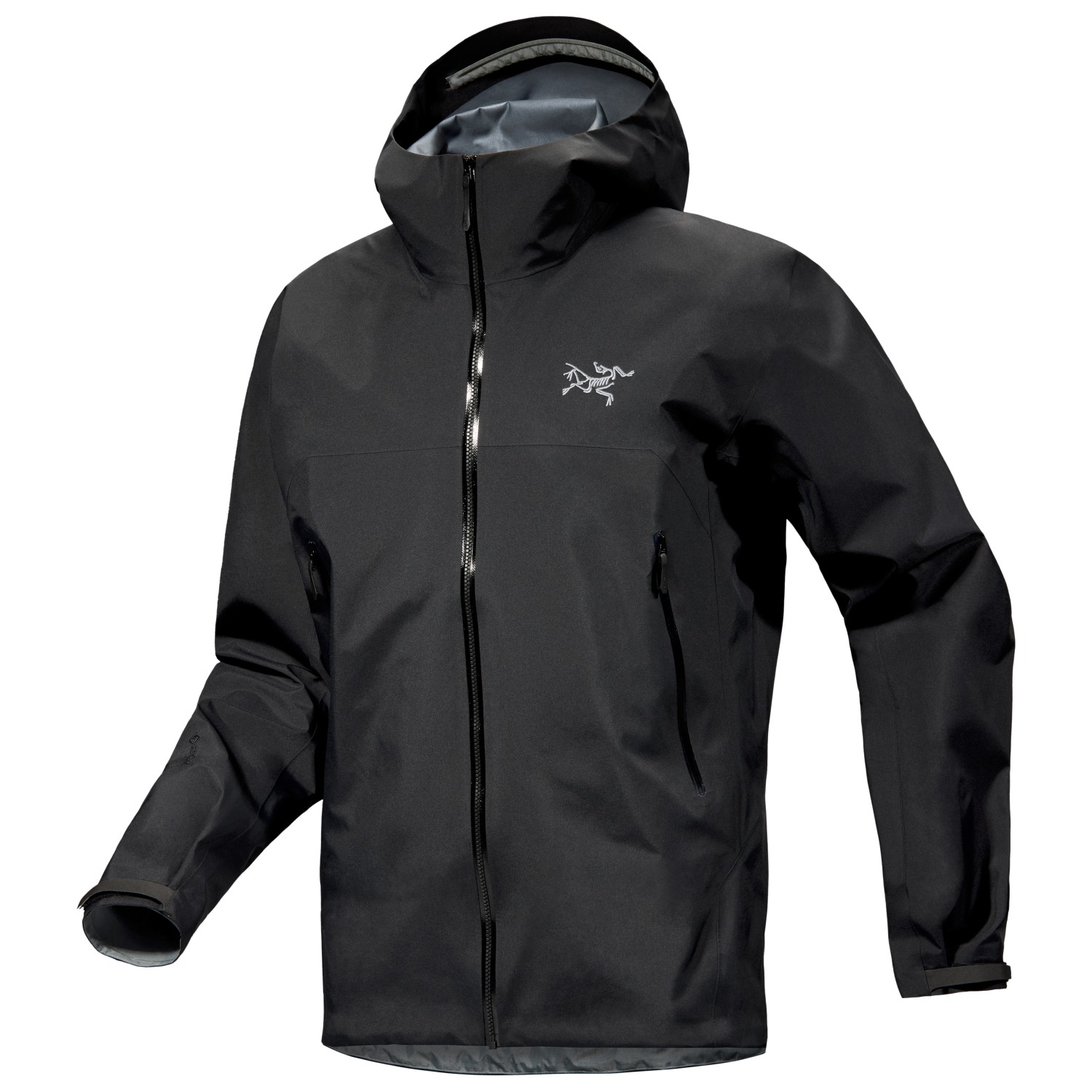
Arc'teryx Beta Jacket
Our editor’s verdict: “This jacket has been popular for a long time, and for good reason. It’s light, it’s protective, and it has all the right details and features while still retaining a smart, versatile look.”
Price: £350 Weight: 300g Best for: Hiking, climbing, backpacking and day-to-day use What we liked: light but durable, simple aesthetic What we didn’t like: lacking pit zips
There’s no denying that the Arc’teryx brand is hugely popular at the moment with its reputation even crossing beyond the outdoor realm and this, the Beta Jacket, is up there as one of its most sought after products. But is it any good? Yes, it is actually. It’s a really decent jacket.
OK, it’s expensive (though not the most expensive in this test) but it does ooze quality. The materials are all high-spec, the details are all carefully thought through and, from our experience, it offers the kind of performance any hiker or climber would want from a waterproof jacket.
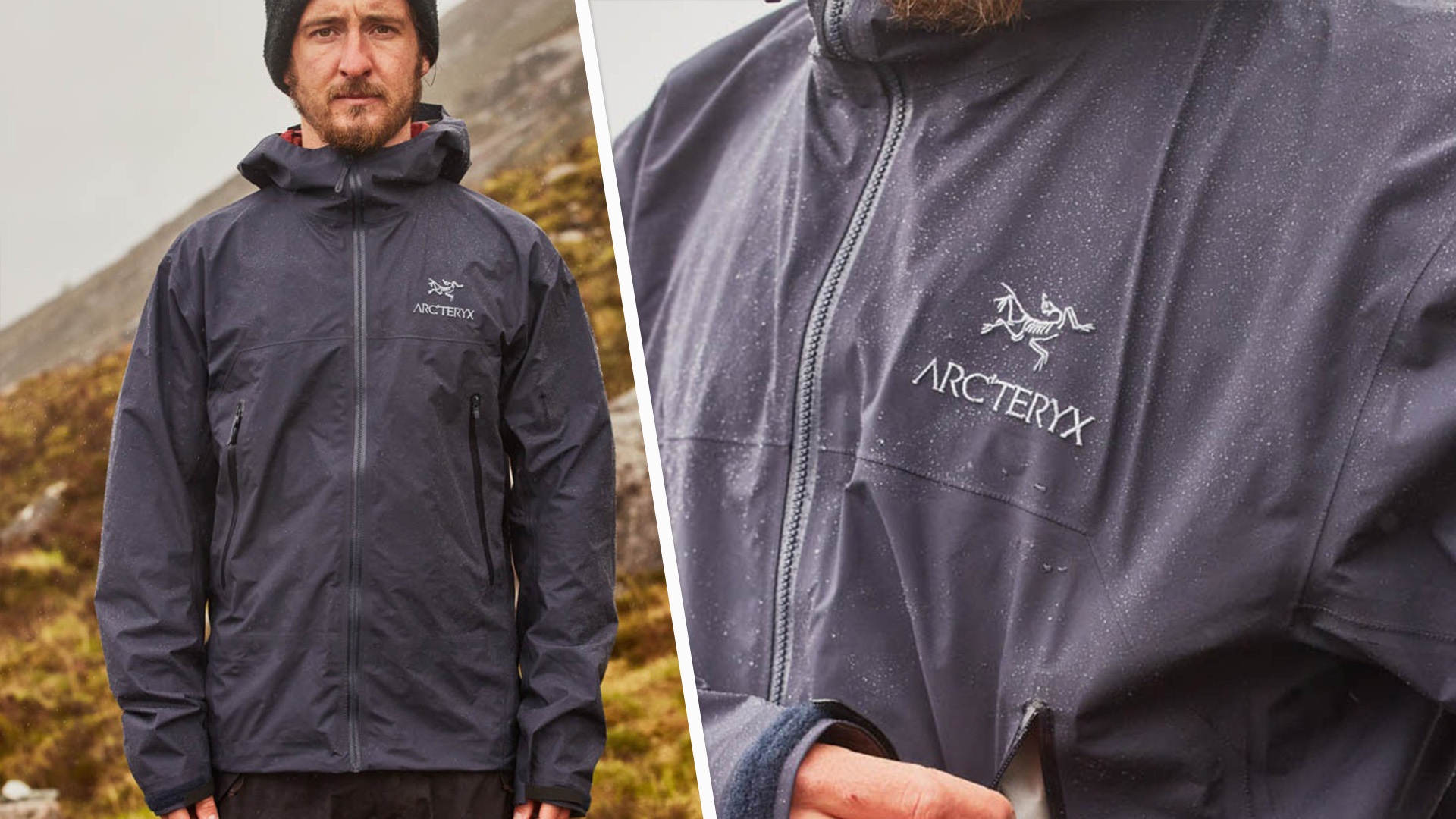
Our 5 foot 9 tester wearing a size M in the Cairngorms.
The Beta uses a Gore-tex waterproof membrane that’s sandwiched between a lightweight shell and a C-knit backer and the resulting fabric feels durable but also very light and packable. From our experience, this thing’s so light you can stuff it in your backpack and completely forget it’s there. Then, when you need it, it’ll offer dependable protection without too much clamminess and it’ll fend off a bit of rough stuff too – we found it held up really well when exposed to rough rock while scrambling.
Arc’teryx describe the Beta jacket as being multi-use. We’d define it as being suitable for hiking, climbing and some not-too-gnarly alpine climbing. It’s a little on the heavy side as a jacket for running, but it’s not wholly inappropriate for that kind of stuff. We’d recommend looking at the Beta LT if you want something for fast tempos.
OM editor Will tried this in a medium, his usual size, and he said it fitted perfectly over a baselayer and mid layer but it’s cut a little too athletically to be worn over a bulky layer of insulation.
This gets our pick as the best value rain jacket from our tests
Where to buy
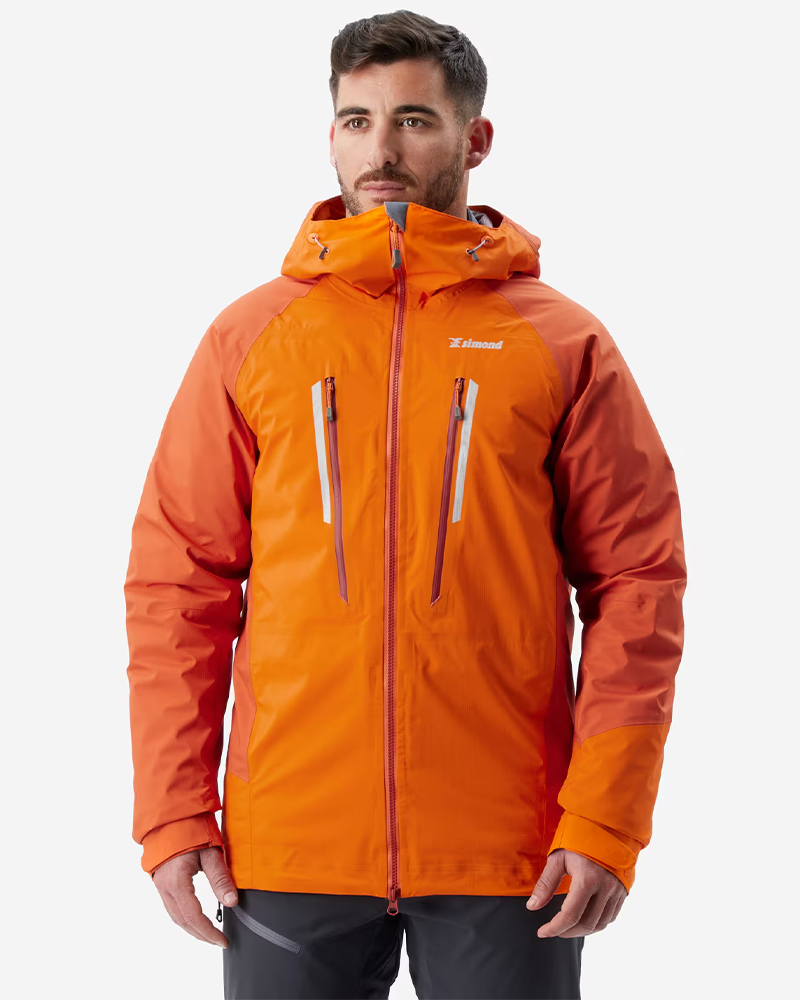
Simond Mountaineering Jacket
Our editor’s verdict: “Well cut, protective and durable – and at a very fair price. It has all the details you’s want from a mountaineering jacket. It’s on the heavy side, but I was really impressed with this jacket during my tests.”
Price: £150 Weight: 580g Best for: winter hiking, mountaineering What we liked: value for money, durable fabric What we didn’t like: hood could do with more adjustment and a broader peak
Simond, in case you don’t know it, is a Decathlon brand. It’s a Chamonix-based branch of the company that focuses on kit for technical outdoor use – things like climbing, mountaineering and alpinism. What they’ve produced here is a jacket that has all the right virtues for serious outdoor use. In fact, it has the look, feel, features and performance of a Gore-tex Pro jacket, but at a much lower price.
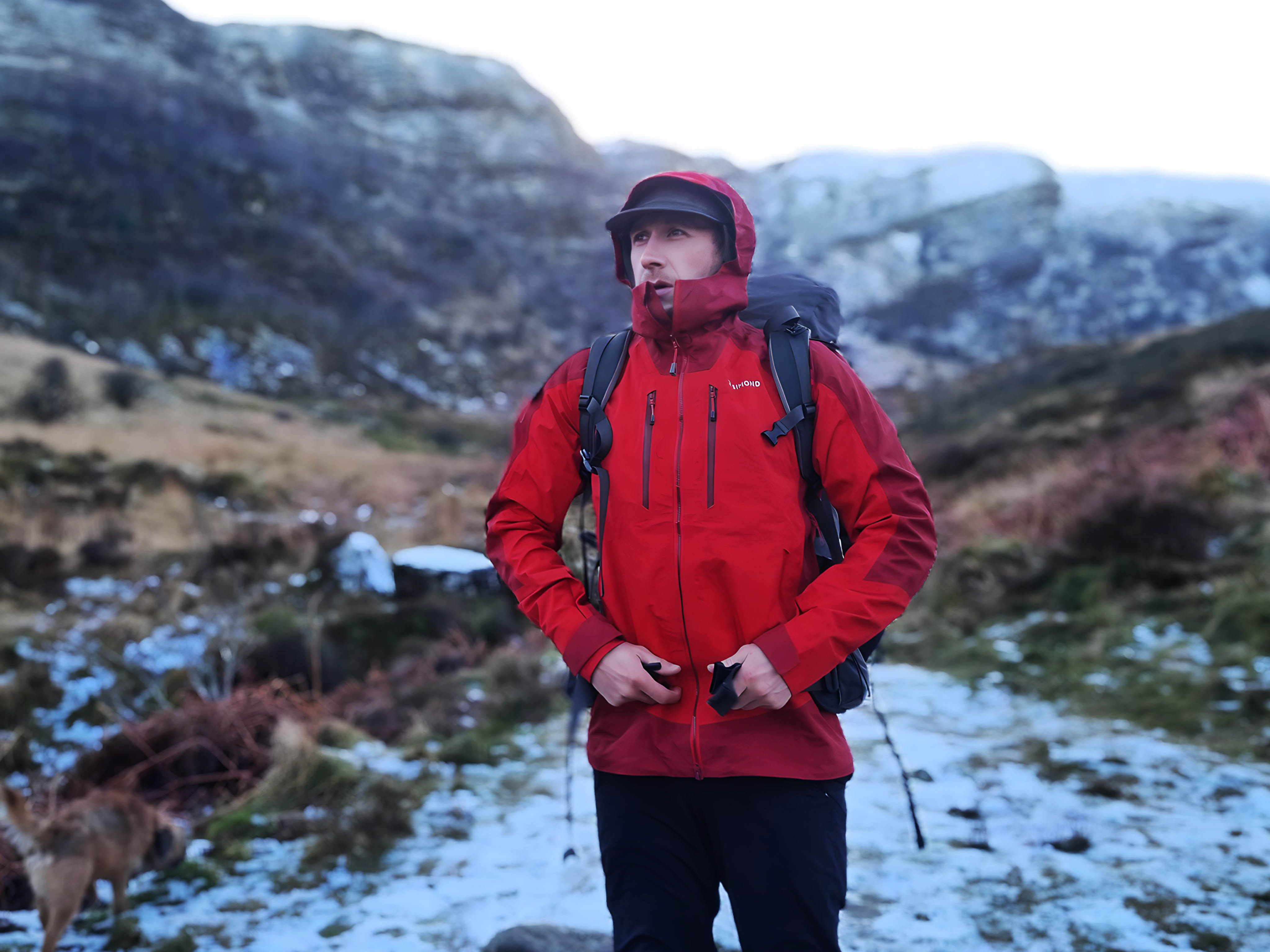
Will Renwick wearing the Simond in a size M – he’s 5 foot 10.
We found the fabric to be protective and highly durable. It’s as breathable as we’d expect a three-layer jacket to be, with large pit zips helping to create nice levels of airflow when you need it. The two-way zip, internal glove pocket and helmet-compatible hood are details that climbers and mountaineers will appreciate and, from our experience, it also serves very well as a winter hiking shell. It’d be a better jacket if the hood had a bit more adjustment (there’s just one tab at the back) and a moldable peak. The pockets are also a little cut off when you’re wearing a backpack with a hipbelt, though you can still get your hands inside them. There’s also the sustainability side of things: a lot of brands are now using some recycled content but this uses virgin plastics throughout. Room for improvement there, for sure. Despite those things, we found this to be a very hardy jacket that’s very good value for money overall.
The best waterproof jacket for breathability, according to our team of testers
Where to Buy
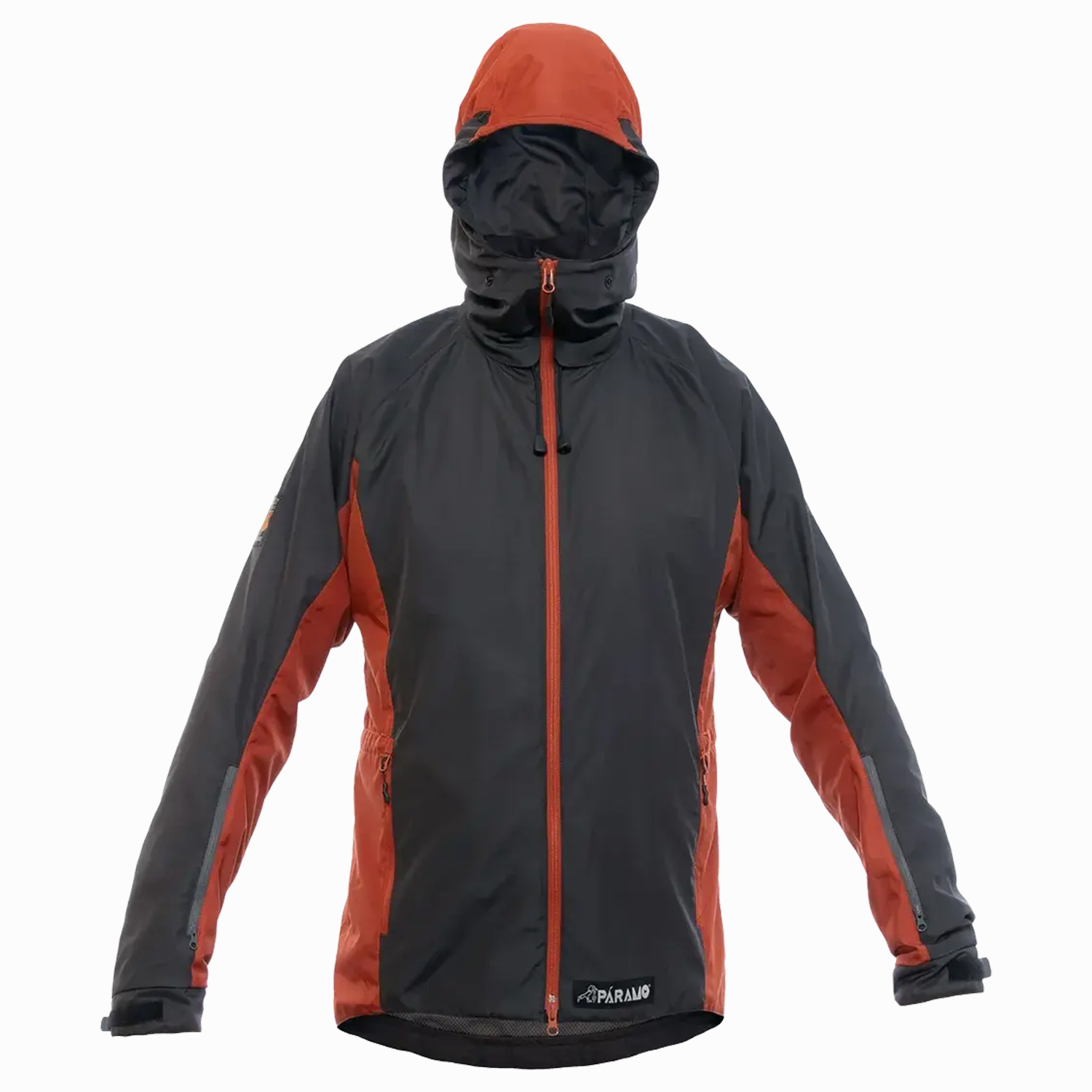
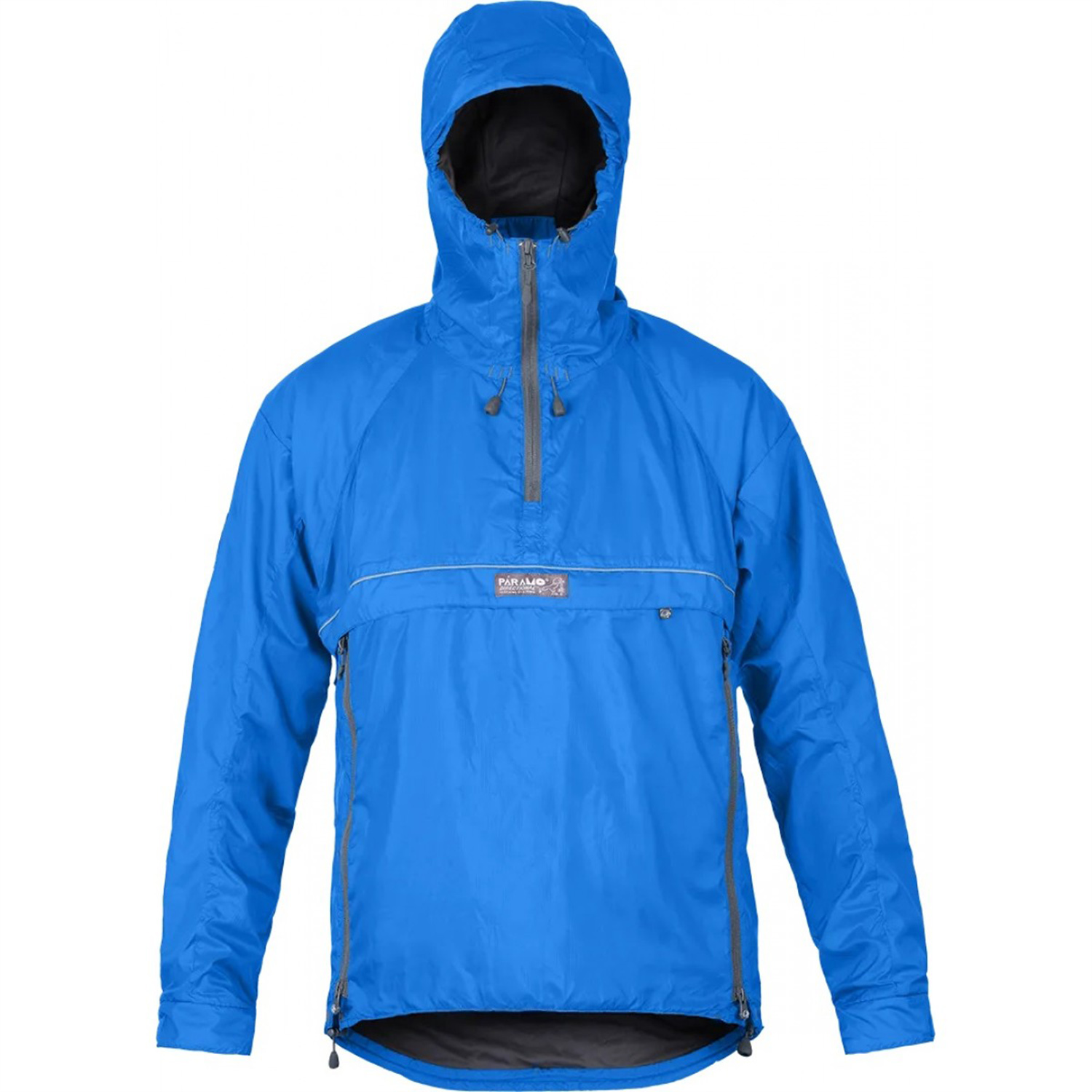
Páramo Caminata
Our editor’s verdict: “An unconventional form of wet weather protection that offers ‘true breathability’. On the heavy side but there are lots of virtues here to make up for this.”
Price: £265 Weight: 700g Best for: cool to mild mountain days What we liked: protective and breathable, excellent hood, good venting, ethically made, built to last, repairable, breathable What we didn’t like: warm and heavy, pockets cut off by backpack hip belt
Páramo’s jackets don’t use waterproof membranes. Instead, they rely on a clever combination of directional, water-resistant fabrics and a water-based Nikwax treatment. The result is a system that moves liquid water away from your body while still allowing moisture vapour to escape. In real-world terms, that means garments that are genuinely comfortable in the kind of mild, wet, and windy conditions that define much of the UK’s climate.
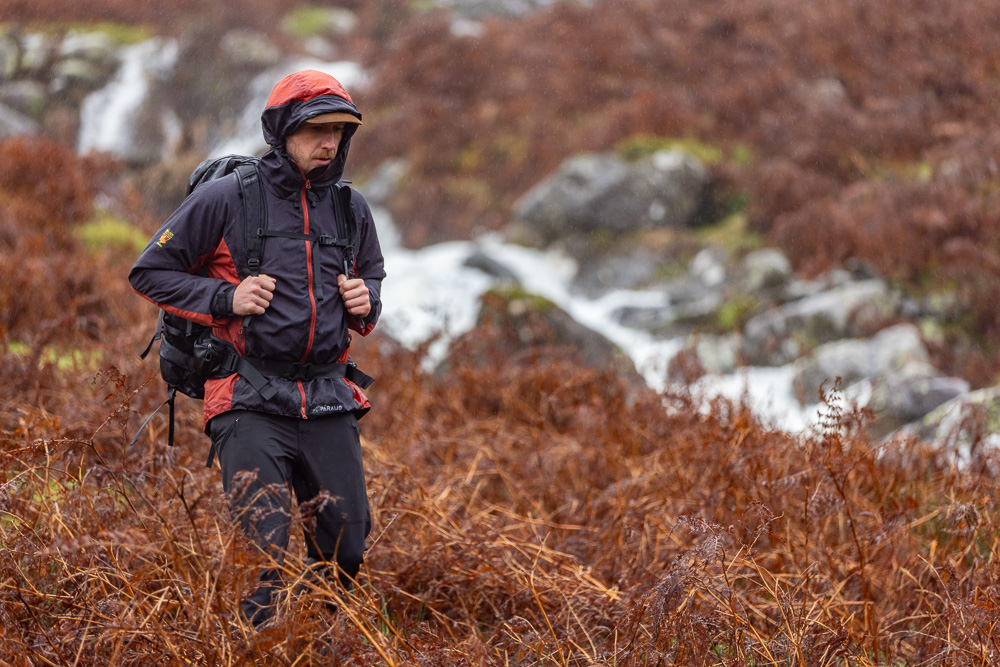
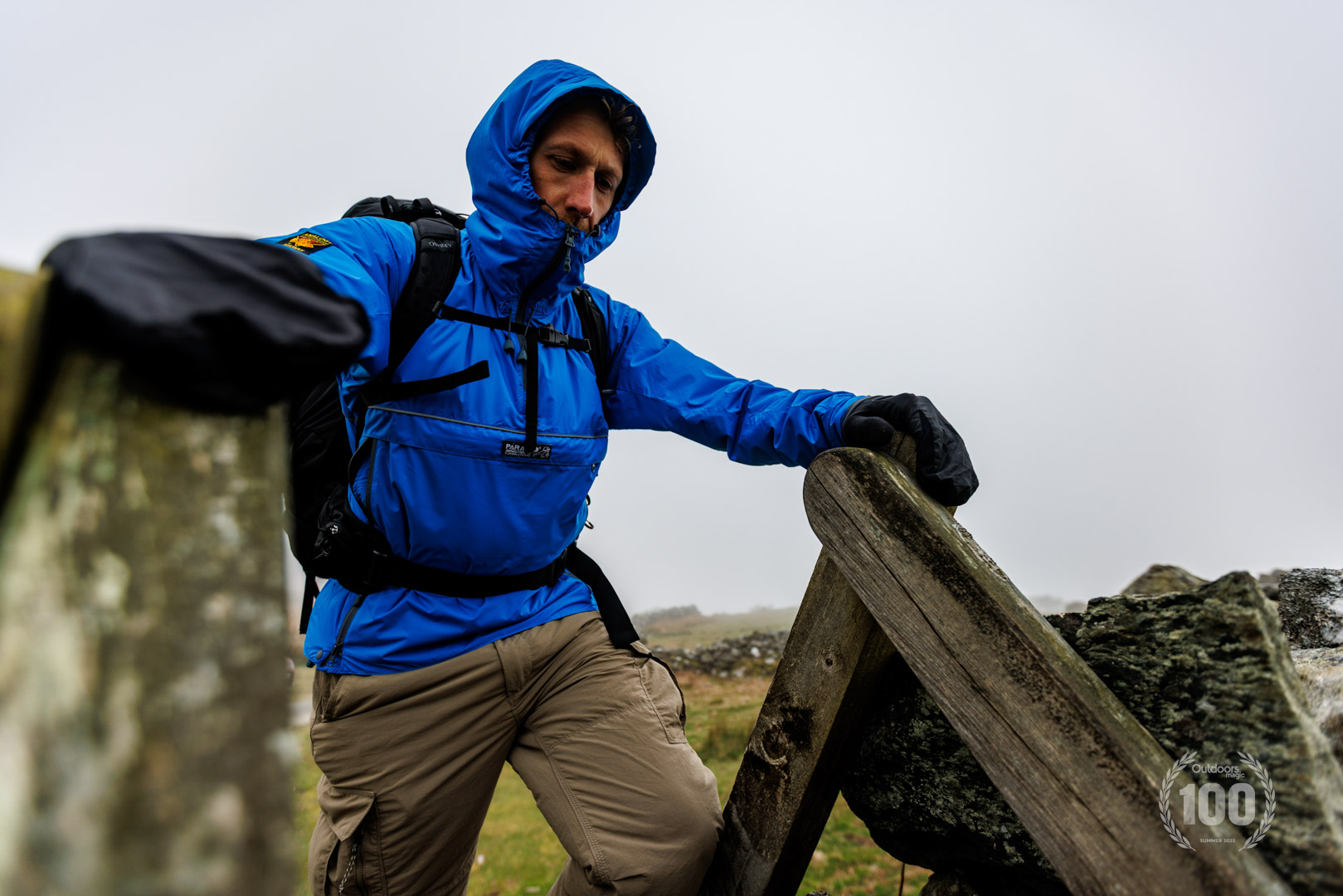
Will testing the Caminata in the Lake District. Photo: Dave MacFarlane.
Performance-wise, this is protective and comfortable to wear in conditions where membrane-lined jackets would feel clammy. It’s also quiet and it’s easy to maintain and repair when necessary. From our experience, Páramo’s products last a long time, and we can see this being the case for the Caminata too.
If you’re wondering what defines this from some of the other jackets in Paramo’s range, we’d say it’d be the cut. It’s just a little more trim and casual than some of their other options. Yes, it’s heavier than your average packable shell, and it runs warmer too. But if your adventures often take you into rough conditions for prolonged spells – and on a regular basis – it’s a jacket we’d recommend.
Add to that Páramo’s Fair Trade manufacturing through the Miquelina Foundation, its long-standing avoidance of PFCs, and its commitment to repair and recycling – and you’ve got a product that’s as ethical as it is effective.
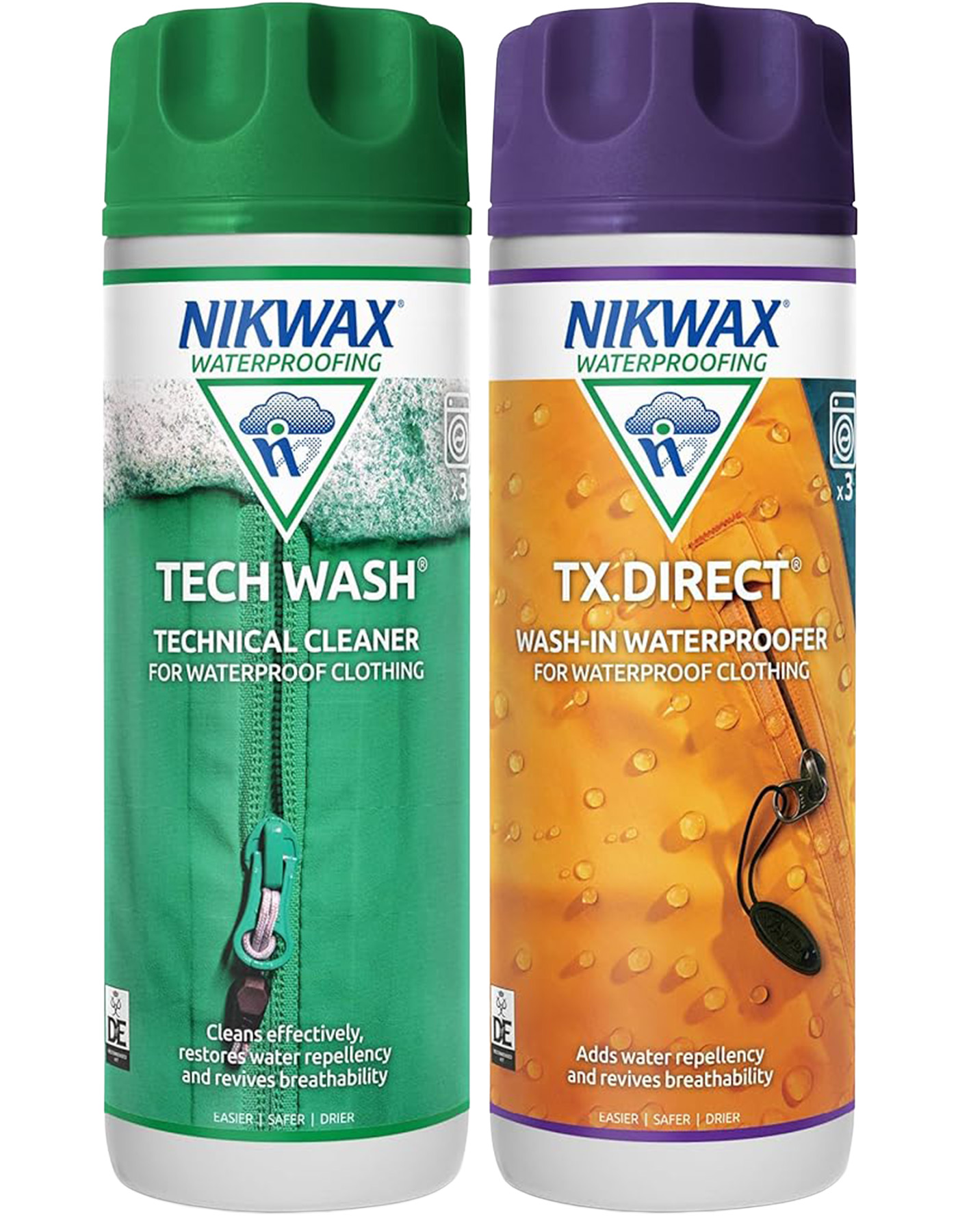
For optimal performance and durability, it’s essential to keep washing and reproofing your waterproof kit. Fortunately, brands such as Nikwax offer solutions that can be applied at home in a quick and easy way. Not only will this reduce dirt build-up and therefore fabric degradation, but it will also restore the water repellant treatment (DWR) and breathability of your clothing, ensuring top-notch performance levels out in the field. Together, all of these factors will also hugely increase the lifespan of your kit. What’s not to like?
This came out tops in our durability tests, landing our award for the most durable waterproof jacket
Where to Buy
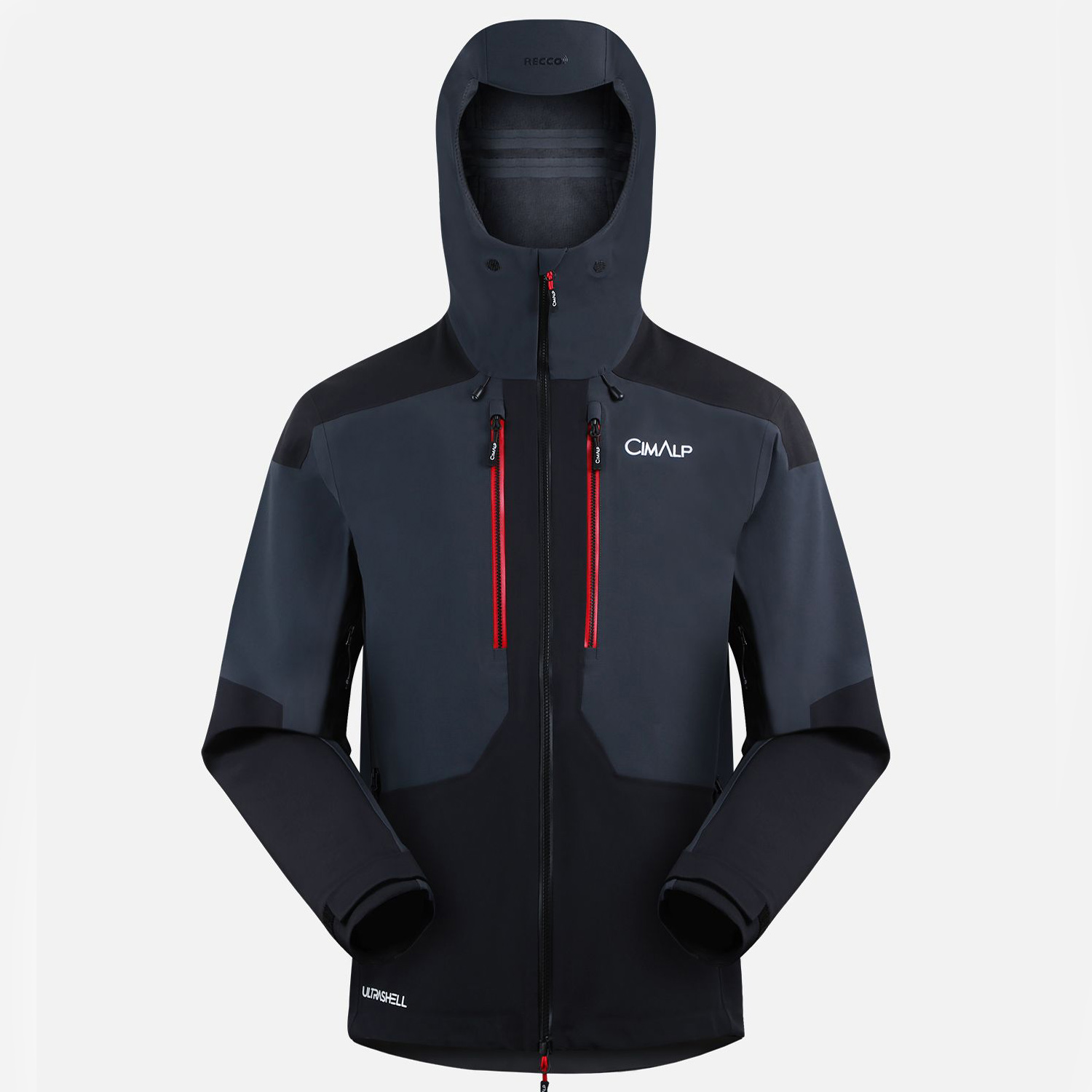
Cimalp Guide Pro
Our editor’s verdict: “This is a technical shell that’s ideal for demanding pursuits in harsh environments. Highly durable but the trade-off is that it’s a touch on the heavy side.”
Price: £350 Weight: 710g Best for: Winter hiking, mountaineering What we liked: very durable, lots of useful details What we didn’t like: heavy
If you like your waterproof jackets to be tough and very hard wearing, this is the jacket for you. Our testers found this to be the most durable jacket we’ve tested for some time, with Cimalp’s proprietary fabric shrugging off all kinds of abrasion.
Will wearing the Cimalp Guide Pro in a men’s M.
This also stood out for its feature set. It’s got all the kind of details you’d want from a jacket for use in difficult environments, including a helmet-friendly hood, a two-way main zip, glove-friendly zipper tabs and a RECCO reflector for avalanche recovery. We also liked the size of the vents under the arms which allowed for bucket loads of airflow when using this jacket in mild to warm conditions.
Cimalp might not be as well known as the likes of Mountain Equipment and Rab, but from what we’ve seen of them, they know how to make kit to rival the big hitters.
Price: from £130 Weight: 405g Best for: hiking What we liked: durable, functional, good eco credentials What we didn’t like: quite heavy, pockets cut off by hipbelt
This shell has been around for a number of years now and it’s become a real bestseller for Patagonia. That’s understandable given the jacket brings functional protection at a reasonable price. It might be lacking in some of the finer details that some higher spec jackets bring to the table but it covers all the important stuff well.
Will wearing a size L during his tests.
“I’ve tested this jacket – and the previous iterations of it – extensively and it’s an option that I hold in high regard,” said OM editor Will Renwick. “I’ve found it to be very protective and the breathability levels are as good as you’d expect from a 3L shell – the vents under the armpits a welcome feature.
“The fabric is pretty burly and tough, which makes the jacket on the heavier side, but there are definitely much heavier jackets out there. Perhaps the main downside is the fact the pockets are cut off by a backpack hipbelt or a climbing harness. A moldable peak would enhance it too. Other than those things though, I’ve found it to be highly dependable and good value for money.”
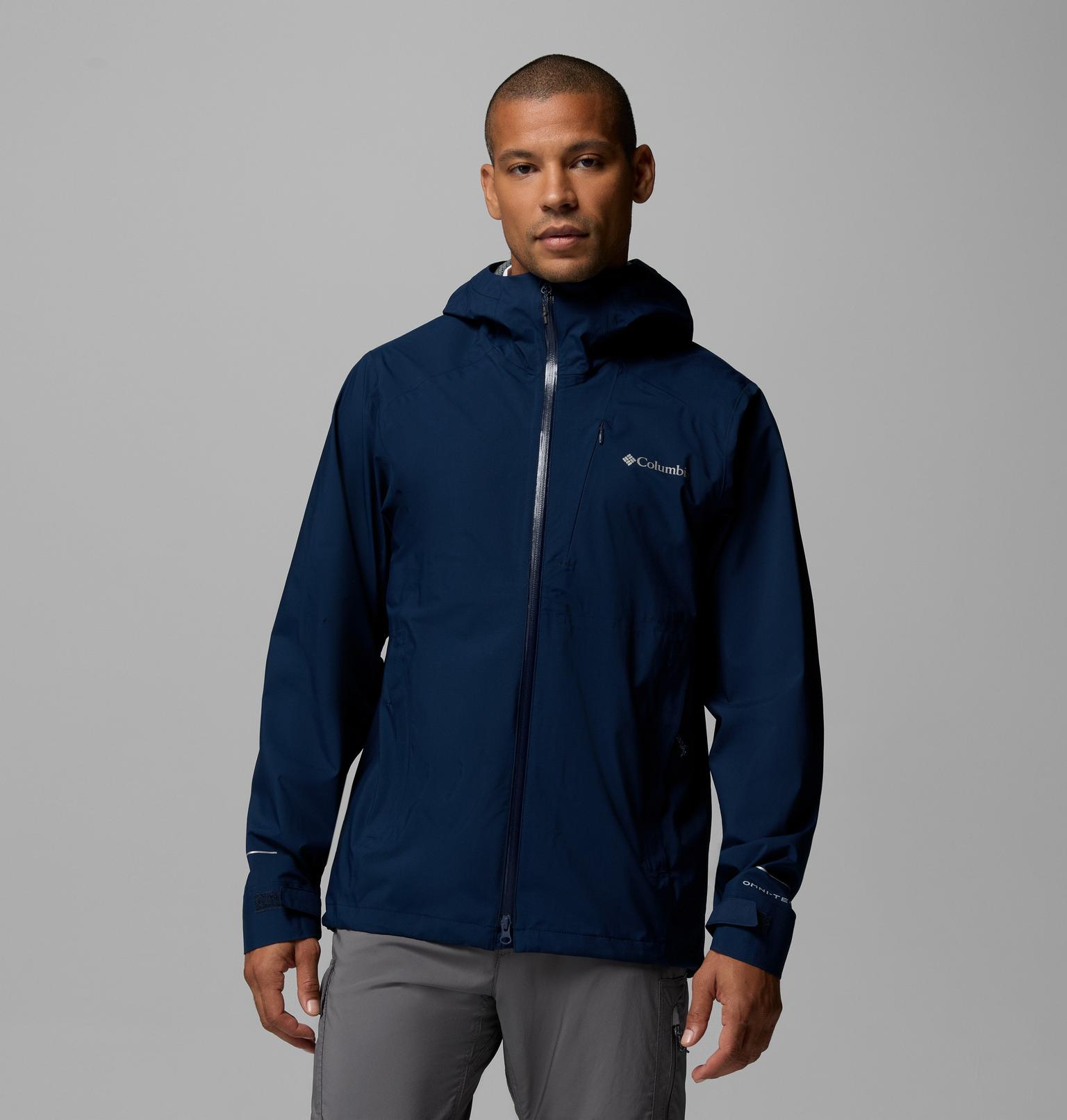
Our editor’s verdict: “Good value for money considering what it brings the table. The feature-set is really useful – particularly the big pit zips – though the hood is a little basic.”
Price: £101 Weight: 345g Best for: three-season hiking, casual wear What we liked: lots of ventilation, two-way zip, large hand pockets, good price What we didn’t like: chest pocket not fully waterproof, hood a little basic.
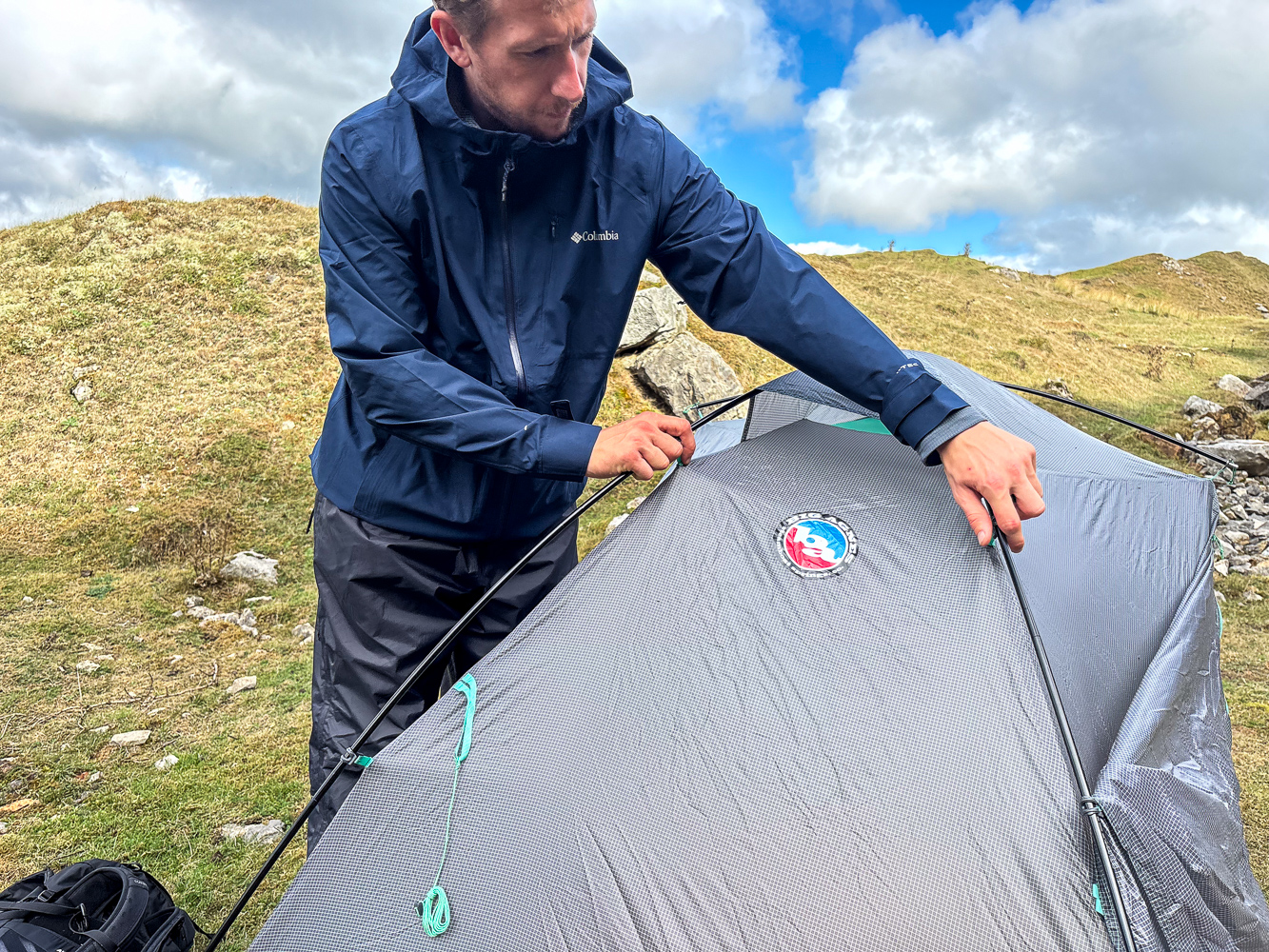
“£145 represents good value for what this offers,” says OM editor Will Renwick, who’s been testing this through late summer and autumn conditions in the UK, most recently on a camping trip through squally conditions in the mountains of south-eastern Wales. “It’s light, it’s packable, there’s a pretty good feature set for the price point and, perhaps most importantly, it provides a good amount of protection from the elements.”
Will using a size L Columbia Trailborne 2.5 in autumn weather.
The feature set he’s referring to includes a hood with toggled adjustment at the back of the head, Velcro cuffs, a cinchable hem, large hand pockets that double as vents and large pit zips too.
“The amount of ventilation on offer here does set this apart from most other 2.5-layer jackets and also most other jackets within the same price bracket,” says Will. “Some of the details are well thought-through too, like the hand pockets that are big enough for an OS map, and the fact the left-hand one doubles as a storage pouch.”
As a 2.5-layer jacket, the focus is placed more on lightweight packability rather than durable protection, so it’s not a jacket for seriously demanding excursions, but instead one that suits general hillwalking, lightweight backpacking and those situations where you want reliable wet-weather protection without carrying a heavier shell.
Drawbacks? Will found heavily wind-driven rain did manage to seep in through the chest pocket at times. He also found the hood a little on the flimsy side: “A slightly stiffer peak would definitely help to keep that extra bit of rain off.”
“I’m caught a little between two sizes with this jacket, I’d say,” says Will. “I’m 5 foot 10 and normally a Large these days, but the Large is perhaps just a bit too baggy for me. If you tend to be between sizes, I’d suggest sizing down.”
Our editor’s verdict: “Genuinely innovative and versatile. You can tell that the team behind it have extensive experience in outdoor gear design.”
★★★★☆
Price: £400 Weight: 204g Best for: hiking, backpacking, trail running, mountain biking What we liked: light but protective, highly innovative design details, excellent versatility What we didn’t like: noisy, no pit zips or dedicated vents, expensive.
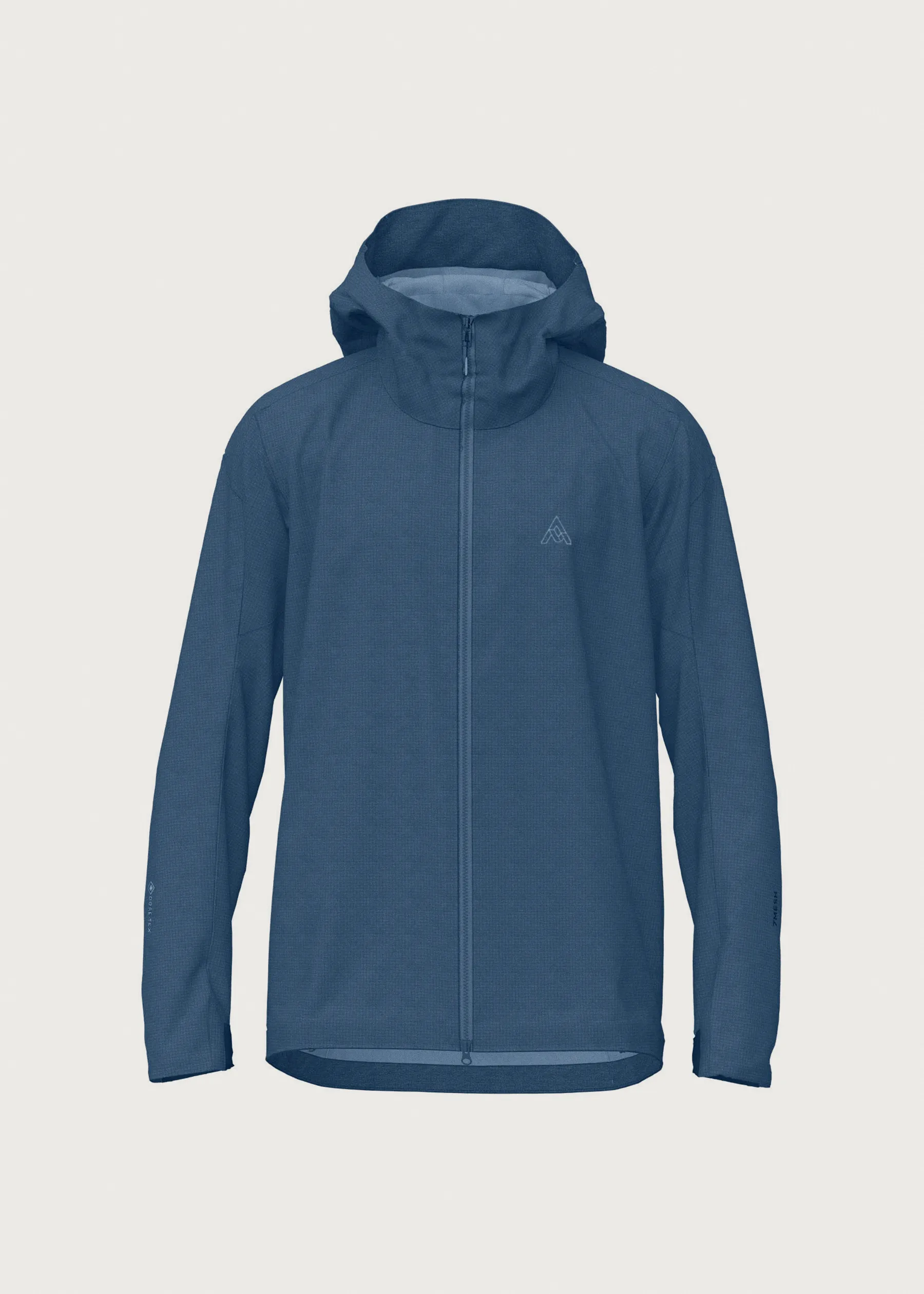
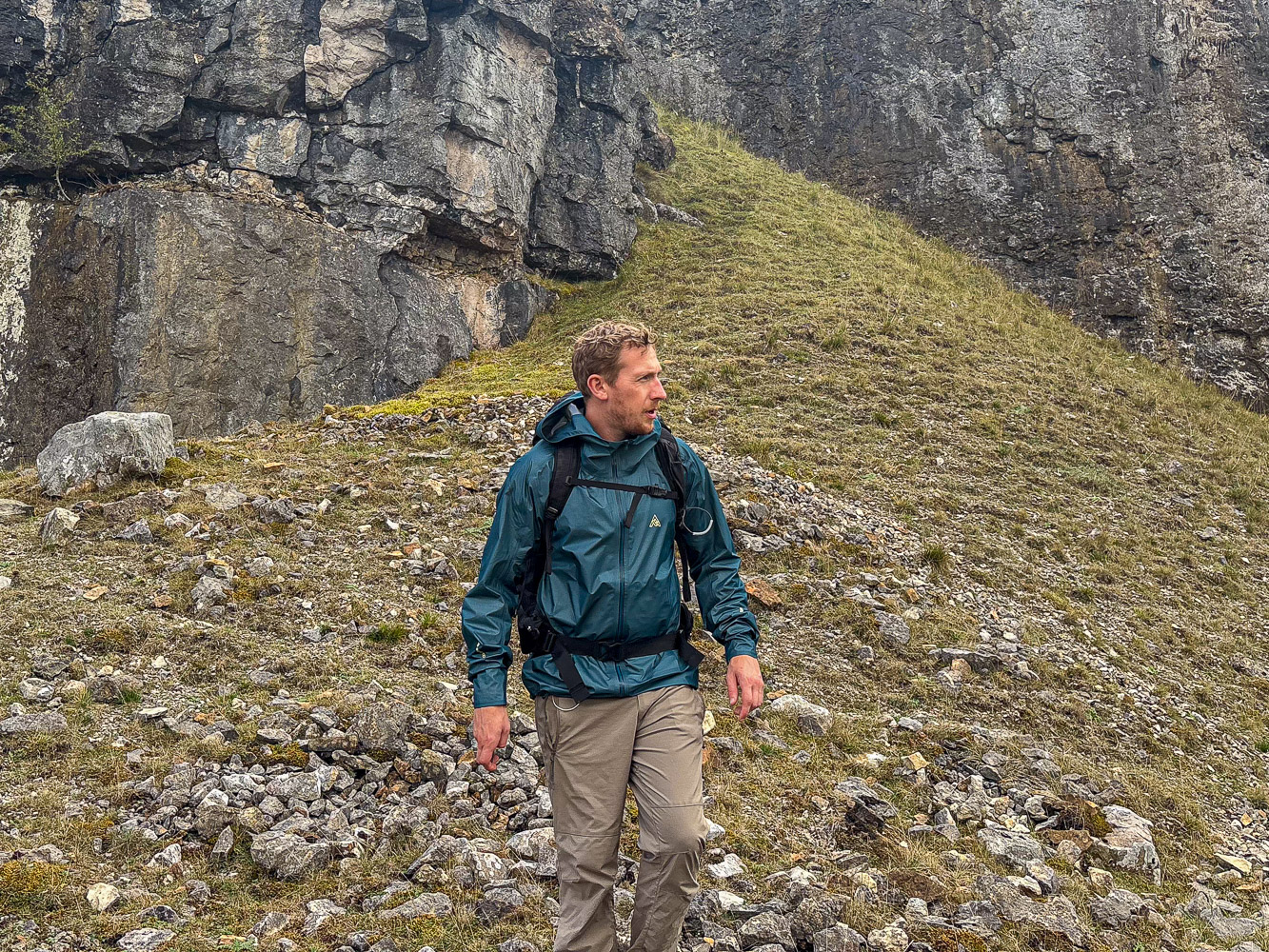
At just 204g, this is currently the lightest GORE-TEX ePE jacket on the market. It’s also a jacket with a lot of versatility – in fact, 7mesh has designed it to cater for cycling, running, hiking, ski touring and more.
OM editor Will has been using it on two wheels and for some recent hiking trips. “I’ve tested a lot of waterproof jackets and so many of them are identical to each other, so this has been refreshing to use,” says Will. “I like that there are some genuinely unique details, like the hood that rolls away and has a clever fastening system, the micro cuffs that work with winter gloves without causing lots of excess material, and, once stuffed into its own pocket, the neat straps that let you attach the jacket to a bike or even around your waist.”
Will wearing a size L of the 7Mesh Guardian Air.
That design thinking comes from the experience of the brand’s founders, who all bring years of experience in senior positions at Arc’teryx, including former CEO Tyler Jordan.
“From my experience using it, it’s a jacket that does have genuine multi-sport versatility, which is a hard thing to get right,” adds Will. “For instance, I’ve found it has the durability and functionality for multi-day hiking with a heavy pack, but then it has the lightness and packability (and qualifying protection) for wearing during trail running races.”
On the fit, Will, who’s 5 foot 10, has found the size L fits him well: “For me, the jacket fits neatly, leaving space for layering underneath without being too baggy or bunching up too much at the front when cycling. I’d recommend going for your usual size.”
Downsides? Aside from the two-way zip, there are no dedicated ventilation points here. Will also says that the jacket is a little bit on the crinkly, noisy side.
Our editor’s first impression: “This feels durable and well enough equipped to withstand some seriously nasty conditions. There’s quality throughout, all backed up by a very reassuring sustainability scheme.”
Price: £1100 Weight: 502g Best for: mountaineering, winter hiking, ski touring What we liked: exceptionally protective, durable, repairable, excellent fit What we didn’t like: expensive, no two-way main zip
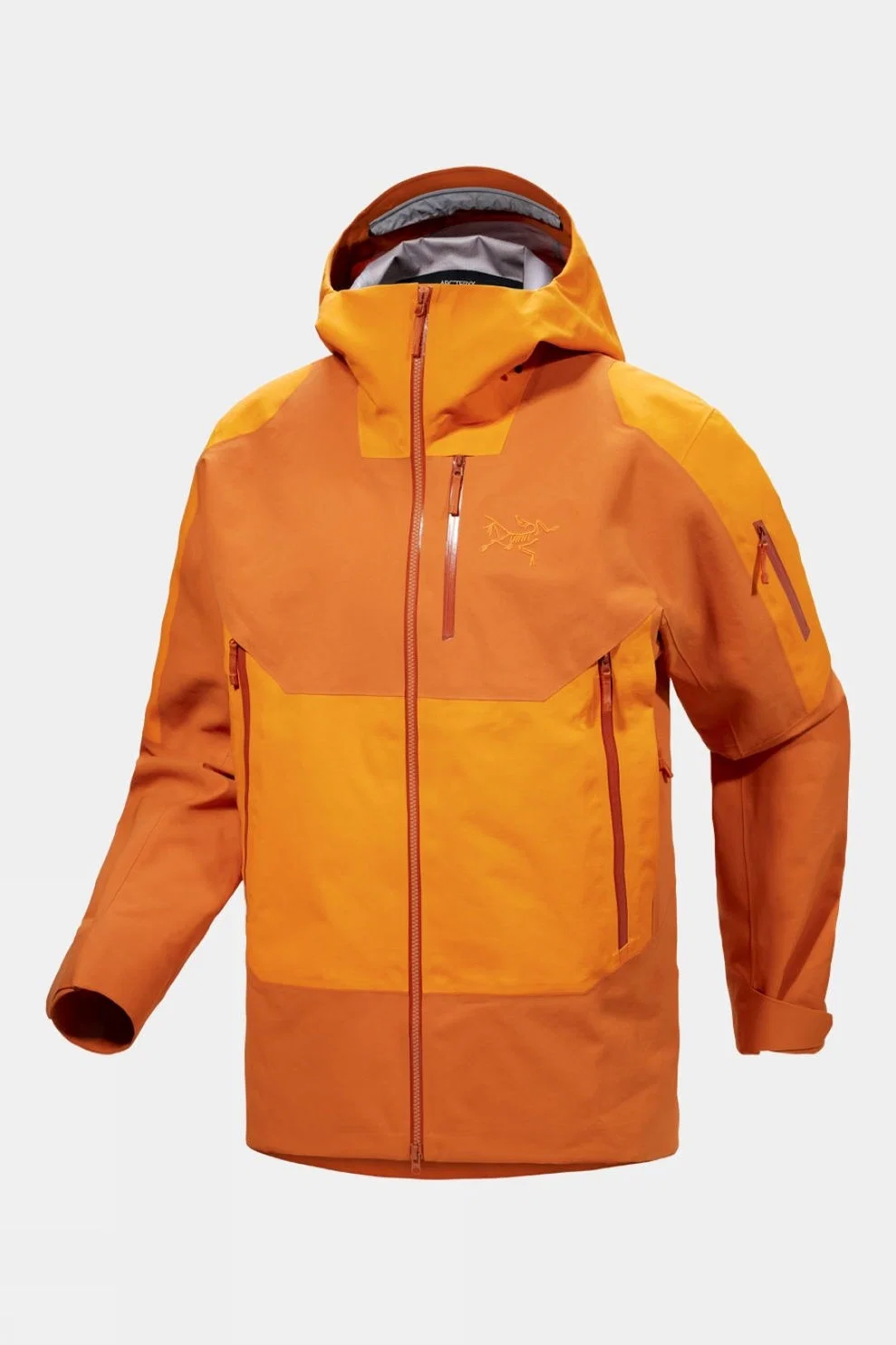
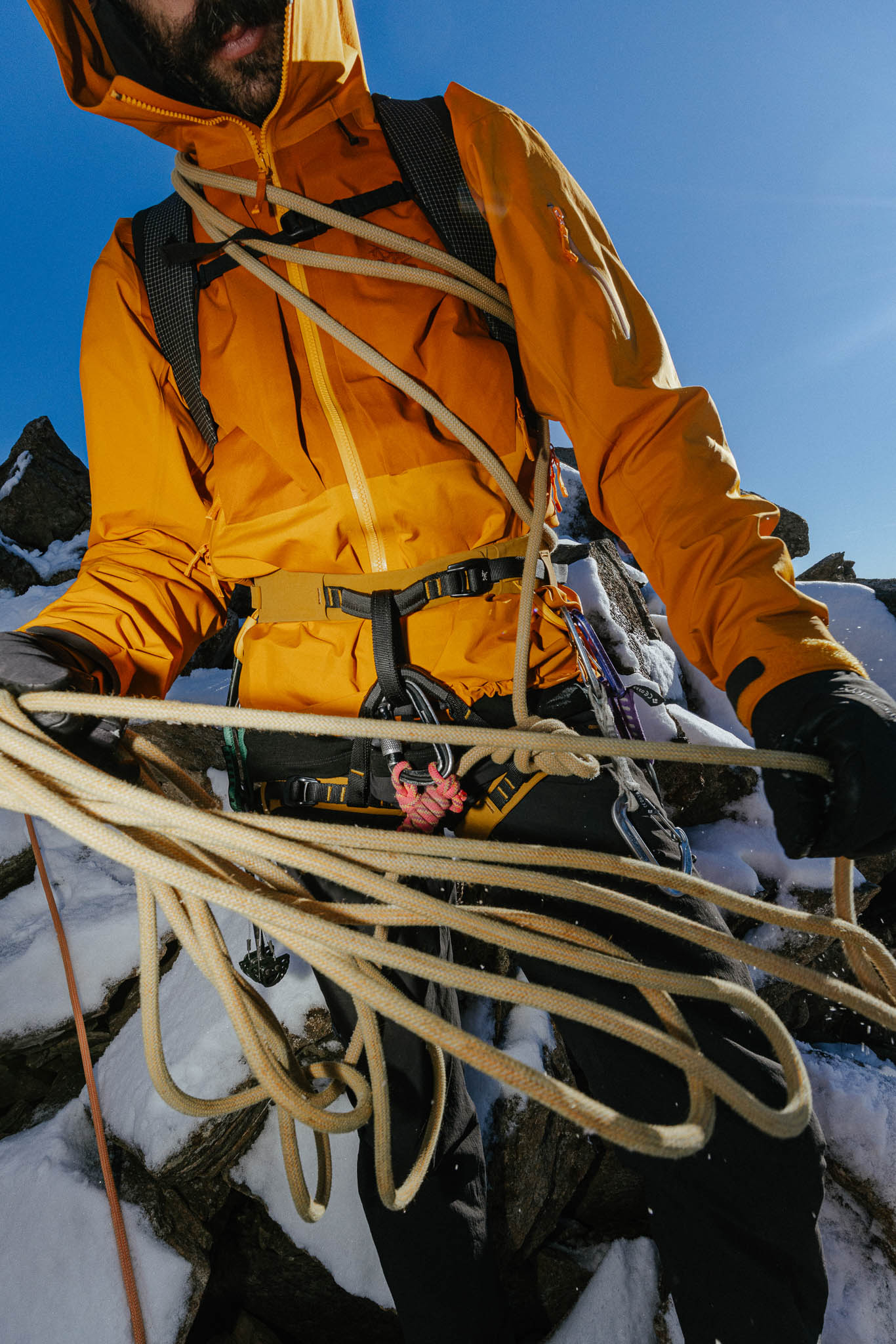
The Sperro SV is a high-spec waterproof shell designed as a multi-activity jacket for mountaineering, ski touring and winter hiking. It uses Gore-Tex Pro with ePE technology and has all the hallmarks you’d expect from Arc’teryx, including an excellent cut, impressive protection and plenty of details designed to streamline your ascent.
OM editor Will has been taking a close look at the Sperro SV, although hasn’t yet had the opportunity to test it in sustained torrential mountain conditions.
Will said, “Arc’teryx have positioned this as a multi-activity jacket. It’s well specced for mountaineering and also makes for a very protective hiking jacket that’s light and packable enough for sticking in a pack without being a huge burden.”
“I’m a bit between a medium and a large with jackets depending on the brand. I opted for a medium in this instance and it’s spot on. It’s a slightly long cut that sits comfortably underneath a climbing harness, with plenty of room for layering underneath, but it still has a fairly trim and athletic look.”
Photo: Arc’teryx.
The Gore-Tex Pro membrane, taped seams, waterproof zip and protective hood provide the protection, while long pit zips help with ventilation. The pockets are also positioned so they remain accessible when wearing a backpack hipbelt or climbing harness.
“I love the big pit zips. The hood has all the right details for proper protection in strong wind and rain, while the pockets are positioned exactly where you want them when you’re wearing a pack or harness.”
At 502g, it’s not the lightest shell available, but that’s reasonable for a robust mountaineering jacket. The most interesting aspect, though, is Arc’teryx’s new System 0 circularity programme. The jacket is designed to be repaired and eventually recycled into another product, while the zip can be replaced if it fails.
“It has a lot of durability to it. That’s one of the hugely impressive aspects of this. It’s a jacket that’s built to last, built to be repaired and built to be recycled at the end of its life to be turned into another product.”
The £1100 price tag is certainly eye-watering, but this is a jacket designed to stay with you for a long time, backed by Arc’teryx’s extensive warranty.
Our editor’s verdict: “Stylish and functional with an excellent balance between weight and durability. An excellent option for three-season long-distance trekking. Shame there are no pit zip vents though.”
Price: £305 Weight: 330g Best for: three-season hillwalking, casual wear What we liked: excellent balance between weight and durability, well-designed and cut, lots of versatility What we didn’t like: quite minimalist – so no pit zips, wired peak or two-way zips
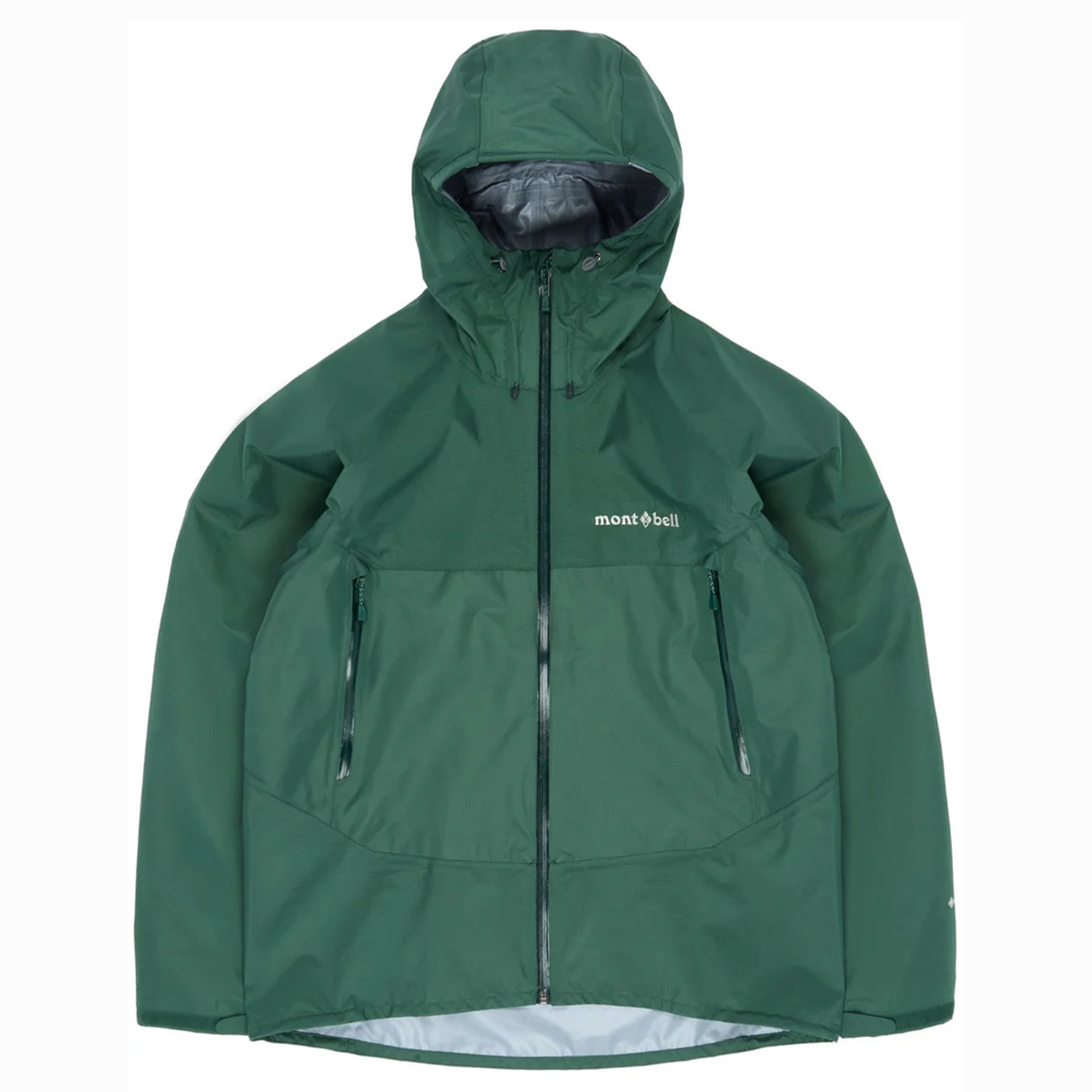
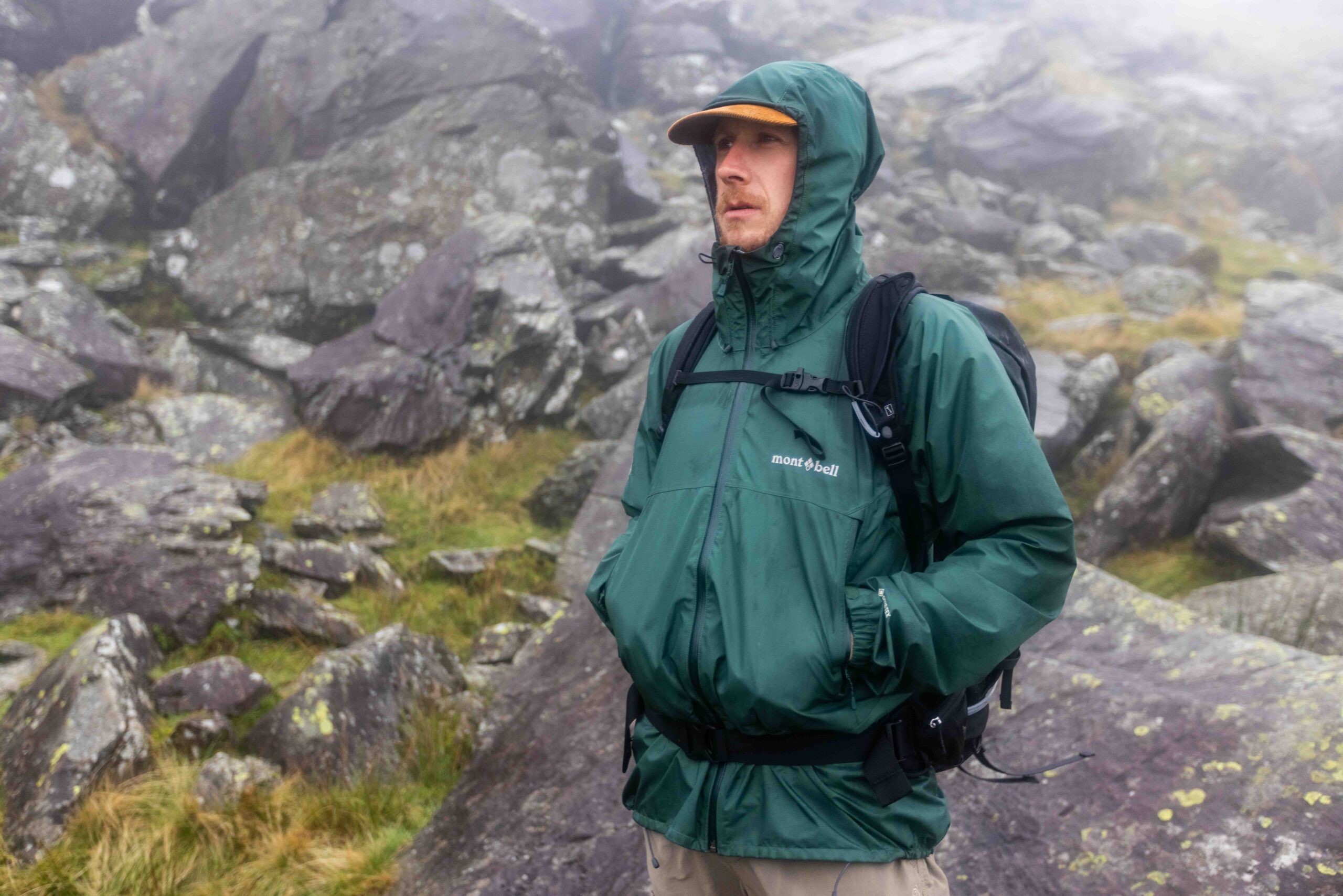
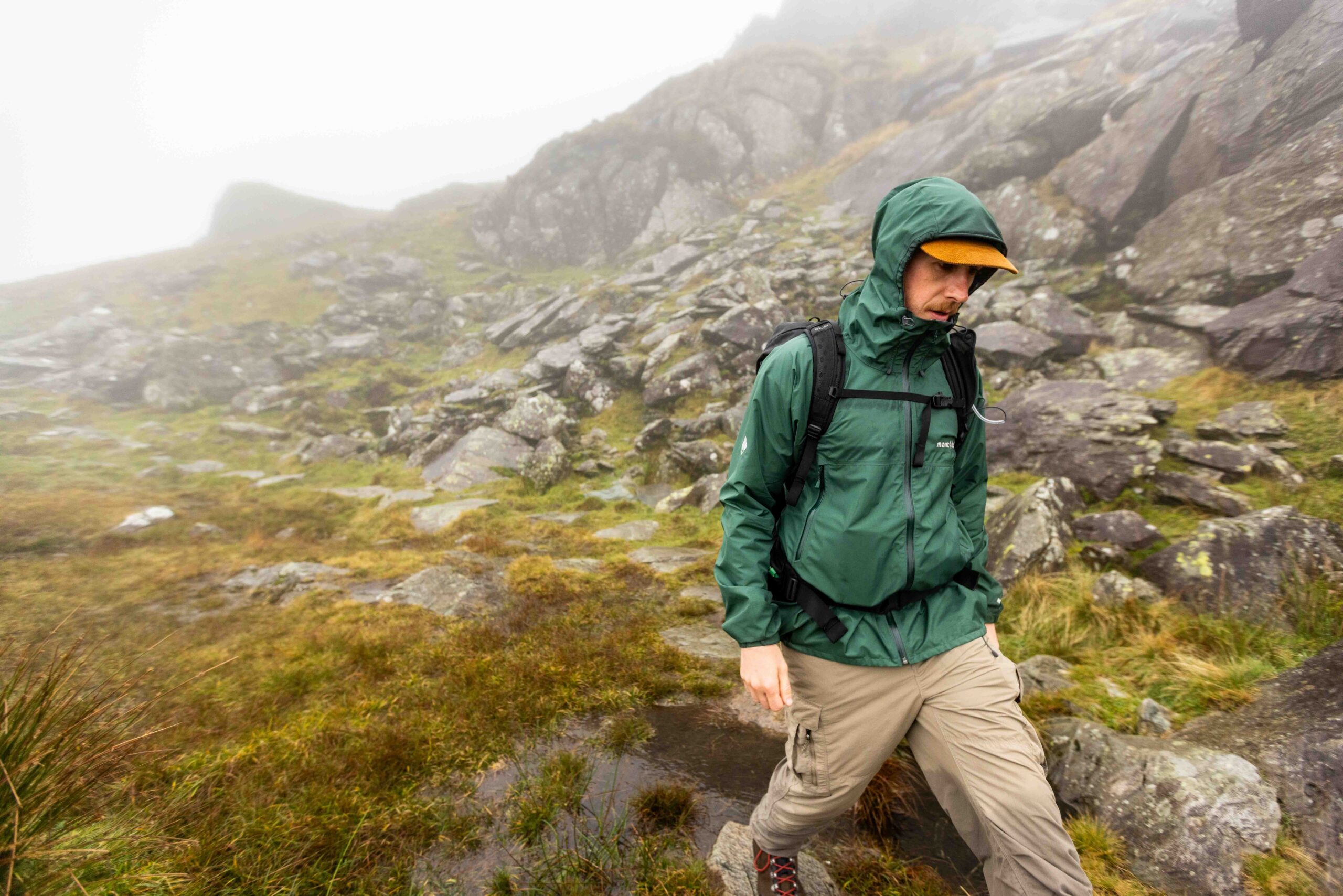
The Montbell Rain Trekker is one of those jackets that serves as a reliable all-rounder. It’ll handle rough days in the mountains, yet its understated look means it works just as well as a daily jacket. Its low weight and packability also make it an excellent option for backpacking. “I’d happily take this on my next long-distance walk”, said tester Will.
OM editor Will wearing a size L. Will is 5 foot 10. Photos: Dave Macfarlane
The previous version of this used a Windstopper membrane. This one now has 3-layer Gore-tex protection. Is it breathable? On paper, it’s rated at 20,000 g/m²/24 hrs. In the field, tester Will said that it felt comfortable and reasonably fresh to wear – “I don’t recall ever feeling overly clammy in it.”
Is it waterproof? Yes. “I’ve faced some pretty brutal weather in this – sideways rain and all – and it’s been very reliable. Crucially, there’s excellent adjustment at the hood, so you can really batten down the hatches, and the PU-coated zips do their job well.”
We’ve also been impressed by its durability. It’s a lightweight jacket, but it feels tough and hard-wearing – very different, in fact, to many modern Gore-tex jackets that now have a softer, almost softshell-like feel. The material here has very little stretch or softness, which, while it adds to the jacket’s water resistance and durability, does make it a bit rustly and swishy.
Our editor’s verdict: “This is a hardy 3-layer shell that feels and performs as well as any Gore-tex Pro jacket would, but at a fraction of the cost. I tried it in my usual size and also in a size up and I preferred the larger size.”
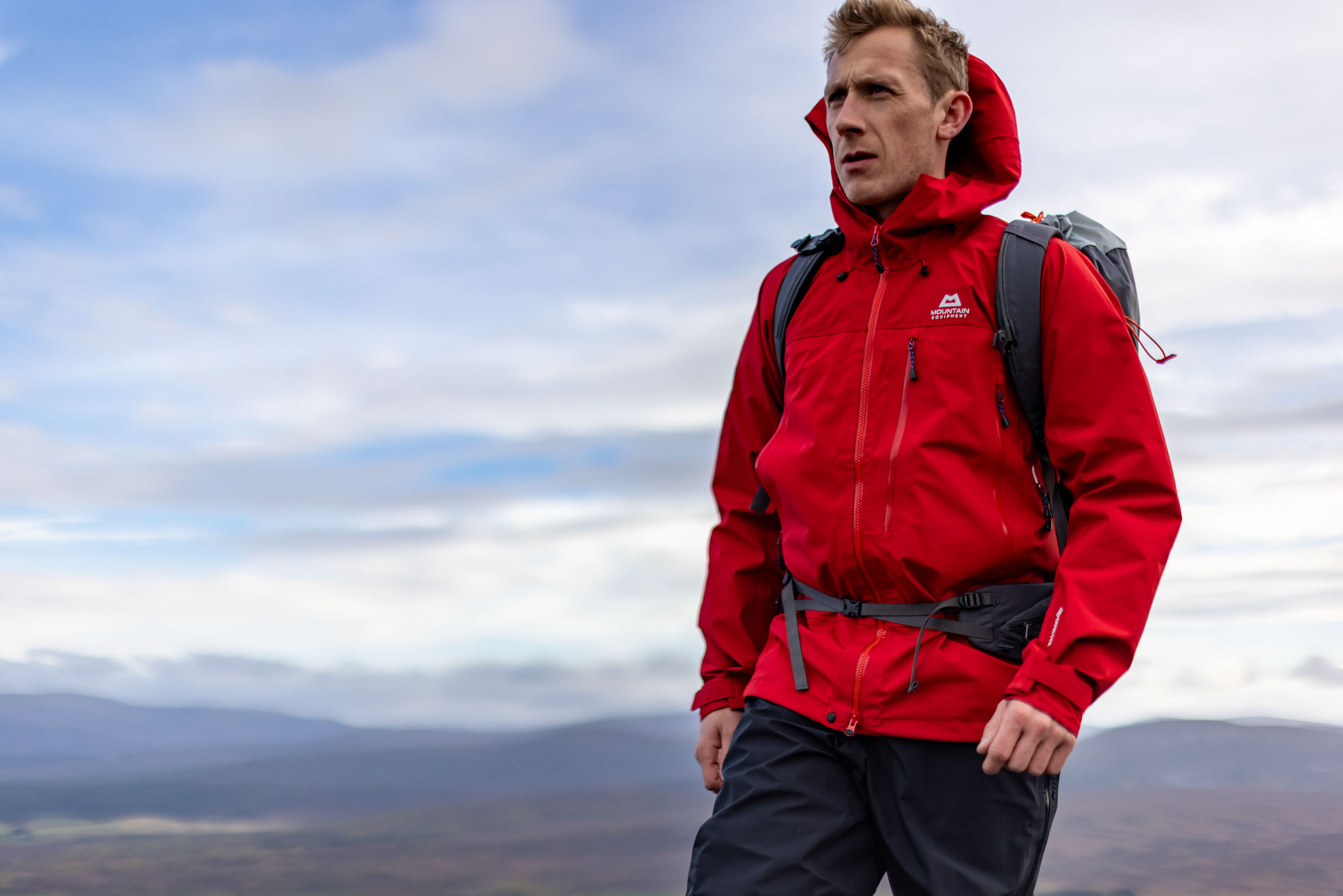
Price: £120 Weight: 556g Best for: year-round hillwalking What we liked: good value, useful details you’d expect on a pricier jacket What we didn’t like: the DWR seems to be quite weak
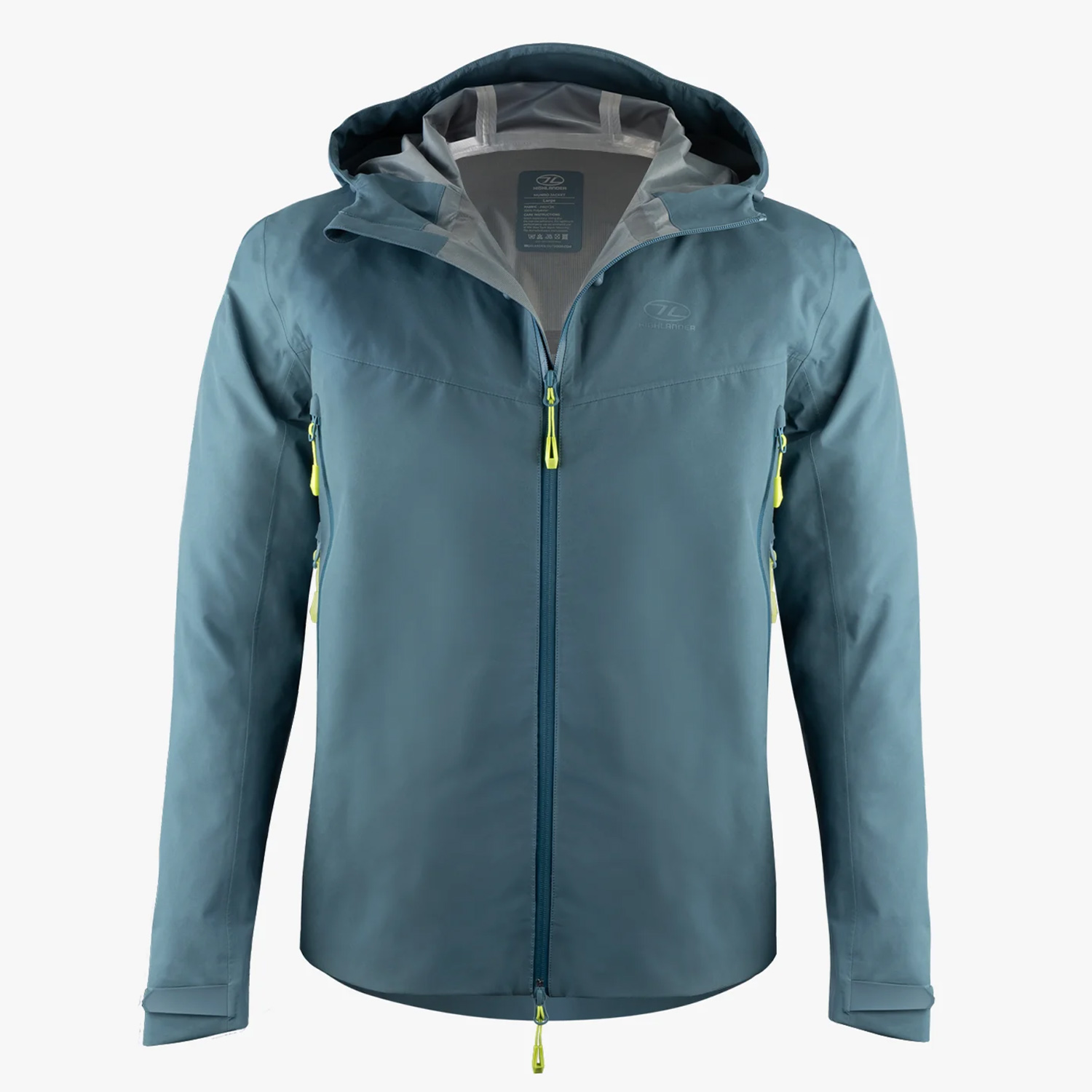
Highlander is a long running Scottish brand that makes functional kit at very good prices (and with decent warranties too) and this, the Munro jacket, is a case and point. It’s a 3-layer shell that has a lot of the same qualities as the Mountain Equipment Makalu jacket that came out tops in this round up, only the materials and details are just a slightly lower-spec.
Will wearing the Munro in a size L which he says he found slightly too large for him as he’s usually a size M.
We tested this out in a lot of rain and wind in the Scottish Highlands and it did what was required of it, with the durability of the fabrics, the venting options and the functionality and reliability of the hood really standing out. We did notice, however, that the outer fabric wetted out quite quickly after the jacket had been used on a few big hikes and, as such, it’s a garment that’s going to need fairly regular reproofing. We found the fit to be true to size – so go for your usual. Also, it comes with a spare set of zipper tabs in a different colour, so you can choose for a muted look or a bit of pop.
Our editor’s verdict: “The waterproofness and cut impressed me. The hood does let it down though as it’s pretty basic and doesn’t give create protection in blustery conditions.”
Price: £384 Weight: 635g Best for: three-season hillwalking, casual wear What we liked: durable, lots of pockets, nice cut What we didn’t like: lack of cuff adjustment, no women’s version.
Teren was founded a few years ago when two friends decided to develop a pair of trousers that could meet all of their outdoor needs. The resulting product was an instant Kickstarter success and the brand subsequently began developing other products. This, the Teren Cloudland Shell, is one of them; a three-layer shell that blends genuine outdoor performance with a casual look that wouldn’t look out of place on the morning commute.
Will is 5 foot 10 and is wearing a size M here. Photo: Dave Macfarlane.
OM editor Will is a big fan of it. “First of all, I really like the fabric they’ve used,” said Will. “Made from eVent, it’s super durable and protective, and it has a good quality feel to it. I like the fact it has underarm ventilation, loads of very discrete pockets and a stormproof hood. And I really like the cut; for me, it hits that goldilocks spot of being fairly trim and aerodynamic while still giving plenty of room underneath for layering.”
But there are some downsides. “I wish there was some adjustment on the cuffs,” said Will. “Also, the fabric is ePTFE, which means it contains so-called ‘forever chemicals’. That’s a negative from a sustainability point of view, but it does make the water resistance noticeably better than the new non-PFAS generation of jackets coming through.”
Our editor’s verdict: “A former best in test on these pages, this is a jacket that ticks a lot of boxes. We found it to be well-specced and protective. It’s made for mountaineering but it serves just as nicely as a hiking and trekking jacket.”
Price: £300 Weight: 550g Best for: hillwalking, mountaineering What we liked: protective, durable, innovative new fabric What we didn’t like: quite heavy
The all-important thing to know about this is that it’s one of the first ever jackets to use Gore-tex’s brand new ePE fabric. This is a new waterproof material from Gore-tex that looks set to replace the standard version of the fabric that we’ve all come to know over the last few decades now. The reason for the switch? The old fabric contains PFCs while the new one doesn’t. PFCs, you see, are now being phased out of production by most outdoor brands due to their potential for environmental harm.
Better still, the fabric is impressive. We’ve used it in three different jackets now and it seems to be durable, protective and as breathable as you can expect a waterproof membrane to be. Featured here in the Mountain Equipment Makalu, it makes for a very impressive offering. During our tests, this jacket had the feel of a shell you can really trust; the kind of thing we’d reach for when we knew conditions were going to be very rough.
But it’s still relatively lightweight too; we found it can serve either as that option to wear all day-long in horrible stuff or as that option to carry in your backpack, just in case some rain happens to roll in. For us, this offered everything we’d want in bad weather: a fully adjustable hood, venting pit zips, water resistant zips and, of course, a fabric that can capably block out moisture.
Will is wearing the size M here.
There are also touches that show Mountain Equipment’s real alpine expertise. The hood, for instance, is helmet friendly, the pockets can be accessed when you’re wearing a harness or backpack with a hipbelt and the arms are articulated so the hem doesn’t lift up when you’re reaching high for a hold.
Our editor’s verdict: “At 570g, this is one of the lighter Nikwax Analogy jackets in the Páramo range. So you’ve got that Páramo breathable protection, but without the weight and bulkiness.”
Price: £260 Weight: 570g Best for: cool to mild mountain days What we liked: easy to repair and long lasting, useful details, very breathable What we didn’t like: the front is quite short
The Páramo Adventure Light Smock uses the forward-thinking British brand’s innovative Analogy Light fabric, which is designed for “full directional waterproof performance and perspiration removal”. We’ve used a number of jackets that use this Analogy system, including the original Páramo Velez, the Aspira 360 and the Torres Smock, and we rate it highly.
Will testing out the Velez in Wales. Will is wearing a size M.
Details we liked on Velez Adventure Light Smock include the abrasion-resistant and breathable outer, the ventilating side vents, the three-point adjustment hood, and last but not least – the fact that this smock was made by Páramo’s partner, the Miquelina Foundation, a Fair Trade Status manufacturer that provides meaningful employment to vulnerable women in Colombia.
“It’s not the most protective option from Páramo but I’d say it’s the best I’ve come across at balancing protection, breathability and weight. Its best deployment, from what I’ve seen, is during cool to mild days from spring through to autumn, and it should suit high-tempo activities in winter too” said our tester. “The features and details are all spot on. For me, my only real qualm is the short hem at the front, but that’s something that maybe the cyclists and climbers might appreciate.”
Waterproof fabric: Nikwax Analogy / Sizes: S-XXL (men’s), XS-XL (women’s) / Pit zips: yes / Fit: loose fit but short at the front
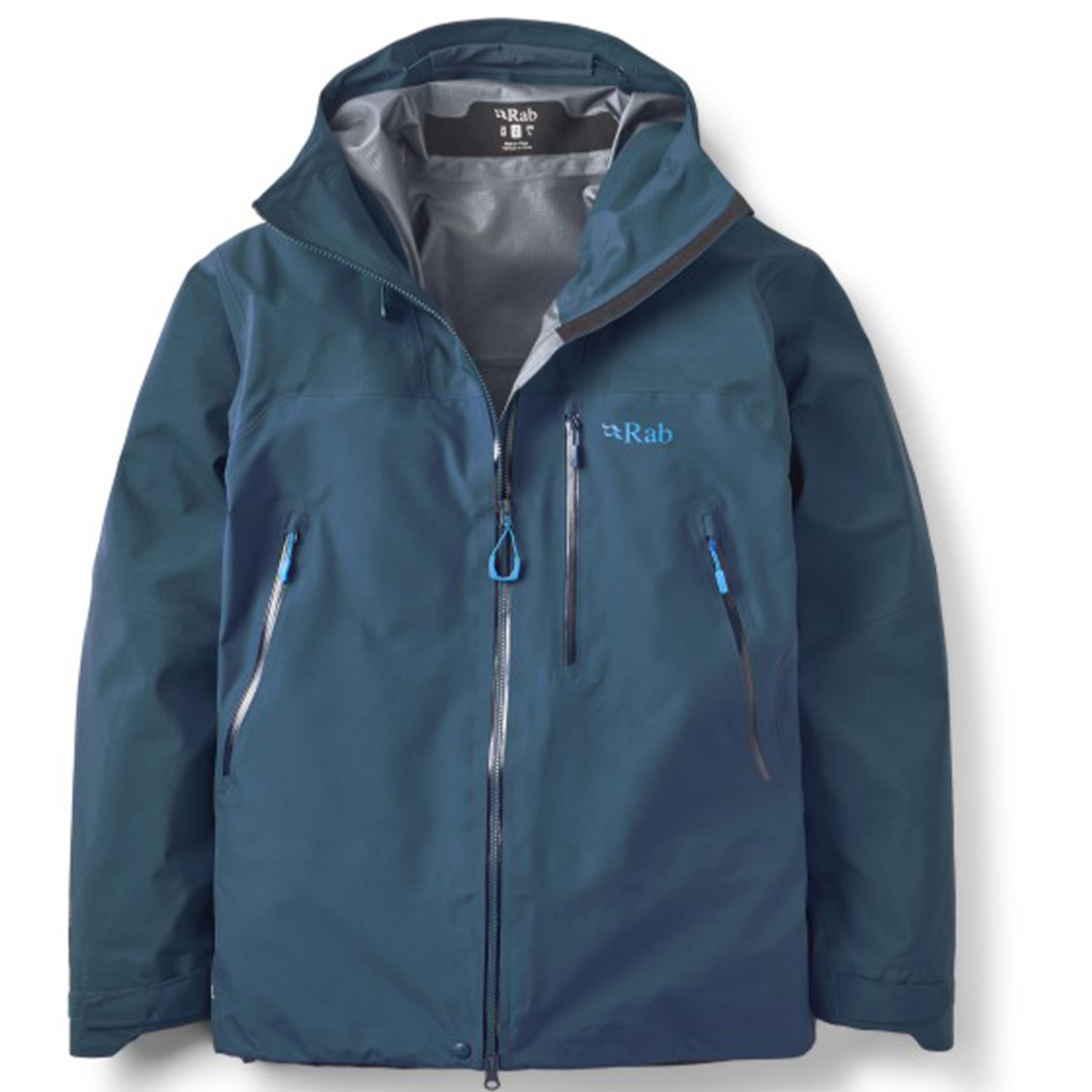
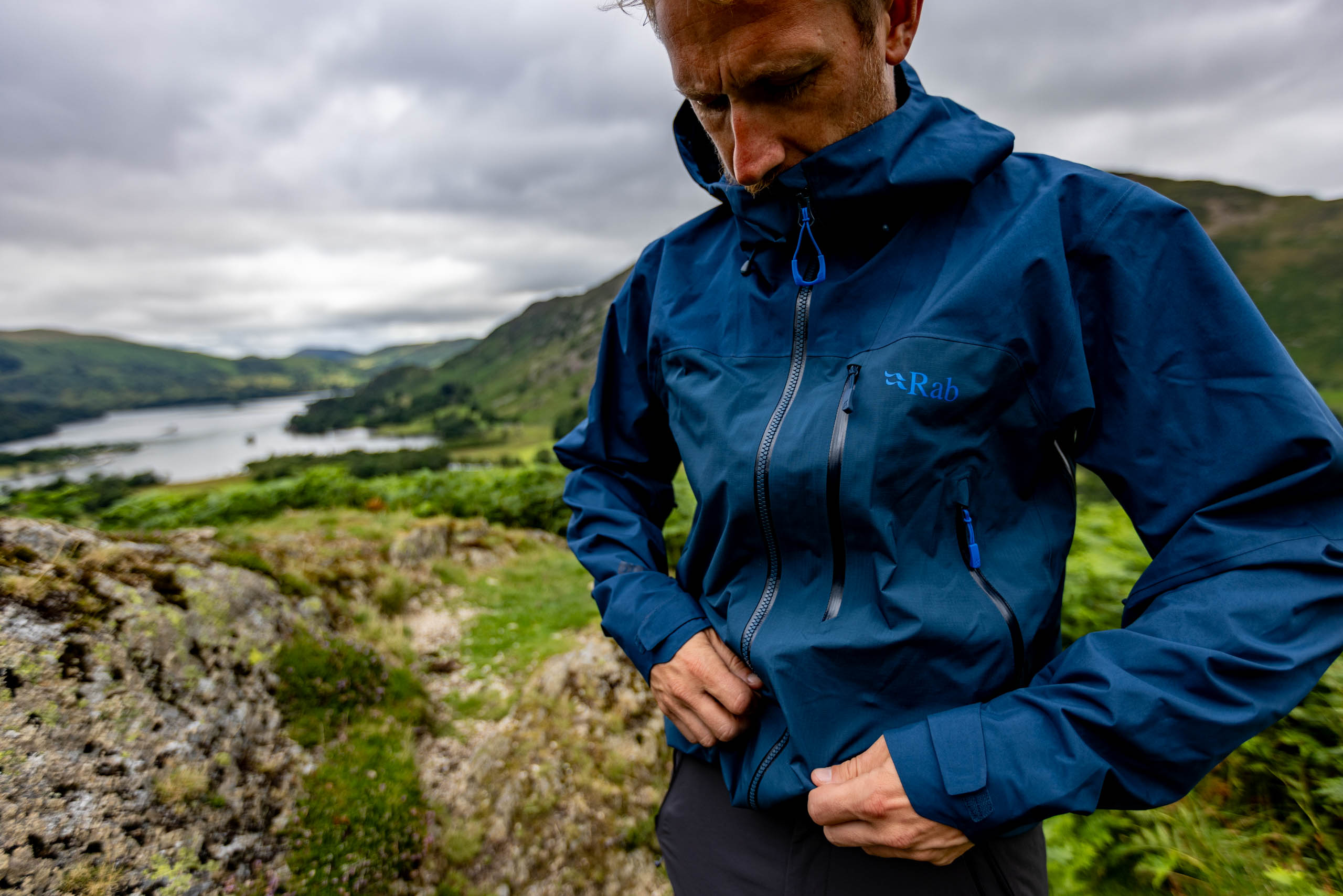
Our editor’s verdict: “Rab know what they’re doing when it comes to waterproof jackets. This one has a great feel to it, the details I’d look for from a mountain shell, and a fit that allows for layering.”
Price: £336 (sale) Weight: 496g (size medium) Best for: harsh conditions, all-season hiking What we liked: durable and protective but still light and packable, good eco aspects, lots of mountain-focused details What we didn’t like: premium price.
Rab know what they’re doing when it comes to waterproof clothing. This is a jacket that’s designed for very harsh conditions, but it’s also surprisingly light and packable too. It’s also one of the first waterproof jackets out there to use the latest version of Gore-tex Pro fabric, which contains no PFAS chemicals.
OM Editor Will is pictured here testing the new Rab Latok Mountain jacket out in the Lake District. Photo: Dave MacFarlane.
OM editor and gear tester Will has been out testing the Rab Latok Mountain GTX Pro jacket this season, and was impressed with its performance and its admirable sustainability credentials too. That’s why it’s one of only a select few items to make it into our Greener Gear Guide for this year.
He said, “I’ve found this to be a very well-made jacket with all of the right details that I’d expect from a mountain shell. It’s hardy and very protective, and it doesn’t skimp on features while still remaining reasonably light. While it’s made with alpine mountaineers in mind, I’ve found it to be an all-round performer that really doesn’t look out of place as a three-season hillwalking shell or even as a casual day-to-day rain jacket. OK, it’s got a top-tier price, but you’re getting a cutting-edge fabric with impressive environmental credentials, excellent protection, and the sort of build quality that should last for years with the right care.”
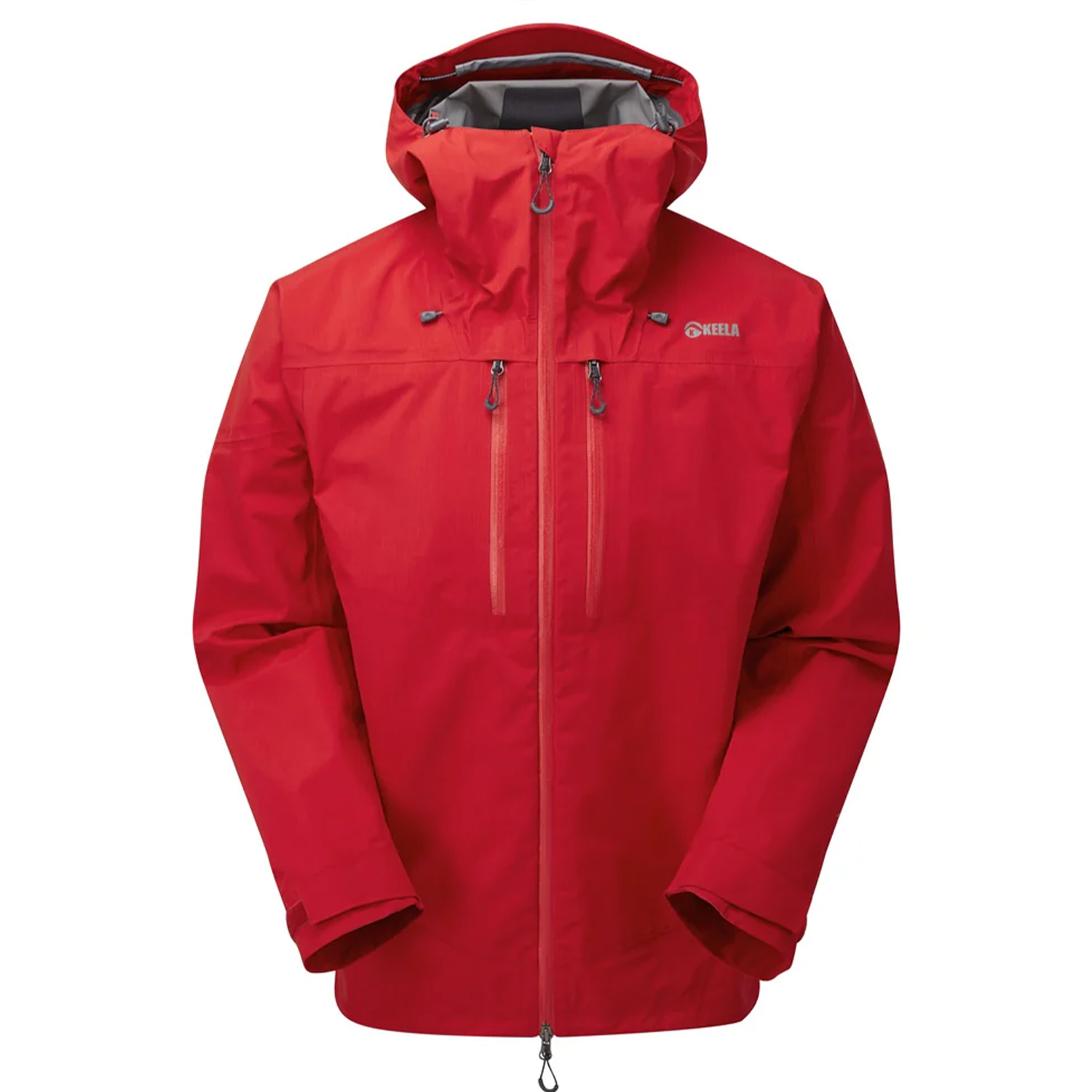
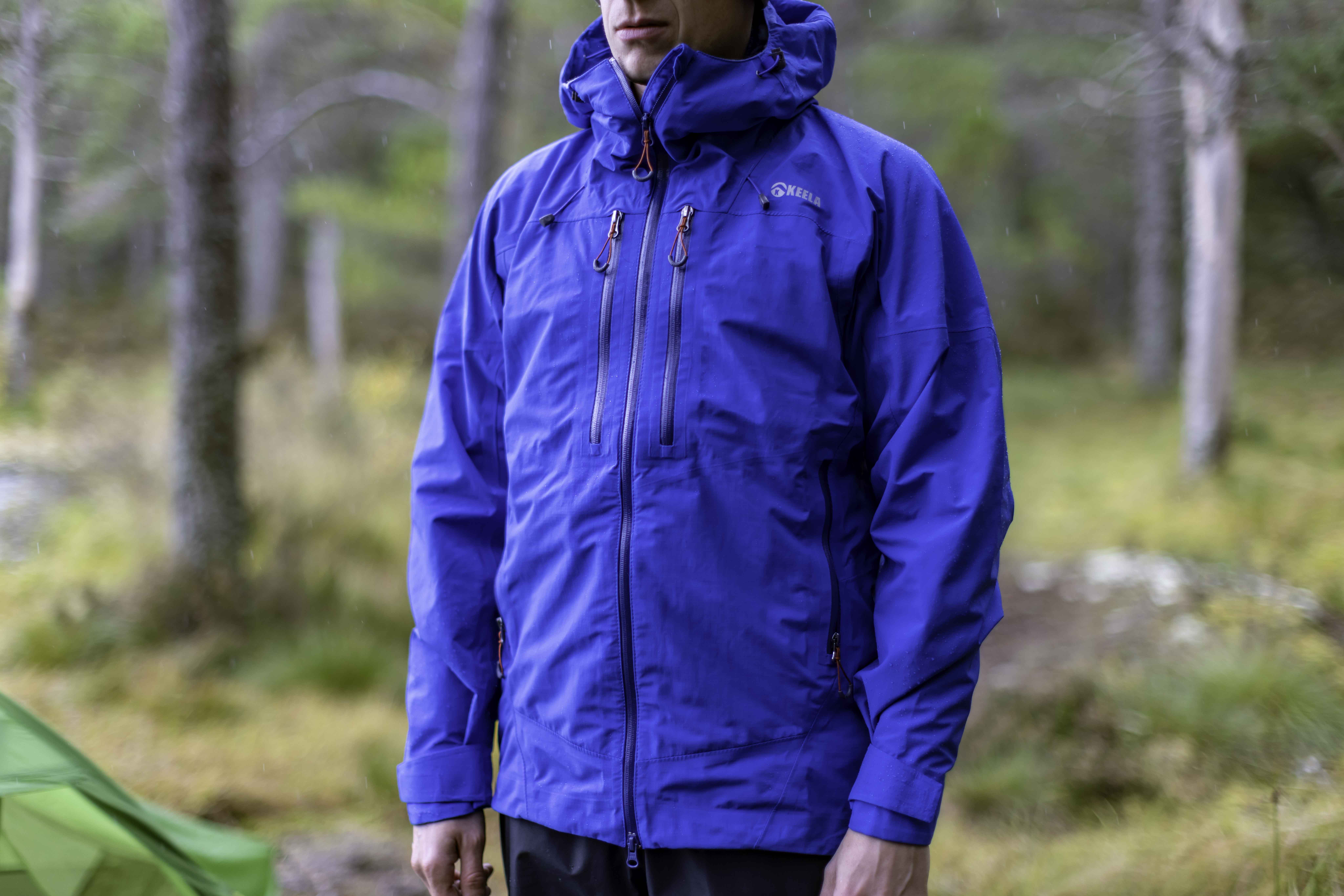
Our editor’s verdict: “You get a lot of bang for your buck here. The fabric is tough (which makes it a little on the heavy side), the pit zips are large and the pockets are big enough for an OS map. One of our favourites from the Scottish brand.”
Price: £195 Weight: 405g Best for: Hiking, mountaineering What we liked: durable, lots of handy details, good value What we didn’t like: quite heavy
From our experiences, the Keela Pinnacle offers the same kind of protection and performance that you’d get from a £300 Gore-tex jacket, just at a much lower price.
Keela is a Scottish brand that does things a little differently to some of the more well-known brands. Its designers think outside of the box, coming up with their own fabrics and clever design details, and this results in great products like this.
Will is 5 foot 10 and is wearing a UK size M here.
It’s a useful, versatile jacket with some really nice details, including glove-friendly zipper tabs, a big moldable peak, two-way zips and huge vents at the armpits. We found the three-layer fabric to be protective and durable and it has a slight bit of stretch to it to give that touch more of dynamism when you’re reaching up for a hold in this thing.
From our experience using the Pinnacle, we’d call it your three-season work horse. It’s the kind of jacket that will come in handy for anything from alpine-style climbing through to scrambling, hillwalking and just day-to-day use. The cut was noteworthy too; we found it to be loose enough to accommodate a thick layer of insulation underneath but it didn’t come across as bulky or baggy either.
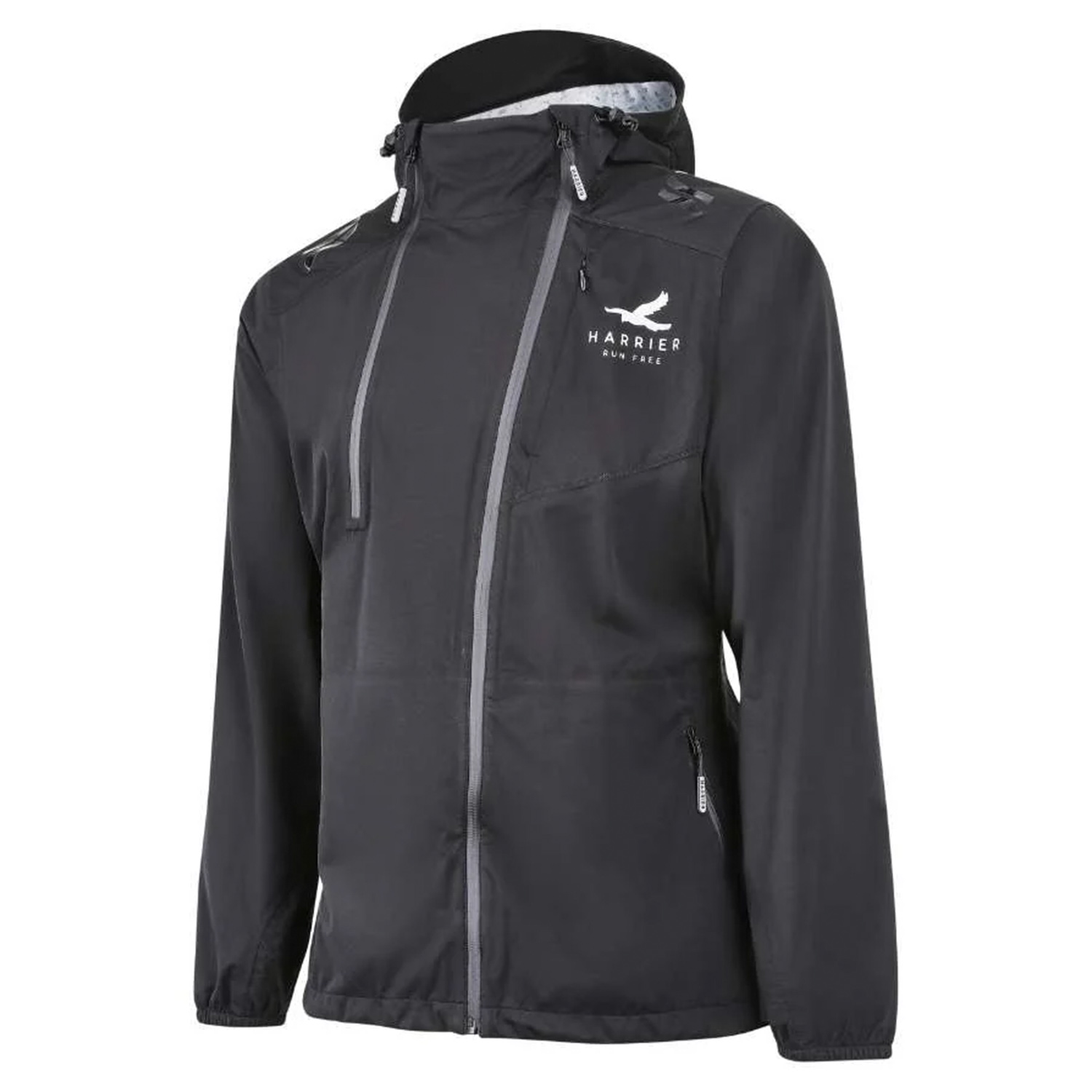
Price: £75 (sale) Weight: 340g Best for: trail running, lightweight hiking What we liked: stretchy fabric, loads of ventilation, smart design details What we didn’t like: on the heavy side for its category
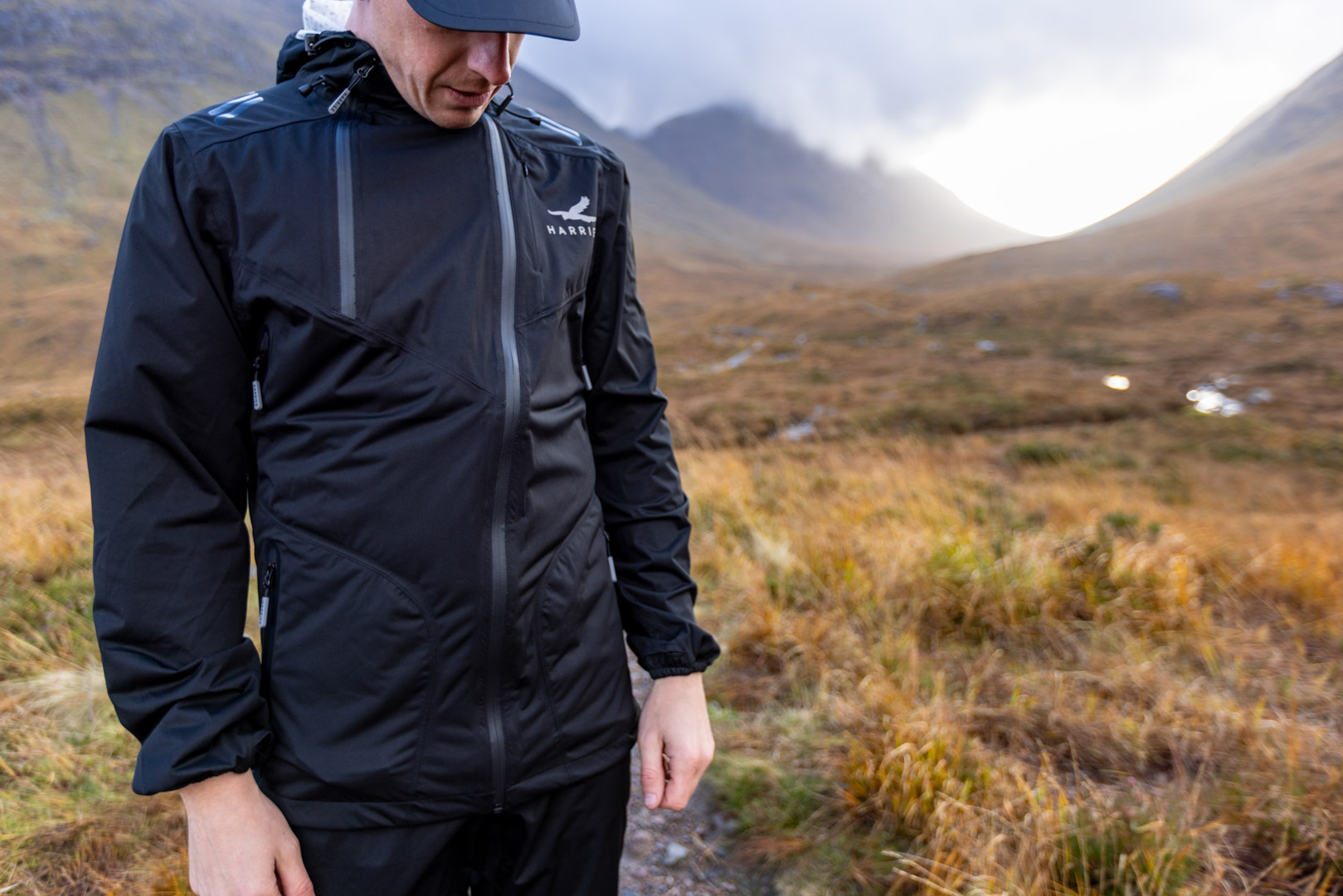
Harrier is a fairly new brand that makes great value kit specifically designed for trail running. This, the Exmoor jacket, is one of their bestsellers and, having tested this out extensively now, we can see why. It’s one of those jackets that’s clearly made by people who actually know exactly what a jacket should deliver; it has a waterproof but stretchy fabric that moves with you, it has loads of useful ventilation points and a hood with excellent adjustment, and a mouldable peak.
Will wearing a size M version of the Exmoor Jacket during tests in Glencoe.
Its dual, offset zips on the front are designed to allow you to wear it over the top of a running vest, so you can still have access to your squeezy bottles and nutrition and there’s a really smart design feature that lets you roll down the jacket around your waist like a belt, without actually needing to take it off. Read our full review to get the full details there.
While this is made for running, we found that it can still serve as a lightweight hiking jacket, but it’s worth noting that this has quite a close fit and will be a bit of a squeeze over a thick mid layer.
Our editor’s verdict: “The eco aspects here are really impressive. Aside from those elements though, it’s a hardy jacket with large pockets, useful ventilations options and a reliable hood configuration. I like the cut which is slightly long at the hem.”
Price: £160 (sale) Weight: 460g Best for: eco-minded adventurers What we liked: good eco credentials, durable build, nicely cut What we didn’t like: quite heavy
This is a jacket that showcases some excellent eco efforts. The polyester face fabric, membrane and backer, for instance, are derived from recycled materials (100%, 75% and 100% respectively) while a solution dyeing process has been used in its creation. Solution dyeing means that the fibres used to form the garments are dyed before they’re woven together instead of being woven then dyed. By doing it before, less water and energy is used and it also results in more colourfast garments.
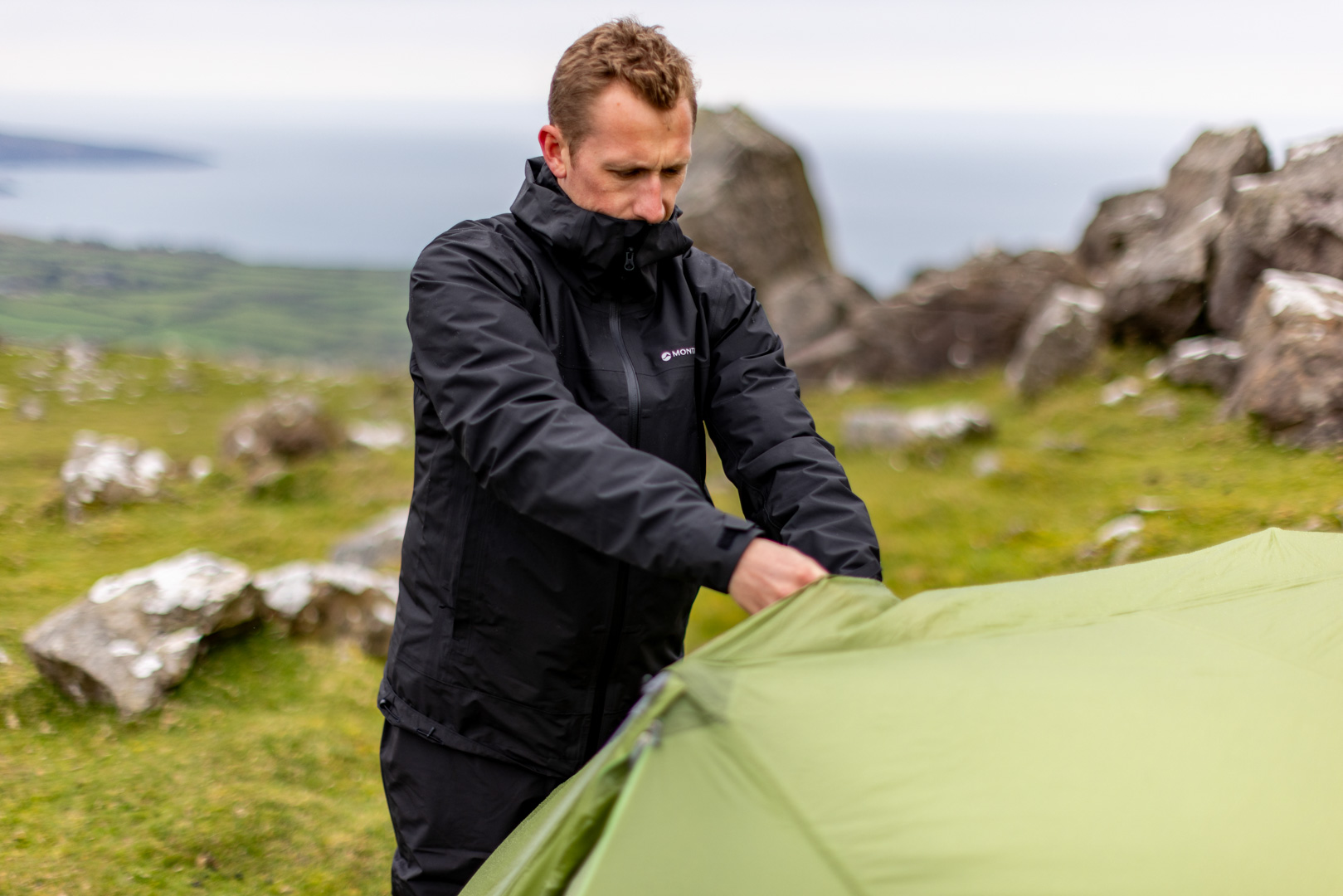
Will wearing the Montane Solution in a UK size M.
Fortunately, the jacket also performs very well, offering the levels of waterproofing and breathability you’d expect from a three-layer waterproof jacket. It’s also got a very durable feel to it and feels built to last. That durability does come at a cost though, because at 460g it’s not particularly light.
“I’m 5 foot 10 and tried this in my usual size”, which is a size medium, said our tester. “I really like the fit as the hem comes down nicely below the waist to keep below a backpack hipbelt without riding up and there’s plenty of room for a midweight down or synthetic insulated jacket underneath too.
Waterproof fabric: Pertex Shield Revolve / Sizes: S-3XL (men’s), 8-18 (women’s) / Pit zips: no / Fit: regular though slightly long at the hem
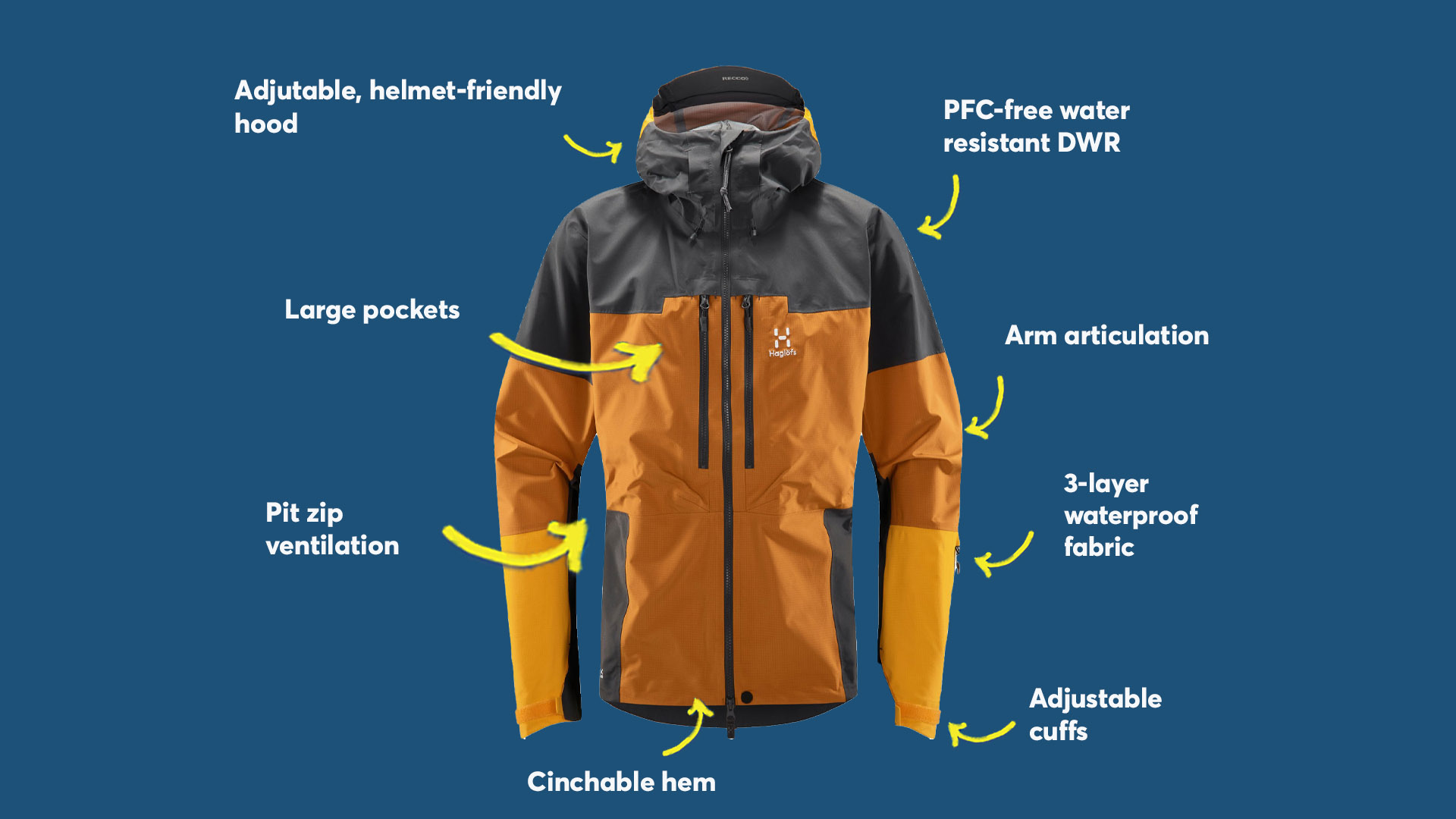
Venting – This not only comes from the breathability of the fabric, but manufacturers are also able to increase venting through the use of pit zips and mesh lined pockets.
Zips and pockets – The type of zip a jacket has influences how waterproof the jacket is. Premium zipper technology creates a zip that locks together tight, to remove the need for a PU or fabric coating that covers the entire zip. However, this also adds a little more to the price of the jacket.
Hoods – Hoods come in a variety of shapes, sizes and adjustability, which all depend on the type of brand you’re looking to buy – it’s again important to try them on before you buy. You’ll be looking for a good range of adjustability and if you’re climbing a lot, then a helmet compatible hood is essential.
Pockets – A good all-round jacket will hold a few pockets for stuffing various items in throughout the day. Considering the pockets based on the activity you’re buying the jacket for is important, as if you’re frequently strapping your backpack up, then you don’t want pockets that can’t be used whilst wearing a pack. Similarly, Napoleon chest pockets are essential for climbers who are frequently wearing a harness over their waterproof jacket.
Understanding Waterproof Membranes
Rain jackets are essential for staying dry in wet conditions, but not all are created equal. Key to their effectiveness is the waterproof membrane, a specialised layer within the jacket’s fabric. It acts as a barrier to prevent water from entering while allowing moisture vapour to escape. There are various types of waterproof membranes, each with unique properties. Notable options include Gore-Tex, known for its exceptional waterproofing and breathability; eVent, highly breathable and waterproof; Pertex Shield, known for its lightweight qualities, and H2No by Patagonia, which is highly regarded for its sustainability and protection. There are numerous other options out there though, with many brands offering their own proprietary waterproof fabrics.
Some details to look for when choosing a waterproof jacket. Pictured: the Haglofs Spitz GTX Pro
These membranes work in different ways, though most feature microscopic pores that are smaller than water droplets but larger than water vapour molecules – so water can only pass through in vapour form and not in liquid form.
These membranes are typically laminated to the jacket’s inner surface, preventing rain from penetrating while allowing sweat and moisture to escape. On the outside, you’ll tend to find a durable fabric that protects the membrane from abrasion, while on the inside you tend to find liner fabrics that protect the membrane, wick moisture and add next-to-skin comfort.
Waterproof Rating (mm H2O)
This rating, often referred to as the hydrostatic head, represents the amount of water pressure a fabric can withstand before water penetrates. The measurement is in millimetres of water. For example, a rain jacket with a 10,000mm waterproof rating can withstand the pressure of a 10,000mm (10-meter) column of water before it starts to leak. Higher numbers indicate better waterproofing. Generally, a rating of 5,000mm is suitable for light rain, while 10,000mm and above is ideal for heavy rain and more extreme conditions. For something like a Gore-tex jacket, you can often expect a hydrostatic head of over 20,000mm.
Breathability Rating (g/m²/24h)
This rating measures how well a fabric allows moisture vapour (sweat) to escape from the inside of the jacket to the outside. It’s typically expressed in grams per square meter over a 24-hour period. The higher the number, the more breathable the fabric. A breathable waterproof jacket helps regulate your body temperature and prevents you from feeling sweaty and clammy. A good range for breathability is 5,000g/m²/24h to 20,000g/m²/24h, with higher values indicating better performance. Gore-tex don’t tend to give figures for the breathability of their jackets but they tend to be rated to at least 20,000g/m²/24h – there are some membranes with far, far higher rating though, with Polartec NeoShell arguably being the most notable example.
How to Wash and Reproof a Waterproof Jacket
Care for your kit!
Nikwax Waterproof Clothing Care Kit
For optimal performance and durability, it’s essential to keep washing and reproofing your waterproof kit. Fortunately, brands such as Nikwax offer solutions that can be applied at home in a quick and easy way. Not only will this reduce dirt build-up and therefore fabric degradation, but it will also restore the water repellant treatment (DWR) and breathability of your clothing, ensuring top-notch performance levels out in the field. Together, all of these factors will also hugely increase the lifespan of your kit. What’s not to like?
Since it was discovered that the chemicals (PFCs) used to add water repellency to jackets were bad for the environment and companies subsequently stopped using these, there’s a strong case to say that more recently produced waterproof jackets (without PFCs) can saturate quickly. As such, it’s essential to keep reproofing such items if you want them to perform at their best for you. Fortunately, brands such as Nikwax offer solutions that can be applied at home in a quick and easy way.