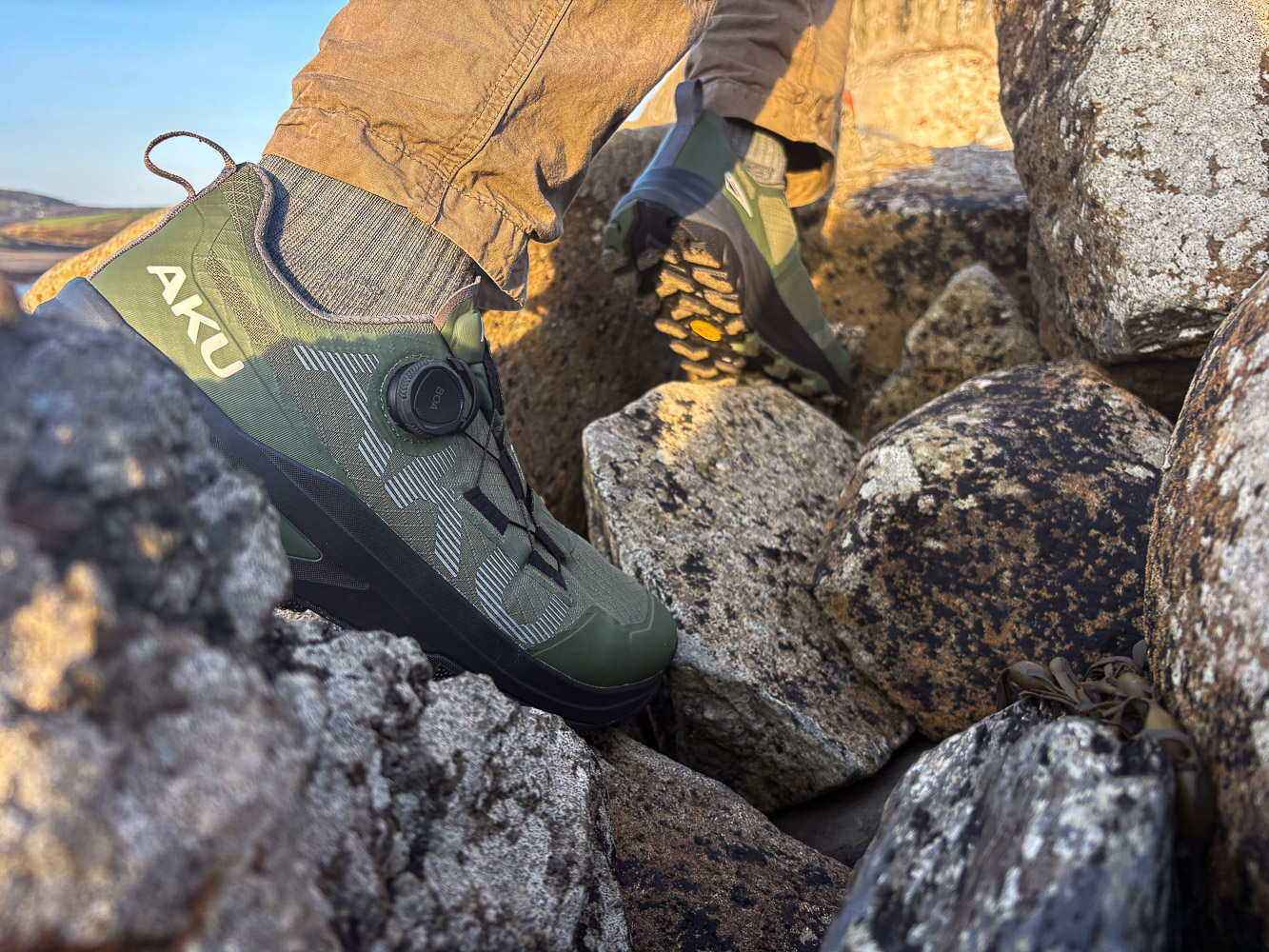
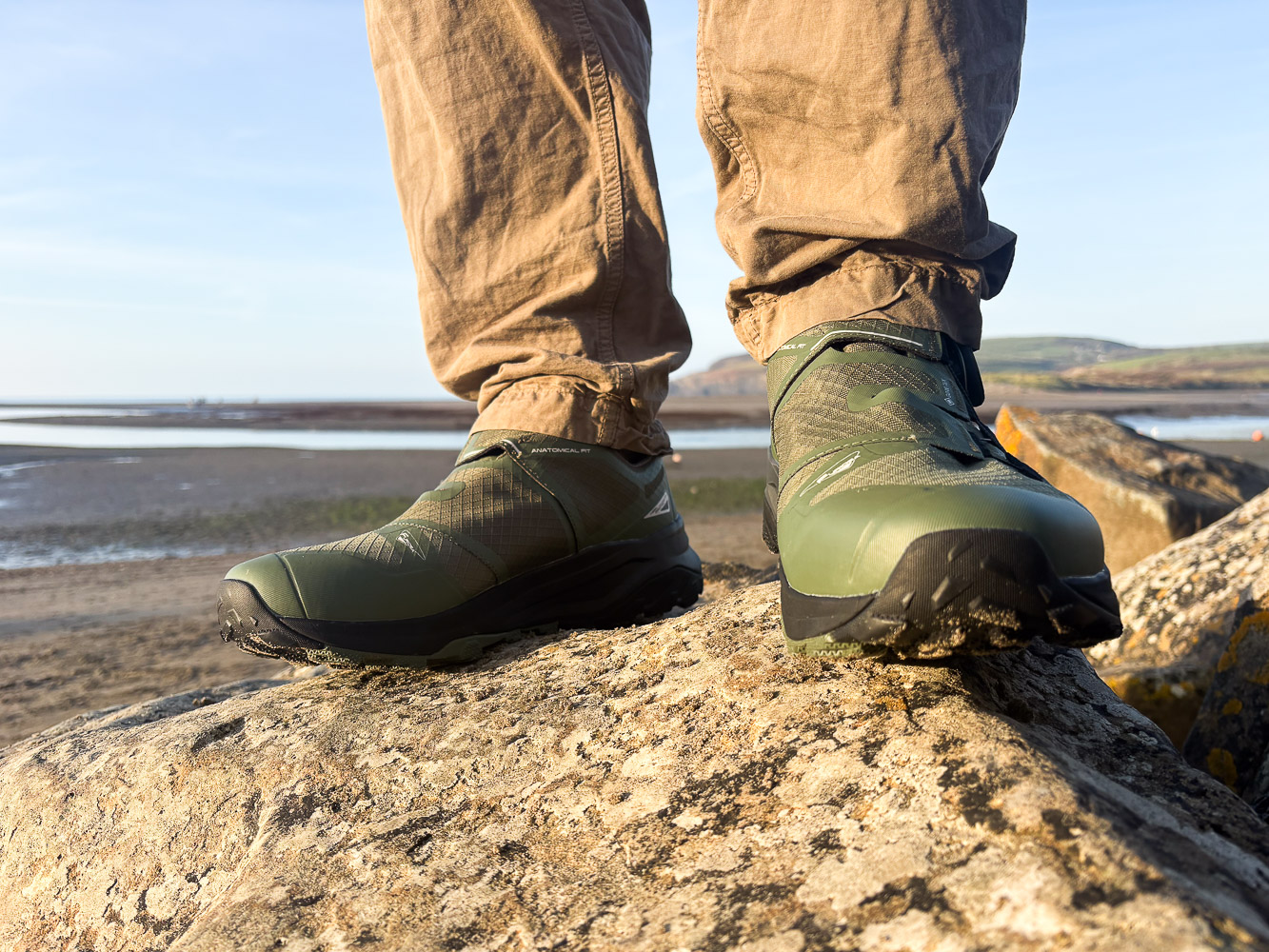
The AKU Furiosa BOA GTX shoe is a modern hiking shoe that has one foot in the world of trail running and the other in traditional hiking. With a lightweight construction, Gore-tex waterproofing, Vibram Megagrip outsole and BOA closure system, it brings together some of the best ingredients from both categories. It’s also got a distinctly contemporary look, with a style that fits the Gorp-core aesthetic – a space occupied so successfully by the Salomon XT6.
I’ve spent around two months testing the Furiosa shoe (it’s also available as a boot) across the rocky coastal trails of Pembrokeshire and the muddy, often slippery chalk tracks of Wiltshire, covering approximately 150 miles in total in it. I’ve been impressed by its comfort, grip and particularly its fit. It’s an expensive shoe at £195, though.
Price: £195
Weight: 465g
Best for: Hikes on defined trails
Pros: Light and nimble, versatile grip, comfortable fit, good balance of trail-feel and protection
Cons: Those who like plush cushioning and a wide toe box might want to look elsewhere
Stiffness level: 3/5
Cushioning level: 3/5
Durability: 3/5
Overall rating: 4/5
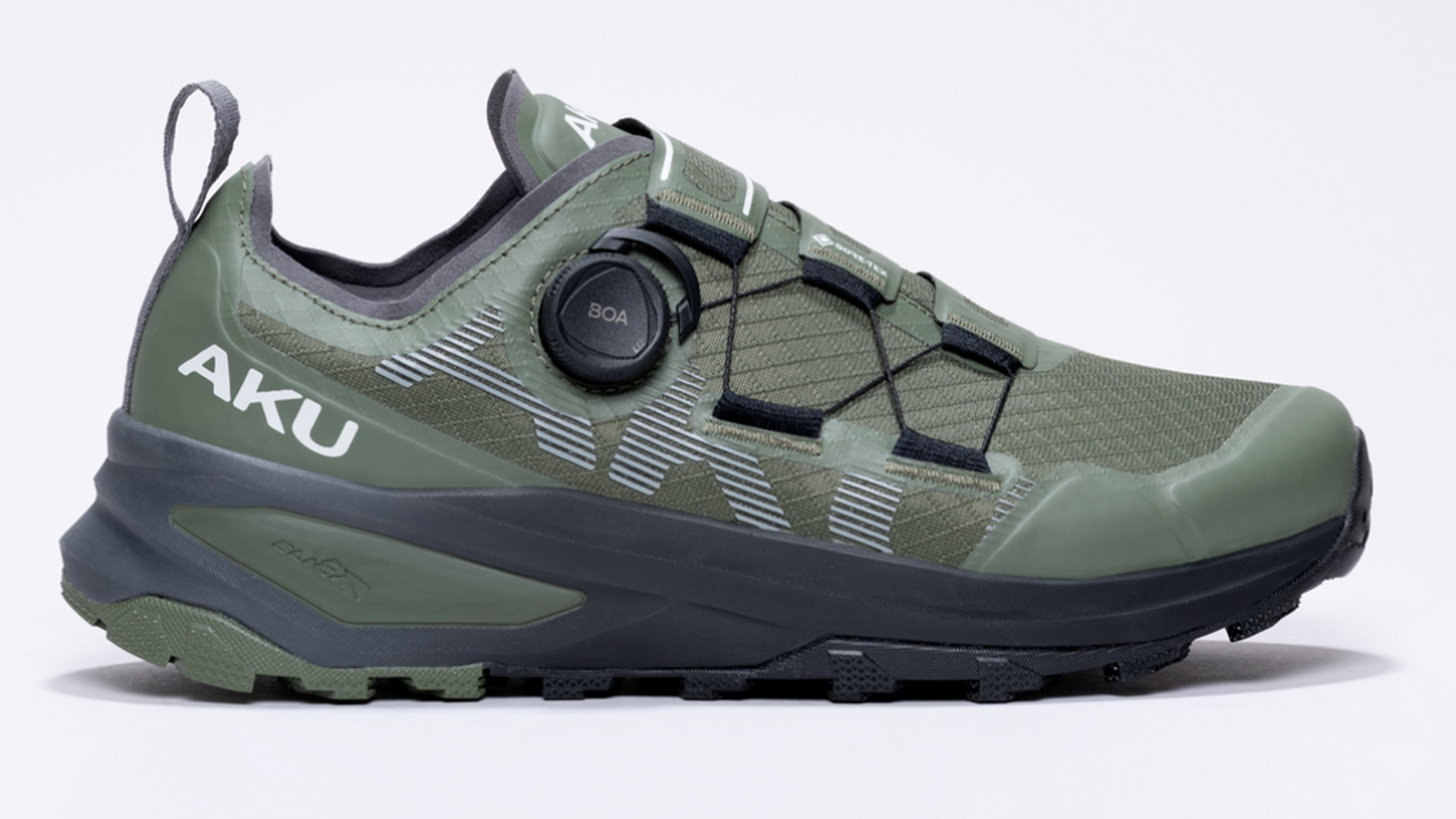
Aku Furiosa BOA GTX
Fit and Comfort
One of the Furiosa’s strongest qualities is its fit. Mine felt comfortable straight out of the box, with no breaking-in period needed, and the BOA system makes it possible to achieve a particularly secure, close-fitting hold around the foot.
It’s almost as if your feet are being vacuum-packed by the upper. I found the tension distributes evenly, creating a snug, glove-like fit without any pressure points. The heel hold is excellent too, with no slipping or rubbing during my testing.
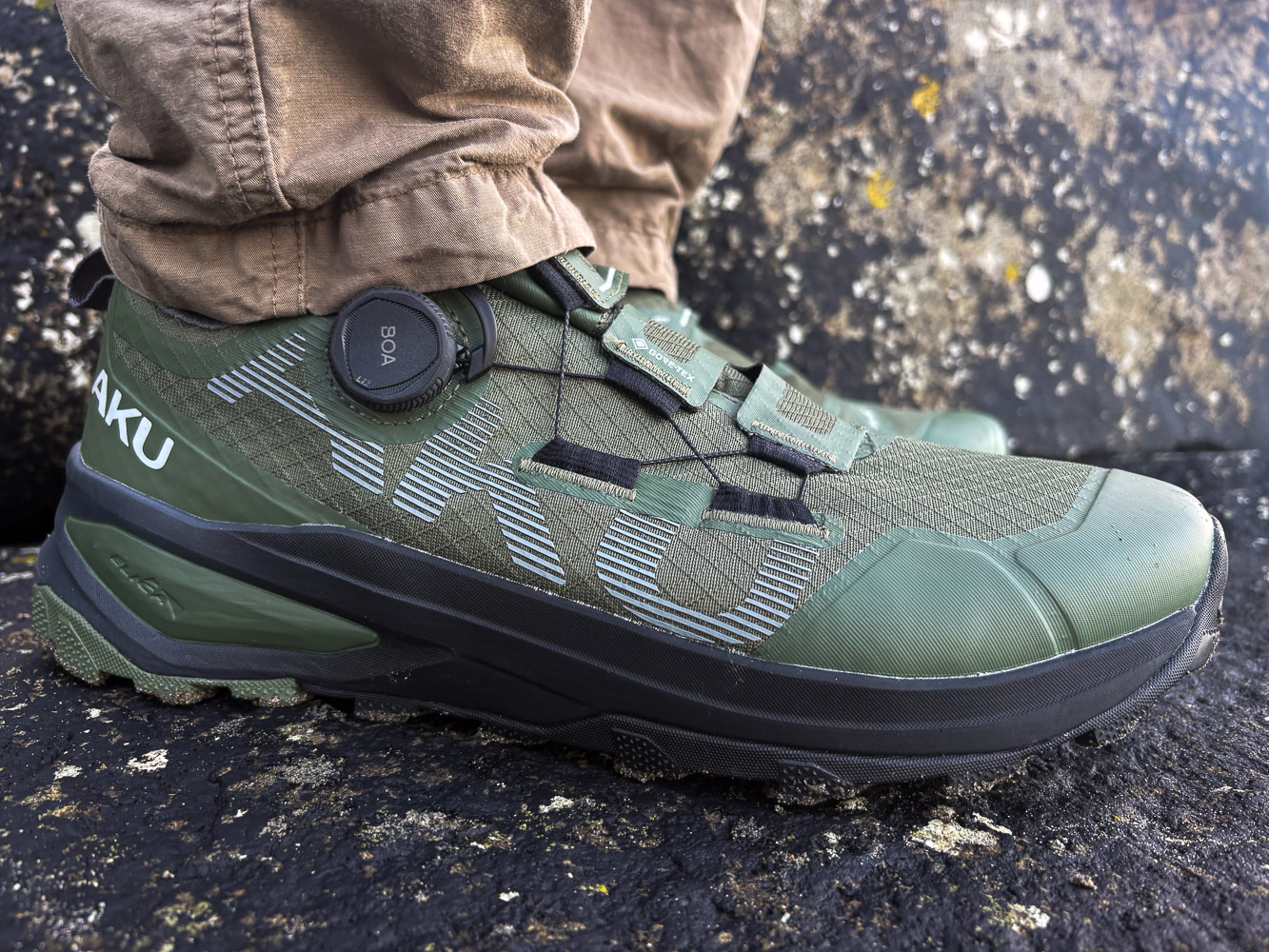
The toe box looks quite pointed from the outside, which initially made me wonder whether it might feel restrictive. In practice, I’ve found it occupies the moderate ground in its internal volume and is actually reasonably accommodating, with enough room for a little natural foot splay. It’s nowhere near as roomy as, say, an Altra shoe, however, and those with particularly wide feet might find it too narrow.
There’s also moderate cushioning underfoot, rather than the plush, high-stack feel you get from some modern trail shoes. I quite like this. The relatively low platform provides good trail feel and stability, while the EVA midsole offers enough cushioning for full days out. It uses a supercritical foam construction, which should offer better longevity than conventional EVA, although all foam midsoles will eventually compress with use.
The BOA Advantage
The BOA closure system is arguably the Furiosa’s defining feature, and it’s one I’ve really liked. Tightening and loosening the shoe is almost effortless, and the dial allows for quick, precise adjustments without having to stop and retie as you would with conventional laces.
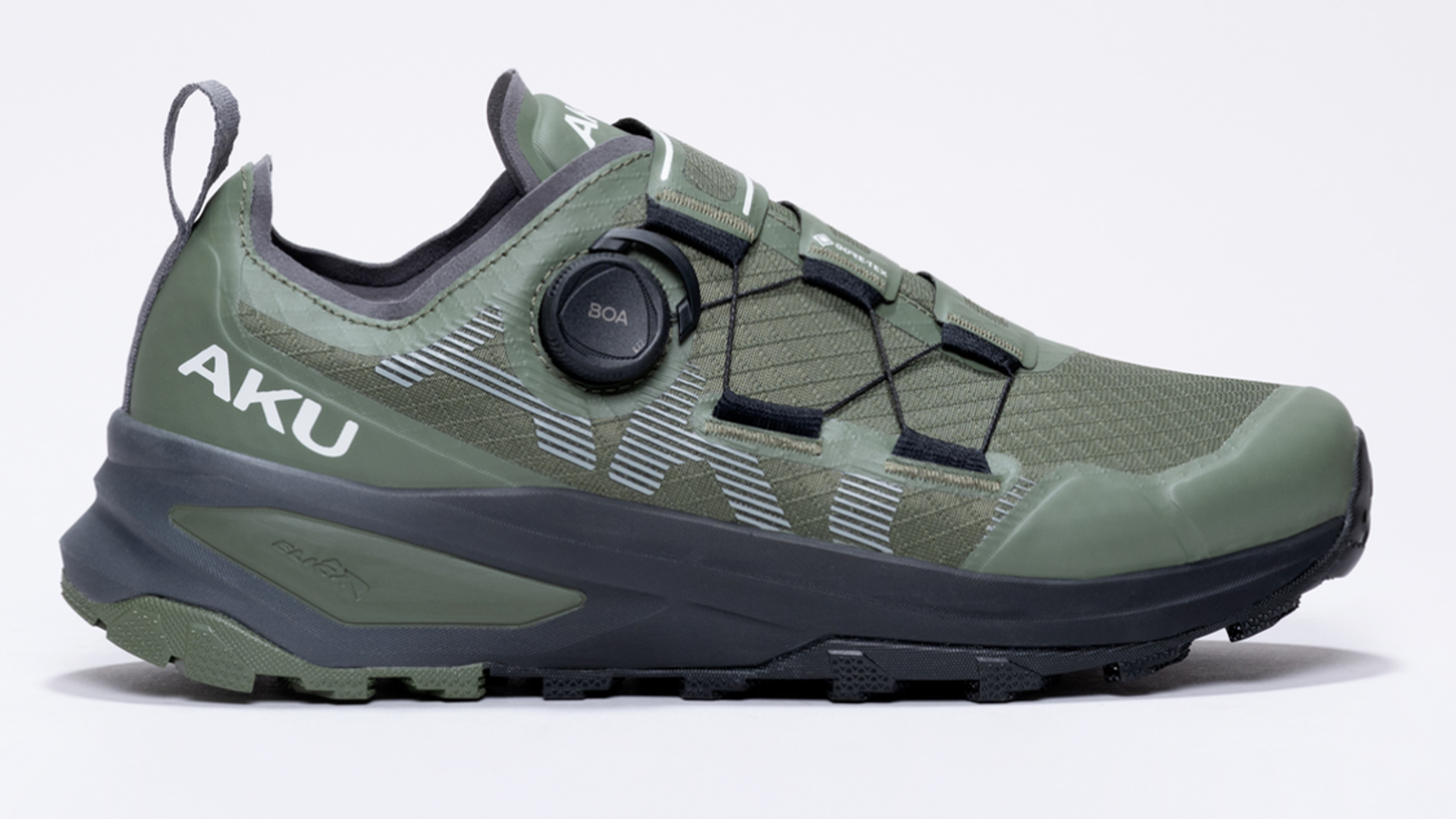
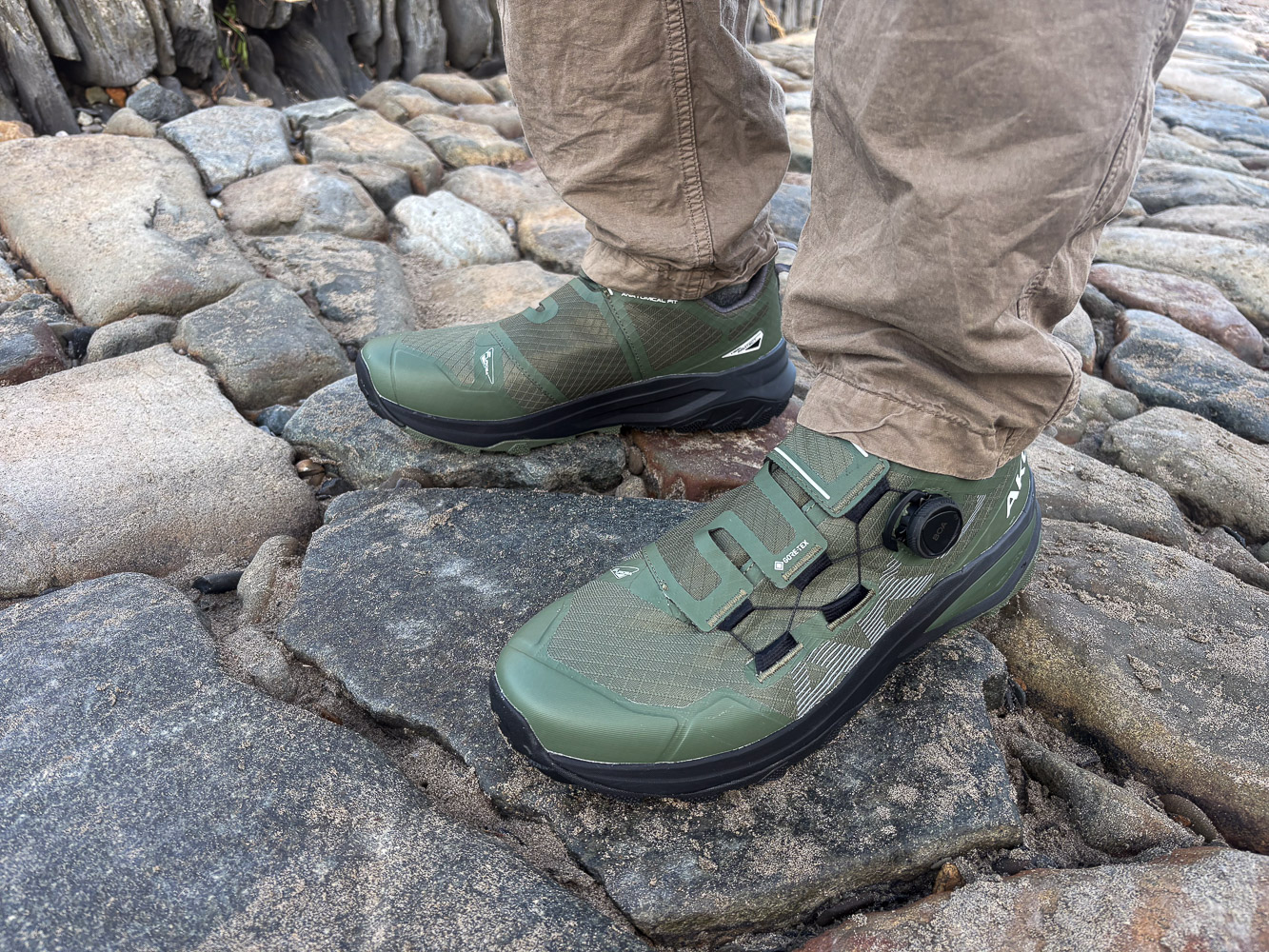
It also creates a naturally even fit around the foot. Those who like to have different levels of tension in specific areas might prefer traditional laces, but I’ve found the BOA system particularly comfortable and reliable. It hasn’t loosened unintentionally once during my testing, and it’s easy to adjust even when wearing gloves.
There is one potential drawback. BOA mechanisms can occasionally fail. This isn’t something I’ve experienced personally, only anecdotally, so it’s something just worth considering if you’re planning a particularly remote expedition or a long-distance walk where a broken closure could leave you in trouble. BOA has a good warranty and repair service, reportedly providing replacement repair kits where necessary, but I’d still consider carrying some emergency tape or a spare lace on more committing trips.
For everyday hiking and long-distance trail walking, though, I think it’s a genuine advantage rather than just a gimmick.
Grip and Performance
Underneath, the Furiosa uses a Vibram Megagrip outsole with multi-directional chevron-shaped lugs. It’s a versatile tread pattern, with something of an approach shoe or aggressive trail-running shoe aesthetic. There’s no dedicated climbing zone or pronounced heel brake, but I’ve found the grip excellent on dry rock, loose gravel and uneven ground.
It has also been dependable on muddy paths and slippery grassy slopes. Wet rock is where traction becomes less convincing, although that’s not unusual for a hiking shoe. I would personally have liked a more pronounced heel brake, particularly for descending steep, slippery ground.
The shoe has a relatively wide platform and a fairly low stack height, giving it a stable feel over uneven terrain. There’s also a polypropylene rock plate beneath the foot, which provides a useful degree of protection from sharp rocks and roots while adding some torsional stability. The sole remains relatively flexible, however, allowing for a natural forward roll. This isn’t a shoe for edging across technical rock or scrambling on particularly demanding terrain. It feels much more like a trail-running shoe in that respect.
A TPU toe bumper provides good protection around the front of the foot without making the shoe feel overly bulky or restrictive. Overall, it’s a nicely judged balance of protection and agility.
Waterproofing and Breathability
The Gore-tex membrane has kept my feet dry through sustained rain and wet conditions, with no water ingress during my testing. Breathability is about as good as you’re likely to get from a waterproof shoe, although it’s worth remembering that no Gore-tex footwear is going to be particularly airy. In very warm temperatures, my feet have become noticeably hot, but never to an especially problematic degree.