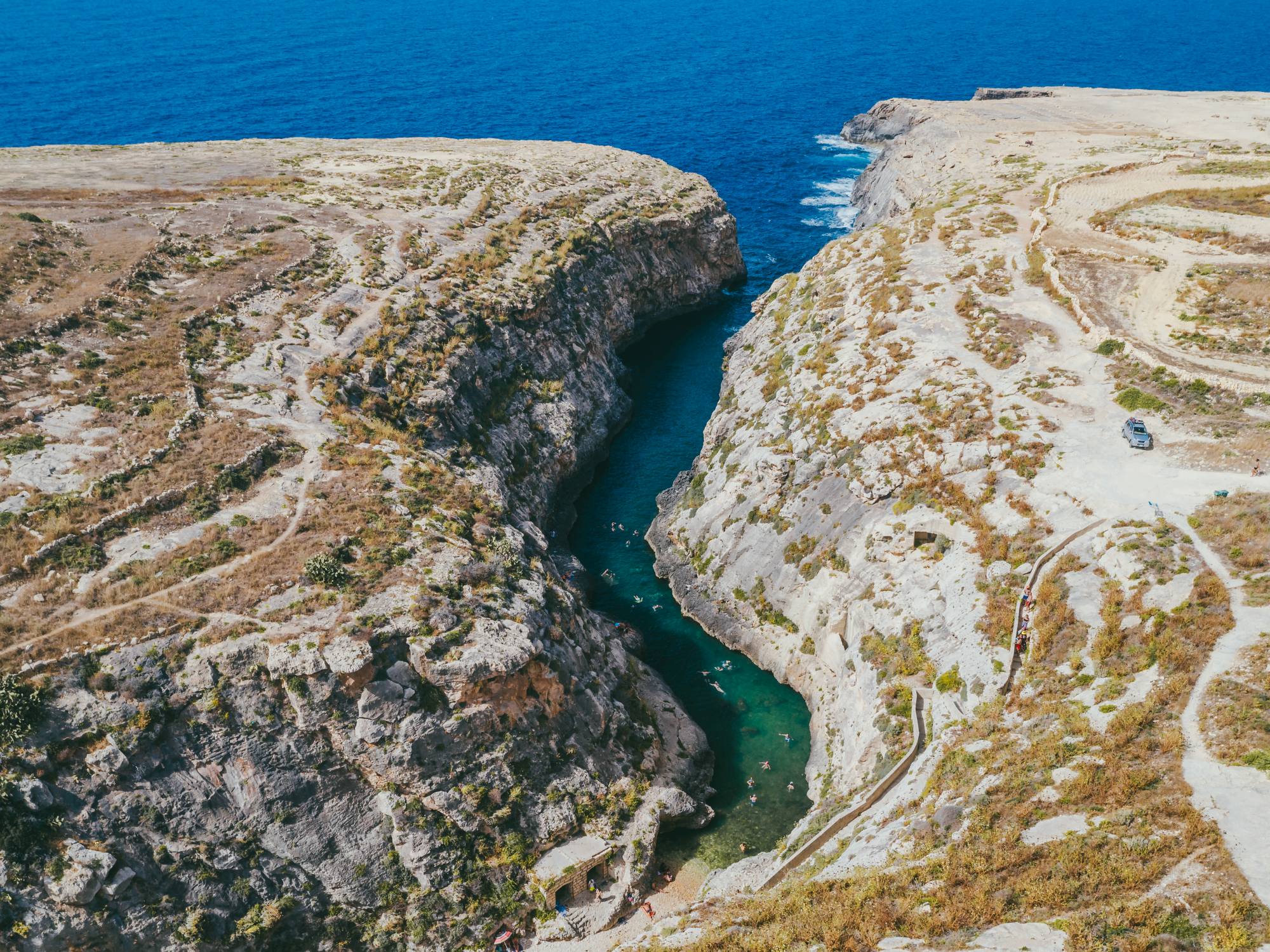
This article was originally published on our sister title Active Traveller’s website by Roger Fulton at this URL.
A year-round holiday destination, Malta and its close neighbours Gozo and Comino will delight hikers with their natural beauty, welcoming climate – think 300 days of sunshine each year – and a remarkable history stretching back 7,000 years.
More intimate than the European mainland, Malta punches well above its weight, making it easy to cram in a huge range of walking experiences.
Whether you prefer a short hike or a longer trek, get off the beaten track, or take in popular tourist sites, enjoy beautiful sea views, gaze at geological wonders, or get up close to the varied botanical life, there are hikes in Malta to suit every taste. Trek along dramatic coastal cliffs plunging down to the sea, roam across the rocky scrubland (garrigue) and hidden, lush valleys of the interior, and visit unique UNESCO World Heritage sites.
Related: Treasure Island | Adventure in Malta
Related: The Best Cycle and Bike Routes in Malta
Related: A Guide to Exploring the Malta’s Wild Side
Areas such as the Il Majjistral Nature and History Park are ideal for a day trip. Areas where you’ll find some of the best walks in Malta include Mellieħa, Dingli, Fawwara, Wardija in the North, and the southern coast with its pretty fishing villages and scenic Delimara Point. And don’t miss out on the small island of Gozo and the even smaller Comino, which offer their own splendid views and landscapes.

Home to some of the oldest free-standing temples in the world, the islands have also played host to the Phoenicians, the Romans, Napoleon and the British Empire. Malta boasts three UNESCO World Heritage sites: the Cultural Capital City of Valletta, the jaw-dropping Ħal-Saflieni Hypogeum – an underground temple consisting of halls, chambers, and passages cut into rock – and seven magnificent Megalithic Temples, such as Ħaġar Qim.
Valletta, founded in the 16th Century by the Knights of St John, has hundreds of monuments, all within a relatively small space, making it one of the most concentrated historic areas in the world. Also well worth a visit is the ancient capital Mdina, founded 4,000 years ago. With narrow, cobbled streets shrouded in an air of mystery, Mdina will plunge you back in time.
The best time to hike in Malta is spring and autumn, avoiding the hottest summer period, when watersports offer a tempting alternative! You’ll find both circular and point-to-point hikes in Malta, many well-served by buses from the main centres.
The Best Hiking Routes in Malta | Seven Favourites
In no particular order…
- The Watch Towers Walk
- The Three Villages Walk
- Xagħra Heritage Trail
- The Windmills Walk
- Dingli, Fawwara, Wied iż-Żurrieq Walk
- Salt Pans Walk
- Comino Walk
1. The Watch Towers Walk
Distance: 14.5km
Duration: 2.5-4 hrs
Difficulty: Moderately hard
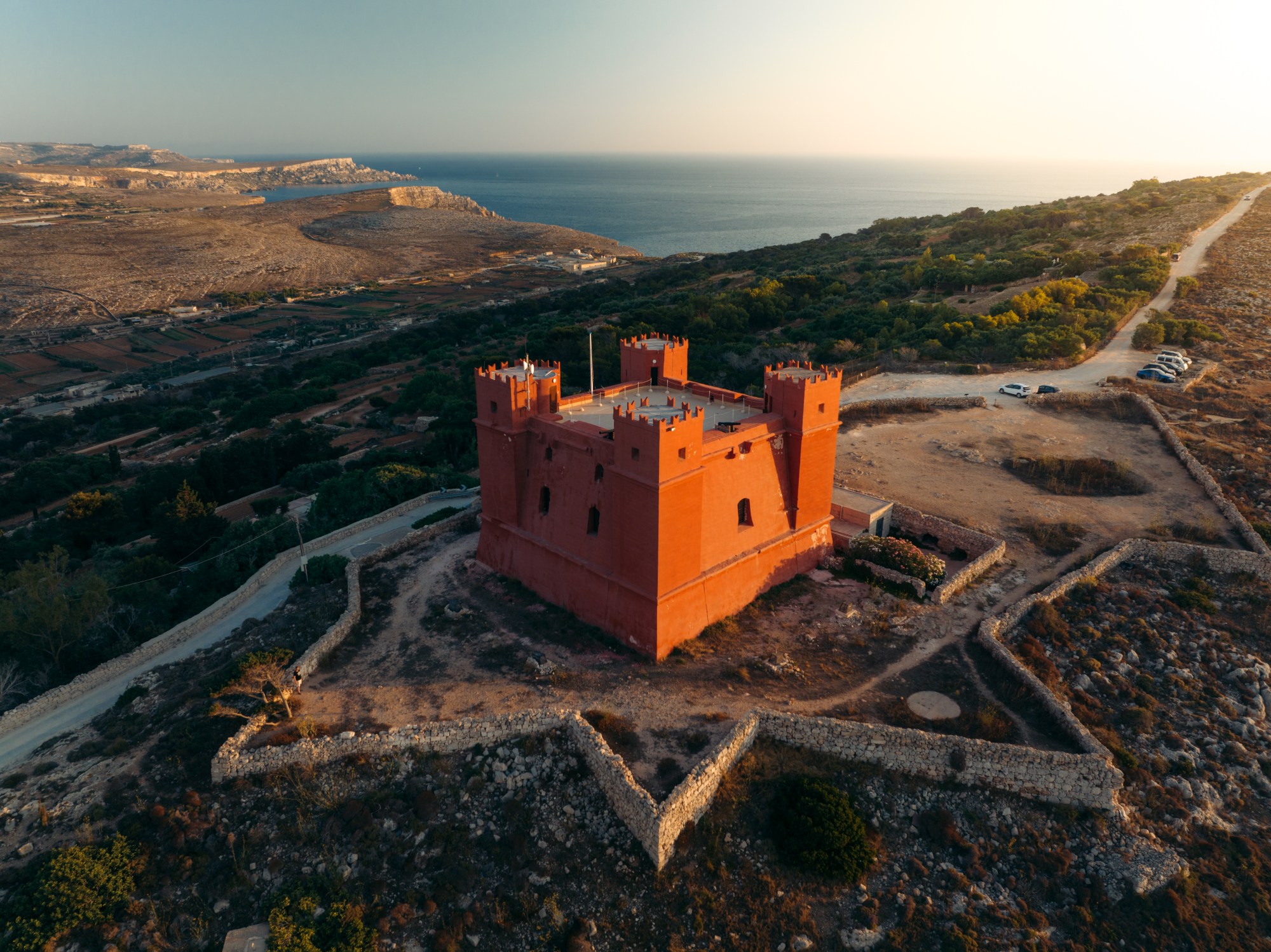
A chance to explore a significant part of Maltese history. Malta, Gozo and Comino’s coastal watchtowers, built primarily by the Order of Saint John during the 17th and 18th centuries), served as a vital observation and communication network to defend the islands against Ottoman and pirate attacks. Eight of these iconic limestone, square, or circular structures still stand on Malta, with highlights including St Agatha’s Red Tower, Għajn Tuffieħa and the De Redin towers.
This classic Malta walk starts and ends at Għadira . After taking in the view of the beach, the Mellieħa village on the hill and the steep cliffs on the right you can start the walk. Setting off from close to the Għadira Nature Reserve, the trail reaches the top of Marfa Ridge just beneath the hugely imposing Red Tower – a Malta photo-op must!
Offering stunning views to the sea on either side, the walk takes you through dry-farmed land, garrigue, wooded areas and amazing cliffs. Before arriving at the White Tower, a short detour reveals a spectacular geological formation.
Along the shoreline, the walk passes by a number of fortified structures dating back to the time of the Knights of St. John, and others built during World War II. The walk turns uphill again towards Paradise Bay, and eventually makes its way past the Red Tower, Għadira Nature Reserve, and back to the starting point.
Moderately challenging in winter and spring, the route – a mix of paved paths, and rugged, rocky and sometimes muddy trails – is quite exposed, making it tougher in the summer heat. It also has some steep sections, especially around the cliffs
2. The Three Villages Walk

Distance: 7km
Duration: 1-2 hrs
Difficulty: Very easy
This gentler walk around the three central villages of Attard, Lija and Balzan, located between the modern capital of Valletta and the ancient capital of Mdina, provides a great contrast to the big-ticket hikes and is all the more charming and captivating because of it. The walk offers a chance to uncover Malta’s authentic nature and quieter hidden treasures, from local bakeries and cafes, the tranquil urban setting intertwining with Maltese history and heritage.
The route is quite short and the ‘duration’ timing is less an indication of endurance, more a guide to its leisurely urban character, with a focus on exploring the historic streets of all three villages rather than covering long distances.
Beginning in Attard, the tone is set by lush greenery and impeccably-maintained gardens. Take a breath as you immerse yourself in the timeless beauty of traditional Maltese architecture, characterised by limestone facades adorned with intricate wooden balconies and stone carvings. In Attard, explore the iconic San Anton Palace and Gardens, steeped in 17th-century heritage and now the esteemed residence of Malta’s President. As you leave this village, stop off at the iconic Three Villages Bar.
In Lija, you’ll be enchanted by opulent baroque architecture and grand palazzos. Marvel at Villa Francia, an exquisite 18th-century mansion now housing the official residence of Malta’s Prime Minister. Continuing to Balzan, wind through narrow cobblestone streets lined with charming townhouses boasting vibrant balconies and ornate doorways.
3. Xagħra Heritage Trail
Distance: 6.8km
Duration: 2.5 hrs
Difficulty: Moderate
A mind-blowing heritage walk on Gozo that takes you to Xagħra’s heritage sites including the ancient temples at Ġgantija, Calypso’s Cave, and more. It’s not really the distance that eats up the time here; it’s the time you spend absorbing the myth and history behind the incredible caves and temples.
Trail-wise, you’re on a mix of country roads and established paths, but with some uneven, rocky, or steep sections.
Start with Calypso’s Cave, a site with a distinct place in Maltese folklore as the location where the nymph Calypso kept Odysseus a ‘prisoner of love’ for seven years after the fall of Troy. Follow up with the natural stalactites of Ninu’s Cave and Xerri’s Grotto, a cave discovered in 1923 by a local man who was digging for a well.
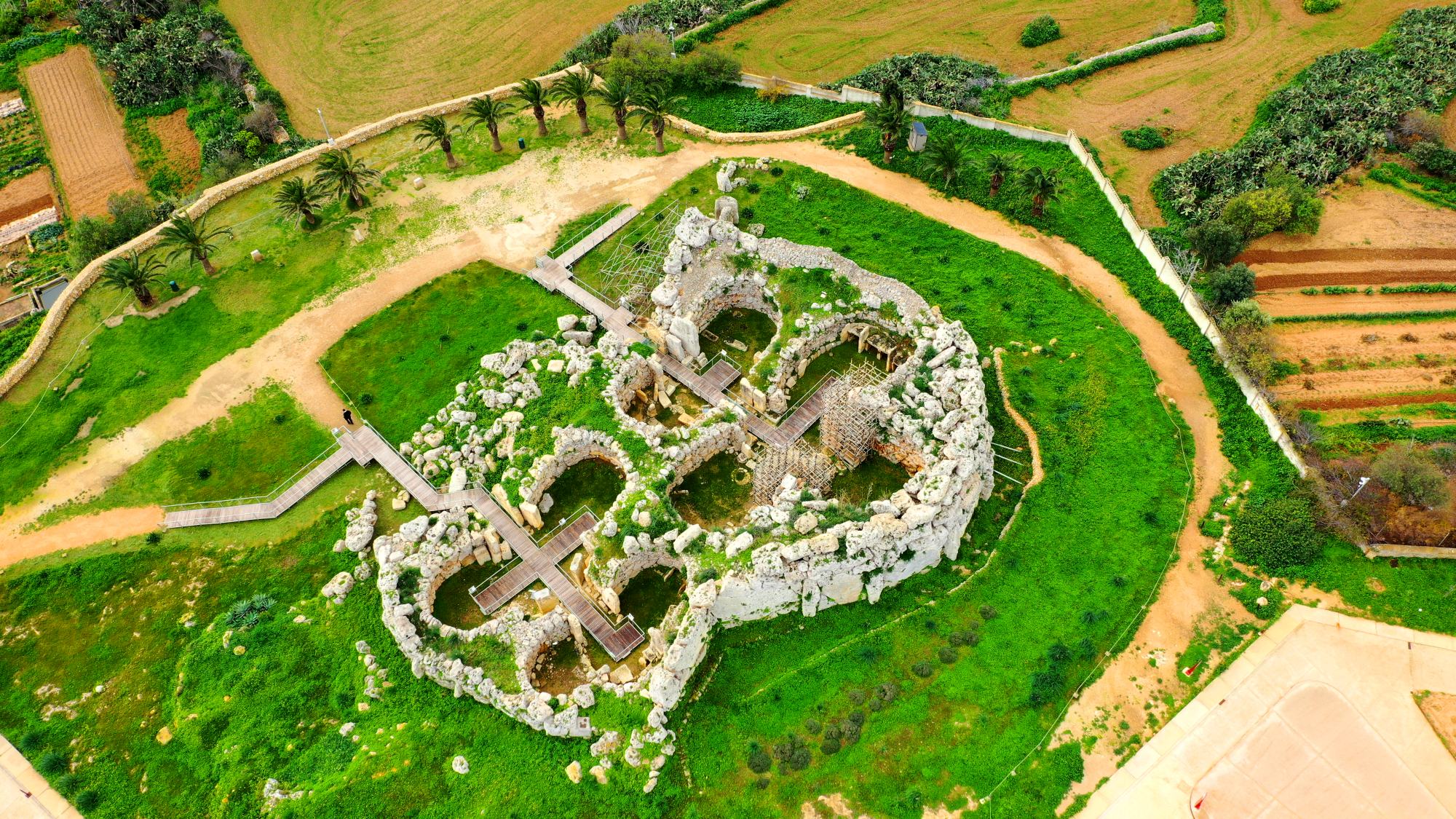
Other must-visit attractions include the Xagħra Stone Circle, a pretty 18th century windmill, churches, a toy museum and a former plague hospital. But the absolute highlight has to be the neolithic Ġgantija Temples, designated by UNESCO as a site of universal importance. This structure sitting in the middle of open landscape represents a culture that flourished on the island between 3600 and 2500BC. More colourfully when first discovered they were believed to have been constructed by giants.
4. The Windmills Walk
Distance: 8.8km
Duration: 2-3 hrs
Difficulty: Easy/leisurely
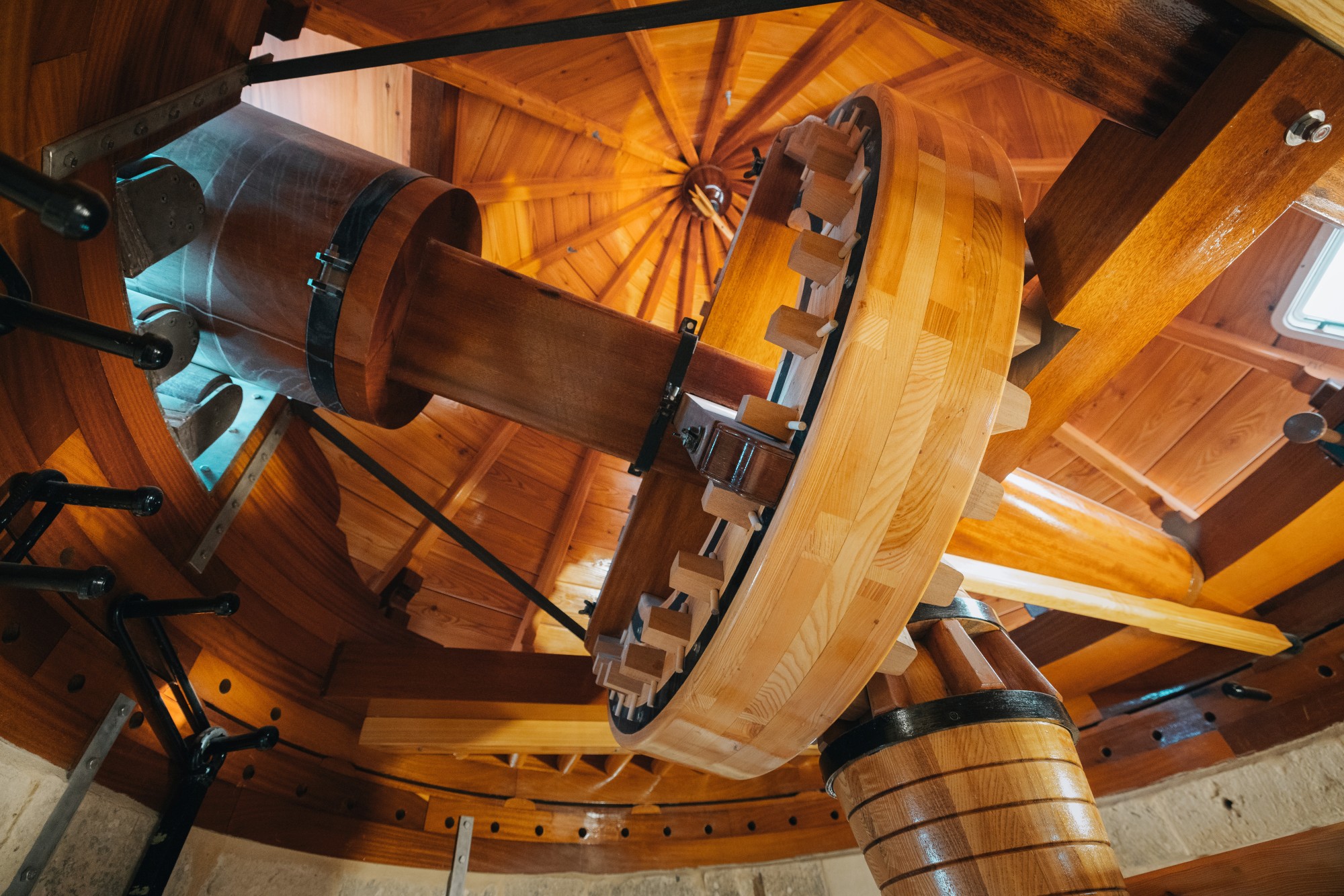
Windmills in Malta, particularly from the 17th-18th century Knights’ Period, were crucial for rural self-sufficiency, grinding wheat for bread, the staple food, and millers were often exempt from Sunday church attendance if the wind was right for grinding. Maltese windmills possess a distinct design, featuring a cylindrical tower attached to a two-story residence.
At one point, Malta had a remarkably high density of over 69 windmills. Many fell into ruin and today those that remain serve as significant historical, architectural landmarks showcasing rural life with notable examples like the Xarolla Windmill in Żurrieq, one of the few with still-functional mechanisms, and which forms a highlight of this gentle rural circuit.
The route starts and ends at Żurrieq’s village square, passing through the small village of Safi and the surrounding countryside.
Besides the Xarolla Windmill, other highlights include important sites such as the Ta’ Marmara, Tas-Salib and Ta’ Qaret Windmills, Ġibjun Gardens, the Wardija Watchtower, the Hamlet of Bubaqra, the Tal-Bakkari remains, Hlantun and Safi Parish Church. You can also admire ancient Roman tombs which are thought to date as far back as 700 BC.
5. Dingli, Fawwara, Wied iż-Żurrieq Walk
Distance: 11.2km
Duration: 3 hrs
Difficulty: Easy/moderate
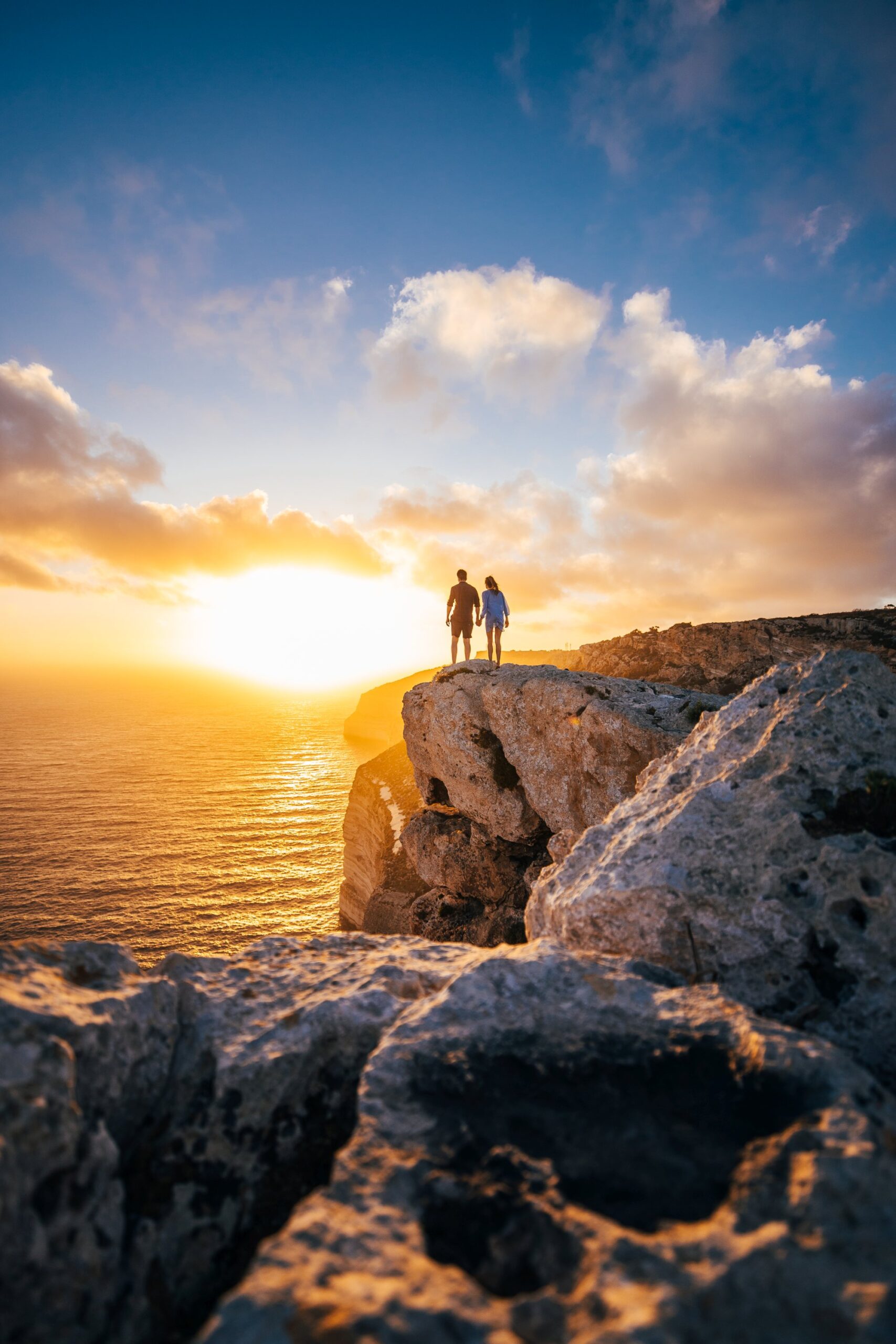
Scenic walks in Malta don’t come better than this. Malta’s highest coastal walk is a definite must-do, for the magnificent sea views over the Dingli Cliffs on the island’s south side (especially near the imposing radar station). The cliffs, at 253m above sea level run for 2km and are the highest point on the island.
However, if you also enjoy visiting ancient sites, this walk also offers plenty to distract you, including an enigmatic series of prehistoric cart ruts which run a short distance before abruptly stopping, and the remains of a bronze age village at Wardija ta’ San Ġorġ. The route meanders through Fawwara, a quiet landscape of caves, wildflower meadows and cultivated fields, as you progress towards its other highlight – the impressive prehistoric temple complexes of Ħaġar Qim and Mnajdra.
You’ll also pass several small country chapels and churches – St Mary Magdalene, Mt Carmel and the Annunciation Chapel, which stand as a reflection of the influence of the Church on Maltese life and customs.
Opposite you as you gaze out to sea is the tiny uninhabited islet of Filfla. Now a wildlife preserve it is off limits to visitors, but while British forces were stationed here in the 1950s it was used for target practice!
The route ends at the bay of Wied iż-Żurrieq, from where you can take a boat ride to the renowned Blue Grotto, or enjoy a traditional meal in one of the many local restaurants nearby.
6. Salt Pans Walk
Length: 12kms
Duration: 2-3 hours
Difficulty: Moderate
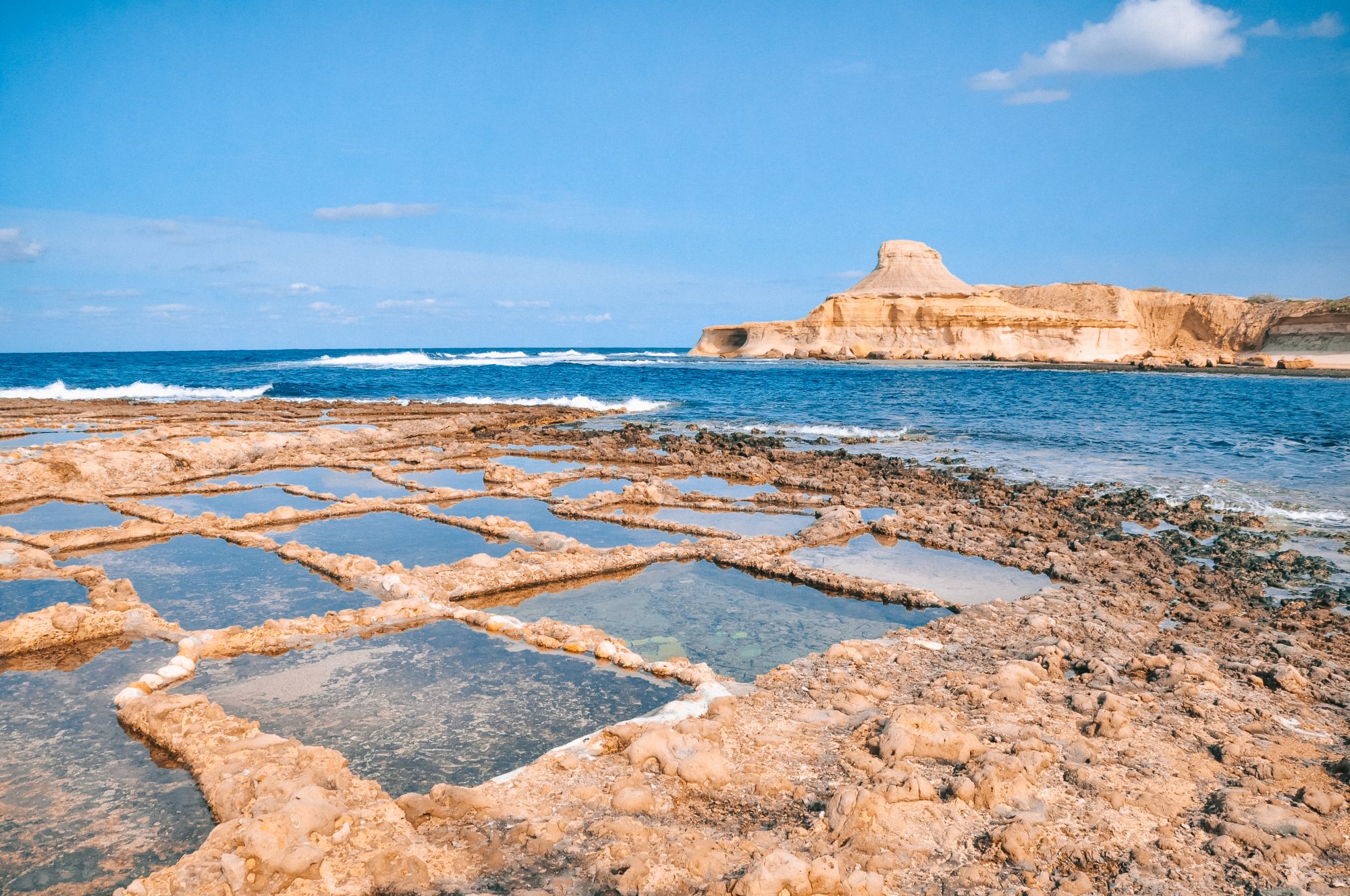
One of the best Gozo hiking trails, this is a unique circular hike full of contrasts. It starts and ends in Victoria, the main town of Gozo, which, if you’re arriving by ferry from Malta, is a 20-minute bus or taxi ride from the port of Mġarr. The route takes in the breathtaking Sara valley, a tranquil, scenic stretch located on the northern outskirts of Victoria, known for its peaceful, natural, and green landscape. After visiting Gozo’s oldest basilica, the strikingly ornate baroque Parish Church of St. George (yes, that St. George!) the route continues to Wied il-Għasri, a meandering picturesque north coast valley flanked by high cliffs, and then to the sea.
Near here is Reqqa point, with its traditional salt pans – a remarkable, otherworldly natural landscape feature where salt is produced by evaporation of sea water. The salt pans really do justify their status as a natural wonder, as well as preserving an ancient method of harvesting a vital resource. The route proceeds to Xwejni Bay, known for its crystal-clear waters, salt pans and striking rock formations and then Qbajjar Bay, where rest facilities, restaurants and public conveniences are available.
Leaving Qbajjar behind, the walk takes you along a dusty road through the beautiful Gozitan countryside and valleys. Passing by the watercourses you can observe the diverse flora and fauna associated with these unique habitats. The walk then continues back to Victoria, where you can enjoy a quiet drink in the central square before returning to the ferry.
7. Comino Walk
Distance: 7km
Duration: 2 hrs
Difficulty: Easy
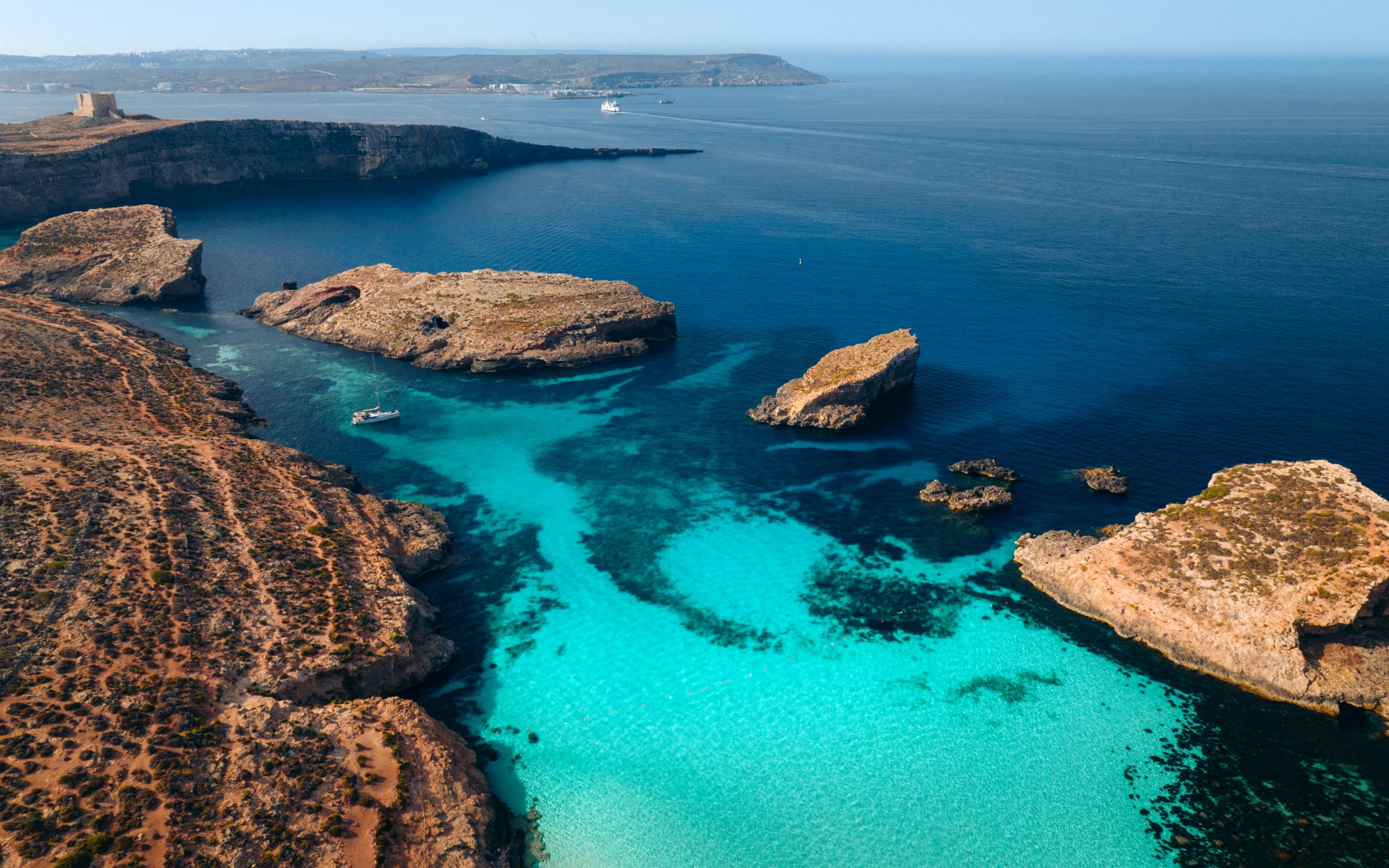
A short stroll exploring the wildlife preserve of Comino, the archipelago’s smallest island. Historically a preferred hideaway by corsairs and pirates, Comino is now a haven for birds and tranquillity – hunting is not allowed, nor are vehicles other than those used by the resident population.
The circular route starts and ends at Bejn il-Kmiemen (Blue Lagoon). The trail follows the main pathways but can easily be extended by going off the beaten track to explore more of the island especially along the wild cliffs on the east side.
The best panoramic views of the island are to be found from the roof of the St Mary’s tower which visitors can access when its flag is flying.
Wildlife spotters will likely observe the large population of Maltese Wall Lizards either darting through the terrain or basking in the sun.
Most people come here to visit the Blue Lagoon itself, so few people generally venture along the coast or into the heart of Comino. To keep the area protected and to combat overcrowding, visits to the Blue Lagoon require a free, pre-booked timeslot. Go to blcomino.com to book your visit.