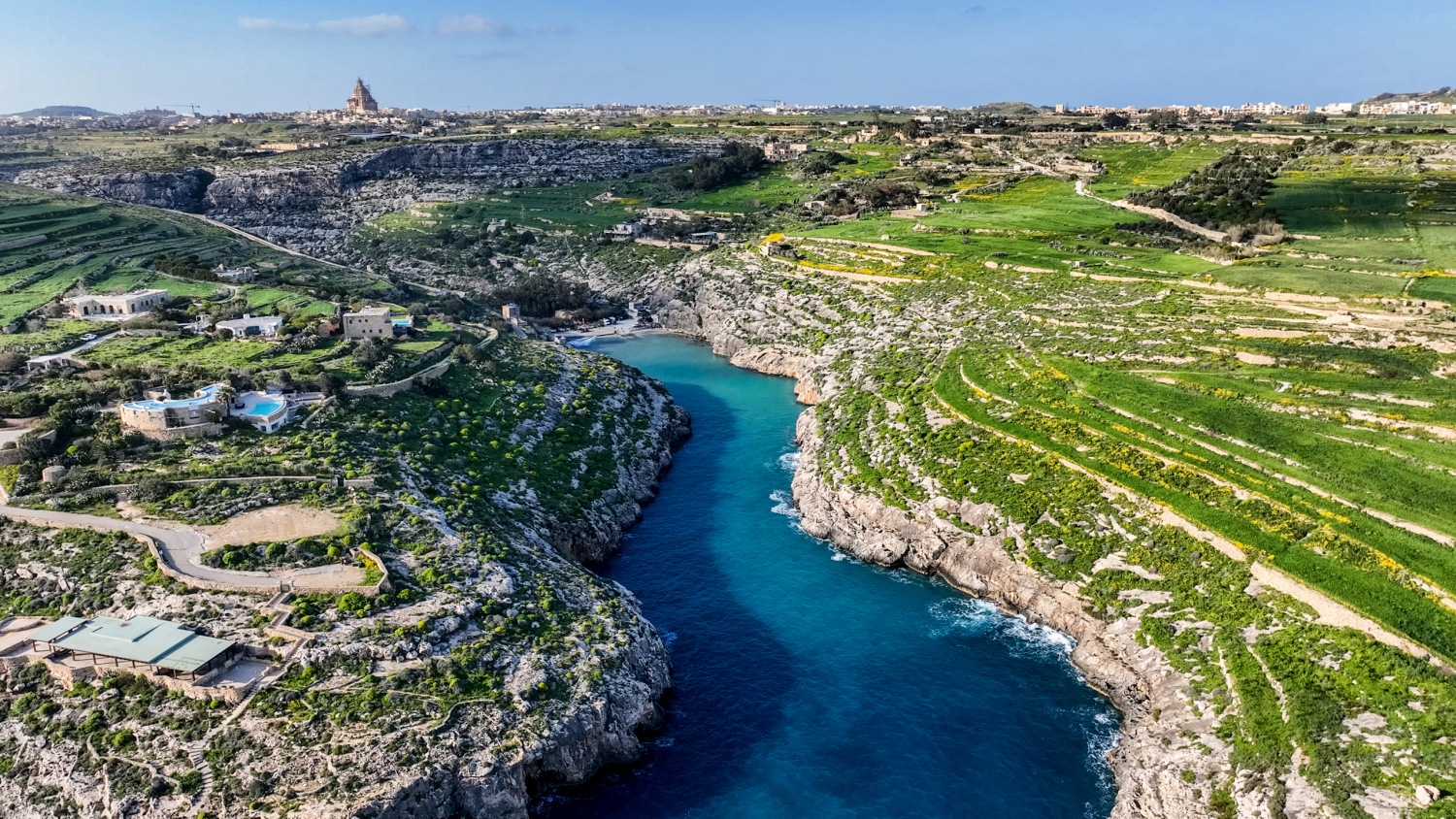
This article was originally published on our sister title Active Traveller’s website by Will Renwick at this URL.
Malta has always stood out to me for one quirky reason: as a child, I remember it would often give the UK a generous 12 points at the Eurovision Song Contest. I’ve also heard that Malta’s streets curiously featured the same red letterboxes and phone boxes that are so familiar in Britain. Preparing for my visit, I’m relieved to learn I’ll be driving on the familiar, left-hand, side of the road, and that I won’t have to dig through my tangled odds-and-sods drawer to locate an EU socket adapter.
Why? Well, although Malta officially became independent from the UK 61 years ago after a 164-year occupation, there was a large and influential military presence here as recently as 1979. In the grand scheme of things, this means the dust has barely had time to settle.
With three days of exploring the small island nation booked, I’m curious. I’ve lined up a load of outdoor activities, but I’m also hoping for some deeper insight into the island’s history and culture. Will I be heading to a warmed-up Britain, or will I find a place that has long moved on from its colonial past?
A Walk Through Malta’s Past
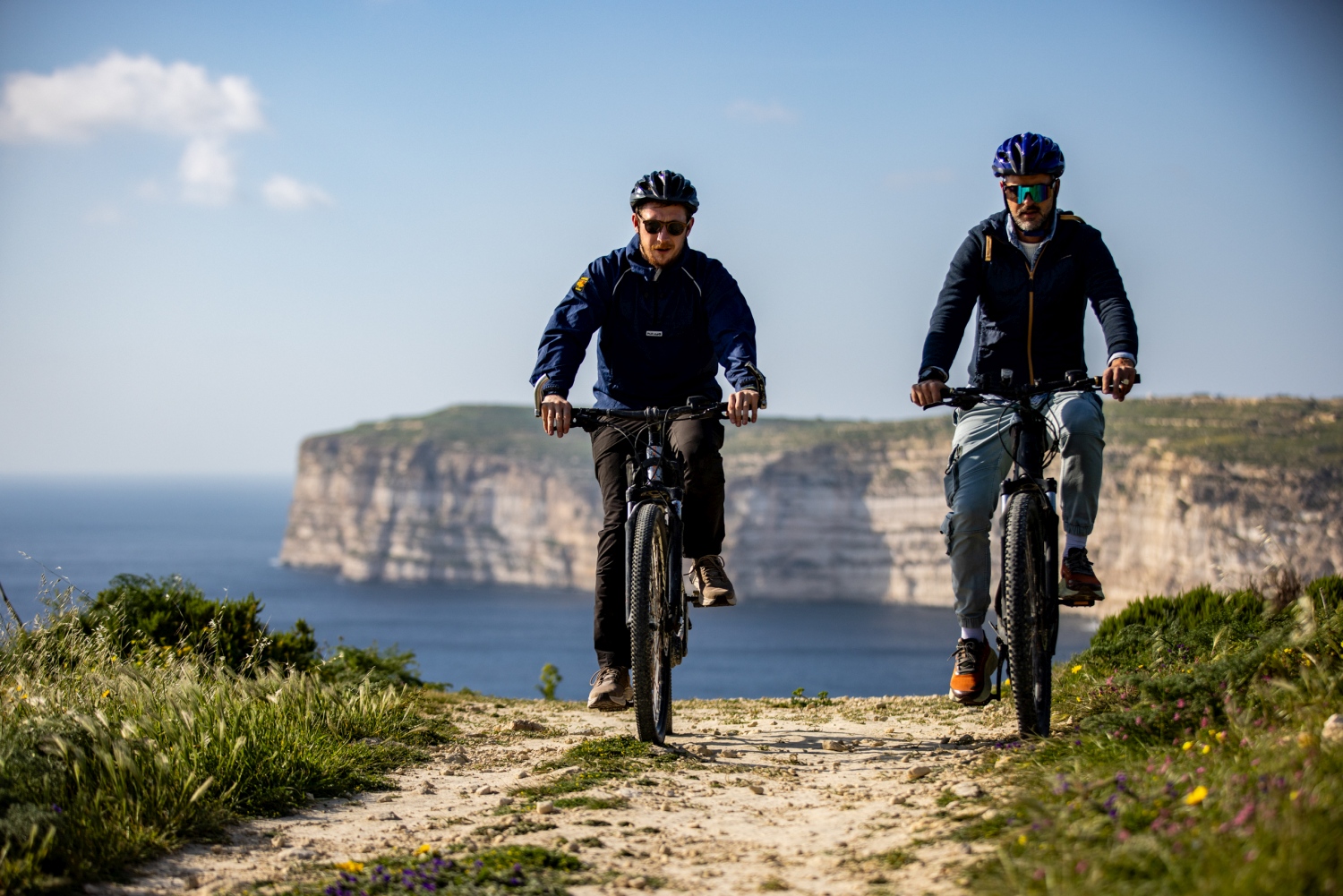
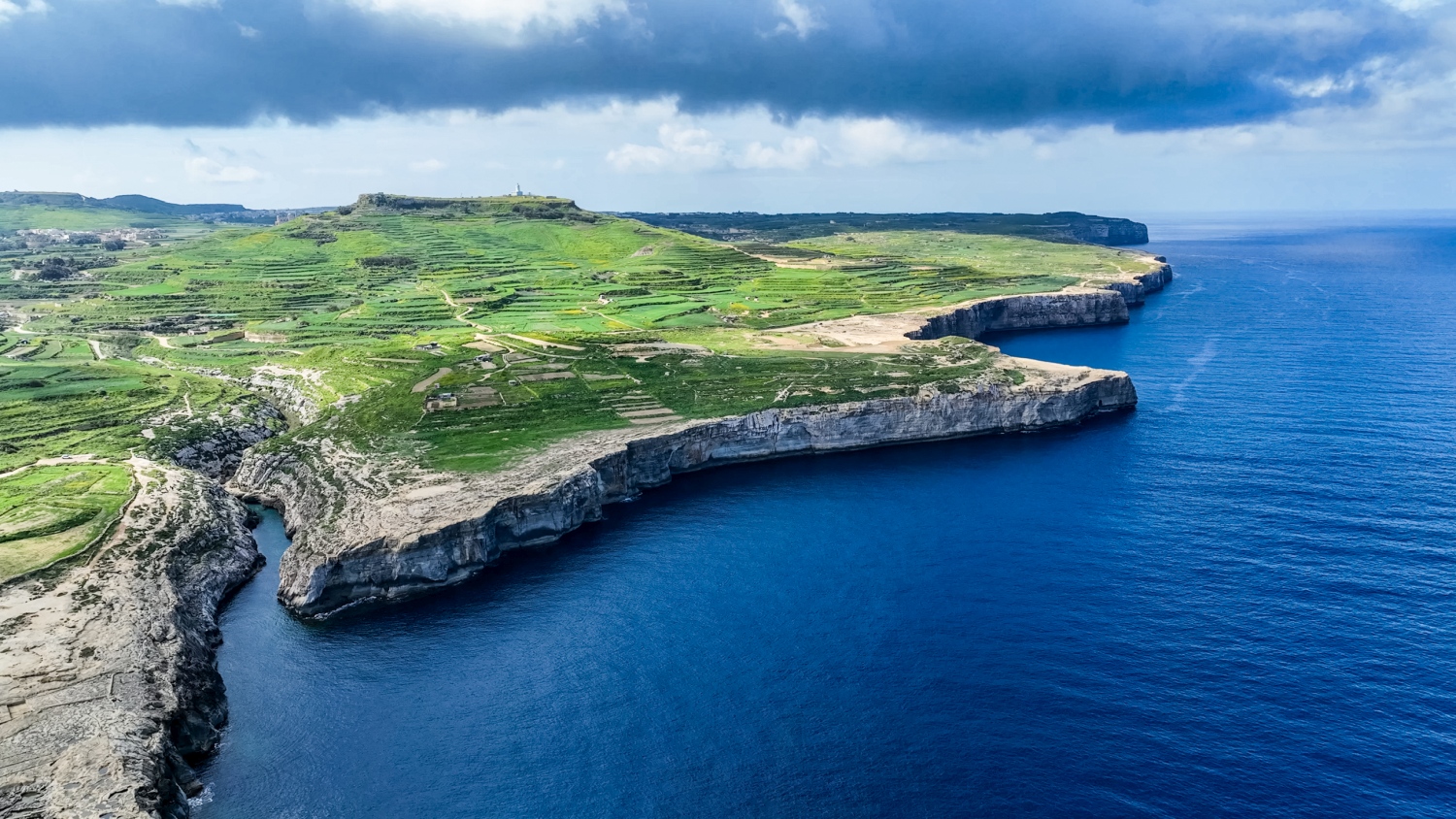
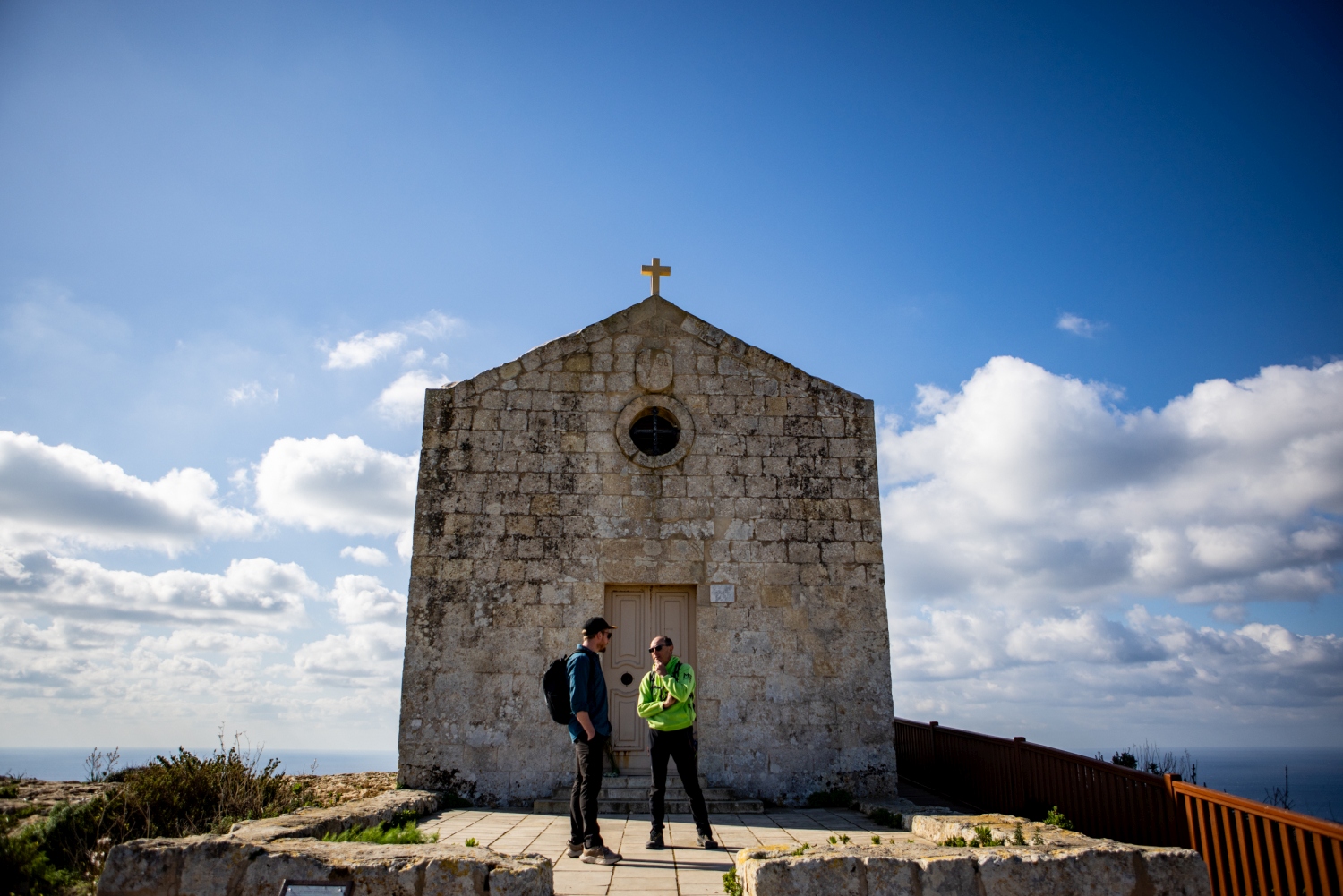
The first person I meet during my four-day visit to the islands is Andrew Warrington, the owner of an outdoor activity company called MC Adventure. He’s agreed to take me on a tour around the southern coast of the island. We rendez-vous at a postage-stamp-sized chapel perched on the top of Dingli Cliffs, one of the most famous viewpoints in Malta; where the golden rockface leans over a deep cerulean blue.
“People used to say that Malta had a church for every day of the year, but it’s since been worked out that there are even more,” explains Warrington. His softly spoken accent sounds like RP English, but with a slight mediterranean twang. I assume at first he’s a British expat, but he tells me he’s born and bred in Malta. He points to the horizon and slowly sweeps his finger across it to explain the lay of the land ahead of us.
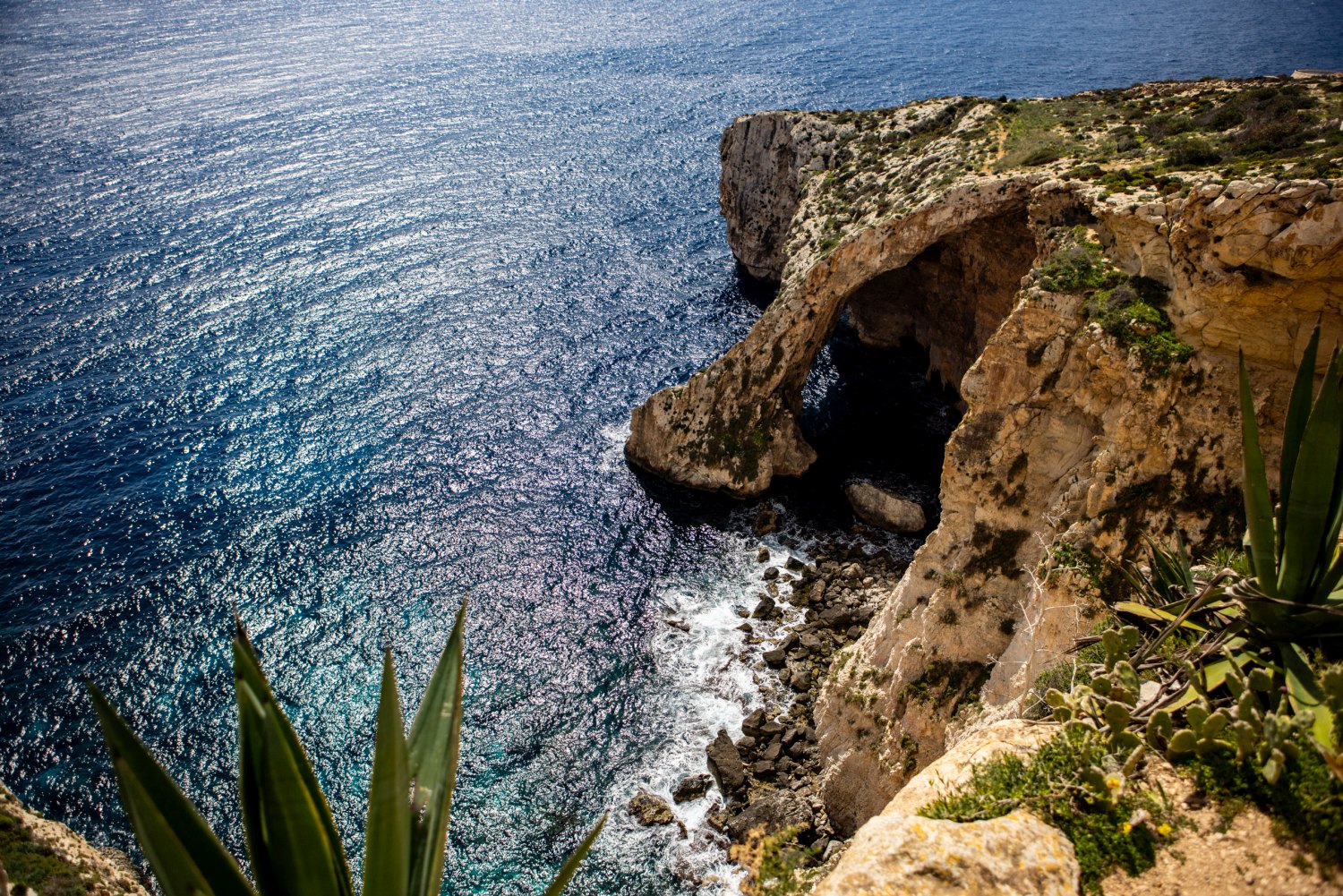
This southern side forms the higher side of this wedge-like island which slopes down to Valletta, the sprawling capital city on the northern coast. In the distance we can see Mdina, a fortified hilltop town with a striking domed cathedral forming its centrepiece. A small woodland grows around its base. Warrington tells me it’s the only one on the island, as the limited rain and thin soil makes it difficult for trees to thrive.
Related:The Best Hiking Routes in Malta
Related: The Best Cycle and Bike Routes in Malta
Related: A Guide to Exploring the Malta’s Wild Side
It’s early spring and only yesterday I’d been traipsing through mud under grey Wiltshire skies on my daily dog walk, but now, on this island that receives over 300 days of sun in a year, I can feel rays on my neck and a gentle soothing wind. Ahead of us is an undulating green landscape that’s speckled in yellow wildflowers. One of these, Warrington tells me, is known to the locals as “the English plant.” Its name is Cape Sorrel, and it’s actually originally from South Africa, but it was brought to Malta by an English botanist, who unwittingly created a breakout.
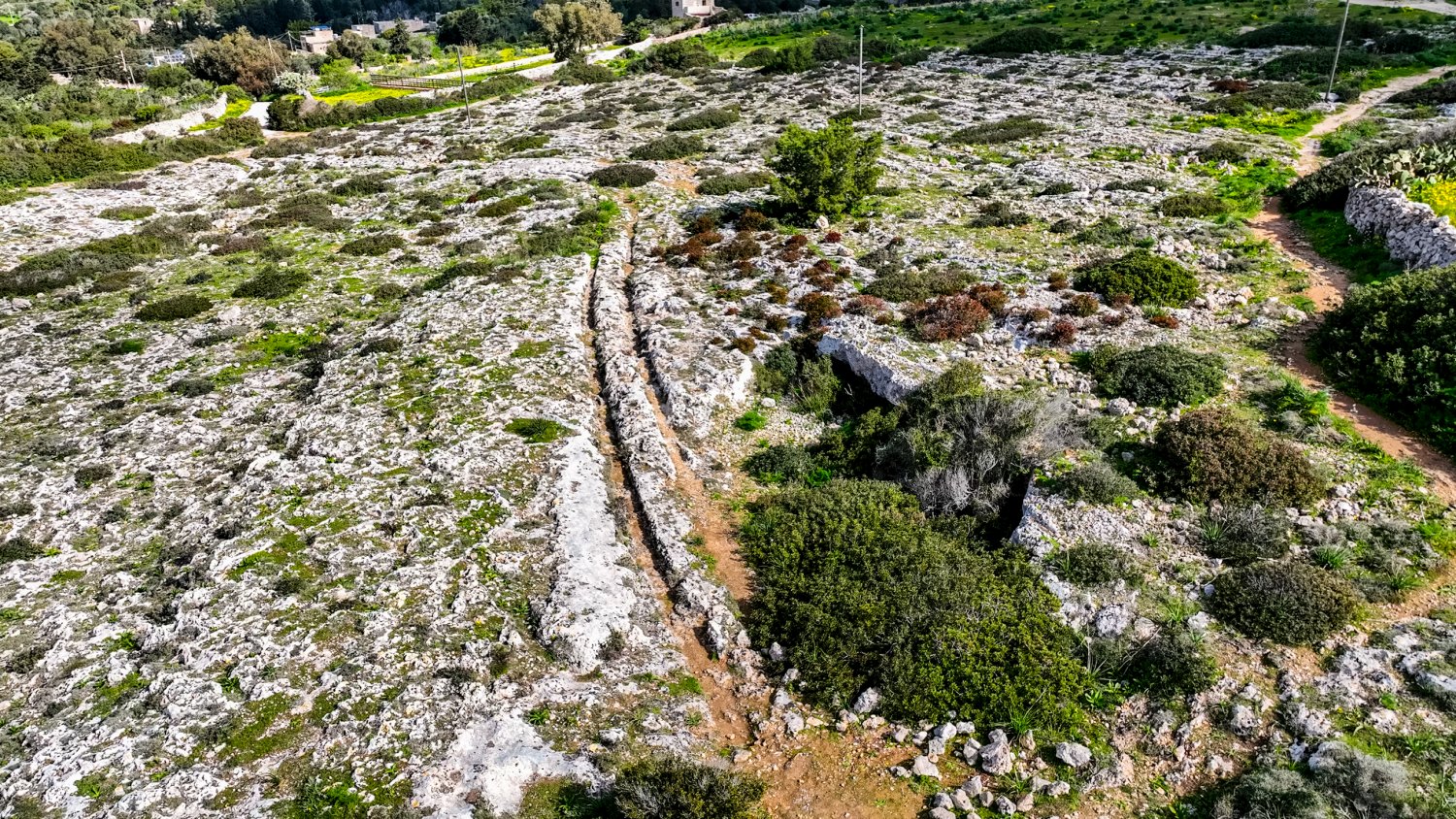
The next location we visit is called Clapham Junction—or Misrah Ghar il-Kbir, to give it its Maltese name. Here, we don’t find a busy train station, but instead, a broad table of limestone that appears to have been scored with criss-crossing track-like cuts. “We know that these tracks are man made,” says Warrington, “but no one has been able to decipher why. You’d think they were cut as cart ruts but the pairs of lines don’t run perfectly parallel to each other.” Just a stone’s throw from this site, we enter a small hole in the ground that brings us out of the morning sun and into a collection of caves. Warrington tells me they’ve been inhabited since prehistoric times, and people lived in them as recently as the 19th century, when the British colonial administration forced the inhabitants to move out in the name of sanitation and modernisation.
On a hilltop overlooking the sea, we find Ħaġar Qim, a ruined megalithic temple. It’s one of the oldest free-standing stone structures in the world, even predating Stonehenge. Like Stonehenge, it’s aligned with the summer solstice, with the rising sun shining through a specially carved hole, illuminating a stone slab inside the temple before the light then sinks down, seemingly to be absorbed by the earth.