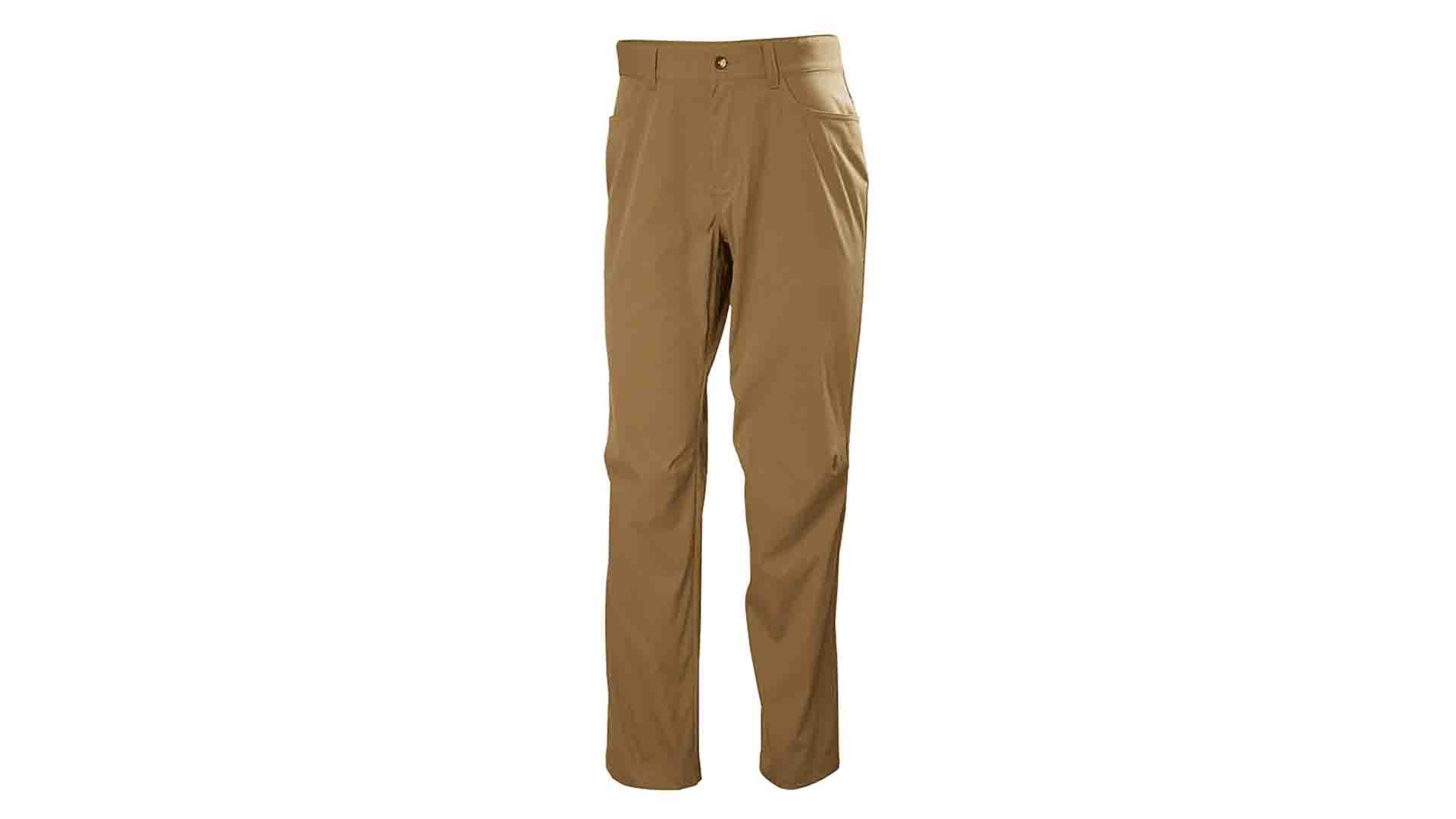
When we assess winter mountain clothing here at Outdoors Magic, we’re looking for more than just warmth. Cold-weather gear needs to manage moisture effectively, protect against wind and rain, and still allow you to move efficiently over long, demanding days. Durability matters too – winter terrain is hard on kit – and so does versatility, especially when conditions can change quickly.
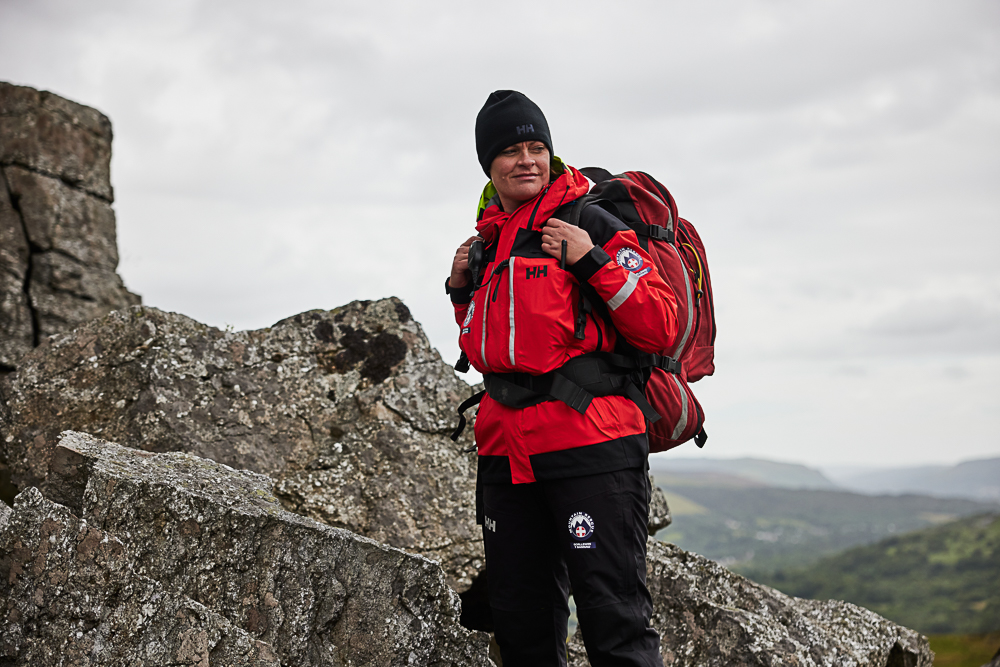
One brand that has built its reputation around those exact challenges is Helly Hansen. With roots in professional sailing and mountain environments (including being the trusted supplier for multiple mountain rescue teams), its technical ranges are designed as modular systems rather than standalone pieces. That makes it a good candidate for a proper layer-by-layer look at how winter clothing actually works in practice.
Below, we break down a complete Helly Hansen winter setup, from baselayer through to shell, explaining what each piece is for, when it excels, and where it fits into a broader mountain clothing system.
The Baselayer System
Role: Moisture management, warmth and next-to-skin comfort in cold conditions
In winter conditions, staying warm is as much about staying dry as it is about insulation. A good baselayer system should move moisture away from the skin quickly, regulate temperature across a wide range of activity levels, and remain comfortable during long, demanding days.
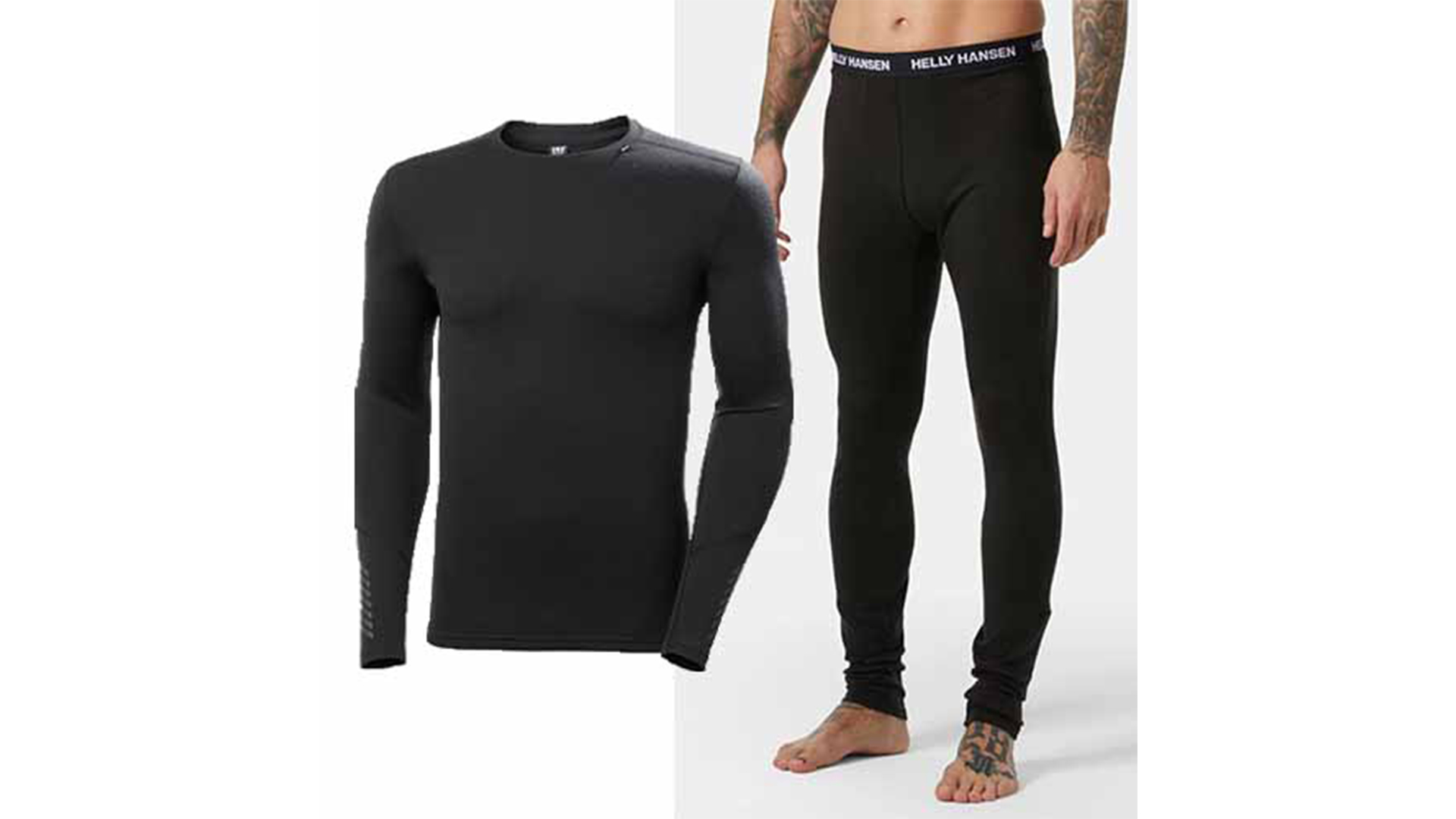
Helly Hansen’s LIFA Merino Crew and LIFA Merino Midweight 2-In-1 Base Layer Pants are designed to work together as a full next-to-skin system. Both combine the warmth and odour resistance of merino wool with the fast-drying performance of Lifa fibres. Lifa is Helly Hansen’s proprietary polypropylene fibre; it’s hydrophobic by nature, meaning it doesn’t absorb moisture, instead pushing sweat away from the skin towards outer layers where it can evaporate.
In practice, this baselayer system works particularly well for UK winter hillwalking and cold, damp trekking – especially when you’re dealing with variable exertion and exposed, wind-cooled sections. It provides a dependable foundation for the rest of the layering setup, helping to maintain comfort and energy levels over long days.
Best for: Cold to very cold conditions, multi-hour winter days, variable output and damp environments