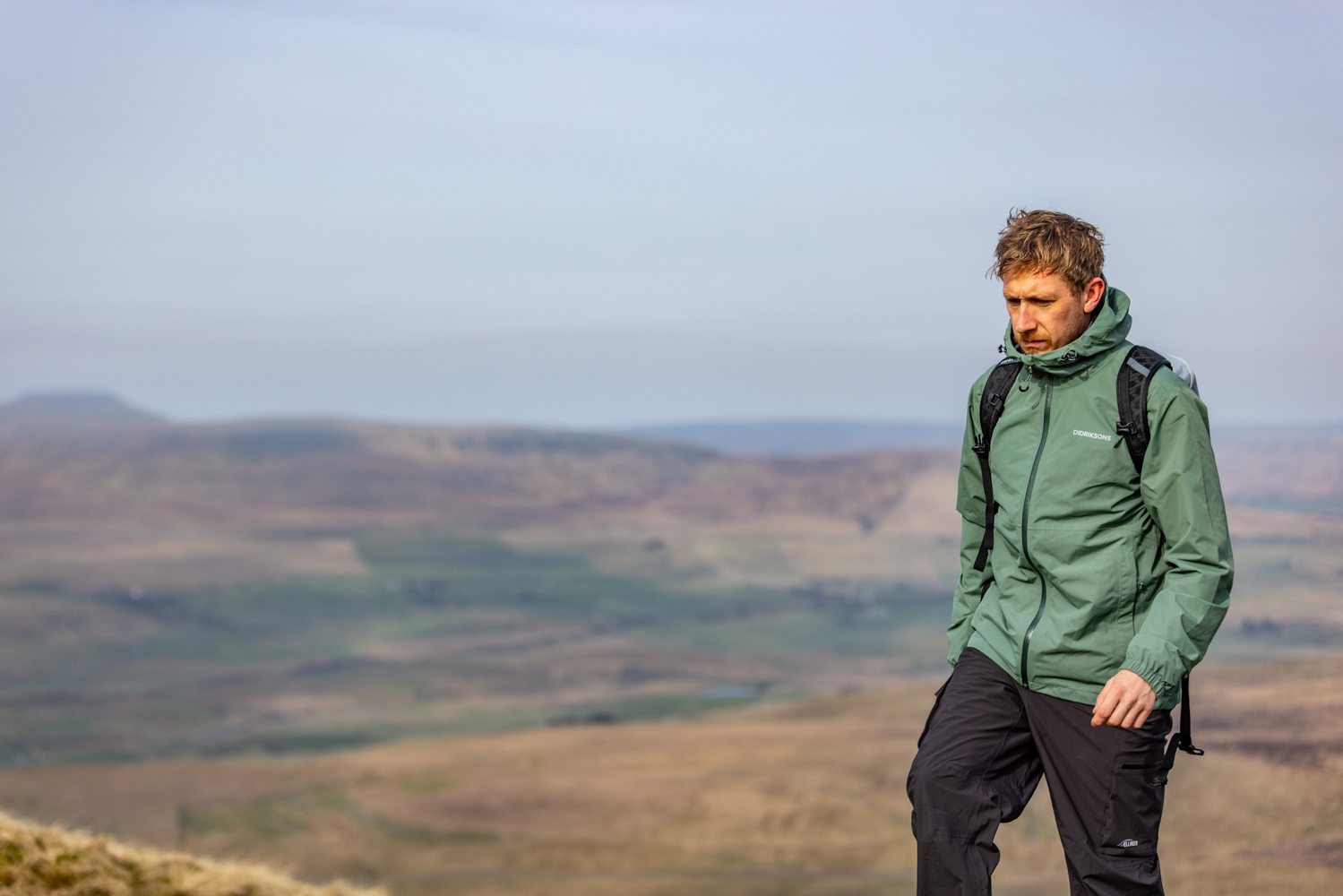
Didriksons, in case you don’t know them, are a brand hailing from the western coast of Sweden and they started out all the way back in 1913 by making jackets that were, at the time, groundbreaking for the amount of weather protection they were able to provide. Fast-foward to today and the brand is still very much focussed on producing kit for the elements, but at more affordable prices than you tend to see across the outdoor market.
The Didriksons Dario jacket exemplifies this. It’s a waterproof shell from a reputable brand that has an RRP of just £110. How does it perform though? I’ve been putting it to the test through spring conditions, taking it up two hills in the Yorkshire Dales and out on some wet country walks – here’s my verdict.
Didriksons Dario Jacket: The Top Line
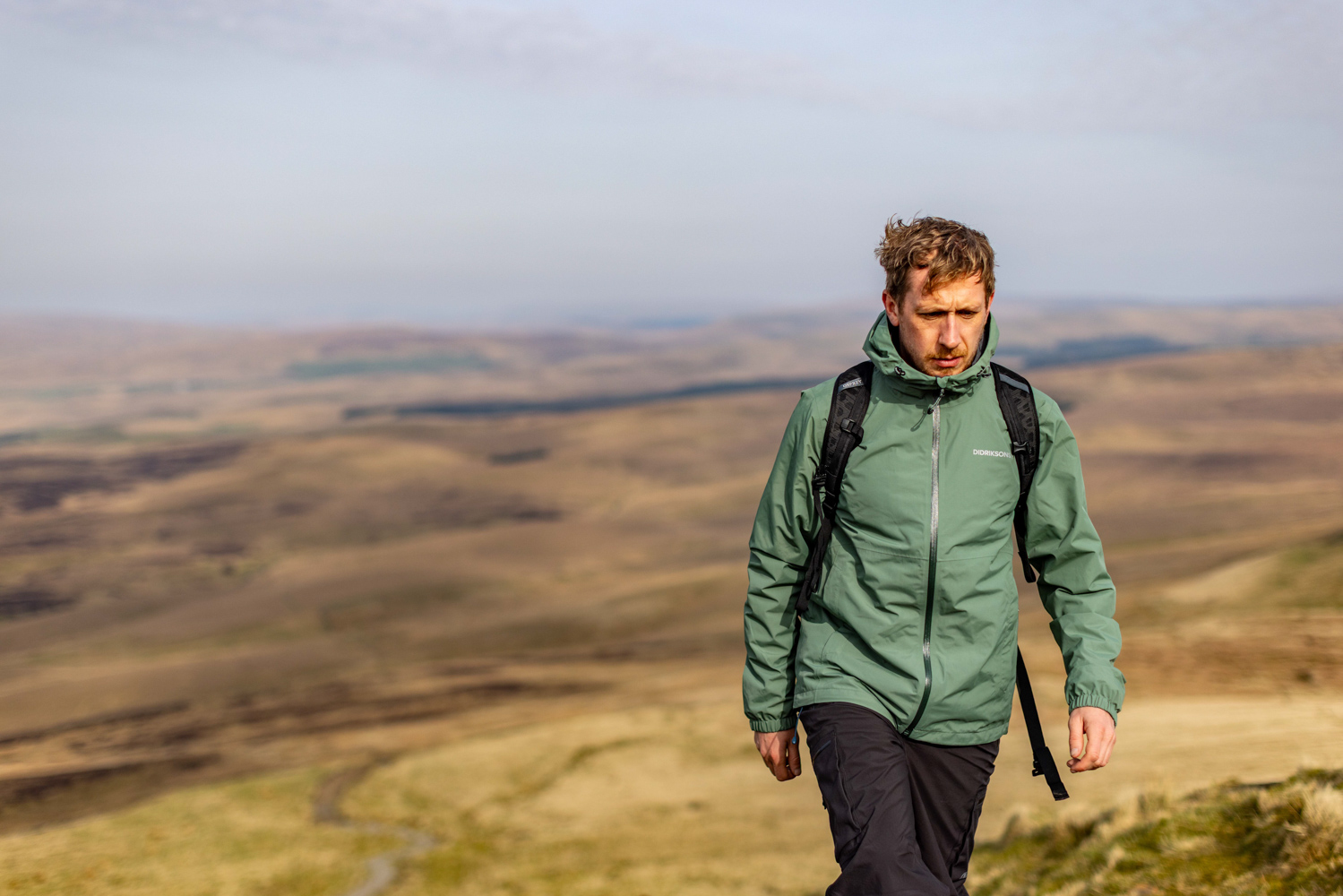
A 2-layer shell that offers enough protection for country walks and that can do the job for summer hikes when the weather isn’t too brutal. Like most 2-layer shells, it has its limitations. One of the standout aspects of it for me was the cut.
Performance: Is It Waterproof?
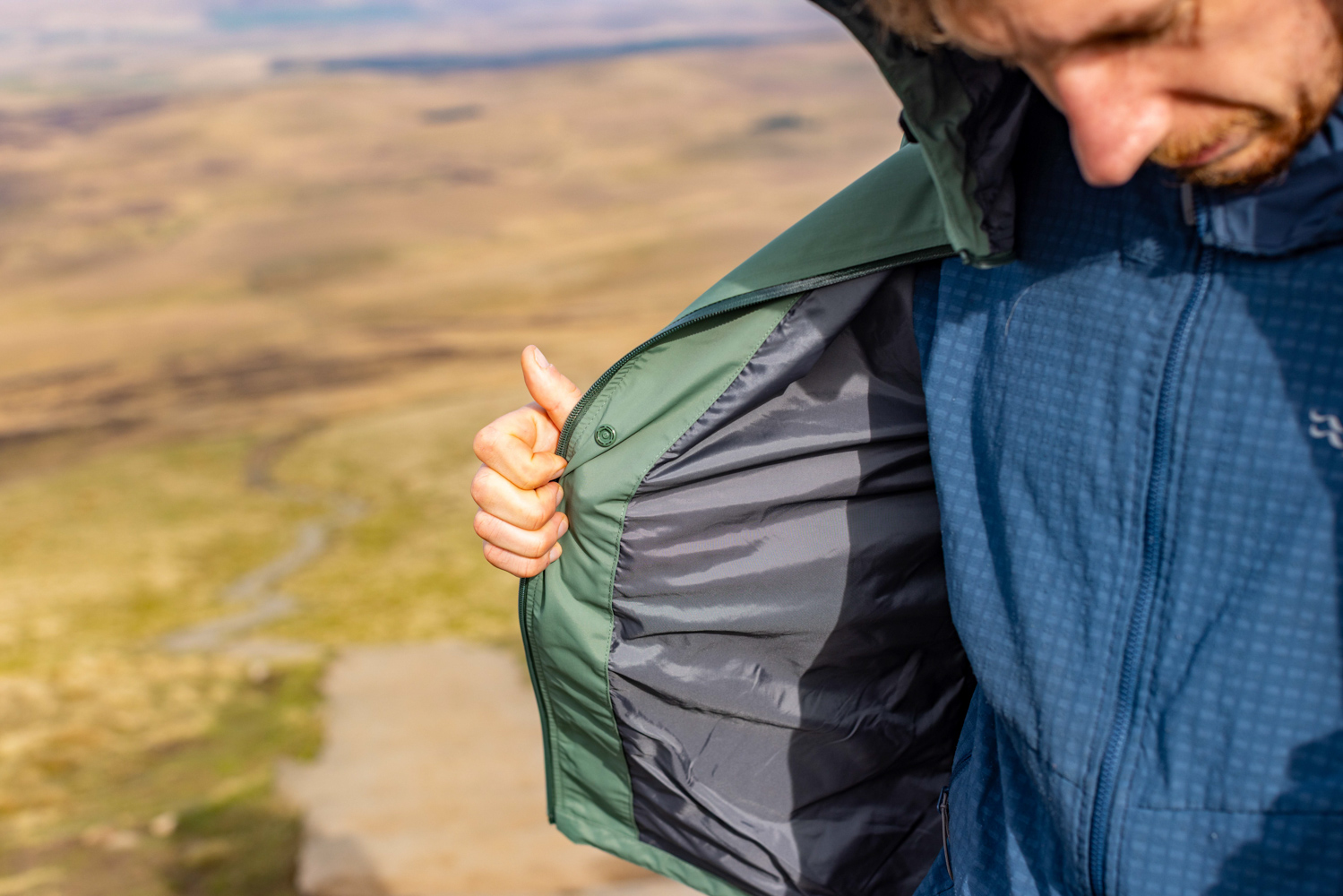
The Dario’s waterproof system involves a membrane that’s protected by a DWR-treated fabric on the outside. On the inside, there’s an inner polyester lining that’s not actually attached to the membrane. It’s a typical 2-layer construction which you tend to see on lower cost wet weather gear.
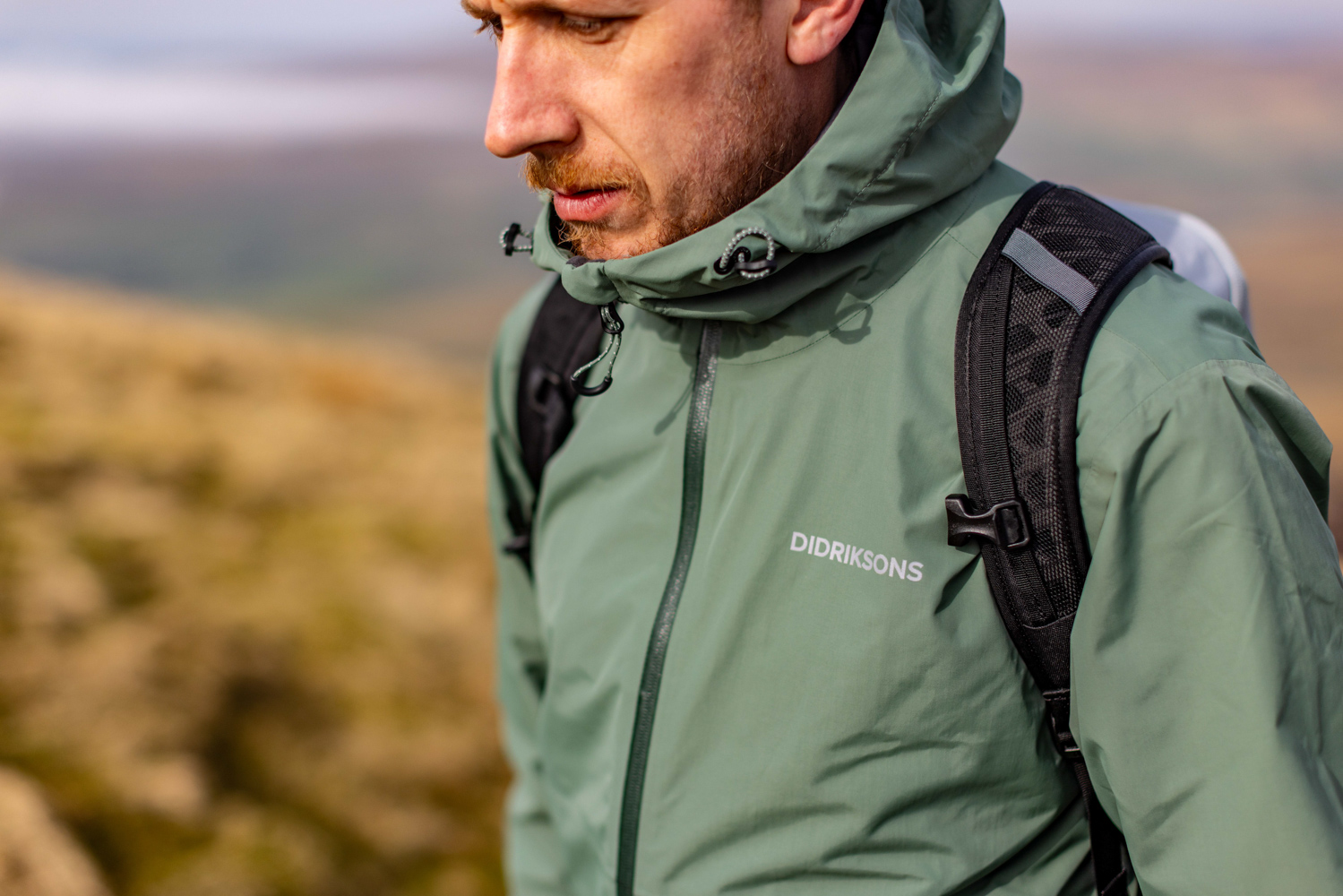
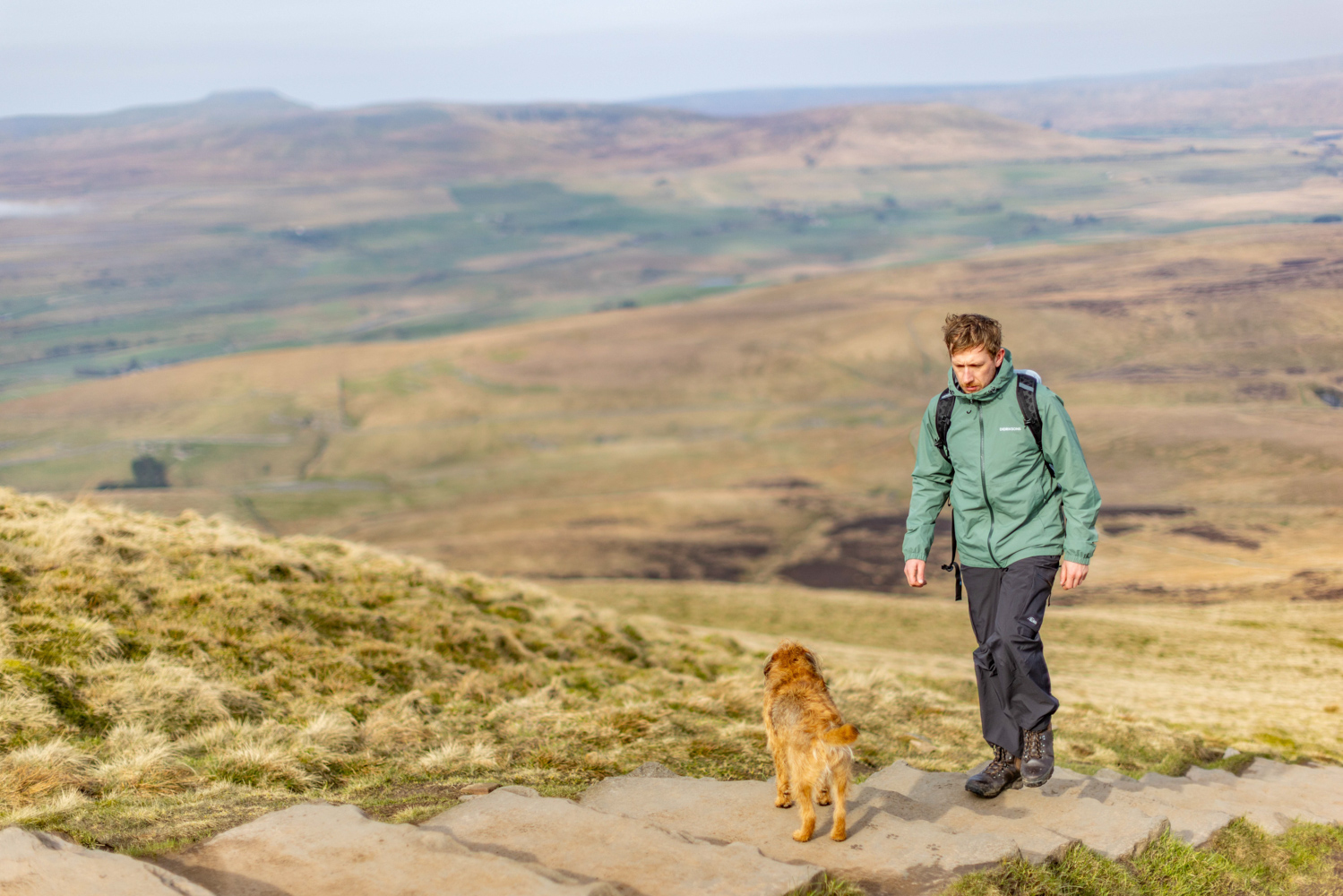
The first time I wore it was on a long hike in the Yorkshire Dales where we climbed up to about 700 metres. It was a blowy day but there was plenty of sunshine and temperatures of around 15 degrees. In these conditions, I was impressed by the jacket’s ability to keep off wind chill and I didn’t overheat during the ascents, so the breathability seemed good. I’ve since used the jacket in the rain and I have found that moisture does hinder the breathability a bit, which is to be expected from a 2-layer jacket.
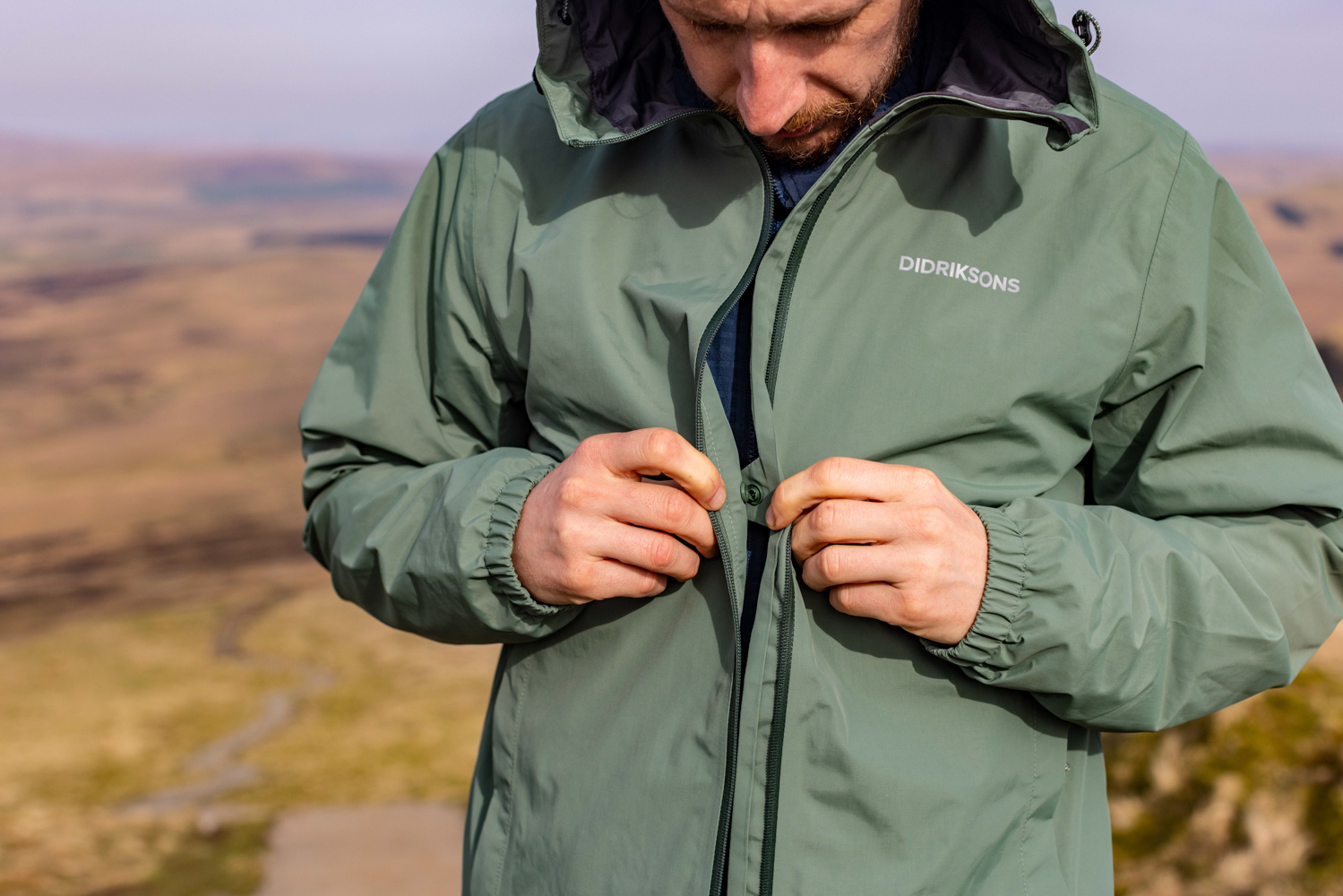
And the protection it offers in the rain? I’ve worn this on multiple rainy dog walks in the Wiltshire Downs and it’s served me very nicely, keeping all moisture out, even in some breezy conditions. The seam taping has all done its job and the same can be said for the waterproof coating on the main zip. It has a casual look to it that doesn’t really look out of place in urban settings, so I’ve been wearing it often as a daily jacket and it serves that purpose nicely.
The hydrostatic head rating is 15,000mm. For perspective, Gore-tex has a rating well above 20,000. Its rain performance has been fine for me so far when worn through light to medium-heavy rain, but I haven’t fully pitted it against a stormy scenario just yet. I’ll come back to update this when I’ve got some real findings on the fabric’s waterproofness.
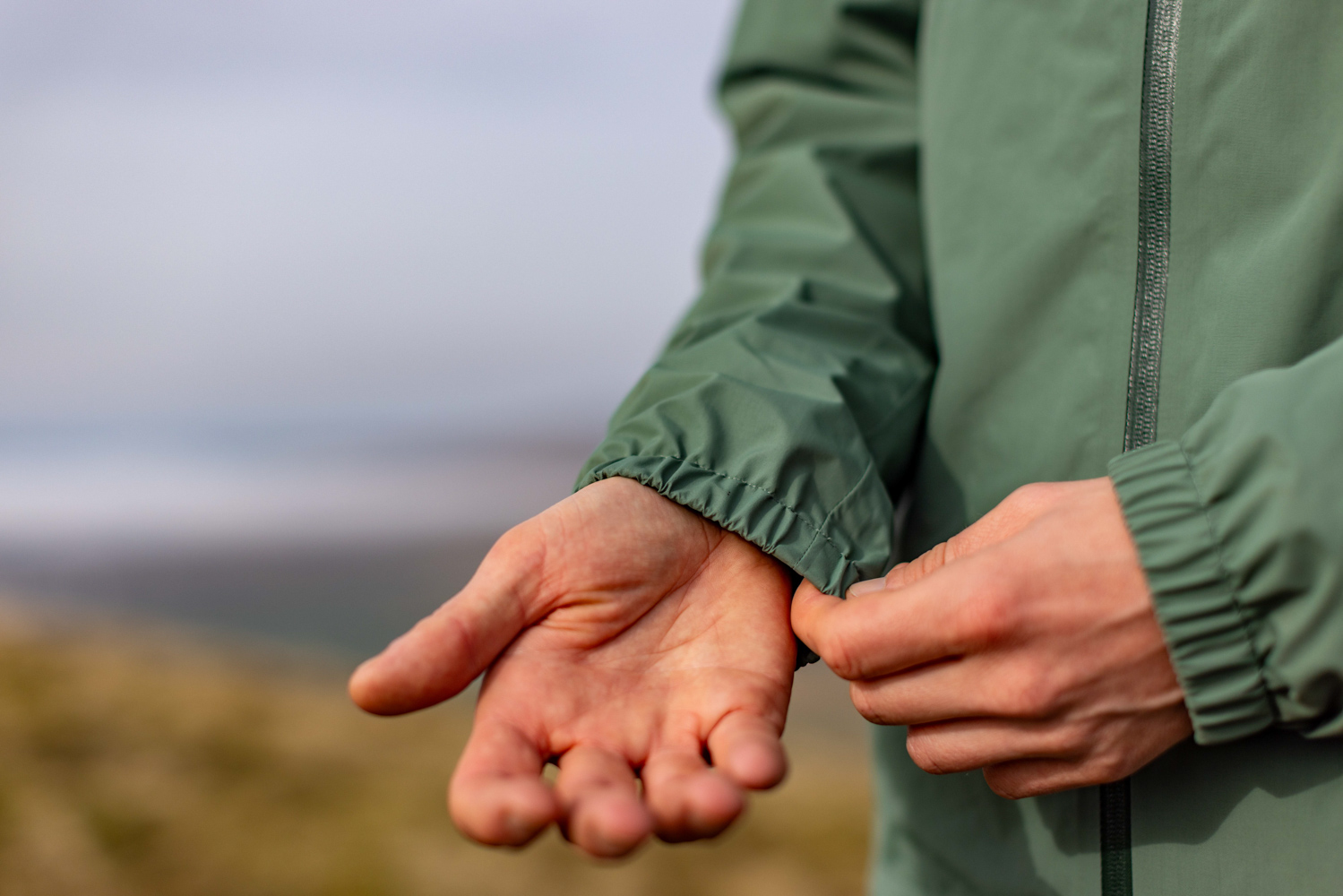
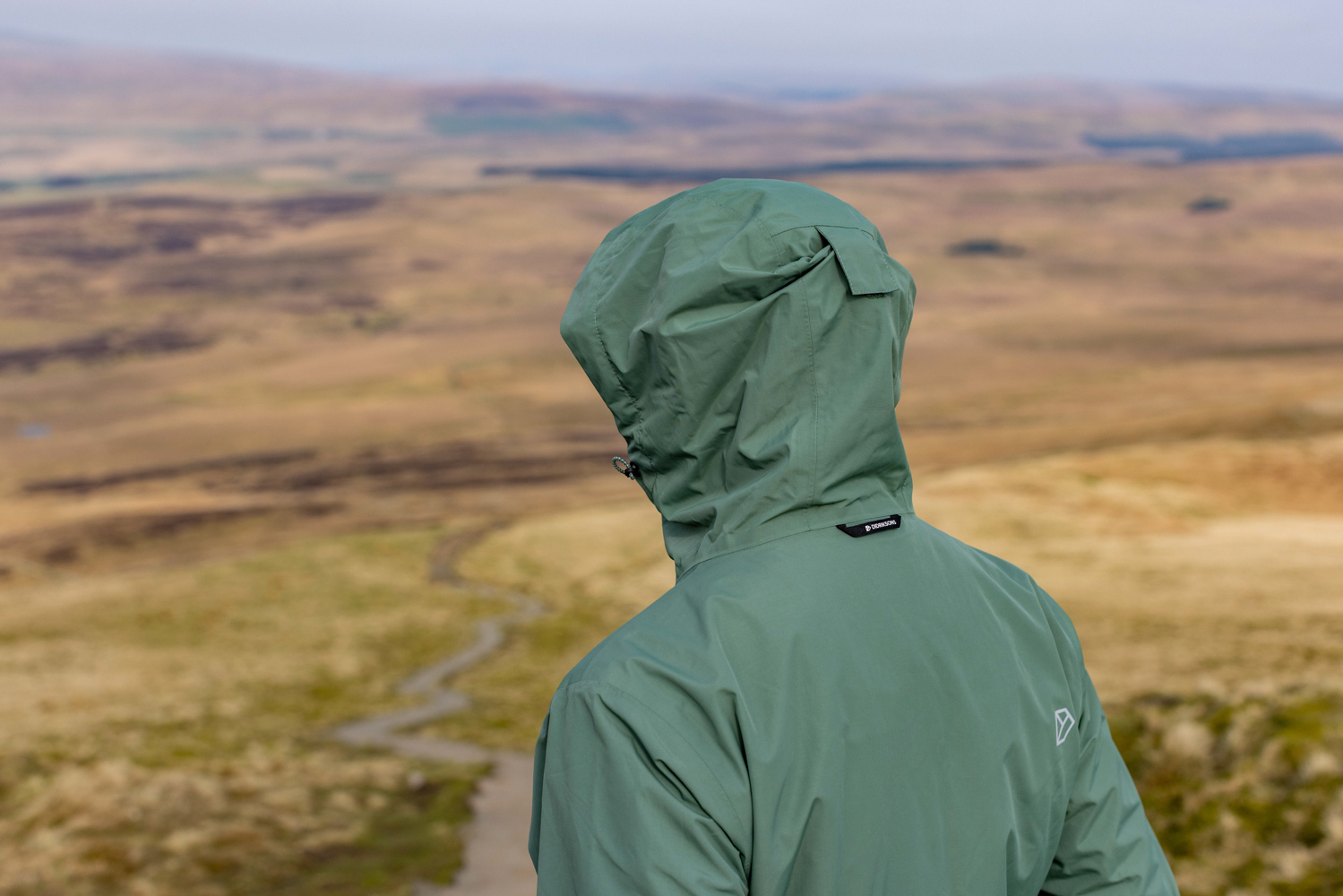
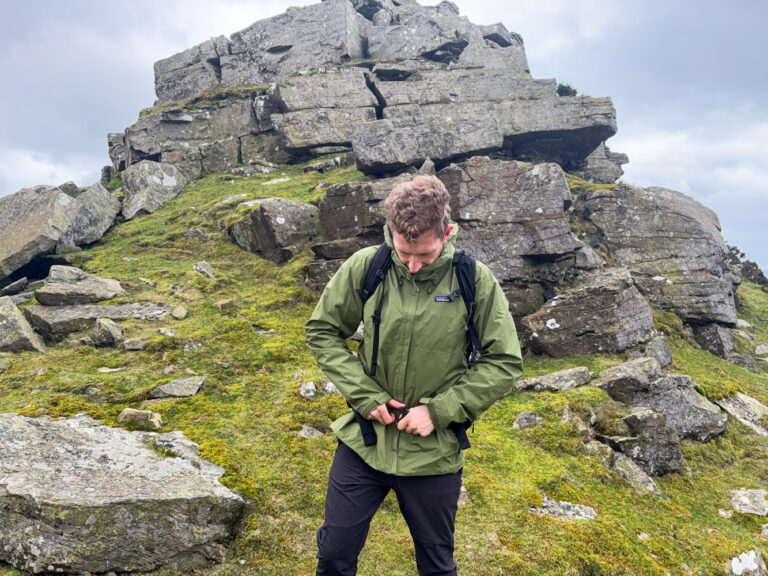
Regardless of the fabric’s performance, there are some aspects of this jacket that don’t make it suitable for very rough conditions. The hood, for instance, isn’t a stormproof design and the cuffs are only elasticated – I tend to find Velcro cuffs much more reliable through wind-driven rain. Still, I haven’t had any issues with these two aspects on wet, low-level walks.