Outdoors Gear, Equipment, News, Reviews, Forums, Walking Routes and More at OutdoorsMagic.com

Outdoor Features

British Mountain Classics: Walking The Yorkshire Three Peaks

In search of what makes the Three Peaks route – 24 miles of valleys, hills and historic paths – a rite of passage for walkers

“Yorkshire Three Peaks? Oh, I wouldn’t be doing that. I haven’t understood the ‘why’ part about all of that stuff yet.”

This is the response I get from a glint-in-the-eye Doncastrian I’ve just met. I’m in a country inn deep in the Yorkshire Dales, chatting to a group of fifty-somethings on the table next to me about my plans for the following day. I’ve probably had one too many pints of Black Sheep, considering the miles ahead – and the alarm set for dawn.

That friendly Doncastrian, you could say, is in the minority. Every year, it’s estimated that as many as 200,000 people find their ‘why’ and come here. Many flood in during the summer to raise money, taking part in organised charity treks; plenty more arrive primed to tick off a personal goal they can upload to Strava. For me? Curiosity. I’ve been an outdoors writer for almost 15 years now but, guiltily, I’ve never set foot in the Yorkshire Dales. To get a taste of the area, it feels right to start with the route that links its three highest hills – Ingleborough, Pen-y-ghent and Whernside.

“Our day finishes at Ribblehead Viaduct – perfectly timed to watch the sun set behind its 24 arches.”

“Oh, it’s fantastic, you’ll love it,” replies his wife, who had just been detailing her favourite route up Pen-y-ghent. “Just ignore him – he’s clueless. Doesn’t know what he’s missing.”

The first recorded attempt at the Yorkshire Three Peaks is believed to have been in 1887 by J. R. Wynne-Edwards and D. R. Smith, in a time of 10 hours. A fell race followed, but it wasn’t until the 1960s that the route really gained popularity, when the Pen-y-ghent Café in Horton-in-Ribblesdale introduced a clocking-in service for walkers aiming to join the Three Peaks of Yorkshire Club. While this check-in no longer exists, the village is still regarded as the start and finish – and it’s where Dave, who’s joining me, and I begin on a fine mid-March morning under a bluebird early spring sky.
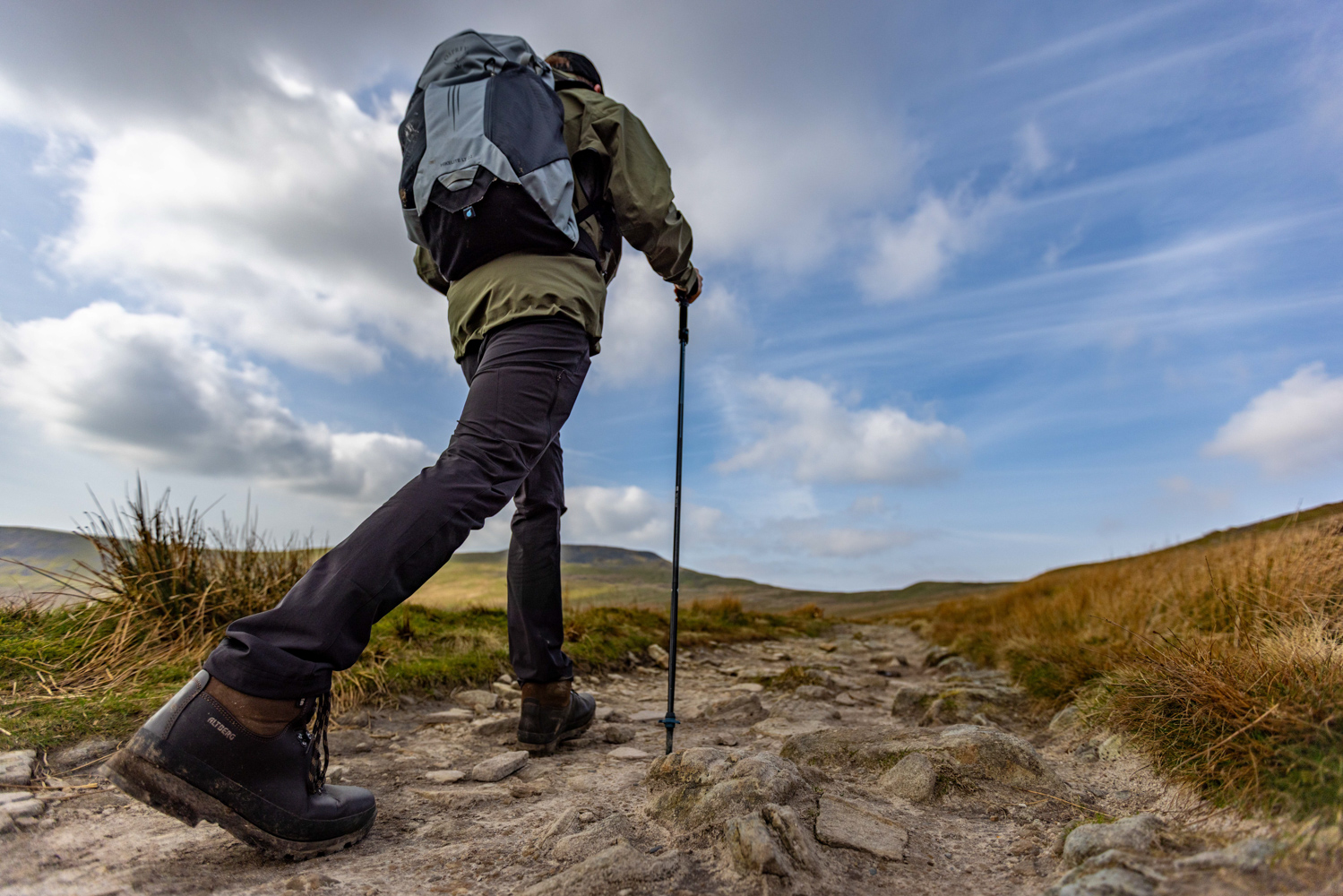
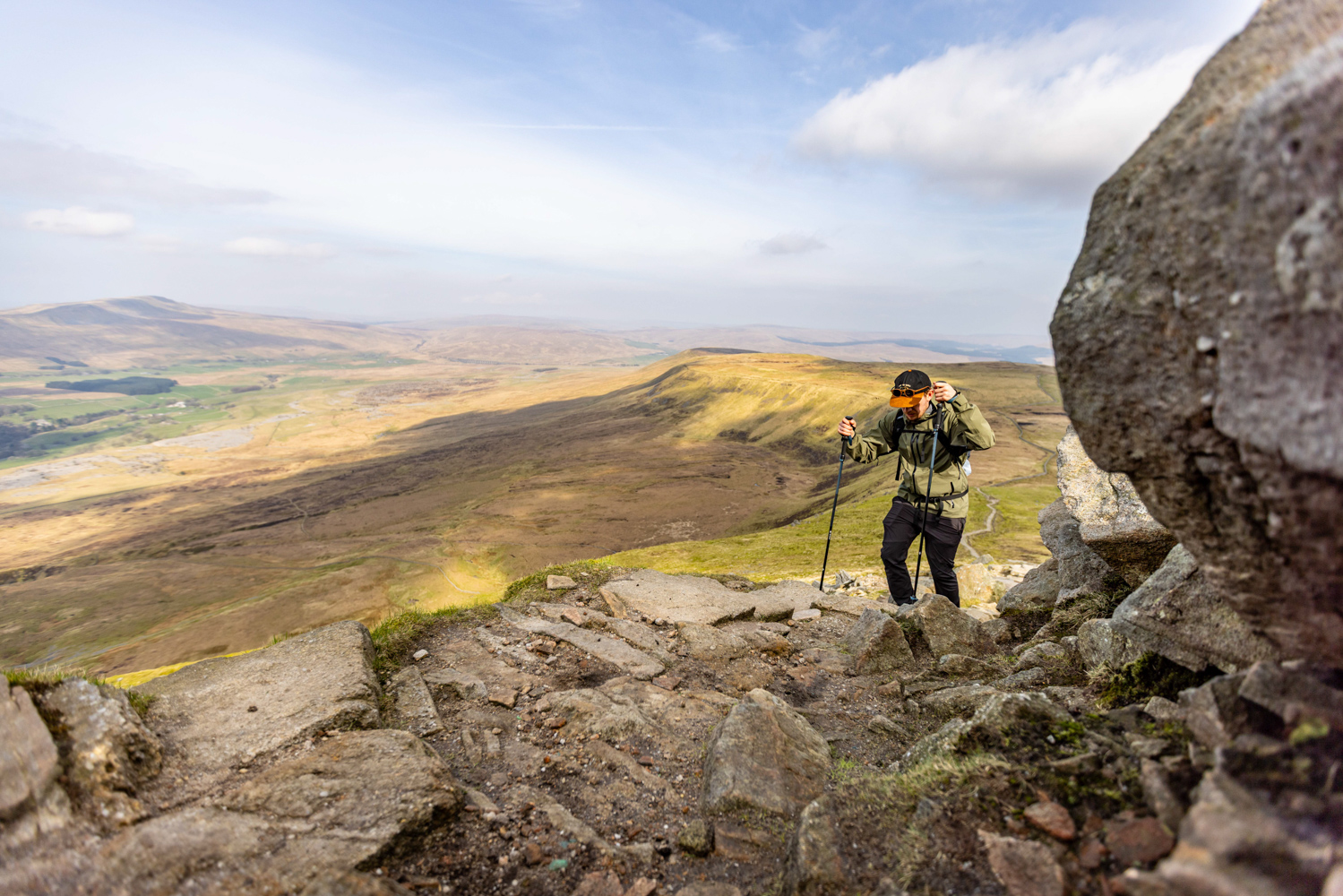
Hiking through Sulber from Horton in Ribblesdale. Boots: Alt-berg Fremington. Photos: Dave MacFarlane
The pull up Ingleborough from Simon Fell. Whernside is back left.
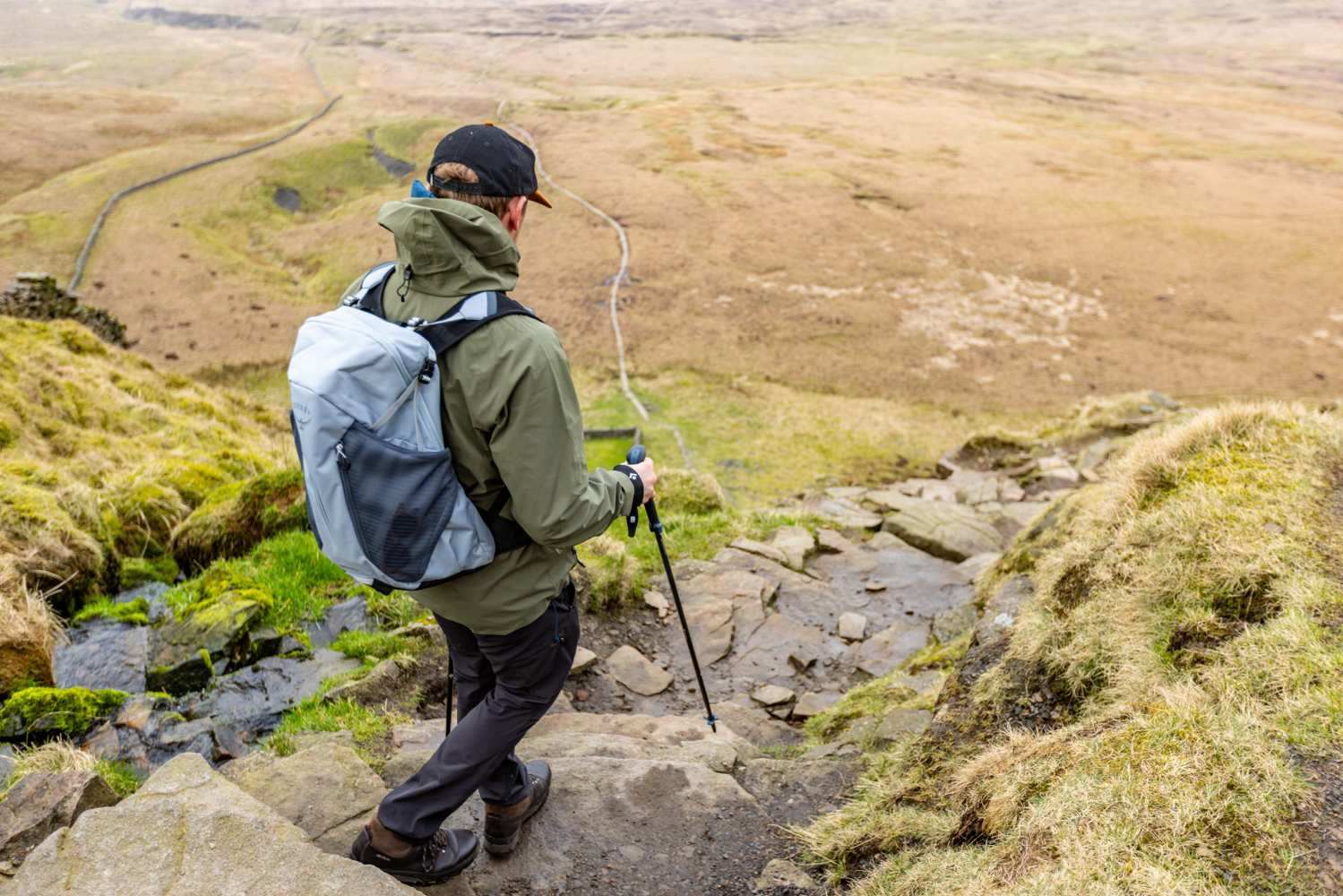
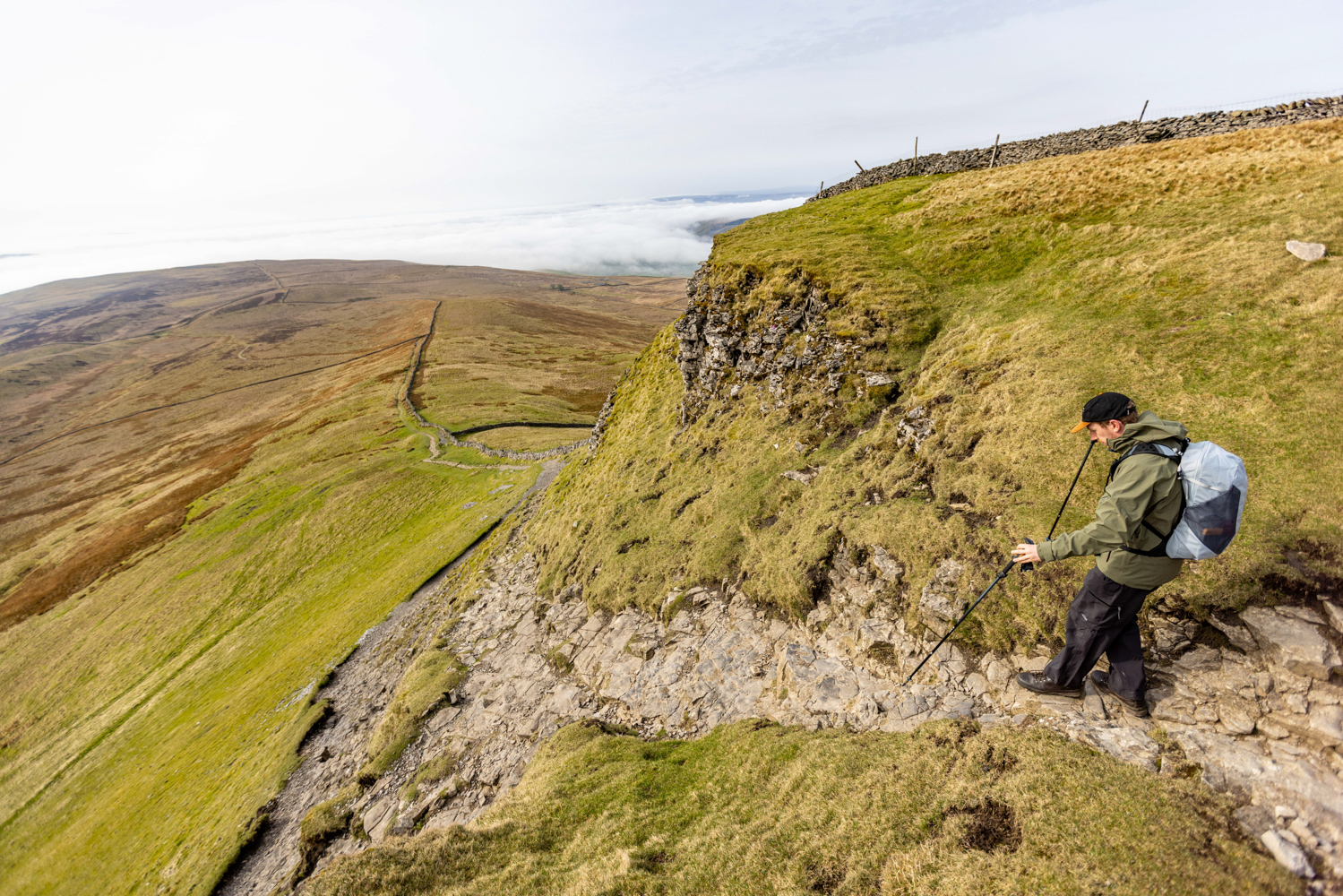
Descending along the Dales high Way down to Chapel-le-Dale. Pack: Osprey Hikelite LT 22
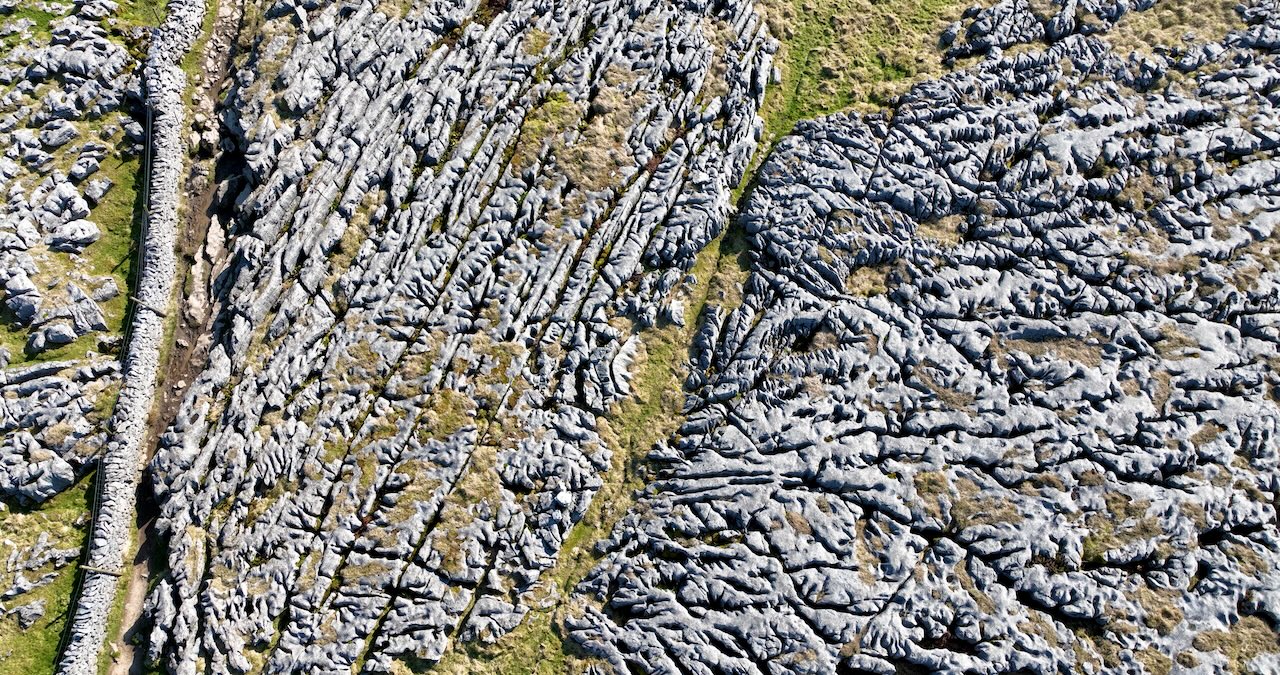
Sulber's limestone pavement.

The famously grumpy outdoors writer Alfred Wainwright, unsurprisingly, wasn’t too keen on the idea of the Yorkshire Three Peaks challenge. “Some participants have chosen to regard the walk as a race,” he wrote, “and this is to be greatly regretted; walking is a pleasure to be enjoyed in comfort.” With the days still short at this time of year, Dave and I take his advice and split the route over two days. Going further against the grain, many tackle it anti-clockwise, starting with Pen-y-ghent, but with today’s wind direction we opt to begin with an ascent of Ingleborough.

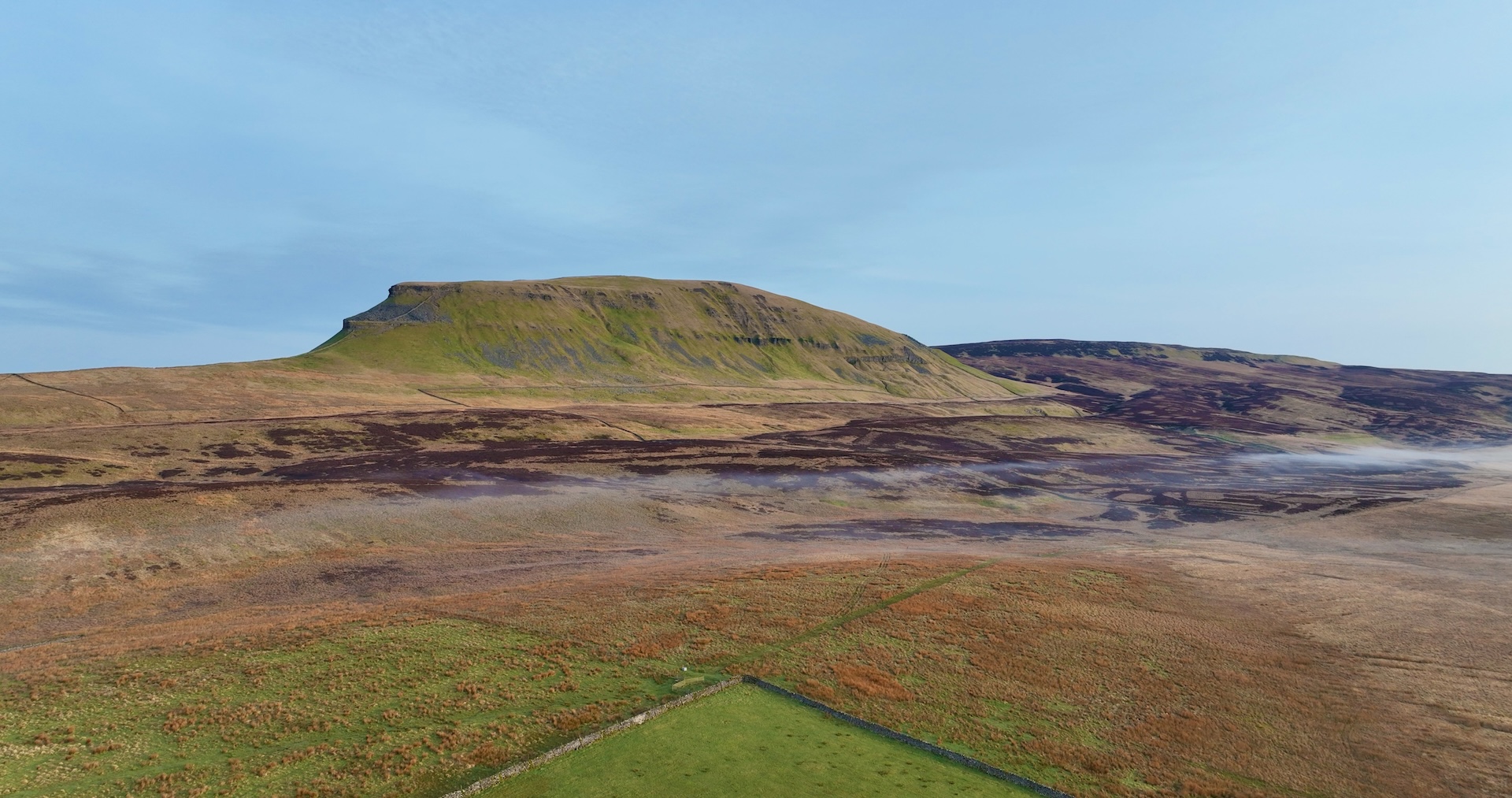
“Pen-y-ghent rises out of the moorland like a surfacing submarine – sudden, dark, and slightly improbable.”

Leaving the village past the railway station – with its potted plants and cheerfully red-painted bridge – it’s not long before we’re among a maze of channels cut through pale grey rock. This is limestone pavement, common across the Dales, formed as slightly acidic rainwater slowly dissolves exposed stone. Over thousands of years it exploits natural cracks, widening them into deep fissures known as grykes, while leaving the flat blocks between them – clints – standing proud. The result is a fractured, gridded landscape that looks almost man-made, like the foundations of some ancient settlement.

As we climb steadily up the northern side of Ingleborough, skylarks singing overhead and bleating lambs in every direction, we come across an elderly man leaning against an old stone ruin. After the usual exchange about the weather, he offers his ‘why’.

“It’s my birthday today,” he says, “so I thought I’d get up the first two peaks, stop for a couple of pints down in the valley, then catch the train back to the start.”

“That’s as good a way as any to mark a birthday,” Dave replies as we continue uphill.

While not high by some standards, Ingleborough – whose name is usually taken to mean “fort on the hill” – is prominent and well placed, and today’s clear weather gives us a sweeping panorama from its broad summit. Stone-walled valleys stretch in all directions, while the rest of the Dales rises in hazy, dark whalebacks. A good spot for a picnic – and the two crows loitering nearby seem well aware of it.

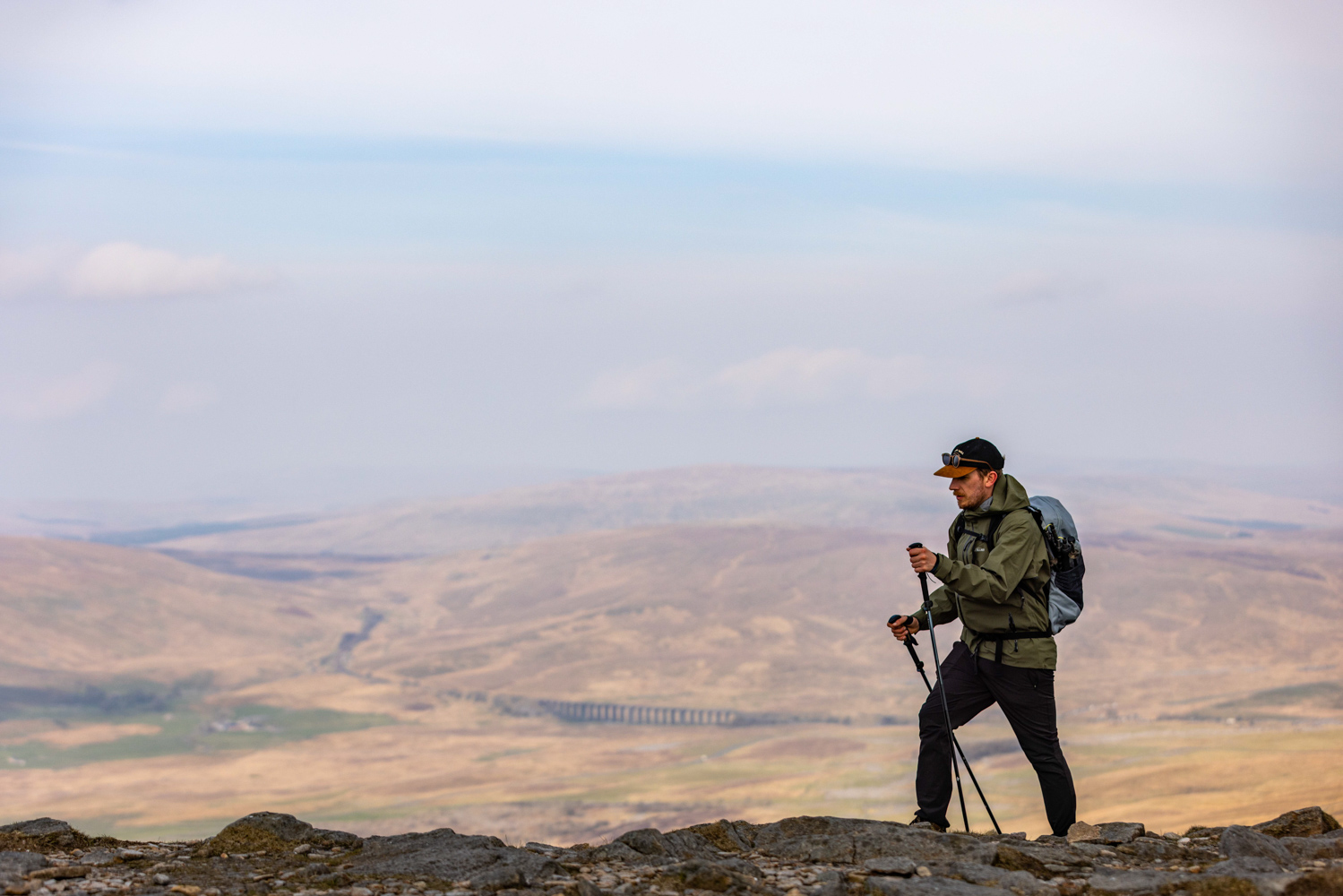
(Head to the bottom of this article for full details on the kit pictured above). 


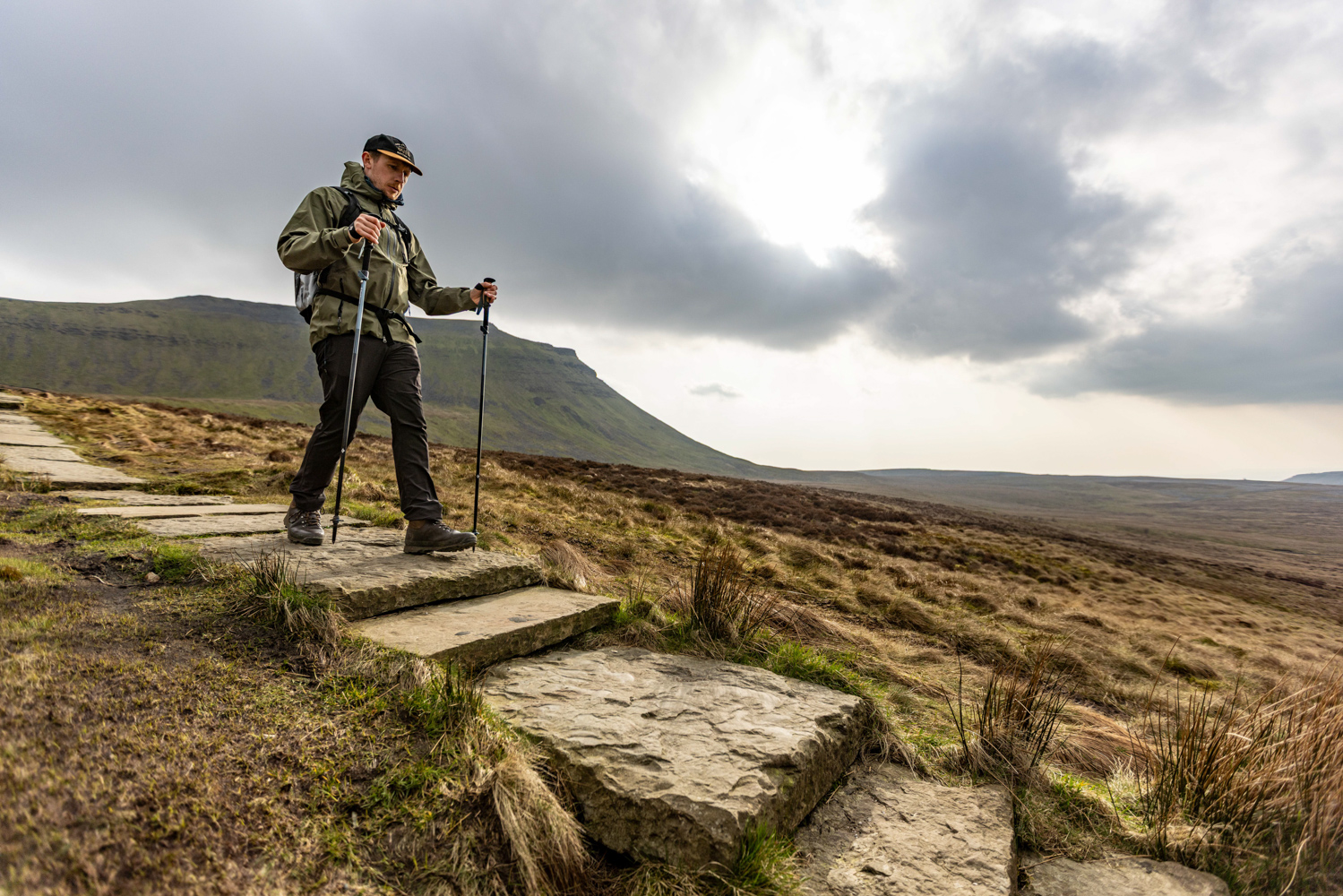
Thick stone slabs lead from the summit all the way down into the valley. Much of the route is paved like this – the sheer number of boots passing through, combined with the fragility of the ground, makes it necessary. As much as 600 tonnes of aggregate can be needed to maintain a single mile of path.

The valley between Ingleborough and Whernside offers a rare chance to refuel. There’s the Old Hill Inn at Chapel-le-Dale, once a resting place for drovers and reputedly visited more than once by Sir Winston Churchill. There’s also Philpin Farm, with a café in the high season and vending machines the rest of the year.

Whernside might be the highest of the three peaks, but it’s arguably the least distinctive, forming a long, broad ridge running south to north. Its name, first recorded in 1208 as Querneside, is Old English in origin, referring to the hard stone on its summit, once used for making quern stones – millstones for grinding corn.

A steady climb leads to the top – a Yorkshire peak whose summit strays just over the Cumbrian border. We pause, looking west towards a gently shimmering Morecambe Bay and, further north, the distant, pointed fells of the Lake District silhouetted in the haze.

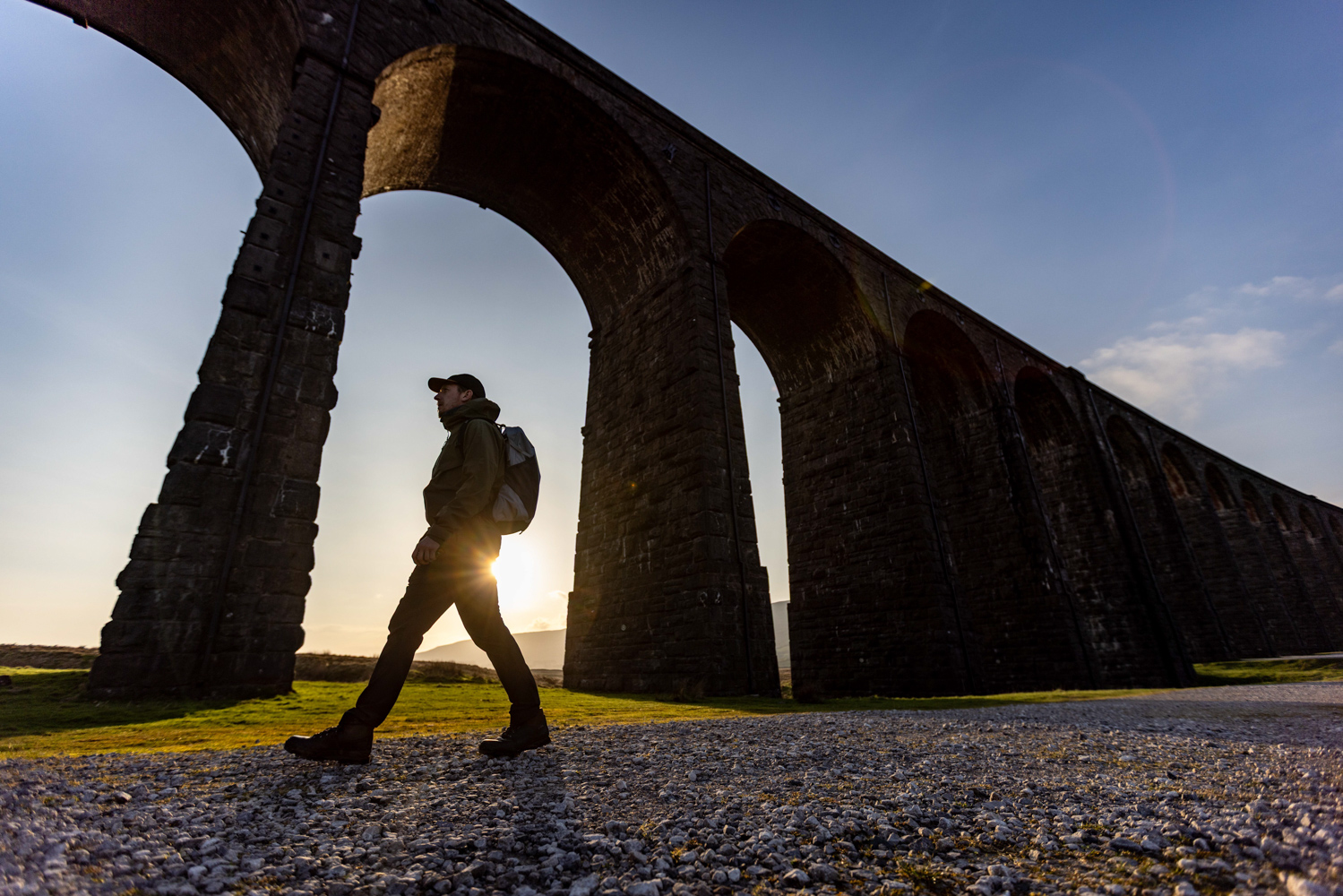
Our day finishes at Ribblehead Viaduct – perfectly timed to watch the sun set behind its 24 arches as the final trains of the day pass overhead before disappearing into the darkness of Blea Moor.

Most of the route is over thick stone slabs, used to prevent erosion from the thousands of visitors every year.
Ribblehead Viaduct at sunset. Trains still run across this today.
Pen-y-ghent viewed from the south.

The stretch between Whernside and Pen-y-ghent is often described as the most psychologically demanding part of the route – six miles of open moorland. Much of the real intrigue, though, lies beneath our feet. OS maps here are dotted with names like Jackdaw Hole, Cross Pot and Birkwith Cave. We’re standing above one of the most extensive cave systems in the UK – more than 2,500 caves have been recorded across the Dales.

Nearby is Gaping Gill, where Fell Beck plunges over 100 metres into a cavern large enough to swallow a cathedral. Elsewhere, systems like White Scar Cave offer a glimpse into this hidden world – stalactites, echoing passageways and the slow drip of water shaping the rock below.

Pen-y-ghent is the shortest of the three peaks, but from where I’m standing it feels the most distinctive. Writers including Alfred Wainwright and J. B. Priestley – a Yorkshireman himself – have described it as “perfectly formed”, “spirited”, and quietly “characterful”. It rises out of the moorland like a surfacing submarine – sudden, dark, and slightly improbable – its craggy sides giving it a more serious air than its height might suggest.

“It sounds very Welsh, doesn’t it,” I remark as we climb in the early morning sunshine. It’s not coincidental: the name comes from the old Brythonic language once spoken across much of northern Britain, an ancestor of modern Welsh. Pen, in Welsh, means “head” or “summit”.

The descent from Pen-y-ghent, heading back down to Horton-in-Ribblesdale.

At the top, we meet some of the day’s Three Peakers. A man in running gear climbs towards us, arm outstretched as he films himself. Two women collapse into laughter while trying to balance together on the trig point. Another man taps the summit with his phone still to his ear – “that’s the first one” – before heading straight off towards Whernside.

We chat to two friends attempting their fifth round.

“Why do you keep coming back?” I ask.

“It’s just a great day out – in all weathers, but especially when it’s like this,” one says.

I understand him.

On my first visit to the Dales, these quirky hills – and the views they open up – have more than answered the question. As we finish back in Horton-in-Ribblesdale and the cars come into view, we pass the Station Inn.

“Fancy a pint?” Dave asks.

“Why not?”

The Kit List

I took the following items with me on this trip, aiming to balance a low pack weight with the right levels of protection and comfort.

  1. Black Diamond Trail Vista FLZ poles More info
  2. Elliker Ayre 3L Hardshell More info
  3. Elliker Bordley 3L TrousersMore info
  4. Osprey Hikelite LT 22 pack More info
  5. Alt-berg Fremington boots More info
  6. Patagonia Terravia Alpine pants More info
  7. Darn Tough Hiker Micro Crew socksMore info
production